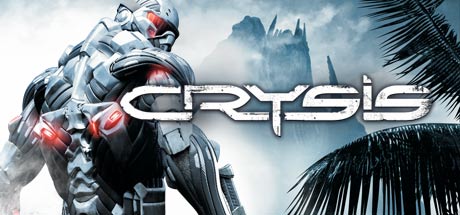
Crysis
Adapt to Survive An epic story thrusts players into an ever-changing environment, forcing them to adapt their tactics and approach to conquer battlefields ranging from newly frozen jungle to zero-gravity alien environments. Suit up! A high-tech Nanosuit allows gamers to augment their abilities in real time on the battlefield.
🎮Game Details
💬What Players Say
"It was quite the pleasure to play this after all those years. OG, not the "remaster" based on Xbox 360 code. Graphics are still holding strong and physics are way better than in many new titles...."
"I played this in 2013, and again now in 2026. It was fun in the open world parts to be able to use the suit experimentation. The switch to fighting aliens instead of Korean's came at a good time and the ice and alien environment change up...."
"I haven't had a system that this game actually works on in over ten years."
📝Editorial Analysis
The jungle isn’t just frozen—it’s breathing. One second you’re crouched in steaming undergrowth, the Nanosuit’s thermal overlay painting heat signatures like ghosts through mist; the next, the ground cracks open and a slab of ice shears upward, forcing you to sprint, slide, then leap—not away from gunfire, but from gravity itself as the battlefield tilts into zero-gravity alien architecture. That’s not scripted spectacle—it’s adaptation, raw and urgent, pulled straight from the official description: “An epic story thrusts players into an ever-changing environment, forcing them to adapt their tactics and approach to conquer battlefields ranging from newly frozen jungle to zero-gravity alien environments.” And yes—the physics still hold. As one player put it, “Graphics are still holding strong and physics are way better than in many new titles.” You feel the weight of a rifle’s recoil syncing with snow displacement; you hear the crunch-snap of ice giving way beneath boots—not canned audio, but layered, responsive, physical. Even the memory of struggling to run Crysis on aging hardware (“I haven’t had a system that this game actually works on in over ten years…”) becomes part of its texture: a stubborn, almost defiant materiality.
What makes Crysis’ atmosphere singular isn’t its sci-fi scale or military framing—it’s the tactile intimacy of escalation. You don’t just gain power—you relearn your body. The Nanosuit isn’t a menu of upgrades; it’s a nervous system rewiring mid-stride: strength to vault a fallen tree, speed to blur past a sniper’s aim, armor to tank a plasma blast while your vision whites out at the edges. There’s no cutscene between human conflict and alien revelation—just a seamless pivot (“The switch to fighting aliens instead of Korean's came at a good time…”), where geopolitical tension dissolves into ontological shock. It doesn’t ask you to understand the alien—it asks you to survive its geometry. That’s the feeling: disorientation with agency, awe laced with vertigo, wonder edged with exhaustion. You’re not conquering a world—you’re negotiating it, molecule by molecule.
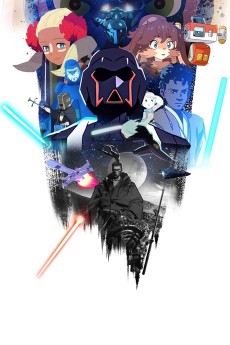
That same pulse lives in TRIGUN STAMPEDE, where Vash’s hyper-kinetic evasion isn’t flash—it’s physics made philosophical. His coat flares mid-air as he rebounds off bullet casings, gravity bending around his choices, not for spectacle, but because the world itself is unstable—dystopian infrastructure fraying, neon-lit cities built atop buried ruins. Like Crysis, it treats environment as both obstacle and collaborator: rain slicks streets so tires hydroplane exactly right for a drift into cover; light refracts through cracked domes to blind pursuers. Both live in Cyberpunk & Dystopia not as backdrop, but as pressure—systems failing, tech straining, humanity clinging to coherence. Then there’s Redline, all blistering velocity and analog grit: a race across a planet where terrain fights back—magnetic storms flip cars, lava rivers erupt mid-turn, and the cockpit HUD glitches with your heartbeat. Its Sci-Fi & Space isn’t about stars—it’s about surface: the scorch of asphalt, the shudder of engine mounts, the sweat on a pilot’s brow as centrifugal force threatens to peel him from his seat. Just like Crysis, it trusts physics over plot to generate tension. And Final Fantasy VII: Advent Children—that rain-soaked, mako-scorched wasteland where Sephiroth’s wings slice air like blades and Cloud’s sword bends light as he moves—mirrors Crysis’s tonal pivot: from grounded war to mythic rupture. Its Cyberpunk & Dystopia isn’t aesthetic—it’s physiological: bodies mutated, cities poisoned, tech fused with flesh until the line between suit and skin vanishes.
This pairing sings for the viewer who replays a 2007 demo just to feel the thud of a Nanosuit jump on a CRT monitor, who watches TRIGUN STAMPEDE’s opening chase and pauses it—not to admire the animation, but to count how many frames pass between tire smoke and asphalt fracture. It’s for the player who, after ten years of chasing “next-gen,” boots up Crysis not for nostalgia, but because nothing else makes gravity feel like a suggestion you can argue with. They don’t want lore dumps—they want resistance: a world that pushes back, beautifully, brutally, and in real time. They love when a suit hums in their bones, when neon bleeds into rain, when a single leap carries the weight of everything unspoken—adaptation, awe, survival, truth.
→63 Anime That Match the Vibe

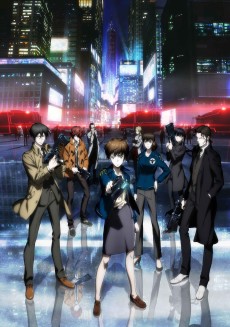
Vash’s neon-drenched, rain-slicked showdown in the ruined city of July—where his nanotech-enhanced body flickers under holographic ads—mirrors Crysis’s frozen jungle where nanosuit optics warp reality mid-firefight. Both weaponize 🌃 Neon Noir not just as backdrop but as narrative pressure: light fractures identity, tech blurs human limits, and survival demands constant, visceral adaptation. That shared tension—between dazzling spectacle and existential fragility—makes their resonance startlingly coherent, not coincidental.

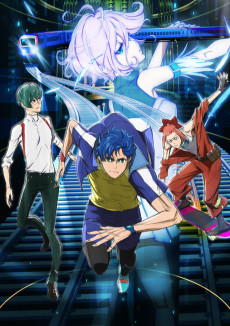
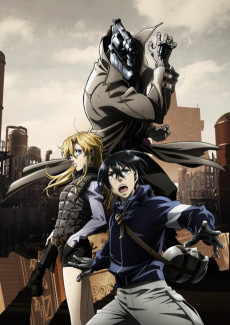
JP’s helmet visor shattering mid-race on Roboworld’s neon-drenched, gravity-defying tracks mirrors Nano-Suit soldiers scrambling across Crysis’s fractured Arctic jungle—both worlds weaponize environmental chaos as narrative engine. Where Crysis forces tactical reinvention through zero-gravity ice caves and alien bio-hazards, Redline’s universe-wide tournament thrives on unregulated, cyberpunk-tinged spectacle: chrome bodies, overclocked engines, and physics-bending turns that treat space itself as terrain. This shared sci-fi audacity—treating environment not as backdrop but as volatile, adaptive antagonist—makes their resonance thrillingly visceral, not just aesthetic.

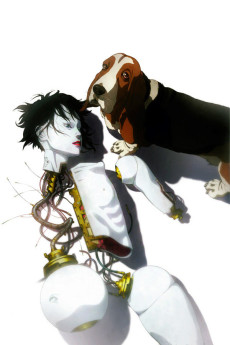
Frozen jungle canopy shatters under Crysis’s nanosuit—just as Kazane’s clockwork wings fracture in *Heaven’s Lost Property the Movie*’s climax, both collapsing organic and mechanical systems into glittering, unstable entropy. Where Crysis weaponizes sci-fi to interrogate human fragility amid alien ice and zero-G chaos, Kazane’s arc embodies cyberpunk & dystopia through her self-sacrificial rewiring—her body a failing machine in a world that discards broken angels. This pairing is startling: two stories where transcendence arrives not through power, but through elegant, devastating system failure.

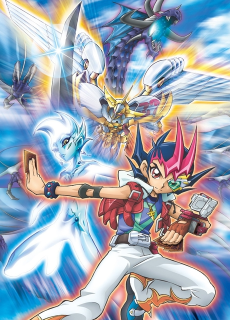
Connected through 2 aesthetic dimensions.
Connected through 2 aesthetic dimensions.
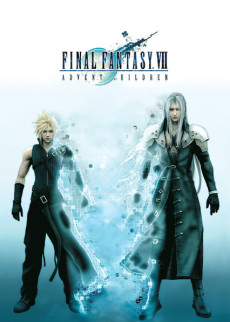
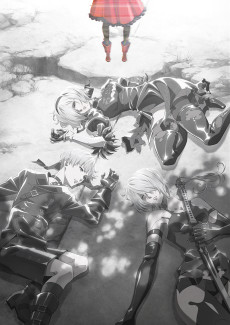
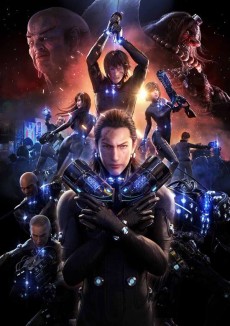
Frozen jungle canopy shatters under a nanosuit’s leap—just as Midgar’s ruined plate groans beneath Cloud’s boots in *Advent Children*’s rain-lashed climax. Unlike most sci-fi, both anchor spectacle in visceral bodily struggle: Crysis’ adaptive warfare mirrors the Geo-stigma’s corrupting physicality, where flesh rebels against techno-organic decay. This shared cyberpunk & dystopia dimension makes their resonance startling—not just visual grandeur, but trauma encoded in environment and biology.

Connected through 3 aesthetic dimensions.
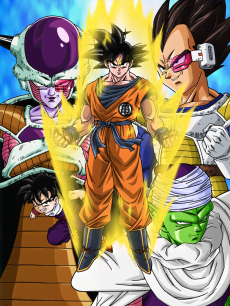
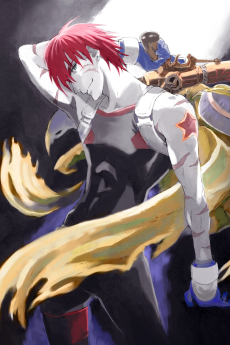
Frozen jungle canopy shatters as Nomad’s nanosuit flares—just as Vegeta’s Final Flash tears through Kai’s remastered sky. Where Crysis weaponizes sci-fi’s raw physics to demand tactical reinvention, *Dragon Ball Z Kai* strips spectacle down to manga-precise escalation, making every power-up feel like a recalibration of cosmic rules. Their shared 🚀 Sci-Fi & Space dimension isn’t just backdrop—it’s the logic engine: one grounds wonder in adaptive tech, the other in disciplined narrative compression. Surprisingly, both treat escalation as rigor, not excess.
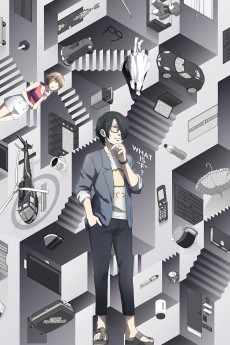
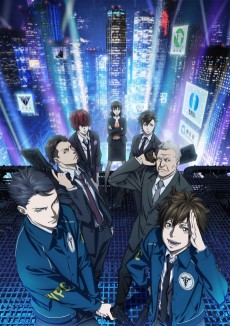
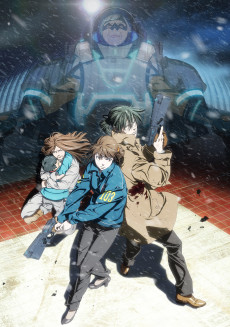
Frozen jungle canopy cracks under alien ice—Crysis’s nanosuit hums as the world destabilizes. Meanwhile, Moe Nishinosono walks Tokyo’s rain-slicked neon alleys in *The Perfect Insider*, her quiet intensity mirroring the game’s lone soldier navigating collapsing realities. Both weaponize 🌃 Neon Noir not as backdrop but logic: systems fail, truths fracture, and survival demands reading layers of deception beneath shimmering surfaces—making their dark-seinen tension eerily symbiotic.
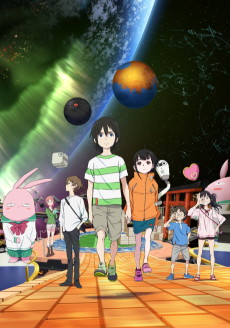
Connected through 2 aesthetic dimensions.


















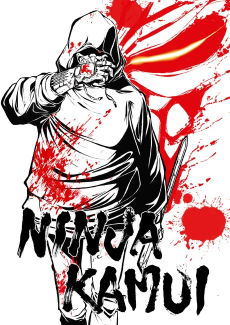












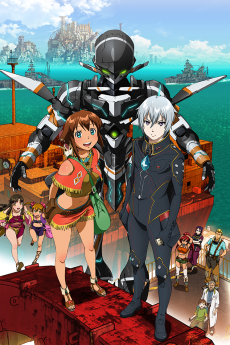





Match Dimensions Explained
❓Frequently Asked Questions
Why is TRIGUN STAMPEDE on the 'Anime Like Crysis' list when it's not about nanosuits?
Great question—it’s not about the suit *per se*, but how Vash’s adaptive, reality-bending combat mirrors Crysis’s core 'Adapt to Survive' loop: in Episode 12, he shifts tactics mid-battle—switching from evasion to precision sniping to environmental sabotage—just like toggling Nanosuit modes (Armor, Strength, Speed, Cloak) on the fly in Crysis’s frozen jungle or alien zero-G zones. The cyberpunk-dystopian world and high-stakes environmental unpredictability (sandstorms, collapsing cities) hit the same visceral, physics-driven tension fans love from the OG Crysis’s superior physics and open-world experimentation.
Is there a Crysis anime adaptation?
No official anime adaptation exists—but TRIGUN STAMPEDE and Redline capture its *spirit* so tightly that fans often mistake them for spiritual sequels. Redline’s insane zero-gravity race through orbital debris fields? That’s straight out of Crysis’s alien environments. And TRIGUN STAMPEDE’s nanotech-infused biomechanical weapons and shifting battlefield conditions (like the gravity-fluctuating ruins in Episode 19) mirror how Crysis forces real-time tactical pivots—no remaster or Xbox 360 port needed, just raw, unfiltered sci-fi ingenuity.
How does Final Fantasy VII: Advent Children compare to TRIGUN STAMPEDE for Crysis vibes?
FFVII:AC leans harder into cinematic spectacle and biotech body horror (think Sephiroth’s mako-charged transformations), while TRIGUN STAMPEDE nails Crysis’s grounded-yet-escalating escalation—like Vash overriding his own neural limits in Episode 24 to survive a collapsing reactor, echoing Crysis’s Nanosuit overload sequences where systems fail mid-combat. Both nail the 'high-tech vs. decaying world' aesthetic, but TRIGUN STAMPEDE’s emphasis on environmental interactivity (sand, ice, gravity shifts) matches Crysis’s physics-first design far more closely than AC’s more scripted set-pieces.
What’s the best anime like Crysis if I want that ‘suit-up-and-adapt’ adrenaline rush?
TRIGUN STAMPEDE—hands down. When Vash activates his 'Overdrive' mode in Episode 17 and starts rewriting battlefield physics with kinetic redirection and terrain manipulation, it’s pure Nanosuit energy: same split-second mode-switching, same jaw-dropping environmental consequence (shattering ice cliffs, triggering avalanches), and same 'OG Crysis' feel—no remaster, no compromise. It even mirrors player review #2’s love for ‘suit experimentation’ in open-world moments, like when Vash improvises stealth + speed combos across Neo-Babylon’s neon-drenched rooftops.