
Space Brothers
Mutta's life has hit rock bottom. He's been fired, blackballed from his profession and now he's had to move back in with his parents. Meanwhile, his kid brother Hibito has been literally riding a rocket and training to be an astronaut. The same career Mutta once dreamed of. So, is it ever too late to go after your dreams? Through a little coercing and a bit of covert activity, Mutta's family and friends can get his resume on the right desk, but from that point on it will be up to Mutta himself. Does he have what it takes to turn his life around and put his footprint on the moon? The first step on the highway to the stars is always the hardest, and in a job where crash and burn isn't just a euphemism, it will be the biggest risk Mutta's ever taken. But with the best support team ever, maybe he'll find what he needs to rekindle the spark inside him and light the biggest candle of them all!
(Source: Sentai Filmworks)
📺Anime Details
📝Editorial Analysis
The smell of instant ramen steam rising in the cramped, sun-faded kitchen. Mutta’s fingers hovering over a keyboard—not launching rockets, not calibrating thrusters, but typing his résumé for the third time, cursor blinking like a hesitant heartbeat. His reflection in the dark laptop screen: tired eyes, stubble, a half-unpacked box labeled “Astronomy Texts (2003)” leaning against the fridge. Outside, a plane traces a white scar across the sky—Hibito’s flight path, maybe, or just another ordinary commuter jet. That quiet, unglamorous moment is where Space Brothers lives: not in zero-G triumphs, but in the weight of a grown man sitting at his childhood desk, trying to believe he hasn’t missed his launch window forever.

What makes Space Brothers ache so deeply isn’t its space setting—it’s how it treats time as both antagonist and ally. It’s the patience required to relearn orbital mechanics at thirty-five. The dignity in showing up to a physical exam with trembling hands, knowing your body might say no before your mind does. This isn’t sci-fi as spectacle; it’s sci-fi as stewardship—of dreams, of relationships, of self-worth measured not in mission patches but in consistent, uncelebrated effort. You don’t feel awe here—you feel recognition: that slow, stubborn pulse of hope when you’re rebuilding something you thought was buried.
That same emotional gravity echoes in Space Empires IV Deluxe, where players don’t command fleets on a whim—they manage decades of research, ship design, colony logistics, and diplomatic attrition. Its description calls it a “grand strategy title in the space 4X genre,” and the player review notes it’s “easy to mod” and “runs on anything”—a testament to its endurance, its quiet insistence on being there, usable, adaptable, long after flashier titles fade. Like Mutta studying for entrance exams while washing dishes, this game rewards the steady hand, the incremental gain, the willingness to lose a battle to win a century-long campaign. It doesn’t shout. It accumulates.
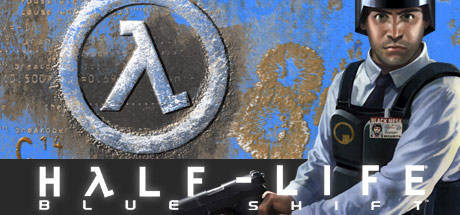
Then there’s Half-Life: Blue Shift, where you play as Barney Calhoun—a security guard, not a physicist or soldier-hero, just a guy in the wrong place when reality fractures. The description confirms it’s set “in the Black Mesa Research Facility,” and the player review admits it “doesn’t add anything new to the original game” but delivers “more story gameplay and levels.” That’s the resonance: ordinary competence under extraordinary pressure. Barney isn’t chosen—he’s present, doing his job until the floor drops out. Just as Mutta isn’t gifted with sudden genius—he’s given a chance, then must earn every inch of credibility through paperwork, interviews, sweat, and humility. Both are stories about showing up, not saving the world, but holding the line until someone notices you’ve been holding it all along.
Even DOOM + DOOM II, with its raw, unrelenting chaos, shares DNA—not in tone, but in physicality. The description names it “the definitive, newly enhanced versions” of id Software’s 1993–94 landmarks, and the player review recalls building a 486 computer with their father just to run it. That tactile memory—soldering irons, sound cards, the body remembering how to build the machine that lets you dream—mirrors Mutta’s journey back into aerospace: not abstract ambition, but hands-on re-engagement. Fitting a capacitor, calibrating a gyroscope, learning to walk in a weighted suit—these are DOOM’s shotgun reloads, its health pack grabs: small, urgent, bodily acts that ground cosmic stakes in muscle and memory.
This pairing speaks to the person who keeps a notebook full of star charts and grocery lists. Who watches rocket launches live but also replays a failed interview in their head for weeks. Who finds heroism in the grit, not the glory—in the way Mutta practices speaking clearly into a mirror before his JAXA interview, or how a player spends three hours tweaking engine specs in Space Empires IV Deluxe, knowing no one will applaud it. They love the quiet certainty that some dreams aren’t lost—they’re just waiting for you to sit down, breathe, and type the first sentence again. Not because it’ll be perfect—but because it’s yours, and it’s now.
🎮63 Games That Match the Vibe



























Match Dimensions Explained
❓Frequently Asked Questions
Why does Space Empires IV Deluxe feel so much like the slow-burn political tension in Space Brothers' Mars colonization arc?
Because both hinge on careful resource diplomacy and long-term colony management—like when Shiro and Mutta negotiate water rights with rival agencies, SEIVD makes you broker trade pacts and manage orbital infrastructure across decades. Its turn-based 4X pacing and JRPG-style narrative weight (think faction backstories and diplomatic 'dialogue trees') mirror the show’s grounded, consequence-driven sci-fi realism.
Is there an anime or live-action adaptation of Space Empires V?
Nope—Space Empires V is purely a game (the 3D real-time strategy sequel to SEIVD), and despite its rich lore and alien factions like the K’thar and Xr’lth, it’s never been adapted. It *does* share Space Brothers’ vibe of human-alien coexistence under pressure—but you’ll only find that in-game, not on screen.
How does Half-Life: Blue Shift compare to Quake III Arena if I love Space Brothers’ mix of grounded science and sudden chaos?
Blue Shift nails the grounded, claustrophobic ‘scientist-in-over-their-head’ tension—Barney Calhoun navigating Black Mesa’s failing systems feels like Mutta’s early engineering panic—while Quake III Arena is pure adrenaline-fueled arena chaos, like the show’s zero-G training drills gone hyper-competitive. Both fit Space Brothers’ sci-fi DNA, but Blue Shift leans into narrative stakes; Q3A leans into kinetic precision.
What’s the best game like Space Brothers if I want that quiet, late-night ‘stargazing while thinking about purpose’ mood?
Space Empires IV Deluxe—it’s the one where you pause mid-turn, zoom out from your fleet near Proxima Centauri b, and just *watch* your colony ships crawl across the starfield while researching terraforming tech. That reflective, almost meditative grandeur? Exactly what Mutta feels gazing at Earth from the ISS. No frantic combat, no cutscenes—just you, deep time, and the hum of distant stars.