Half-Life: Blue Shift
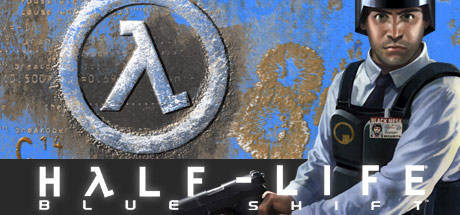
Made by Gearbox Software and originally released in 2001 as an add-on to Half-Life, Blue Shift is a return to the Black Mesa Research Facility in which you play as Barney Calhoun, the security guard sidekick who helped Gordon out of so many sticky situations.
🎮Game Details
💬What Players Say
"Honestly kind of overhated Half-Life game. It doesn't add anything new to the original game but if you're interested in more story gameplay and levels then this is certainly for you as it does just that, and honestly I'd say it's a tad bit more enjoyable than Opposing Force because the gameplay stays simple. Worth checking out if you're a HL fan, for sure."
"[h1]Pretty much just a gameplay extention to the main game ![/h1] Half-Life: Blue Shift takes place from the perspective of Gordon Freemans coworker, Barney Calhoun, during the events of Half-Life. The game itself doesn't provide any new gameplay elements from what I remember...."
"this game is HORRIBLE id rather kill myself then play this id rather be skinned alive id rather live in afghanistan the play this DO NOT GET THIS JUST GET OPPOSING FORCE DO NOT GET BLUE ♥♥♥♥"
📝Editorial Analysis
The fluorescent hum of a Black Mesa corridor—flickering, uneven—suddenly cuts out. Not with a bang, but with a sickening pop, plunging Barney Calhoun into near-total darkness. You fumble for your flashlight. The beam shakes. It catches the edge of a blood smear on the wall—not fresh, but old, already tacky, layered over yesterday’s grime. This isn’t Gordon Freeman’s Black Mesa: it’s Barney’s. A place you’ve walked past a hundred times in cutscenes, now suddenly real in its weariness—its coffee-stained break room bulletin board, its cracked tile floor in Sub-Level C, its quiet dread before the first alien scream splits the air. That’s the core feeling: not heroism, but continuity. Not arrival, but residence. As one player bluntly puts it, Blue Shift is “a gameplay extension”—not a reinvention, but an insistence: this world existed before Gordon, and it persists after him, in the margins, in the uniforms, in the tired eyes of a guy who just wanted to clock out.


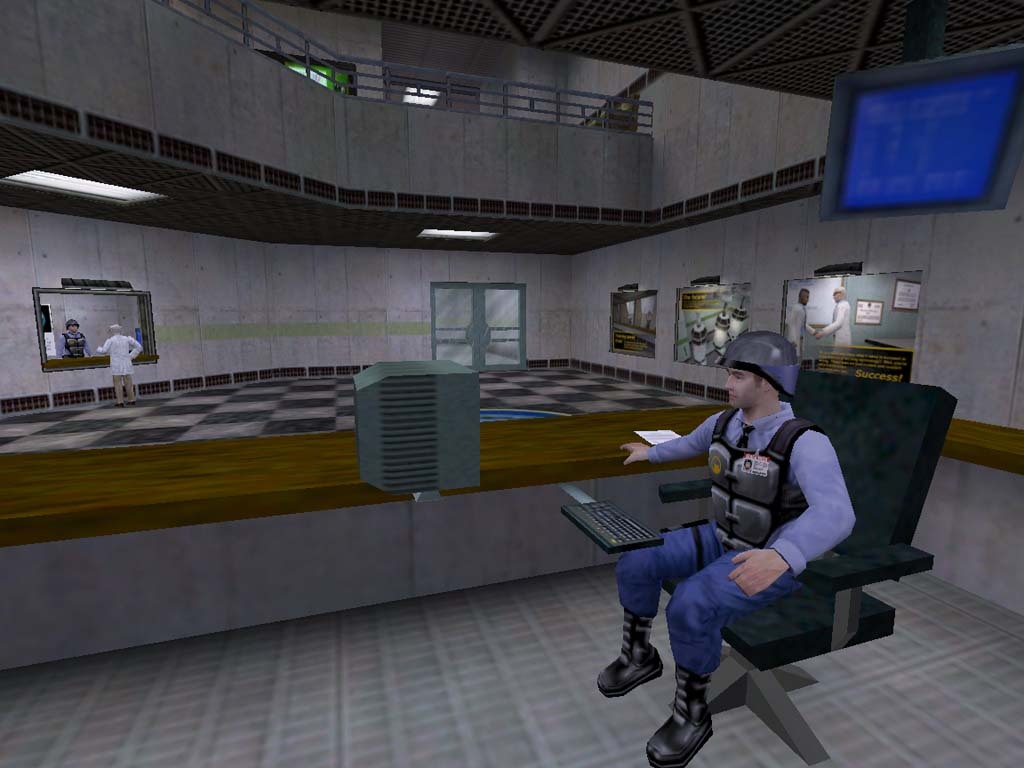
What makes Half-Life: Blue Shift ache like this isn’t its tech or its scope—it’s its refusal to elevate. It doesn’t give you new weapons, no gravity gun, no crowbar mythos. It gives you Barney’s walkie-talkie static, his slightly-too-loose security vest, the way he ducks instinctively under pipes he’s ducked under for seven years. It makes you feel small, not powerless—grounded. There’s no messianic weight here, no silent physicist chosen by fate. Just a man whose job was to check IDs and log maintenance requests, now improvising survival in a facility he knows too well—every shortcut, every faulty door sensor, every flicker of that damn fluorescent light. That’s the emotional DNA: quiet competence, unheroic endurance, and the profound loneliness of being the person who stays behind when the plot moves on. It’s not horror as spectacle—it’s horror as routine interrupted, as familiarity curdling. You don’t feel like a protagonist. You feel like evidence.
That same resonance pulses through Space Brothers, where Mutta Nanba—a thirty-something aerospace engineer sidelined by failure—re-enters the JAXA recruitment pipeline not with fanfare, but with calloused hands, overdue bills, and the quiet, grinding weight of second chances earned in silence. Like Barney, Mutta isn’t chasing destiny—he’s relearning how to belong in a system he thought had discarded him. Both live in the adult space between ambition and accommodation, where triumph isn’t victory, but showing up again. Then there’s Terra Formars, which shares Blue Shift’s claustrophobic, institutional dread—but twists it with body horror. The Mars mission isn’t glamorous; it’s a compromised, underfunded, politically tangled operation where the walls sweat condensation and the suits chafe just so. When the mutations begin, they’re not cinematic—they’re visceral, biological, inescapable, like the way Barney’s flashlight reveals something wrong in the ventilation shaft—not a monster, but teeth where teeth shouldn’t be, embedded in rusted metal. The shared dimension isn’t gore for shock, but violation of the known: the lab coat, the corridor, the human form—all turned untrustworthy. And Planetes, with its zero-G salvage crews patching micrometeorite holes in aging satellites, mirrors Blue Shift’s tactile realism—the grease under fingernails, the muffled clang of a wrench against hull plating, the exhaustion of maintaining systems no one celebrates. Its drama lives in the silence between transmissions, just as Blue Shift’s tension lives in the pause before the alarm sounds—both rooted in adult stakes, not adolescent angst.
This pairing sings for the viewer who watches anime not for wish-fulfillment, but for recognition: the 32-year-old engineer who pauses mid-scroll because Mutta’s commute looks exactly like theirs; the grad student who flinches at Terra Formars’ surgical dissection scene—not from disgust, but from memory of their own lab’s sterile, humming chill; the night-shift technician who plays Blue Shift not for thrills, but because Barney’s exhausted sigh when he leans against a vending machine at 3 a.m. feels like breathing. They don’t want myth. They want texture. They want the weight of a worn badge, the smell of ozone and old carpet, the quiet dignity of people doing necessary work in broken systems—and finding, against all odds, meaning not in the grand event, but in the act of staying.
→15 Anime That Match the Vibe
Connected through 2 aesthetic dimensions.
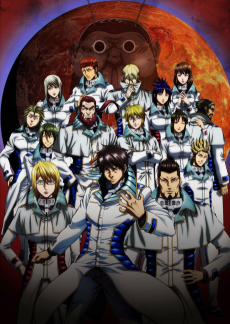
Barney Calhoun’s claustrophobic sprint through Black Mesa’s flickering, blood-smeared corridors—where every vent hisses with unseen threat—echoes the suffocating dread of *Terra Formars*’s Mars expedition vessel, where mutated cockroach-human hybrids erupt from sealed walls. Both weaponize **Body Horror & Occult** not as spectacle but systemic violation: Barney watches colleagues dissolve into alien biomass; the *Ares II* crew confronts grotesque, ritualized metamorphosis rooted in failed bio-engineering. That shared descent—from institutional order into visceral, biological chaos—makes their resonance unsettlingly precise, not just thematic but tactile.

Connected through 2 aesthetic dimensions.

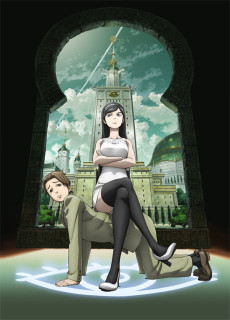
Barney Calhoun’s exhausted, low-stakes scramble through Black Mesa’s crumbling corridors—radio crackling with distant chaos—mirrors Mutta’s humbling return to his parents’ cramped apartment after professional ruin. Unlike most sci-fi that glorifies triumph, both anchor cosmic scale in quiet, adult vulnerability: Blue Shift’s grounded security-guard perspective and Space Brothers’ Season 2 focus on bureaucratic setbacks and familial friction deepen the 🖤 Adult & Dark Seinen resonance. It’s startling how deeply both find dignity in failure—not as a prelude to victory, but as lived reality.

Connected through 2 aesthetic dimensions.

Barney Calhoun’s exhausted, low-angle crawl through Black Mesa’s flickering, blood-smeared corridors—where every vent hisses and every shadow hides something *not quite human*—mirrors Hachirota’s silent, weightless sweep of orbital debris in *Planetes*’s vacuum: both are grounded, weary professionals navigating catastrophic infrastructure failure. Unlike most sci-fi that glorifies discovery, these works share a dark seinen intimacy—gritty, procedural, morally ambiguous—centered on maintenance labor as quiet heroism. That resonance feels surprising: one is a claustrophobic FPS footnote, the other a contemplative anime about cosmic janitors—and yet both find profound humanity in the grimy, unglamorous work of holding civilization together.
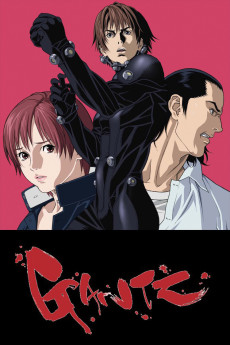
Barney Calhoun’s claustrophobic sprint through Black Mesa’s flickering, blood-smeared corridors—where every overturned cart and severed limb pulses with visceral body horror—echoes Kurono’s raw, trembling recoil as he stares at his own disintegrating hand after a Gantz mission. Unlike most sci-fi thrillers, neither work romanticizes survival; instead, they anchor cosmic dread in the grimy, tactile reality of adult exhaustion and compromised morality. This resonance in 🖤 Adult & Dark Seinen makes their shared descent into institutional absurdity and bodily violation feel startlingly coherent—not parallel, but mutually sharpened.

Barney Calhoun’s claustrophobic sprint through Black Mesa’s flickering, blood-smeared corridors—where every vent groans with unseen threat—mirrors Shinichi’s visceral panic as his right hand moves *against* his will in *Parasyte -the maxim-*. Both weaponize **Body Horror & Occult** not as spectacle but as intimate violation: one man fighting to retain agency over his own limbs, another over his entire nervous system. Unlike most sci-fi thrillers, neither offers clean separation between host and invader—just escalating dread in the flesh you can’t escape.

Barney Calhoun’s claustrophobic sprint through Black Mesa’s irradiated, flesh-warping test chambers echoes Ryoma Nagare’s visceral recoil as Getter Robo’s cockpit floods with Saotome’s reanimated, biomechanical presence—both works weaponize **👻 Body Horror & Occult** not for shock alone, but to fracture identity under scientific hubris. Unlike most mecha or FPS narratives, *Armageddon*’s resurrection plot and *Blue Shift*’s mutated security footage share a grim intimacy: the lab isn’t just breached—it’s *alive*, and hungry. That shared dread of sentient infrastructure makes their resonance unsettlingly precise.
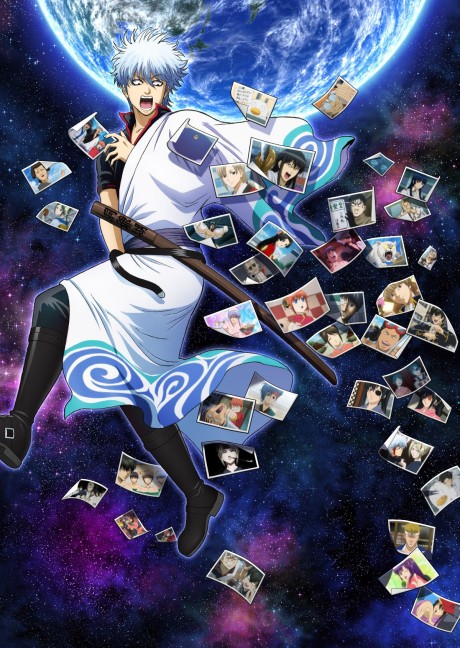
Barney Calhoun’s claustrophobic sprint through Black Mesa’s dripping, bio-luminescent vents—where alien ichor coats cracked tiles and mutated limbs twitch in peripheral shadows—echoes Porori’s rain-slicked, distorted Tokyo alleys where onomatopoeic *ploink* sounds warp reality itself. Unlike most sci-fi pairings, this resonance lives in shared body horror: Barney’s forced assimilation into the Lambda Core’s unstable physics mirrors Gintama.’s Slip Arc subversion of identity via porous, waterlogged boundaries between human, alien, and linguistic sign. The Slip Arc’s unused manga roots make its surrealism feel *unmoored*—just as Blue Shift’s grounded security-guard perspective makes Black Mesa’s collapse terrifyingly intimate.


Match Dimensions Explained
❓Frequently Asked Questions
Why is Space Brothers recommended for Half-Life: Blue Shift fans?
Because like Barney Calhoun’s grounded, everyman perspective at Black Mesa, Mutta Nanba in Space Brothers starts as an overlooked, mid-30s security/operations staffer (JAXA ground crew) who gets thrust into high-stakes crisis response—not as a hero, but as a competent, relatable guy just trying to do his job amid escalating sci-fi chaos. The quiet tension of routine turning surreal (e.g., Mutta’s tense solo EVA prep scene mirroring Barney’s lone patrol before the resonance cascade) nails Blue Shift’s vibe better than flashy shonen.
Is there an anime adaptation of Half-Life: Blue Shift?
No—there’s never been an official anime adaptation of Blue Shift, and none are in development. Valve and Gearbox have kept all Half-Life media rights tightly controlled; even the acclaimed webcomic 'Half-Life: Full Life Consequences' is fan-made. That said, Terra Formars’ claustrophobic Black Mesa–like lab disasters (e.g., the Mars base quarantine breach in Episode 4) and Gantz: Second Stage’s sudden, brutal shift from mundane security duty to alien war (like Kei Kurono’s first mission after his dead-end job) channel Blue Shift’s core premise without licensing it.
How does Planetes compare to Terra Formars for Blue Shift vibes?
Planetes leans into Barney’s blue-collar realism—think Hachirota ‘Hachimaki’ Kusaka meticulously repairing satellite debris while wrestling existential dread, much like Barney patrolling Sector C before everything collapses. Terra Formars, by contrast, goes full Black Mesa meltdown: grotesque body horror (the cockroach-human hybrids), frantic lab evacuations, and that same oppressive, close-quarters panic when the terraforming facility fails—closer to Blue Shift’s most intense moments than Planetes’ quieter, more humanist tone.
What’s the best anime like Blue Shift if I want that ‘security guard suddenly in over his head’ feeling?
Parasyte -the maxim- is your best bet—especially early episodes where Shinichi Izumi, a sleepy high schooler working part-time at a convenience store (basically Barney’s ‘non-hero’ energy), stumbles into cosmic horror during his shift and has to improvise survival with zero training. The way Shinichi fumbles with basic combat, hides injuries, and tries to maintain normalcy while the world unravels mirrors Barney’s entire arc—right down to that awkward, unglamorous hallway takedown of a Headcrab Zombie in the locker room.