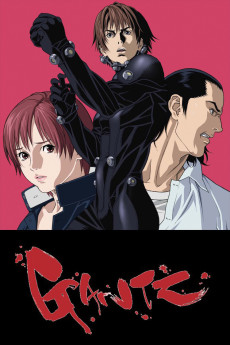
Gantz: Second Stage
Kurono Kei and his ex-elementary school classmate, Kato Masaru have survived the first two ordeals that the unknown black sphere Gantz has sent them through. Exploding body parts, struggling to stay alive till the last seconds and seeing your fellow comrades fall in a pile of blood and gore are norm to them now. They are aware now that Gantz can call them up along with any new deeds, at any time for another confrontation with aliens.
Will Kato's experiences in the Gantz world give him the same courage in the real world? With fellow veteran Gantzer Kei Kishimoto currently staying at Kurono's home as his "adopted pet", can Kurono stave off his growing lust for her mammaries?
What the heck is Gantz?
(Source: anime-source.com)
📺Anime Details
📝Editorial Analysis
The smell of burnt hair and copper hangs in the air—not metaphorically, but physically, as if your own nostrils catch it when Kurono Kei stumbles over a still-twitching alien limb, its segmented carapace split open to reveal pulsating, iridescent viscera that breathe even after decapitation. That’s not the climax. It’s Tuesday. Just another call from the black sphere—no warning, no fanfare—just the cold floor of an apartment hallway, the hum of Tokyo traffic outside, and the sudden, nauseating lurch of your stomach as your body reassembles itself wrong, skin stitching mid-air, ribs clicking back into place with wet, organic finality.

This isn’t dread you anticipate. It’s dread you inhabit. Gantz: Second Stage doesn’t build tension—it leaves trauma in the room like furniture. You feel the weight of Kato Masaru’s silence after his first kill—the way his fingers won’t stop trembling while he buttons his shirt, the way he stares at his reflection like he’s checking for something else behind his eyes. There’s no catharsis in survival, only recalibration: every victory is measured in how much of yourself you’ve lost, how many seconds you bought by sacrificing someone else’s name, their face, their weight in your memory. The urban landscape isn’t backdrop—it’s complicit. Neon signs flicker over blood-slicked alleyways where a man just dissolved into pink mist. The afterlife isn’t ethereal—it’s fluorescent-lit, tiled, and smells faintly of antiseptic and ozone. You don’t question if death is real here. You question whether you are.
That emotional DNA—claustrophobic inevitability, bodily betrayal, survival without salvation—pulses in three games with eerie fidelity. Vampire: The Masquerade - Bloodlines, described as blending “brutal combat” with “Dark Fantasy, Body Horror & Occult,” mirrors Gantz: Second Stage’s psychological erosion. Its player review urges you to “BUY IT ON GOG”—not for convenience, but because the game demands immersion, just like Gantz forces Kurono and Kato to live inside their own unraveling. Both weaponize vulnerability: you’re not a hero—you’re a vessel slowly cracking under the pressure of what you’ve become, your humanity leaking out with every bite, every bullet, every compromised choice. The “Adult & Dark Seinen” dimension isn’t tone—it’s texture: the way dialogue curdles, the way power corrupts not with grand speeches but with quiet, humiliating concessions.
Then there’s S.T.A.L.K.E.R.: Shadow of Chernobyl, where survival means fearing “radiation, anomalies and deadly creatures”—but also, crucially, other S.T.A.L.K.E.R.s. Like Gantz’s missions, the Zone offers no moral high ground, only shifting borders of trust and exhaustion. Its player review marvels at how “the map is big and beautiful… I’m intrigued in the whole thing”—a feeling identical to Kato’s dawning horror as he realizes the Gantz world isn’t episodic, but expanding: new rules, new aliens, new ways for your body to fail you. The “Body Horror & Occult” dimension isn’t spectacle—it’s systemic. When your suit glitches and your arm briefly phases through concrete, or when a mutant’s jaw unhinges sideways—not for attack, but because it can—you feel the same visceral wrongness as watching a teammate’s spine extrude like wet rope during a failed teleport.
And Dead Space (2008) lands with surgical precision: “You are Isaac Clarke, an engineer… You’re not a warrior. You’re not a soldier. You are, however, the last line of defense.” That sentence is Kato Masaru’s arc in microcosm. The player review calls it “a true sci-fi horror classic… with great visuals that still hold up today”—but what holds up isn’t just the lighting or sound design. It’s the relentless physicality: limbs severed, not stylized; necrotic flesh that resists cutting, then gives with sickening suction; gravity boots clanging on metal floors as you drag your own bleeding body toward a door that may or may not seal you in forever. Like Gantz, Dead Space refuses to let you forget you’re meat—and that meat is always failing.
These aren’t for people who want to win. They’re for those who recognize the quiet horror in choosing which friend to save when both are bleeding out—and then having to carry the one who didn’t make it, their dead weight sagging against your shoulder as the black sphere hums louder, impatient, alive. If you’ve ever watched Kato stare blankly at his hands after a mission—not in triumph, but in recognition—and felt your throat tighten, then you’ll know exactly why these games don’t just match Gantz: Second Stage. They breathe with it.
🎮52 Games That Match the Vibe




Match Dimensions Explained
❓Frequently Asked Questions
Why does S.T.A.L.K.E.R.: Shadow of Chernobyl feel so much like Gantz: Second Stage’s ‘Tokyo Dome’ arc?
Because both drop you into a lawless, irradiated hellscape where mutated anomalies and paranoid human factions mirror Gantz’s brutal survival-of-the-fittest stakes—especially during the Tokyo Dome’s chaotic, no-rules slaughter. The Zone’s oppressive fog, unpredictable environmental hazards (like flesh-melting 'Vortex' anomalies), and morally gray Stalkers hunting each other hit the same visceral, body-horror-meets-occult dread as Kei Kurono’s descent into nihilistic combat.
Is there a Gantz: Second Stage video game adaptation?
No—there’s never been an official Gantz: Second Stage game. But fans who crave that specific blend of grotesque transformation, tactical squad-based horror, and existential despair often land on Dead Space (2008), where Isaac Clarke’s zero-G limb-severing combat and Necromorph mutations echo Gantz’s biomechanical terror and psychological unraveling—just without the black spheres or alien suits.
How does Vampire: The Masquerade – Bloodlines compare to Assassin’s Creed (Director’s Cut) for Gantz-like moral ambiguity and adult tone?
Bloodlines wins hands-down for Gantz-style moral rot: you play as a newly Embraced vampire forced to betray, feed on, or manipulate humans in L.A.’s gothic underworld—think Kurono’s compromises after his first kill. Assassin’s Creed leans more into clean-cut stealth and historical spectacle; its ‘Adult & Dark Seinen’ tag comes from brooding monologues, not Bloodlines’ raw, consequence-heavy choices like siding with the sadistic Ventrue clan or watching your humanity drain in real time.
What’s the best game like Gantz: Second Stage if I want that overwhelming, claustrophobic dread of being hunted by something inhuman?
Dead Space (2008) is your answer—especially the Ishimura’s flickering corridors and sudden Necromorph ambushes through vents. That moment when a Pack latches onto your back while you’re low on ammo? Pure Gantz ‘no escape’ energy. It nails the same suffocating isolation, body-horror escalation, and desperate resource management as Kurono’s early missions—no hand-holding, just you, your plasma cutter, and screaming, reassembled corpses.