Quake III Arena
The greatest warriors of all time and space have been summoned to battle for the amusement of an ancient alien race. Wield a variety of guns and power-ups as you fight for glory against ruthless combatants in this fast-paced single-player and multiplayer FPS.
🎮Game Details
💬What Players Say
"Exelent game, just smush in ioquake3 and your good to go."
"One of the best shooters I've ever played. The movement, gunplay, map design, and OST are all basically perfect. It's multiplayer driven, but it's from 1999 so expect a steep learning curve because most people will be better than you are starting out...."
"this game so bomb if you have ppl to play it with"
📝Editorial Analysis
The air crackles—not with electricity, but with anticipation. You’re airborne, rocket-jumping off a curved ramp in q3dm17, boots barely brushing the ceiling before you pivot mid-air, tracking an opponent who just vanished behind the pillar. Your fingers don’t think—they remember: strafe-left, flick-right, fire—plasma bolts scream, then silence as your enemy dissolves into giblets. No health bar pulses. No voice chat pleads. Just the hollow thump of your boots hitting floor, the low hum of the arena’s ancient alien architecture, and the faint, looping synth pulse of the Quake III Arena OST—cold, precise, unblinking. This isn’t war. It’s ritual. A summoning. As the official description says: “The greatest warriors of all time and space have been summoned to battle for the amusement of an ancient alien race.” Not for conquest. Not for survival. For glory—pure, distilled, and merciless.
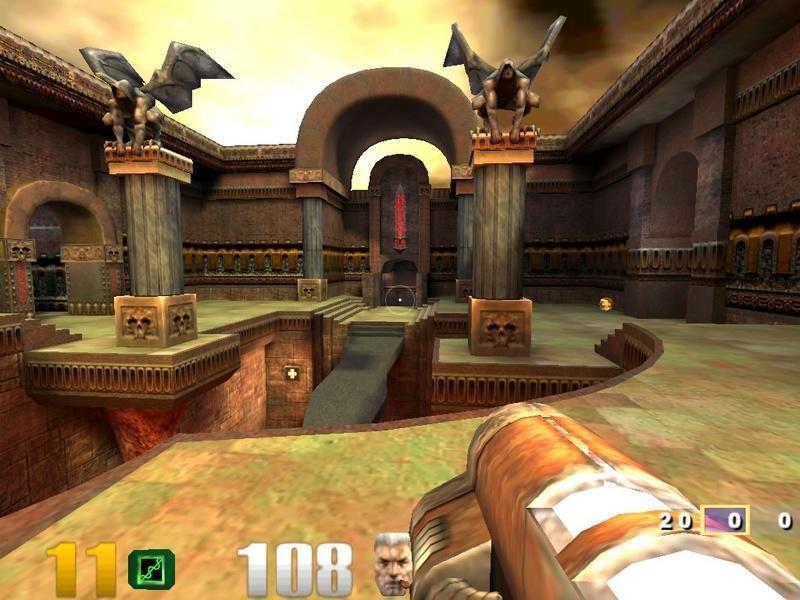


What makes this game’s atmosphere unique isn’t speed alone—it’s gravitas in motion. Every jump, every reload, every death feels ritualized, not random. The movement isn’t just fast; it’s architectural, demanding you read corridors, angles, and gravity like sacred geometry. Player review 2 nails it: “The movement, gunplay, map design, and OST are all basically perfect.” That perfection isn’t comfort—it’s austerity. There’s no story cutscene, no lore dump, no character bio. Just arenas carved from obsidian and light, weapons named like mythic artifacts (railgun, gauntlet, plasma gun), and power-ups that flare like divine interventions—quad damage, regeneration, invisibility. You don’t learn the game by watching—you learn it by repetition, by failing the same corner three times, then owning it on the fourth. It makes you feel small, yet exalted: a gladiator in a machine-built colosseum, where every match is both fleeting and eternal. You don’t play to win forever—you play to witness yourself become sharper, second by second.
That same electric tension lives in Hajime no Ippo: The Fighting!, where every jab, slip, and clinch unfolds with the same surgical timing and spatial awareness as a q3dm0 duel. Ippo doesn’t shout—he measures distance, adjusts stance mid-exhale, and lands a hook because he read the micro-shift in his opponent’s shoulder. Like Quake’s movement, his footwork is architecture: angles, rhythm, and timing over brute force. Both demand respect for the frame, for the invisible grid beneath action—whether it’s the 76fps tick rate or the split-second window before a counterpunch connects. And the dimension “Competitive Spirit” isn’t about ego—it’s about devotion to the form, the quiet fire that burns when you reset after dying, or when Ippo spars alone at dawn, glove leather worn thin.
Megalobox shares that same stark, resonant minimalism. The ring isn’t decorated—it’s defined: ropes, canvas, floodlights, sweat on steel. No backstory needed. Just Joe stepping into the circle, gloves tight, breath steady—like a player selecting q3dm13 and hearing the arena door seal with a hydraulic hiss. The OST mirrors Quake’s: synth-heavy, rhythmic, stripped bare—no strings, no choir, just bassline and pulse. Both reject ornamentation to spotlight motion as meaning. When Joe dodges a haymaker by millimeters, it’s not spectacle—it’s calculation, just like sliding around a corner to avoid a railgun shot. The “Action Spectacle” here isn’t flash—it’s precision made visible, each movement carrying weight because nothing is wasted.
And BAKI, with its brutal, hyper-stylized close-quarters combat, mirrors Quake’s physicality-as-language. Baki doesn’t dodge—he absorbs, redirects, uses the floor, the wall, the opponent’s momentum like Quake players use rocket jumps, grenade hops, and slide-canceling. The fights aren’t about stamina bars or health pools—they’re about control of space, about forcing the other into a corner you’ve already mapped in your head. That’s why player review 3 hits so hard: “this game so bomb if you have ppl to play it with…” — because like Baki’s sparring sessions, Quake’s truth only ignites in real-time resistance, in the unpredictable, breathing presence of another mind pushing back.
This pairing speaks to the person who watches a 45-second clip of Ippo’s first southpaw stance adjustment and rewinds it seven times, who spends Saturday mornings practicing rocket jumps in ioquake3, who hears the Quake III Arena OST and feels their pulse sync—not to hype, but to clarity. They love the silence between actions more than the actions themselves. They don’t crave lore dumps or emotional exposition—they crave mastery as meditation, competition as communion, and the rare, electric certainty that comes when body, mind, and machine align—just once, in a perfect arc, mid-air, mid-swing, mid-breath.
→203 Anime That Match the Vibe

Ippo’s first amateur bout—hands shaking, breath ragged, yet launching that desperate left hook—mirrors Quake III’s arena spawn: raw nerves instantly weaponized into pure Competitive Spirit. Where alien spectators watch warriors duel for cosmic amusement, Ippo fights not for glory but self-creation—yet both arenas demand total bodily commitment amid explosive Action Spectacle. It’s startling how much adrenaline thrums in silence before a punch lands or a rocket jumps off the railgun.
Connected through 2 aesthetic dimensions.

Connected through 2 aesthetic dimensions.

Junk Dog’s neon-drenched underground ring pulses with the same raw, no-respawn urgency as Quake III Arena’s frag-filled arenas—where every dodge, reload, and power-up grab hinges on split-second spatial awareness. 💥 Action Spectacle isn’t just visual flair here; it’s structural: both compress tension into hyper-kinetic loops of aggression, evasion, and explosive payoff. Unlike most sports or arena shooters, neither offers narrative breathing room—glory is earned in the heat of relentless, rule-bent combat, making their synergy startlingly physical and deeply satisfying.

Pure kinetic energy — the action choreography in both is some of the best in their medium.

Connected through 2 aesthetic dimensions.
Connected through 2 aesthetic dimensions.

Fujiwara-no-Sai’s spectral possession—his fingers twitching with inherited muscle memory as Hikaru’s body becomes a vessel for centuries of Go strategy—mirrors Quake III Arena’s arena where warriors are stripped of identity and reassembled as pure competitive vectors. 🏆 Competitive Spirit ignites not through rivalry alone, but through the eerie fusion of self and legacy: Sai *is* Hikaru’s hands; the Quake combatants *are* their weapon pickups, their health bars, their frag counts. Unlike most sports anime or arena shooters, both treat embodiment as temporary scaffolding for transcendent contest—surprisingly, chillingly elegant.

Connected through 2 aesthetic dimensions.

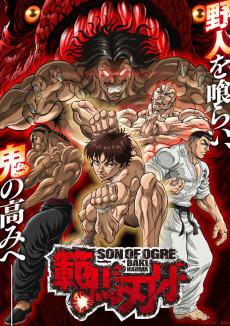
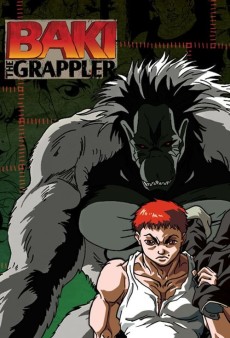
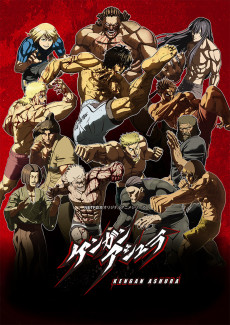
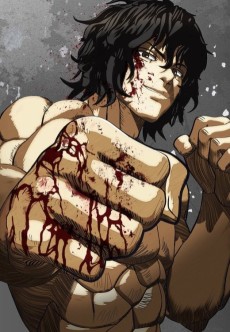
Baki’s underground arena brawls—where fighters bleed under fluorescent lights, muscles straining against gravity and pain—pulse with the same raw, physics-defying intensity as Quake III Arena’s rocket-jumping combatants slamming into walls mid-air. 🏆 Competitive Spirit isn’t just backdrop; it’s ritualized spectacle, where victory demands split-second precision, spatial mastery, and utter disregard for bodily limits. Unlike most sports anime, this ONA leans into grotesque, almost alien physicality—mirroring how Quake III frames combat as a brutal, sacred contest for an unseen, godlike audience.






































![Fate/stay night [Heaven’s Feel] III. spring song](https://s4.anilist.co/file/anilistcdn/media/anime/cover/large/bx21719-MSdTlkno0Z0u.jpg)






























































![Fate/stay night [Heaven's Feel] I. presage flower](https://s4.anilist.co/file/anilistcdn/media/anime/cover/medium/bx20791-yPCX5GJuMH2k.png)










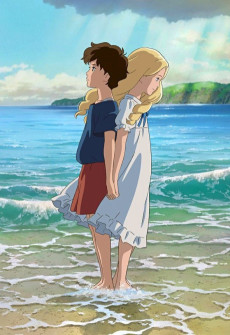


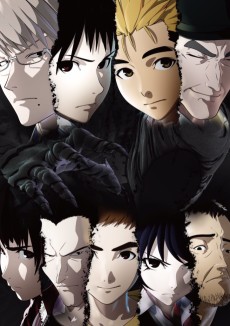

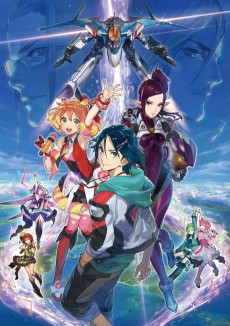
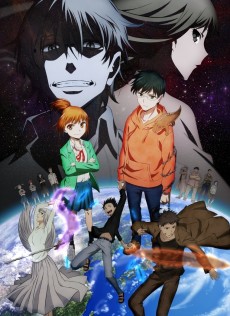




















Match Dimensions Explained
❓Frequently Asked Questions
Why does Hajime no Ippo match Quake III Arena so well despite being a boxing anime?
Because both revolve around hyper-precise, high-stakes one-on-one combat where timing, spacing, and reading your opponent are everything—like when Ippo lands his Dempsey Roll against Sendo, it’s the anime equivalent of strafing while predicting enemy movement to land that perfect railgun shot. The tournament structure and escalating intensity mirror Q3A’s arena matches, especially in the All-Japan Rookie Tournament arcs.
Is there an anime adaptation of Quake III Arena?
No—there’s never been an official anime adaptation of Quake III Arena. But if you love its vibe, Megalobox nails the same adrenaline-fueled, rules-light, skill-heavy competitive energy: think Junk Dog’s lightning-fast combos and arena-battle pacing echoing Q3A’s 20fps movement and instant-death railgun duels.
How do BAKI and Hinomaru Sumo compare for someone who loves Quake III Arena’s fast, brutal multiplayer feel?
BAKI leans harder into raw, over-the-top physical spectacle—like Hanma’s gravity-defying throws mirroring Q3A’s rocket-jump chaos—while Hinomaru Sumo delivers tighter, more technical tension (e.g., Ushio’s split-second belt-grab counters) that feels closer to mastering Q3A’s map geometry and weapon timings. Both nail the ‘no respawns, one mistake ends it’ stakes.
What’s the best anime like Quake III Arena if I want that intense, no-nonsense competitive rush?
Tsurune is surprisingly perfect for that—don’t let the bow-and-arrow setup fool you. The tension in the national finals, where every draw, release, and breath is timed like a Q3A frag, mirrors the game’s razor-thin margin for error. It’s all about precision under pressure, just like lining up a perfect sniper shot while dodging rockets in 'The Longest Yard' map.