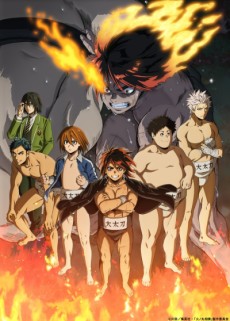
Hinomaru Sumo
It is a divine ritual, a martial art, a combat sport—it's sumo!!
A "small" new student, Ushio Hinomaru, appears before the weak little sumo club of Oodachi High School! The words "big" and "heavy" are the rules to this sport, which does not fit this newbie any inch, but this guy goes and does what...!? Ushio and the small sumo club climbs its way to the top!
The goal is Hinoshita Kaisan (A title for the highest rank in professional sumo, equivalent of Yokozuna)!
A fired up high school sumo tale—no retakes allowed!!
(Source: MangaHelpers)
📺Anime Details
📝Editorial Analysis
The thud—not of flesh on flesh, but of a single bare foot slamming into packed earth, knees bent low, spine coiled like a spring about to snap. Ushio Hinomaru, barely five-foot-two and built like a reed, plants himself in the dohyō’s straw-bound ring—not with weight, but with will. His jaw is clenched so tight it trembles; his breath comes in short, hot bursts you can almost hear over the muffled roar of Oodachi High’s gymnasium. He doesn’t wait for the tachiai. He charges. Not forward—not at his opponent—but up, driving his shoulder under the other boy’s center like he’s trying to lift the roof off the building. It’s absurd. It’s humiliating. It’s holy.
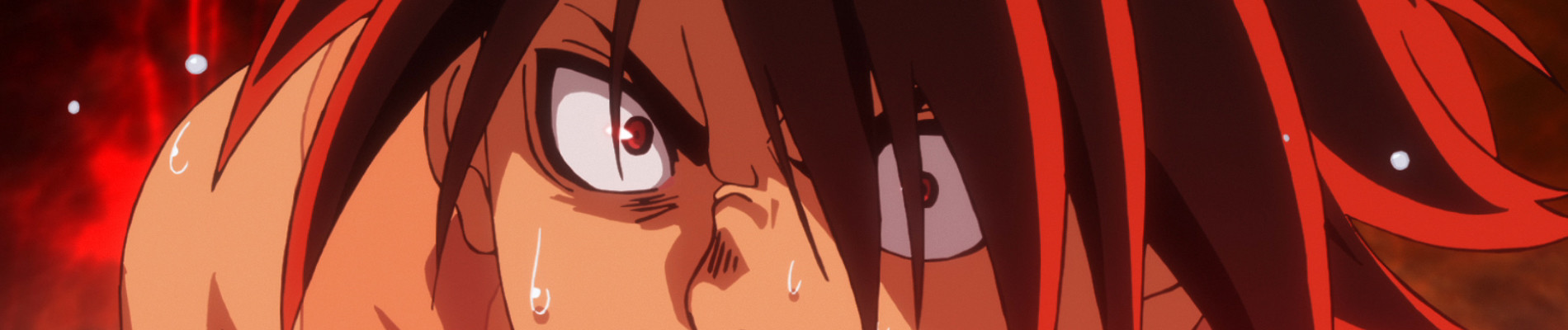
That’s the feeling Hinomaru Sumo lives inside: the sacred friction between impossibility and devotion. It’s not about realism—it’s about ritualized defiance. Every match is a prayer shouted through gritted teeth. The sumo club isn’t training for tournaments alone; they’re rebuilding dignity from splinters—of reputation, of self-worth, of a school that wrote them off as delinquents who couldn’t even fill out a uniform. The air hums with sweat, chalk dust, and something older: the quiet, unspoken weight of tradition pressing down—and the louder, rawer sound of boys learning how to push back. You don’t watch it to see physics obeyed. You watch to feel the heat of effort that refuses to be measured in kilograms or rank alone.
Which is why its emotional DNA pulses strongest in games where spectacle isn’t decoration—it’s testimony. Where competition isn’t scored—it’s sanctified.
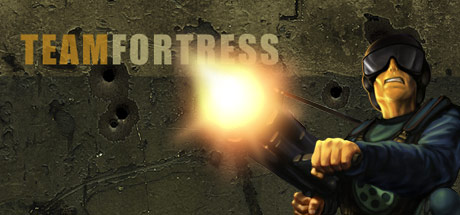
Take Team Fortress Classic: “One of the most popular online action games of all time… enlisted in a unique style of online team.” That word—enlisted—lands like a kata strike. It’s not just play; it’s assignment, duty, role-as-identity. Like Ushio choosing yotsu-sumo (grappling) despite every instinct screaming to flee, each TFClass—Medic stitching wounds mid-chaos, Spy vanishing then reappearing with a knife—commits to a sacred function. And the player review nails it: “I have dreams about this game.” Not because of graphics or lore—but because the feeling of locking into a class, hearing that voice line crackle over laggy dial-up, moving as part of something larger than yourself—that’s the same visceral belonging Ushio finds when he finally locks hands with a rival and holds. Not wins. Holds.
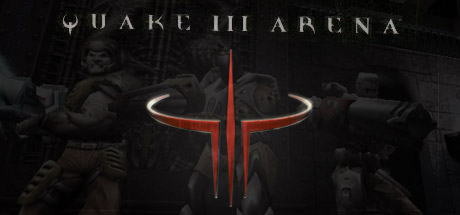
Then there’s Quake III Arena: “The greatest warriors of all time and space have been summoned to battle for the amusement of an ancient alien race.” That framing—gladiatorial, mythic, ritualized—mirrors sumo’s own divine origins. No story, no cutscenes—just arena, rules, and the pure, stripped-down act of combat as ceremony. The player review says it plainly: “There are still internet mp game servers out there as of typing this…” Decades later, people still gather—not for plot, but for the pulse of the fight, the shared breath before the spawn, the way movement itself becomes language. Just like Hinomaru’s first win isn’t about points—it’s about the stunned silence in the gym, the way his teammates’ fists clench not in anger, but in recognition: this is real now.
And Unreal Tournament 2004, with its “ten game modes—both team-based and &q”—that trailing ampersand feels like a gasp mid-sentence, like the breath Ushio takes before his final push in the prefectural qualifiers. Its Editor’s Choice Edition review sighs, “Was fun 20+ years later, but would have blown my mind at that time.” That’s the core resonance: timeless intensity. Not nostalgia for pixels, but reverence for the moment—the split-second dodge, the perfectly timed grenade bounce, the way Ushio’s foot slips once, twice, then sticks, and he doesn’t fall. It’s not about legacy. It’s about the body remembering how to stand.
This pairing sings loudest for the person who keeps a worn-out pair of wrestling shoes under their bed—not because they compete, but because they remember the smell of the mat, the burn in the quads after holding a stance too long, the way a single, clean victory feels less like triumph and more like arrival. For the player who still hears the UT announcer’s “FRAGGED!” like a temple bell. For the one who watches Ushio bow low before stepping into the ring—not to submit, but to witness what his body, his will, and his brothers-in-grime can become. Not big. Not heavy. But unbroken. And that—that—is worth every thud, every frag, every charge into the impossible.
🎮14 Games That Match the Vibe





Match Dimensions Explained
❓Frequently Asked Questions
Why does Hinomaru Sumo feel so much like a chaotic Team Fortress Classic match?
Because both lean hard into over-the-top character personalities clashing in fast-paced, physics-driven spectacle — like Hinomaru’s explosive 'Hinomaru Drop' mirroring the Demolition Man’s sticky bomb chaos or the Medic’s frantic healing keeping teammates in the ring just long enough for one last takedown. TFC’s nine distinct classes (Spy, Heavy, Scout) each have wildly different movement and timing, just like how Hinomaru’s rivals — Kuroda with his brute-force slams or Akiyama with his slippery evasions — force you to constantly adapt mid-bout.
Is there an anime adaptation of Hinomaru Sumo that captures the same competitive spirit as Quake III Arena?
No — but the *vibe* is spot-on: Quake III Arena drops warriors into alien coliseums where speed, precision, and power-up timing decide everything — exactly like Hinomaru’s do-or-die tournament arcs where matches hinge on split-second dodges and perfectly timed throws. The player review calling it 'the greatest warriors summoned for amusement' nails that gladiatorial energy you get watching Hinomaru face off against Kuroda in the National Tournament finals.
How does Unreal Tournament 2004 compare to Hinomaru Sumo in terms of pure adrenaline and team-based tension?
UT2004 delivers that same white-knuckle, high-stakes rhythm — ten game modes including Capture the Flag and Assault mirror sumo’s ritualized yet explosive structure, where every bout has clear stakes, strict rules, and sudden reversals (like when Hinomaru loses his footing mid-charge, only to recover with a lightning-fast belt grip). Its Editor’s Choice Edition even echoes Hinomaru’s underdog arc: praised for holding up 20+ years later, just like how Hinomaru’s scrappy determination feels timeless despite the sport’s ancient roots.
What’s the best game like Hinomaru Sumo if I want that ‘last-minute comeback’ rush and nostalgic intensity?
Unreal Tournament: Game of the Year Edition — it’s the 1999 king of frag-or-be-fragged showdowns, built around clutch moments like grabbing the flag at 0:03 or sniping an opponent mid-air, which hits the same emotional beat as Hinomaru’s final-moment belt grabs against giants like Kuroda. Player reviews call it 'excellent classic gaming to remind you of the good’ole days', matching Hinomaru’s blend of tradition, sweat, and heart-pounding payoff.