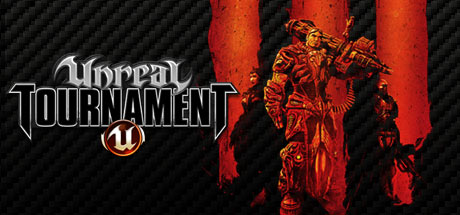
Unreal Tournament 3
Now includes the free Titan Pack expansion! The Titan Pack gives players a substantial amount of enhanced features and new content, including many original environments, new gametypes, the namesake Titan mutator, powerful deployables and weapons, new characters, and the Stealthbender.
🎮Game Details
💬What Players Say
"Kind of a mess and not up to the pedigree of its predecessors. What bothers me the most are its visuals -- it feels like every scene and model has ten thousand bits of unnecessary extra detail added."
"VERY COOL GAME! EU VCTF PRO SERVER STILL LIVES."
"♥♥♥♥ you epic games! bring it back!"
📝Editorial Analysis
The flicker of a Titan’s plasma cannon igniting in the neon-drenched ruins of Trenches, just as your teammate’s voice crackles over VOIP—“COVER ME!”—and you sprint, slide, and vault over a crumbling wall only to see three enemies materialize mid-air, cloaked by Stealthbenders, their outlines shimmering like heat haze before they pop into visibility with a hiss of displaced air. That split-second chaos—where every surface glints with unnecessary extra detail, every model overloaded with polygons that catch light like shattered glass, yet the action moves at blinding speed—is Unreal Tournament 3. It’s not clean. It’s not polished. It’s alive, vibrating with the raw voltage of players who still host EU VCTF PRO SERVERS long after official support ended—servers where the map loads, the flag spawns, and the first jump-punch echoes like a starting bell.
This isn’t a game about immersion or narrative cohesion. It’s about intensity as texture. The visuals don’t serve realism—they serve pressure: ten thousand bits of detail aren’t decoration; they’re visual static, the kind that makes your peripheral vision twitch when you’re dodging fire across a collapsing bridge in Titan Assault. You don’t think about story—you feel the weight of a teammate’s trust when you drop a deployable turret in a chokepoint, or the gut-lurch of being flanked by someone who mastered the Stealthbender’s microsecond delay before decloaking. It’s competitive spirit stripped bare—not as sportsmanship, but as pure, unmediated commitment to the moment. There’s no pause menu for reflection. No cutscene to catch your breath. Just the hum of servers, the ping of hitscan, and the quiet, fierce pride in a perfectly timed dodge. It’s exhausting, yes—but also exhilarating, because it assumes you’re here to fight, not to watch.
That same voltage pulses through Hajime no Ippo: The Fighting!, where every punch lands with a thud that vibrates in your molars—not because it’s realistic, but because the animation frames stretch time just enough to make you feel the strain in Ippo’s shoulders as he throws his third consecutive jab under fatigue. The ring isn’t a stage; it’s an arena of escalating stakes, where sweat blurs the edges of the canvas and the crowd noise drops out the second the bell rings—just like how UT3’s HUD vanishes during a perfect snipe, leaving only crosshair, breath, and target. Both demand action spectacle not as flash, but as consequence: one misstep in the ring, one mistimed jump in Trenches, and the rhythm shatters.
Megalobox shares that same relentless kinetic grammar. The rusted scaffolding of the underground ring mirrors UT3’s industrial decay—exposed girders, flickering signage, oil-slicked floors—but what binds them is how both treat movement as language. Gear’s sliding uppercut isn’t just cool—it’s a tactical reset, just like chaining a wall-jump into a double-rocket-stomp in Warfare. Neither cares about “how” it’s possible—only that it works, that it feels earned, that it pulses with the same nervous energy as a Titan Pack match where two players duel atop a floating platform while gravity mutators flip the battlefield sideways. It’s competitive spirit as physical philosophy: win not by overpowering, but by reading, adapting, and striking in the gap between heartbeats.
And then there’s BAKI, where the sheer density of motion—the way muscles coil and release in stutter-frame bursts, the way blood sprays not as gore but as punctuation—mirrors UT3’s visual overload. That “ten thousand bits of unnecessary extra detail”? In BAKI, it’s the sweat on Hanma’s brow mid-grapple, the fraying thread on a torn gi sleeve, the exact tremor in a clenched fist—all details that don’t advance plot, but make the physical stakes undeniable. Like UT3’s cluttered, hyper-textured arenas, BAKI’s fights feel tactile, almost claustrophobic in their intensity—not because the space is small, but because every inch is charged.
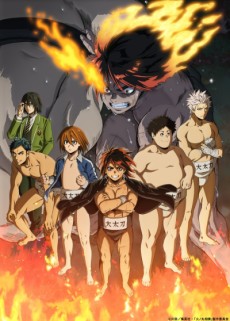
You’d love this pairing if you’ve ever watched a Tsurune archery match and felt your own breath sync with the draw—then immediately queued up a VCTF server, not for victory, but for the shared focus, the silent understanding when your teammate calls out a flank and you move without thinking, because the rhythm is already in your bones. It’s for the player who keeps an old headset plugged in just to hear the echo of a teammate’s “GO!”—and the viewer who rewinds the same 3-second sequence in Hinomaru Sumo five times, not to study technique, but to re-live the weight of the dohyō, the crack of bodies colliding, the silence right before the charge. Not for those who want polish. For those who crave pulse.
→104 Anime That Match the Vibe

Ippo’s first real knockout—fists trembling, sweat flying, crowd roaring—mirrors UT3’s Titan mode: raw escalation where skill, timing, and spatial awareness fuse into explosive catharsis. Unlike most sports narratives, *Hajime no Ippo: The Fighting!* leans into visceral, almost video-game-like choreography—each punch a deliberate input, each dodge a frame-perfect read—echoing UT3’s competitive spirit through precise, high-stakes rhythm. That shared 💥 Action Spectacle isn’t just flash; it’s the heartbeat of mastery earned mid-battle.
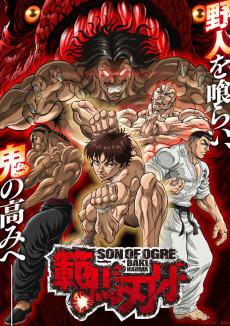
Connected through 2 aesthetic dimensions.

Connected through 2 aesthetic dimensions.

Junk Dog’s rain-slicked, neon-drenched alley fights pulse with the same kinetic urgency as Unreal Tournament 3’s frantic Onslaught mode—where collapsing bridges and exploding turrets demand split-second spatial awareness. Unlike most sports narratives, Megalobox roots its Competitive Spirit in systemic oppression and bodily augmentation, mirroring UT3’s Titan Pack: both escalate stakes not through plot twists, but through layered mechanics—mechanical limbs and deployable Titans—that force players and fighters alike to master chaos. That shared Action Spectacle isn’t just flashy; it’s philosophically charged, turning violence into vocabulary for resistance.

Pure kinetic energy — the action choreography in both is some of the best in their medium.
Connected through 2 aesthetic dimensions.
Connected through 2 aesthetic dimensions.

Fujiwara-no-Sai’s spectral presence—materializing in Hikaru’s peripheral vision mid-game, fingers trembling over the board—mirrors the Titan Pack’s visceral body horror: when a player’s avatar grotesquely *fuses* with the Titan mech, flesh warping into metal as control blurs between pilot and weapon. This shared obsession with contested embodiment fuels their Competitive Spirit—not just winning, but *merging* with mastery until selfhood becomes strategy. Surprisingly, both locate transcendence in violent, intimate surrender to the game’s rules.

Connected through 2 aesthetic dimensions.

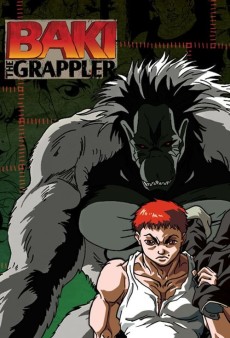
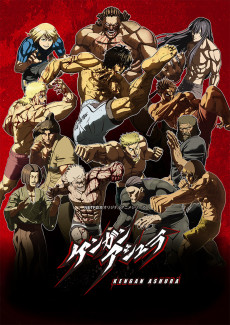
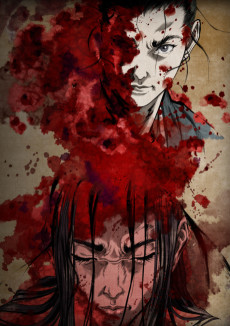
Baki’s underground arena brawls—where fighters bleed mid-air and concrete cracks under sheer force—mirror Unreal Tournament 3’s hyperkinetic arenas where shock combos shatter geometry and Titans stomp through collapsing arenas. That shared 💥 Action Spectacle isn’t just visual; it’s rhythmic: both weaponize split-second timing, explosive escalation, and visceral feedback loops—Baki’s knuckles splitting on Yujiro’s jaw, UT3’s flak cannon detonations syncing to enemy ragdoll physics. Unlike most sports anime or arena shooters, neither asks you to *watch* intensity—they demand you *feel* its velocity in your pulse.



















![Fate/stay night [Heaven’s Feel] III. spring song](https://s4.anilist.co/file/anilistcdn/media/anime/cover/large/bx21719-MSdTlkno0Z0u.jpg)

















Match Dimensions Explained
❓Frequently Asked Questions
Why does Hajime no Ippo: The Fighting! match Unreal Tournament 3 so well despite being about boxing?
Because both thrive on high-stakes, fast-paced competitive rhythm—think Ippo’s rapid-fire jabs and counter combos mirroring UT3’s twitchy arena movement and weapon-switching flow. The Sendo vs. Ippo gym battles or the final match against Miyata have that same ‘no respawns, one life, pure skill’ tension as a tight CTF round on Facing Worlds with the Titan mutator active.
Is there an anime adaptation of Unreal Tournament 3?
No official anime adaptation exists—but Megalobox nails the *vibe* UT3 fans love: gritty, rule-bending competition with deployable tech (like Gear’s pressure-sensitive exo-armor) and explosive, physics-driven action. It’s basically what UT3’s Titan Pack would look like if it jumped into a ring instead of a sci-fi arena.
How does BAKI compare to Hinomaru Sumo for UT3-style action?
BAKI leans harder into UT3’s over-the-top spectacle—like Hanma’s ‘Ogre Style’ breaking concrete floors mid-fight, which feels like landing a perfect shock combo in a cramped AS_Rook map. Hinomaru Sumo trades raw chaos for precision timing and spatial control, echoing UT3’s VCTF pro servers where every shoving match and belt-grab is a micro-strategy—just like holding the flag near the enemy base with a well-placed sniper shot.
What’s the best anime like Unreal Tournament 3 if I want that ‘VERY COOL GAME! EU VCTF PRO SERVER STILL LIVES’ energy?
Tsurune—it’s got that rare blend of intense, real-time tactical focus (archery matches feel like sniping across Frag Hall) and deep team coordination, especially during the national tournament arcs where wind reading and stance adjustments mirror UT3’s map awareness and weapon-swap discipline. Plus, the quiet intensity before each shot? That’s the exact same breath-hold you get right before a Titan drop on Core Assault.