![Fate/stay night [Heaven’s Feel] III. spring song](https://s4.anilist.co/file/anilistcdn/media/anime/cover/large/bx21719-MSdTlkno0Z0u.jpg)
Fate/stay night [Heaven’s Feel] III. spring song
The third film in a trilogy adaptation of the 3rd route of the popular visual novel: Fate/stay night.
To save the girl, to enact the justice he's chosen...The young man will no longer turn a blind eye to
the truth. Mages (Masters) and Heroic Spirits (Servants) work together in the battles of the Holy
Grail War, a fight for an omnipotent wish-granting container called the Holy Grail. However, this
war has become horribly twisted.
A young woman named Sakura Matou, with the sins she has committed, drowns in the murky
darkness. A young man named Shirou Emiya, who vowed to protect Sakura, works together with
Rin Tohsaka and throws himself into the raging battle to put a stop to the Holy Grail War. Illyasviel
von Einzbern, as one of the few who knows the truth behind the conflict, confronts her own fate,
while Zouken Matou uses Sakura to try to fulfill his own desires.
Will the young man’s wish reach her even as he challenges fate itself, battling against the rising
tide? The Holy Grail War is coming to an end... The final battle is about to begin.
(Source: Aniplex of America)
📺Anime Details
📝Editorial Analysis
Rain falls in slow, viscous sheets over Fuyuki City—not cleansing, not gentle, but heavy, like blood seeping through wet concrete. In Fate/stay night [Heaven’s Feel] III. spring song, Shirou Emiya stands in the ruins of the Matou mansion, his breath ragged, his hand gripping Sakura’s wrist as she collapses—not from injury, but from unraveling. Her skin pulses with black veins; her voice cracks mid-sentence, syllables dissolving into something older, hungrier. There is no music swell, no heroic pose—just the wet slap of rain on broken stone and the low, guttural hum of the Greater Grail bleeding into reality. That moment isn’t about victory. It’s about witnessing a person become both victim and vessel, and choosing to hold on—not to save her, but to stay with her as the world ends.
![Fate/stay night [Heaven’s Feel] III. spring song banner](https://s4.anilist.co/file/anilistcdn/media/anime/banner/21719-D361L20cvUXL.jpg)
What makes Fate/stay night [Heaven’s Feel] III. spring song ache so deeply isn’t its magic battles or mythic scale—it’s how it treats truth as a physical weight. The air thickens with unspoken guilt, suppressed memory, inherited sin. Every spell incantation feels like a confession. Every Servant’s noble phantasm carries the echo of a life already lost. This isn’t urban fantasy as backdrop—it’s urban trauma, where alleyways narrow like tightening throats and even sunlight feels like interrogation. You don’t watch this film—you endure it alongside Shirou, your chest tight, your throat dry, thinking not about plot mechanics but about what it costs to love someone who’s been broken by design. It’s quietly devastating, relentlessly intimate, and morally suffocating—not because evil wins, but because love insists on staying inside the wound.
That same emotional gravity lives in The Witcher 3: Wild Hunt, whose description names Geralt’s quest to find Ciri—the Child of Prophecy—across a war-torn, monster-infested continent. Player reviews call it “my favourite game” that “keeps getting better,” underscoring how its power lies not in spectacle, but in accumulated intimacy: choices that fracture relationships, side quests where grief lingers longer than combat, endings shaped by years of quiet care. Like Sakura’s descent, Ciri’s arc isn’t about power—it’s about what survives when identity is weaponized. Both works force you to sit with consequences long after the final blow lands.
Rise of the Argonauts shares that same adult & dark seinen dimension—its description centers Jason’s vow to restore his murdered fiancé, a promise that drags him into myth not for glory, but grief made ritual. Player reviews praise how it “does ancient history right”—but what resonates with spring song isn’t the setting, it’s the emotional archaeology: digging through layers of legacy, betrayal, and corrupted devotion. Jason doesn’t seek gods to worship—he seeks them to bargain with, just as Shirou bargains with the Grail’s truth, not its power. Both reject easy catharsis. Nothing is restored whole. Everything is reconstructed, scarred, and sacred.
Even Dark Messiah of Might & Magic, described as a “dark and immersive” Action-RPG with “ferocious combat,” echoes spring song’s texture—not in tone, but in physical consequence. Its player review calls it “a fantastic melee combat game that still holds up,” highlighting how violence here isn’t abstract. Each parry, each stumble, each blood-slicked floor tile feels earned, exhausting, real. Like Shirou’s cracked knuckles after dragging Sakura from the basement, or the way Sakura’s trembling hands leave smudges on Shirou’s collar—this is combat as contact, as testimony. Not spectacle. Testimony.
You’d love these pairings if you’ve ever paused a scene—not to analyze the lore, but because your breath caught at the exact second a character chose tenderness instead of triumph. If you replay dialogue not for hidden flags, but to hear how a voice breaks just once, and wonder what silence came before it. If you don’t want heroes who win—you want people who persist, who kneel in the rain and whisper names like prayers, who carry others’ pain not as burden, but as vow. This isn’t escapism. It’s recognition. And it lives in the space between a shattered chandelier’s fall and the hand that reaches—not to stop it—but to catch what’s already falling.
🎮174 Games That Match the Vibe











































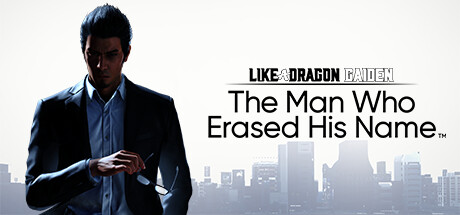



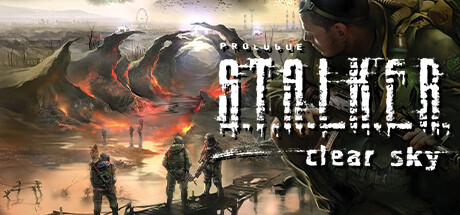

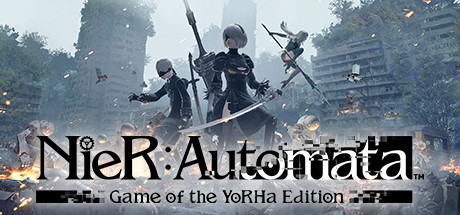


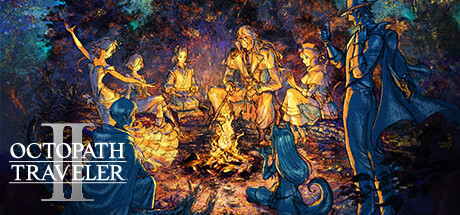



































Match Dimensions Explained
❓Frequently Asked Questions
Why is The Witcher 3 listed as similar to Fate/stay night [Heaven’s Feel] III. spring song?
Because both lean hard into emotionally devastating, morally gray storytelling with adult themes—like Geralt’s agonizing choices around Ciri mirroring Shirou’s impossible sacrifices for Sakura in the Spring Song finale. The 'Adult & Dark Seinen' and 'Emotional Narrative' dimensions line up tightly, and fans consistently praise how both use quiet character moments (e.g., Geralt’s campfire talks vs. Shirou and Sakura’s rooftop confessions) to land gut-punch emotional weight.
Is there a visual novel adaptation of Heaven’s Feel III. spring song?
No—Spring Song is *itself* the third and final visual novel route in the Heaven’s Feel trilogy, not an adaptation *of* something else. It’s the canonical conclusion where Sakura’s arc culminates in that heartbreaking yet tender ending on the rooftop, and it’s only officially available as part of the full Fate/stay night VN or the remastered Steam release—not as a standalone game or anime-only experience.
How does Jade Empire compare to Fate/stay night [Heaven’s Feel] III. spring song in terms of story depth and romance?
Jade Empire delivers JRPG-style narrative branching and relationship-building (like choosing between Dawn Star’s idealism or Sun Hai’s ruthlessness), but it lacks the tightly focused, intimate romantic tragedy of Spring Song’s Sakura route—no scene hits quite like her 'I’m not broken—I’m yours' confession under the cherry blossoms. Still, both earn their 'Emotional Narrative' dimension through strong voice acting, moral ambiguity, and endings shaped by sustained player investment in characters’ inner lives.
What’s the best game like Heaven’s Feel III. spring song if I want that melancholy, bittersweet love story vibe?
The Witcher 3: Wild Hunt is your strongest match—especially the Blood and Wine DLC, where Geralt’s slow-burn, tender, and ultimately tragic bond with Syanna echoes Sakura and Shirou’s fragile hope amid darkness. Reviewers even note how its 'Adult & Dark Seinen' and 'Emotional Narrative' dimensions mirror Spring Song’s tone, right down to quiet dialogue scenes that ache with unspoken history and sacrifice.