
Unreal Tournament 2004: Editor's Choice Edition
Unreal Tournament 2004 is a multiplayer first person shooter that combines the kill-or-be-killed experience of gladiatorial combat with cutting-edge technology. Ten game modes - both team-based and "every man for himself" -- provide even the most hardcore gamer with palm-sweating challenges through unbelievably detailed indoor...
🎮Game Details
💬What Players Say
"Wish I'd played the storyline version of this at release. Was fun 20+ years later, but would have blown my mind at that time. 🏆 Had some trouble beating the final boss Malcolm to win the game...."
"This was the best game ever."
"best arena shooter since quake"
📝Editorial Analysis
The screen flares white—then snap—you’re airborne, rocket-jumping off a crumbling pillar in Facing Worlds, plasma bolts screaming past your ears like wasps in a hurricane. No health bar pulses, no objective marker blinks: just the raw, electric now of knowing—if you misjudge the arc by half a second—you’ll splatter across the floor before your next breath. That’s Unreal Tournament 2004: Editor's Choice Edition—not a story to follow, but a pulse to ride. The official description nails it: “gladiatorial combat” with “palm-sweating challenge.” And one player still remembers Malcolm, the final boss—how his defeat wasn’t scripted triumph, but earned exhaustion, fingers raw from muscle memory forged over hours, not cutscenes. Another calls it “the best arena shooter since quake”—not because it’s prettier, but because it breathes like arena combat should: fast, fair, and fiercely human in its imperfection.
What makes UT2004 vibrate so uniquely isn’t its tech—it’s the weightlessness of consequence. You die. You respawn. You learn. There’s no narrative penance, no moral calculus—just the clean, almost sacred feedback loop of skill sharpening against skill. It doesn’t ask you to care about lore or legacy; it asks you to care about this jump, this flick, this split-second read of an opponent’s stance. That’s why it feels less like playing a game and more like stepping into a dojo where every match is both sparring and sermon. You don’t win against the game—you win with it, inside its rhythm. It’s exhilarating, yes—but also honest. No hand-holding. No mercy. Just ten modes—team-based, solo, objective-driven—each a different dialect of the same language: respect earned in real time.
That same language echoes unmistakably in Hajime no Ippo: The Fighting!, where every jab, feint, and clinch carries the same visceral immediacy as a well-timed shock combo. Ippo doesn’t rise through charisma or destiny—he rises through repetition, timing, and the quiet, grinding certainty that mastery lives in the body before it lives in the mind. Like UT2004’s arena floors, the ring in Ippo has no safety net—only rules, physics, and two fighters reading each other mid-air, millisecond by millisecond. The Competitive Spirit isn’t about ego; it’s about showing up, again and again, to test your limits against someone equally committed.
Then there’s Megalobox, all grit and chrome and sweat-stung eyes—where every bout unfolds like a UT2004 map: vertical, asymmetrical, unpredictable. Gear’s rusted knuckles and Joe’s unrelenting forward pressure mirror the game’s aggressive flow—no cover to hide behind, no respawns to waste. You adapt or you fall. The Action Spectacle here isn’t flash for flash’s sake; it’s choreographed urgency, where camera angles snap like headshots and silence between blows hits as hard as impact. Both Megalobox and UT2004 treat spectacle as consequence made visible: a missed dodge isn’t just animation—it’s airtime lost, momentum broken, ground surrendered.
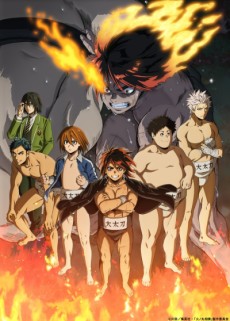
And Hinomaru Sumo—deceptively still, devastatingly precise—shares that same reverence for micro-moments. A single grip on the mawashi, a shift of weight under 0.3 seconds, the exact instant both rikishi explode forward: it’s the sumo equivalent of predicting a dodge-duck-and-snap in Onslaught mode. No HUD, no assists—just bodies, balance, and the unbearable tension before contact. Its Competitive Spirit is stoic, almost spiritual, but never soft. Like UT2004’s most veteran players, Hinomaru’s wrestlers know victory isn’t won in the roar of the crowd—it’s sealed in the silent, trembling second before the clash.
This pairing isn’t for passive fans. It’s for the person who watches a 30-second clip of Ippo’s first southpaw exchange and replays it five times—not to see the punch land, but to see how he shifts his left foot before committing. It’s for the player who still has muscle memory for the double jump + shock combo on DM-Deck16, who can feel the lagless hit registration in their fingertips years later. It’s for those who love competition not as drama, but as dialogue: rapid, physical, stripped bare. Not fantasy—but ferocity, refined.
→104 Anime That Match the Vibe

Ippo’s first real knockout—bloodied knuckles, ringing ears, the crowd’s roar collapsing into silence—hits with the same visceral jolt as a well-timed shock combo in Unreal Tournament 2004’s Onslaught mode. Where UT2004 weaponizes split-second precision and map control to fuel its **Competitive Spirit**, *Hajime no Ippo: The Fighting!* roots that intensity in raw human stamina, strategy, and the quiet agony of pushing past failure. It’s surprising how both elevate spectacle not through flash alone, but through systems—whether physics-driven arenas or boxing’s ironclad rules—that make every victory feel earned, inevitable, and utterly physical.
Connected through 2 aesthetic dimensions.

Connected through 2 aesthetic dimensions.

Junk Dog’s bloodied knuckles gripping the rusted ring ropes in Megalobox’s underground arena mirror the visceral crunch of a frag in Unreal Tournament 2004’s Onslaught mode—where victory demands split-second aggression amid collapsing bridges and roaring engines. Unlike most sports narratives, both reject passive spectacle: Megalobox frames boxing as raw, systemic rebellion; UT2004 weaponizes its arenas as hostile, reactive stages demanding constant adaptation. Their shared Action Spectacle isn’t just speed or impact—it’s the electrifying tension of bodies (flesh and metal, human and avatar) pushed to mechanical and moral breaking points.

Pure kinetic energy — the action choreography in both is some of the best in their medium.

Connected through 2 aesthetic dimensions.
Connected through 2 aesthetic dimensions.

Hikaru’s trembling hands gripping the Go board—Sai’s spectral presence flooding his veins with centuries of strategy—mirrors the visceral, almost surgical precision of UT2004’s Onslaught mode, where players channel raw instinct to breach fortified bases. Unlike most competitive narratives, both weaponize the **Competitive Spirit** not as mere rivalry but as possession: Sai *overwrites* Hikaru’s will, while UT2004’s adrenaline surge overwrites bodily limits in nanosecond reflexes. That shared tension—gladiatorial focus fused with occult embodiment—makes their resonance startlingly physical, not just thematic.

Connected through 2 aesthetic dimensions.

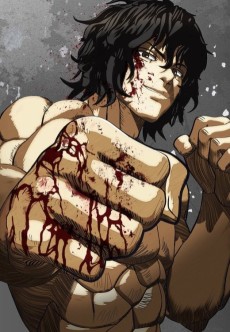
Baki’s underground arena brawls—where fighters bleed, break bones, and roar through sheer will—mirror UT2004’s Onslaught mode: a chaotic, tech-augmented siege where teams storm fortified bases amid explosive mayhem. 🏆 Competitive Spirit thrives in both: Yujiro’s cold, godlike dominance echoes the game’s AI-controlled “Skaarj” bosses—unbeatable until strategy, adaptation, and raw nerve tip the scale. Unlike most sports anime or shooters, neither flinches from visceral consequence—every punch lands like a frag grenade, every victory earned in sweat and shattered cartilage.



















![Fate/stay night [Heaven’s Feel] III. spring song](https://s4.anilist.co/file/anilistcdn/media/anime/cover/large/bx21719-MSdTlkno0Z0u.jpg)
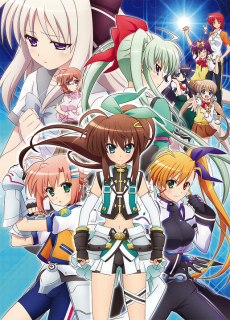
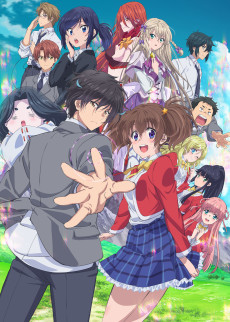
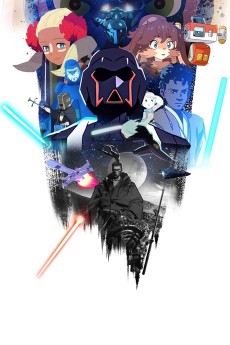

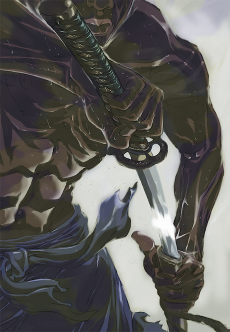












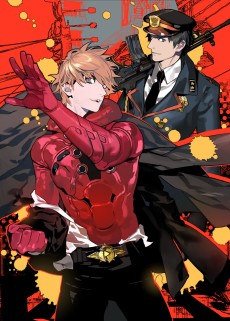
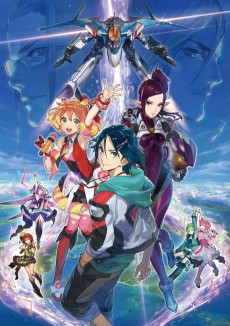
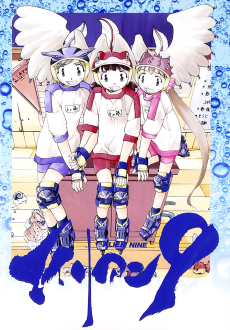
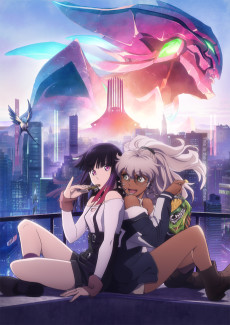




Match Dimensions Explained
❓Frequently Asked Questions
Why does Hajime no Ippo: The Fighting! match Unreal Tournament 2004 so well?
Because both thrive on raw, high-stakes one-on-one combat where timing, reflexes, and reading your opponent decide everything—like Ippo’s ‘Dempsey Roll’ against Sendo in the All-Japan Tournament, where every dodge and counter feels like a frag in UT2004’s Assault mode. The sweat, the crowd roar, the split-second openings—it’s the same adrenaline rush as dodging a shock combo while lining up a perfect sniper shot on CTF-Deck16.
Is there an anime adaptation of Unreal Tournament 2004?
Nope—UT2004 has never been adapted into an anime (and honestly, it doesn’t need one). But the *vibe* is perfectly captured in Megalobox: think Joe’s street-fight grit, Nomad’s brutal arena rules, and that final bout in Neo Tokyo’s underground coliseum—where every punch lands with the same weight and consequence as a well-placed flak cannon blast in DM-Deck16.
How do BAKI and Hinomaru Sumo compare for UT2004 fans?
BAKI delivers UT2004’s over-the-top arena spectacle—think Hanma’s bare-knuckle brawl with Doppo in the underground colosseum, where physics bend and blood flies like giblets after a well-timed grenade. Hinomaru Sumo matches UT2004’s intense competitive spirit more precisely: the ritual, the tension before the tachiai, the split-second win-or-lose charge—just like holding the flag on CTF-Face while listening for footsteps on the metal catwalks.
What’s the best anime like UT2004 for when you want pure, no-nonsense competitive energy?
Tsurune—it’s got that laser-focused, high-stakes tournament pressure UT2004 fans love. Watch Minato’s final yumiya match at the National High School Championships: silent tension, precise timing, zero room for error—exactly like lining up a perfect railgun headshot while your ping holds steady and the enemy’s about to cap your base. It’s competitive spirit distilled into breath control and release.