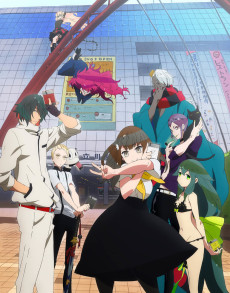
Gatchaman Crowds
The story is set in Japan in the early summer of 2015. 180,000 people live in Tachikawa City, the "second metropolis" of the Tokyo area. Among them are "Gatchaman"—warriors who fight in special reinforced suits powered by "NOTE," the manifestation of special spiritual powers in living beings. A council has scouted a group of individuals with latent powers to protect Earth from alien criminals. In recent years, the council has assigned Gatchaman warriors to deal with the mysterious entity known as "MESS."
(Source: Anime News Network)
📺Anime Details
📝Editorial Analysis
The air in Tachikawa City hums—not with cicadas, but with the low, resonant thrum of NOTE energy vibrating through smartphone screens, subway turnstiles, and the soles of sneakers on rain-slicked pavement. You feel it first in Episode 4, when Hajime Ichinose—barefoot, grinning, hair like spun candy—presses her palm to a public terminal and unfolds a Gatchaman suit not from light or lightning, but from collective attention: a shimmering, crowd-sourced cascade of data, trust, and raw, unfiltered belief. It’s not magic. It’s infrastructure made sentient. And it’s terrifyingly fragile.

That’s the feeling Gatchaman Crowds lives inside: hope that’s algorithmic, power that’s participatory, heroism that’s viral. Not lone wolves roaring into voids, but networks blinking awake—sometimes brilliantly, sometimes catastrophically. The show doesn’t ask if people can change the world; it asks what happens when they all start editing the same document at once. It’s warm and disorienting, like walking into a crowded train station where every person is humming the same tune—but no one knows who started it. You don’t feel awe. You feel responsibility, vertigo, and a strange, electric tenderness for how easily connection becomes contagion.
That emotional DNA pulses strongest in BioShock™, whose description names it outright: a Political Thriller, set in a collapsing utopia built on ideology-as-architecture. Like Tachikawa’s NOTE system, Rapture’s entire society runs on a foundational belief—objectivism made manifest—and when that belief fractures, the city bleeds logic, physics, and empathy alike. A player review calls it “one of the most revolutionary games ever!”—not for its guns, but because it makes you complicit. Just as Hajime’s idealism accidentally enables Berg Katze’s chaos, Jack’s choices in BioShock aren’t moral binaries—they’re feedback loops. You don’t defeat the villain; you realize you’ve been quoting his manifesto in your head for hours. Both works make power feel sticky, shared, and dangerously editable.
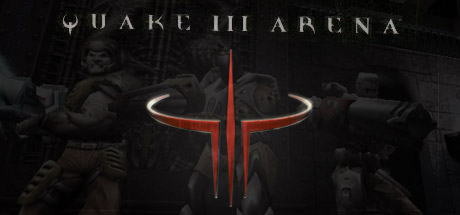
Then there’s Quake III Arena, where “the greatest warriors of all time and space have been summoned to battle for the amusement of an ancient alien race.” That phrase—summoned to battle for the amusement—lands like a gut punch next to Gatchaman Crowds’ Council: a shadowy, ostensibly benevolent body that assigns heroes, curates threats, and treats human potential like a limited resource to be deployed. The anime never shows the Council’s faces; Quake III never explains why the arena exists—it just is, vast and indifferent. A player review notes servers still run “as of typing this,” underscoring how the game’s raw, ritualized combat persists beyond narrative, much like how Gatchaman Crowds’ action sequences—Hajime’s chaotic, improvised battles, Sugane’s rigid, rule-bound strikes—feel less like plot points and more like behavioral demonstrations: what happens when ideology becomes muscle memory.
And DOOM + DOOM II, described as “the definitive, newly enhanced versions” of foundational shooters, echoes the anime’s obsession with legacy systems. Tachikawa’s NOTE isn’t new—it’s repurposed, patched, jury-rigged from existing tech, just as DOOM’s engine was hacked from military sim software. A player recalls building their first computer for DOOM in 1993—a tactile, communal act of creation mirroring Hajime’s DIY approach to heroism. Neither work worships purity; both thrive in the glorious, messy afterlife of old tools pressed into radical new service. The roar of the BFG isn’t just sound—it’s the noise of infrastructure refusing to stay silent.
Who lives for this? Not just fans of aliens or henshin. It’s the viewer who pauses mid-episode to screenshot a crowd’s shifting emoji reactions on a news feed. The player who replays BioShock’s audio diaries not for lore, but to hear the tremor in Andrew Ryan’s voice when he admits he didn’t build Rapture—he inherited its assumptions. The person who boots up Quake III not for victory, but to feel the weight of that arena’s silence between rounds—the hum of something vast, watching, waiting for the next edit. They don’t want escapism. They want systems—alive, flawed, breathing—and the quiet, terrifying, exhilarating certainty that they’re already inside one.
🎮31 Games That Match the Vibe






Match Dimensions Explained
❓Frequently Asked Questions
Why is BioShock listed as similar to Gatchaman Crowds when they're both so different?
Great question — it's not about the surface action, but how both tackle collective identity and ideological control. In BioShock, Fontaine’s 'Rapture' promises radical individualism while secretly enforcing conformity — just like G-Crowds’ 'CROWDS' system and Berg Katze’s manipulation of public sentiment. The haunting 'Would you kindly?' reveal mirrors Crowds’ themes of hidden influence over mass behavior, which is why critics call it a 'political thriller' match.
Is there a Gatchaman Crowds game adaptation?
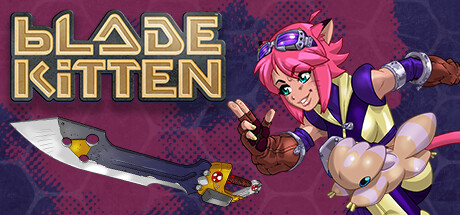
No — there’s never been an official Gatchaman Crowds video game. All the matches on this list (like BioShock, Quake III Arena, or Jedi Academy) are *thematic* parallels, not adaptations. You won’t find Ken Washio or Hajime Ichinose wielding a plasma cutter or lightsaber — but if you love Crowds’ blend of sci-fi spectacle and social tension, BioShock’s dystopian worldbuilding or Blade Kitten’s stylized, high-stakes mech-hunting in Hollow Wish hit that same energetic, idea-driven vibe.
How does Blade Kitten compare to STAR WARS Jedi Academy for fast-paced sci-fi action?
Blade Kitten is all about tight platforming, snappy melee combos, and Kit Ballard’s whip-sword against rogue mechs in neon-drenched Hollow Wish — think agile, grounded, and cartoon-cool. Jedi Academy, meanwhile, gives you full Force powers, lightsaber duels with dual-wield options, and galaxy-spanning missions as a customizable Padawan. Both score 78 and nail 'Action Spectacle', but Blade Kitten leans into kinetic precision; Jedi Academy leans into cinematic power fantasy.
What’s the best game like Gatchaman Crowds if I want that upbeat, chaotic team-energy vibe?
Go straight to Quake III Arena — it’s pure, unfiltered chaotic team energy. Picture the CROWDS’ synchronized transformations, but swapped for arena combat where you’re grabbing quad damage, rocket-jumping off walls, and fragging teammates-turned-rivals in real-time — just like Rui’s crowd-sourced power gone wild. Players still host online servers today, and that ‘ancient alien race watching warriors battle’ premise? It’s got the same playful, high-stakes spectacle as Crowds’ most explosive episodes.