
Unreal Gold
Your prison ship has crash-landed on the fastest, sleekest, most dangerous 3D world ever created. Look around, crystal clear water shimmers, shadows dance and shift, alien architecture fades into the horizon.
🎮Game Details
💬What Players Say
"This game would probably be my pick for the most underrated 90s FPS (and there are a lot of them). I still listen to the soundtrack regularly."
"I really enjoy the sense that it's all one big level. No segmented, complete breaks in levels like most games. Keeps the immersion by having the landscape evolve slowly and naturally level to level...."
"The fact that this isn't available for sale anywhere anymore is criminal. This is one of the seminal FPS games IMO."
📝Editorial Analysis
You’re standing on the hull of the shattered prison ship, boots crunching glass and alloy, staring out—not at a loading screen, not at a menu—but at crystal clear water shimmers, at shadows dance and shift, at alien architecture fades into the horizon. There’s no cutscene. No exposition dump. Just silence, wind, and the low thrum of something ancient breathing beneath your feet. That first breath of Unreal Gold isn’t gameplay—it’s immersion, raw and unbroken, like stepping into a world that was already alive before you crashed into it.
What makes this feeling so rare isn’t the guns or the monsters—it’s the continuity. Not just technical seamlessness, but psychological seamlessness: the landscape doesn’t reset between “levels.” It evolves. A canyon narrows into a cavern mouth; a jungle canopy thins to reveal obsidian spires; light shifts from amber noon to bruised violet dusk without a fade-to-black. You don’t enter new areas—you drift into them, like time itself is breathing slower, deeper. That slow, natural evolution—no segmented breaks, no artificial walls—makes the world feel real, not designed. It’s less “map” and more terrain, with its own weather, memory, and weight. And the soundtrack? Haunting, ambient, cyclical—like listening to the planet’s pulse. It doesn’t score action; it replaces silence, making solitude feel sacred, even when danger hums just off-screen.
That same emotional DNA—the weight of place, the dread of scale, the beauty in decay—pulses through Gintama.: Slip Arc. Not the comedy, not the satire—but the Slip Arc’s descent into body horror and occult dread, where Edo isn’t just a city but a living wound, its streets folding inward, its citizens mutating under cosmic rot. The alien architecture of Unreal Gold mirrors the warped, gravity-defying ruins of the Amanto strongholds—both feel geologically wrong, yet terrifyingly coherent. Then there’s Heaven Official's Blessing Season 2, where every mist-laced mountain pass and crumbling celestial bridge carries the same slow, inevitable immersion: no hard cuts between realms, just a gradual thinning of the veil until you’re knee-deep in spectral residue and bone-deep sorrow. The fight choreography isn’t flashy for flashiness’ sake—it’s spectacle as consequence, each strike echoing with the same physical finality as Unreal Gold’s shotgun blast kicking your view sideways. And Bleach, especially its Hollow-infested wastelands and fractured Soul Society arcs, shares that exact texture: environments that breathe horror, where architecture isn’t backdrop but character—crumbling, sentient, hungry—and where action doesn’t interrupt atmosphere—it unfolds within it, like light bending around a black hole.
This isn’t about matching lore or plot. It’s about who feels these things in their bones: the player who pauses mid-run just to watch dust motes swirl in a sunbeam piercing a ruined dome; the viewer who watches a demon’s jaw unhinge not with disgust, but with awe at the biomechanical elegance of it; the person who finds peace not in safety, but in the resonance of vast, indifferent beauty—water shimmering, shadows shifting, horizons fading. They’re the ones who love the silence between gunshots, the hush before a sword unsheathes, the moment a character steps into fog and the world doesn’t end—it deepens. They don’t want escape. They want presence. And whether they’re navigating Unreal Gold’s seamless sprawl or walking with Xie Lian through a sky littered with broken constellations, they’re chasing the same fragile, exhilarating truth: that awe and dread are two sides of the same coin—and the most dangerous worlds aren’t the ones that try to kill you, but the ones that make you belong to their ruin.
→54 Anime That Match the Vibe

The body as a site of transformation and terror — both push physical boundaries.

Porori’s watery onomatopoeia echoes the shimmering, crystal-clear water in Unreal Gold’s alien crash site—both treat liquid as uncanny texture, not backdrop. Where Unreal Gold weaponizes body horror through grotesque, shifting architecture and biomechanical enemies, Gintama.: Slip Arc leans into occult absurdity via Porori’s surreal, reality-warping presence amid otherwise grounded Edo chaos. This shared 💥 Action Spectacle thrives on destabilizing physics: one through Quake-engine velocity and spatial disorientation, the other through slapstick defying gravity and genre logic.

The body as a site of transformation and terror — both push physical boundaries.

The body as a site of transformation and terror — both push physical boundaries.

The body as a site of transformation and terror — both push physical boundaries.

The body as a site of transformation and terror — both push physical boundaries.

The body as a site of transformation and terror — both push physical boundaries.

The body as a site of transformation and terror — both push physical boundaries.

The body as a site of transformation and terror — both push physical boundaries.

The body as a site of transformation and terror — both push physical boundaries.
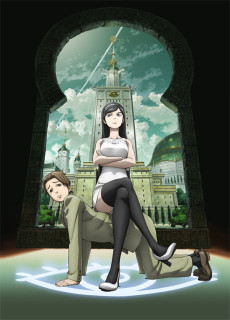







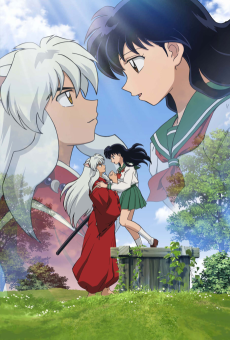








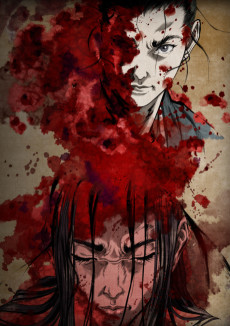




![Fate/stay night [Heaven’s Feel] III. spring song](https://s4.anilist.co/file/anilistcdn/media/anime/cover/large/bx21719-MSdTlkno0Z0u.jpg)






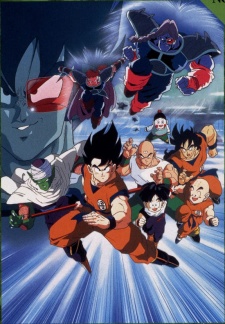





Match Dimensions Explained
❓Frequently Asked Questions
Why does Gintama.'s Slip Arc feel like playing Unreal Gold?
Because both throw you into a single, seamless, high-stakes environment where the world *evolves* around you—not in segmented chunks. Like Unreal Gold’s crash-landed prison ship gliding through alien architecture and shimmering water, the Slip Arc’s Edo shifts fluidly from neon-lit streets to warped spirit realms, with Katsura’s body horror transformations and the Occult-infused action mirroring that same immersive, unbroken intensity.
Is there an anime adaptation of Unreal Gold?
No—Unreal Gold has never been adapted into an anime. But if it *were*, Heaven Official's Blessing Season 2 would be the closest spiritual match: its sprawling, horizon-fading Spirit Realm landscapes, slow-burn environmental storytelling (like the shifting bridges and crumbling celestial towers), and Xie Lian’s visceral, shadow-dancing combat against occult horrors echo Unreal Gold’s ‘one big level’ immersion and crystal-clear, atmospheric dread.
How is Bleach different from Demon Slayer: Mugen Train Arc for Unreal Gold vibes?
Bleach leans harder into *sci-fi scale*—think Hueco Mundo’s endless white deserts fading into alien horizons and Arrancar architecture that feels ripped from Unreal Gold’s 'alien architecture fades into the horizon' description—while Mugen Train trades that expansive worldbuilding for tighter, more claustrophobic spectacle (like the train’s looping corridors and Enmu’s dream mechanics). Both deliver Body Horror & Action Spectacle, but Bleach matches Unreal Gold’s vast, evolving terrain better.
What’s the best anime like Unreal Gold if I want that ‘crash-landed on a dangerous 3D world’ vibe?
Hell’s Paradise Season 2—it nails that disorienting, high-stakes arrival feeling. When Gabimaru and the others first descend into the Shinsenkyō jungle, the camera sweeps across shimmering, crystal-clear waterfalls and towering, unnatural ruins that *fade into the horizon*, just like Unreal Gold’s opening. The constant sense of one continuous, evolving landscape—no hard level breaks—plus visceral body horror (like the Tensen’s mutations) and relentless action makes it the most tonally faithful pick.