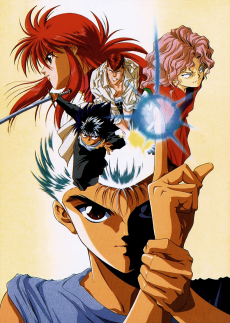
Yu Yu Hakusho: Ghostfiles
Urameshi Yusuke, 14 years of age, is about as troublesome and violent as teenagers come. He is constantly ditching school, causing trouble, and getting into numerous fights everyday. One day however, he does the unexpected, sacrificing himself to save a young child. Such an action, was never ever expected, especially coming from someone as troublesome as Urameshi Yusuke. The afterlife is not prepared for Yusuke, as they never thought he would make such a sacrifice. Nowhere to go, and dead, Yusuke becomes a ghost and must earn his way back into existence.
Yusuke is "employed" by Koenma, who is in charge while his father and ruler of the afterlife, King Enma, is away. Under Koenma's command, Yusuke helps to stop menacing demons that threaten the lives of people everywhere; whether by stealing priceless and invaluable items and destructive weapons, or by wreaking havoc on humans everywhere.
Throughout Yusuke's journey, he is usually joined by; his arch-rival, and local bully, Kuwabara Kazuma. He is also joined by two demons named Hiei and Kurama, whom are ex-convicts of the afterlife that managed to escape from Koenma.
This group of unlikely allies goes on to participate and struggle in battles that have outcomes that determine the fate of humanity!
(Source: AniDB)
📺Anime Details
📝Editorial Analysis
The screech of tires. A child frozen mid-step in the rain-slicked street. Yusuke’s body twisting—not away, but into the path—his school uniform snapping taut as the truck hits him square in the chest. No dramatic music swells. Just the wet thud, the skid, the sudden, brutal silence where a voice should be. That’s not the start of a hero’s journey—it’s the end of one life, and the confused, bureaucratic, bureaucratic beginning of another: paperwork in the afterlife, a dead delinquent handed a spirit detective badge like it’s a hall pass he didn’t earn.
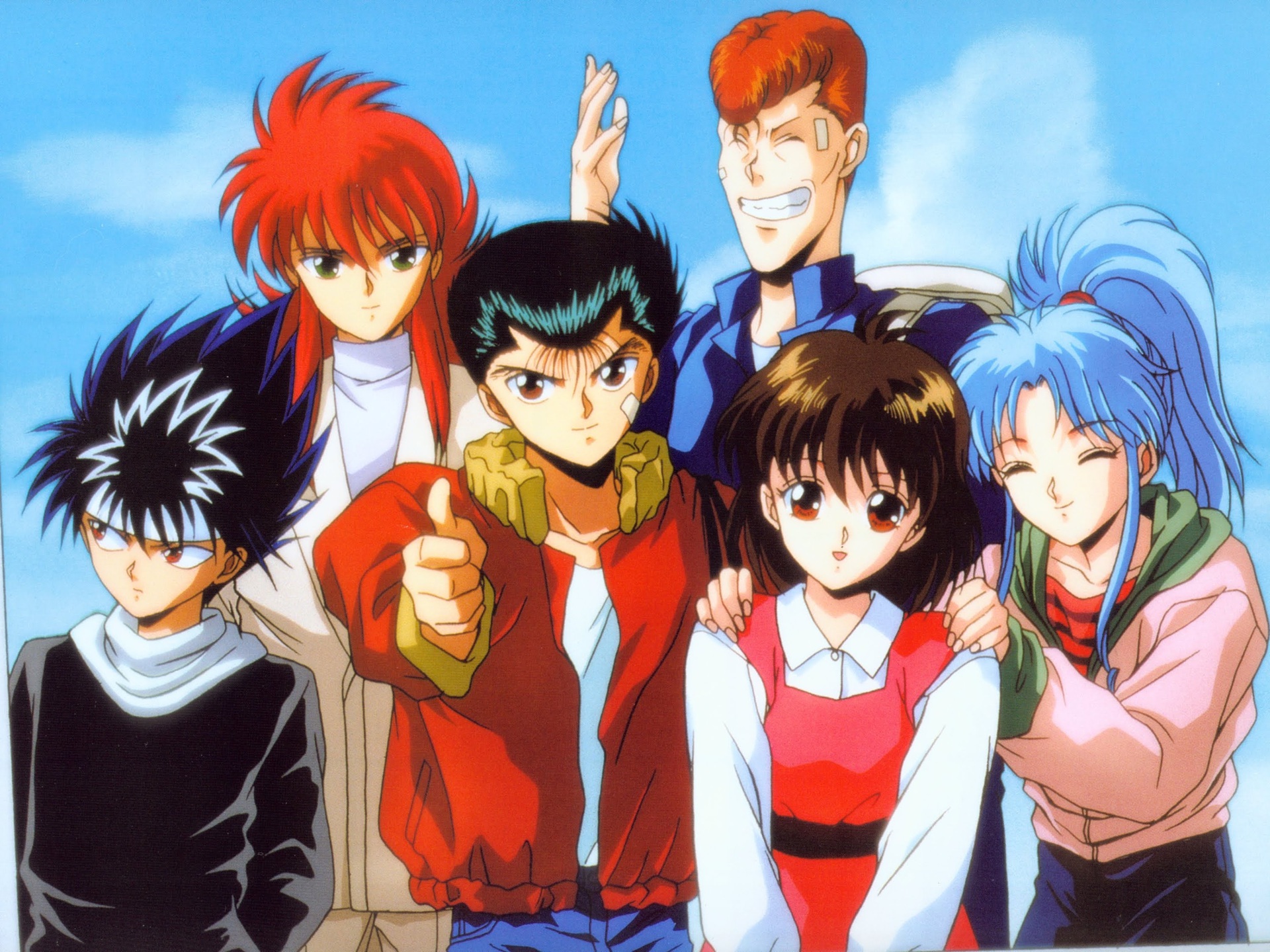
That’s the feeling Yu Yu Hakusho: Ghostfiles lives inside: dissonance. Not just between violence and virtue, but between the grime of city sidewalks and the shimmer of spirit energy; between teenage apathy and sudden, bone-deep responsibility; between punching first and thinking, feeling, choosing later. It’s not about power scaling or destiny—it’s about a boy who’s spent years being told he’s worthless, then dying in a way that makes the entire spiritual bureaucracy stutter. The urban fantasy isn’t decorative—it’s textural: cracked concrete, flickering neon above alley fights, the smell of ramen steam mixing with ozone before a spirit blast. This is coming-of-age forged in real consequence—not metaphor, but blood on pavement, bruises that don’t fade overnight, and the quiet horror of realizing your own capacity for both destruction and sacrifice.
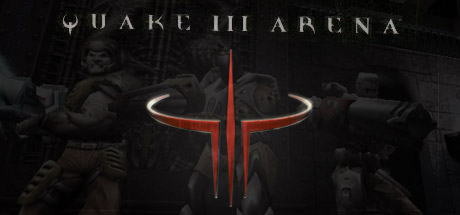
Three games echo that same raw, unvarnished pulse—not because they share demons or schools, but because they share body language, tempo, and moral weight disguised as chaos. Quake III Arena, with its “greatest warriors… summoned to battle for the amusement of an ancient alien race,” mirrors Yusuke’s early arc: a violent, rule-breaking force suddenly thrust into a cosmic arena he never asked for, judged by powers that treat mortality like a glitch in the system. The player review’s offhand “smush in ioquake3” captures the anime’s scrappy, DIY energy—the same spirit that has Yusuke learning spirit gun technique by shooting at pigeons behind the shrine. It’s not polished. It’s functional, urgent, alive in its imperfection.
Then there’s DOOM + DOOM II, described as “definitive, newly enhanced versions” of the 1993/1994 originals—games built on pure, unapologetic forward motion. Like Yusuke barreling headfirst into a demon-infested warehouse without backup, DOOM doesn’t pause for exposition. Its player review nails the emotional anchor: “This game was the reason my dad and I built our first computer.” That’s the shared intimacy—a generational, tactile bond formed through shared intensity, where hardware hums, controllers heat up, and every shotgun blast lands with physical weight, just like Yusuke’s knuckles splitting on a demon’s jaw. Both are artifacts of immediacy, where philosophy hides in the rhythm of reload, dodge, strike—not in monologues, but in breathless, bodily commitment.
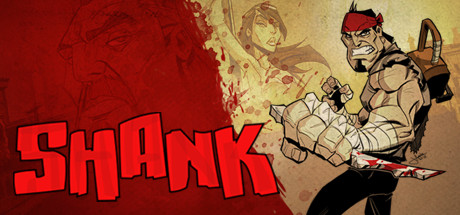
And Shank, the “cult-classic revival of the sidescrolling beat-em-up,” plays like Yusuke’s teenage id given sword and chainsaw: “over-the-top grindhouse,” “packed to the rim with enemies, bosses, combos.” Its player review admits nostalgia—but also insists it’s “still enjoyable.” That duality is core to Ghostfiles: the swagger, the blood splatter, the sheer excess of youth fighting back against forces far older than itself. Shank’s combat isn’t clean—it’s visceral, messy, gloriously unrefined, just like Yusuke’s earliest spirit waves: wild, inaccurate, fueled by rage and instinct, slowly bending toward control only after enough scars.
This pairing isn’t for fans of tidy lore dumps or flawless protagonists. It’s for the kid who still keeps their first controller wrapped in duct tape, who remembers the exact shade of green on their CRT monitor when they first saw a spirit beast tear through a rooftop. It’s for the viewer who watches Yusuke vomit after his first real spirit blast—not from weakness, but from recalibration—and feels their own chest tighten. It’s for players who miss the sound of a 486 fan kicking in during a DOOM deathmatch, or the split-second hesitation before jumping into a Quake frag—knowing full well the fall might kill you, but not jumping means losing something truer than life. These are stories and systems built on grit, growth, and the stubborn, beautiful refusal to stay dead—or silent—when the world expects you to.
🎮21 Games That Match the Vibe



Match Dimensions Explained
❓Frequently Asked Questions
Why does Quake III Arena feel so much like Yu Yu Hakusho: Ghostfiles' Dark Tournament arc?
Because both are pure, high-stakes arena combat spectacles where fighters with wildly different powers—like Yusuke’s Spirit Gun or Quake III’s rocket-jumping, railgun-sniping warriors—are pitted in fast, no-holds-barred matches for cosmic stakes. The alien overseers in Quake III mirror the tournament’s demonic sponsors, and that frantic, skill-based 1v1 flow (especially in CTF or Duel modes) nails the same adrenaline rush as Yusuke vs. Toguro.
Is there a Yu Yu Hakusho anime or game adaptation that actually captures Ghostfiles’ occult body horror vibe?
Not really—but DOOM + DOOM II comes shockingly close. Think about it: the grotesque, mutating demons bursting from hellgates, the visceral gore of chainsawing a Baron of Hell, and the oppressive occult atmosphere of E1M1’s blood-slicked altars all hit the same ‘sacred-but-sickening’ notes as Ghostfiles’ spirit world corruption. Even the 1993 Sound Blaster-era dread feels spiritually aligned.
Shank vs. Unreal Tournament 2004: which one better matches Ghostfiles’ mix of over-the-top action and gritty occult style?
Unreal Tournament 2004 wins for sheer spectacle and tone—it’s got the gladiatorial arena structure, the flashy weapon combos (like the flak cannon shredding enemies mid-air), and those eerie, gothic-tech maps like DM-Deck16 that scream ‘Spirit World coliseum.’ Shank’s grindhouse violence is fun, but UT2004’s team-based mayhem and cinematic lighting nail Ghostfiles’ blend of honor, chaos, and supernatural dread.
What’s the best game like Yu Yu Hakusho: Ghostfiles if I want that ‘late-night, high-octane, slightly unhinged’ energy?
Shank is your perfect late-night pick—its sidescrolling chaos, brutal combo system (think Shank’s dual-wielding machetes and chain hooks), and grindhouse aesthetic (all flickering neon, splattered blood, and sudden boss reveals) deliver that exact ‘one-more-run’ buzz. It’s not polished like newer beat-em-ups, but that raw, unfiltered energy? Exactly what Ghostfiles fans crave after midnight.