Quake 4
As part of the elite Rhino Squad, you must spearhead Earth’s military invasion of a hostile alien homeworld. But, in this desperate war for humanity’s survival against an unrelenting enemy, you may discover that the only way to defeat them...is to become one of them.
🎮Game Details
💬What Players Say
"By far the most underrated FPS I have ever played. This is 100 percent a must play. Great story, amazing gunplay, and crazy ass moments."
"my favorite quake movement type. if you can get your config figured out the game is very fun to play."
"Hasn't aged the best, but not a terrible game. A nostalgia trip for me but I'd say if you've never played and are a fan of iD Software stuff, grab this on sale and see what the old days were like."
📝Editorial Analysis
The first time your Rhino Squad boots land on that alien soil—gravel crunching under armored treads, the sky choked with bruised violet clouds and the jagged silhouette of a Strogg bio-fortress clawing at the horizon—you don’t feel like a hero. You feel expendable. That’s the hook: not victory, but assimilation. The official description doesn’t say “save Earth”—it says “you may discover that the only way to defeat them… is to become one of them.” That line isn’t a twist. It’s a slow, cold pressure building behind your ribs as you reload, as your HUD flickers with corrupted biometric readouts, as your own limbs begin to hum with something not human. Player review 1 nails it: “crazy ass moments.” Not spectacle for spectacle’s sake—but moments where the ground tilts because your body is no longer fully yours.
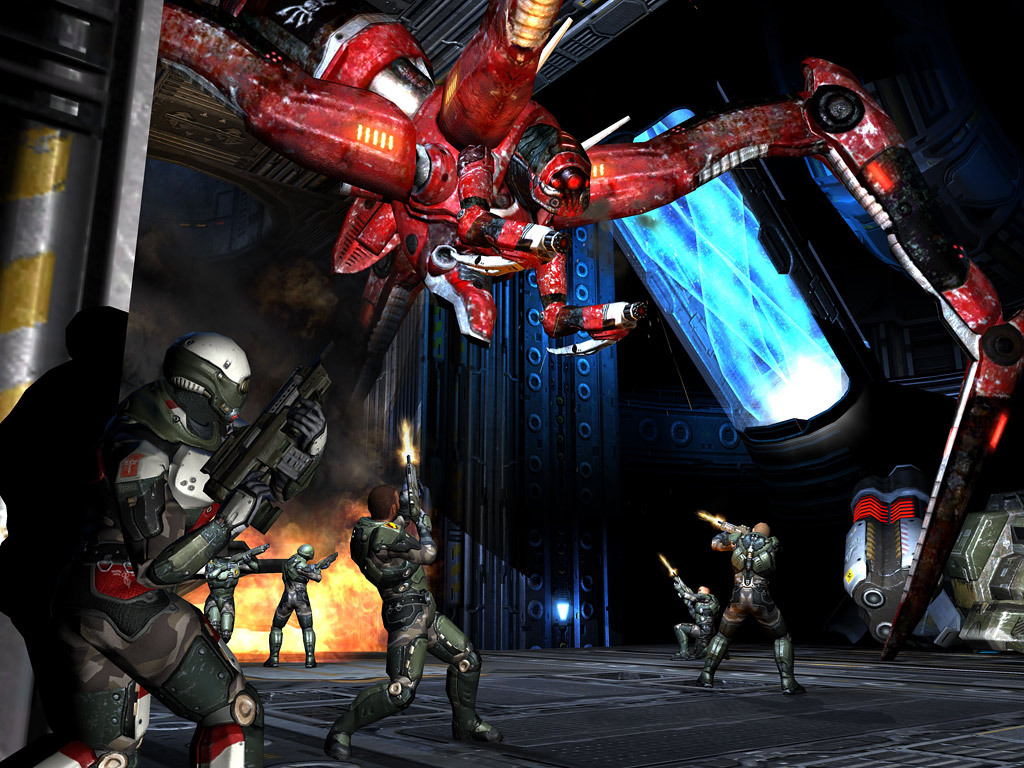
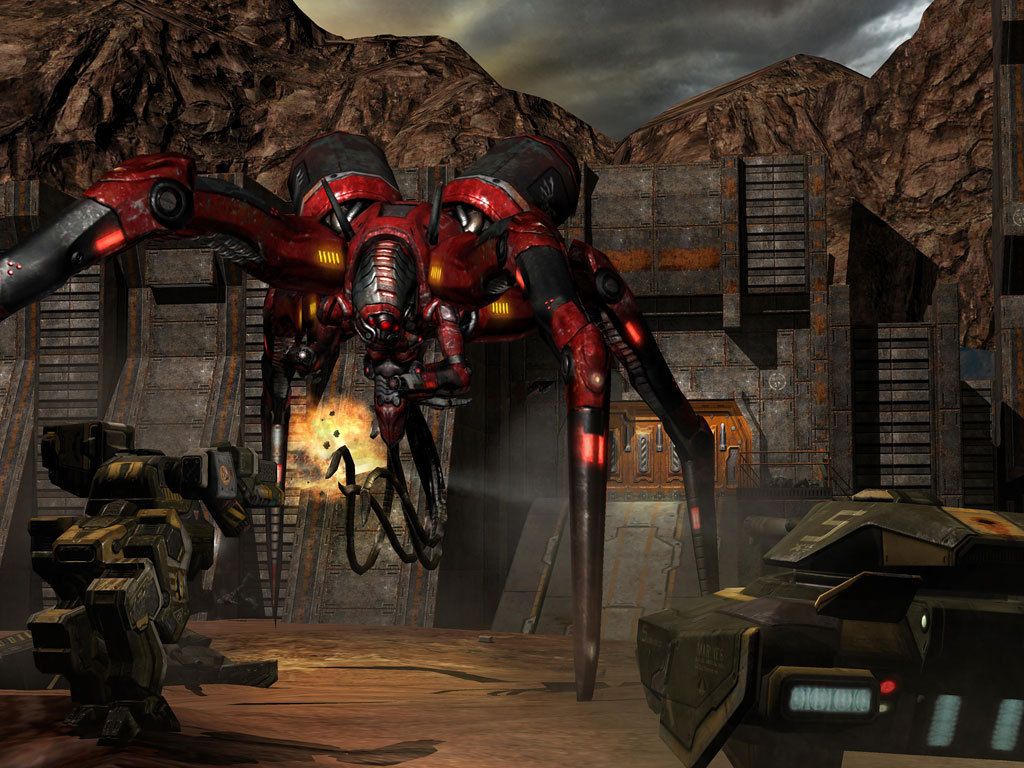
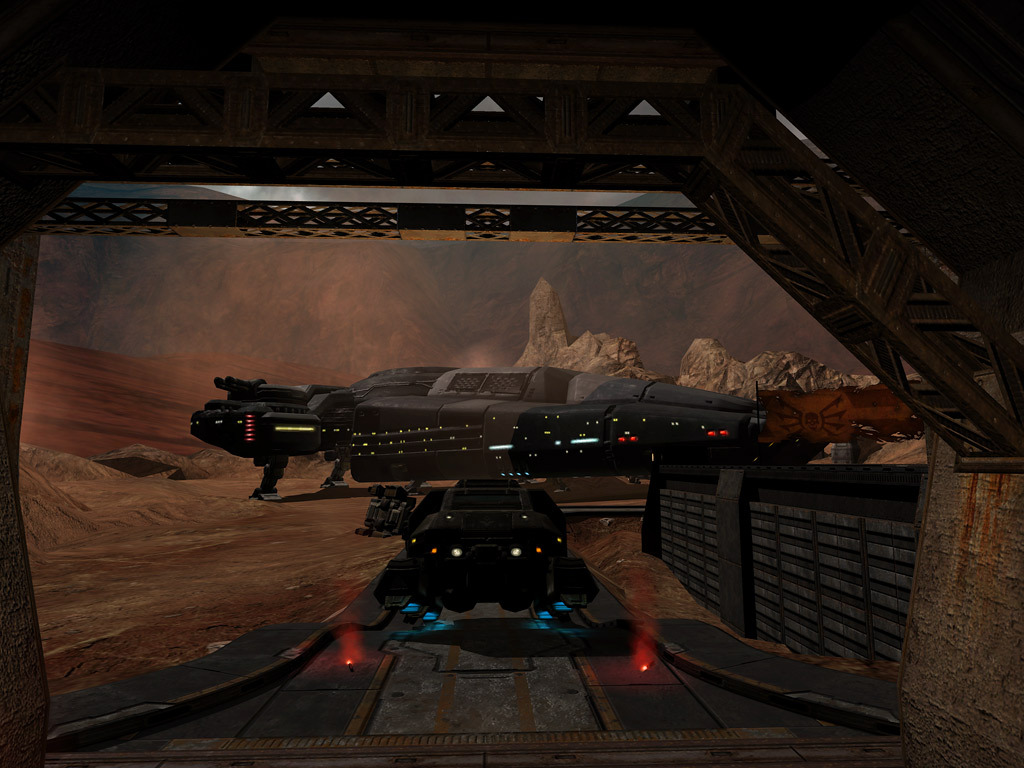
This isn’t dread in the abstract. It’s visceral unease: the way Quake 4’s movement feels just off—a little too slick, a little too heavy—like your muscles are learning new grammar mid-firefight. Review 2 calls it “my favorite quake movement type,” but what makes it resonate isn’t just speed or glide—it’s how that movement betrays you. When you strafe past a collapsed Strogg conduit and your boot catches on something fleshy and pulsing beneath cracked plating, when your jump arc feels less like physics and more like tendrils adjusting, the game doesn’t ask you to suspend disbelief. It asks you to relearn embodiment. That’s its atmosphere: not isolation, not despair—but ontological friction. Every corridor breathes. Every kill feeds the wrong kind of hunger. You’re not fighting aliens. You’re negotiating with your own evolving nervous system.
Gintama.: Slip Arc shares that same grotesque intimacy—not through scale, but through violation of form. The Slip Arc isn’t about invasion from without; it’s about the body unspooling from within, organs rewriting themselves mid-conversation, teeth sprouting where molars used to be. Its Body Horror & Occult dimension isn’t decorative—it’s dialogue. Like Quake 4’s slow-burn assimilation, Gintama.’s horror lands because it’s casual, even humorous—until it isn’t. A character jokes while their arm peels open like fruit, revealing chitinous joints—and suddenly, the joke curdles. That tonal whiplash, that refusal to let horror stay over there, mirrors how Quake 4 weaponizes familiarity: your rifle feels right, your sprint feels earned—until your vision glitches into thermal overlay without prompting, and you realize the HUD isn’t showing you data anymore. It’s interpreting you.
Terra Formars hits harder, colder. Its Sci-Fi & Space setting isn’t backdrop—it’s laboratory. Humans engineered to survive Mars, then mutated by the very creatures they were meant to eradicate. That’s Quake 4’s core paradox distilled: you invade to conquer, only to find conquest requires surrendering your definition of self. Both works treat evolution as violence—biological, irreversible, and deeply lonely. In Terra Formars, a soldier watches his hands thicken into carapace while whispering his sister’s name. In Quake 4, you hear your own voice stutter over comms—not from static, but from vocal cords re-knitting. Neither story offers catharsis. They offer continuation: bodies adapting faster than ethics can catch up.
DAN DA DAN, though brighter in palette, shares the same nerve—Body Horror & Occult fused with playful irreverence. Its aliens don’t just invade; they remix. One moment you’re dodging plasma fire, the next you’re watching a villain’s spine extrude into a disco ball mid-monologue. That absurd-yet-inescapable physical transformation? That’s Quake 4’s DNA in glitter. The game’s “crazy ass moments” aren’t just set pieces—they’re ruptures in continuity, where logic blinks and flesh answers back. DAN DA DAN doesn’t flinch from the weirdness of becoming other; it leans in, grinning. So does Quake 4—when your arm detaches to crawl up a wall like a spider, and the game doesn’t pause, doesn’t explain—it just lets you aim.
This pairing isn’t for fans of clean triumphs or tidy identities. It’s for the ones who get chills when a character’s reflection blinks one beat too late. For players who don’t just want to master movement—but want to feel the floor shift beneath perfected muscle memory. For viewers who watch a monster’s jaw unhinge and think, oh—that’s how grief looks when it grows teeth. These aren’t stories about winning. They’re about what remains after the self stops being a fixed point—and starts being a question mark with a pulse.
→95 Anime That Match the Vibe

Connected through 3 aesthetic dimensions.
Connected through 2 aesthetic dimensions.

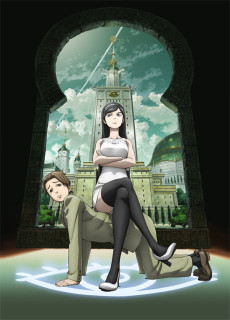
Porori’s watery onomatopoeia echoes the viscous, biomechanical ooze dripping from Strogg conversion chambers in *Quake 4*—a shared obsession with body horror & occult transformation. Where Rhino Squad soldiers scream as their flesh welds to alien tech, *Gintama.: Slip Arc*’s absurd sci-fi logic warps human form just as violently: Kagura’s grotesque “Strogg-ified” parody in Episode 327 mirrors the game’s dread-laced spectacle. This isn’t tonal mimicry—it’s structural kinship: both weaponize absurdity to deepen the horror of bodily erasure.
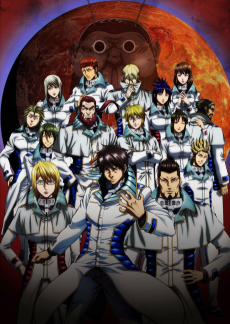
Rhino Squad’s descent into the alien hive—walls pulsing with organic circuitry, soldiers melting into biomass—mirrors *Terra Formars*’s gut-churning Mars colony collapse where cockroach DNA warps human bodies into chitinous abominations. This isn’t just shared 🖤 Adult & Dark Seinen tone; it’s a mutual obsession with biological invasion as irreversible, dehumanizing conquest—where every corridor in Quake 4’s bio-fortresses echoes the claustrophobic horror of *Terra Formars*’s infested tunnels. Surprisingly, both weaponize evolutionary dread: one through militarized sci-fi spectacle, the other through grotesque, insectoid body horror.

Quake 4’s gut-churning alien biotech—fleshy corridors pulsing with organic machinery—meets DAN DA DAN’s body horror not in gore, but in violation: Momo’s spirit medium lineage forces her to *host* entities, while Okarun’s cursed transformation into a cosmic entity warps his form like Rhino Squad’s bio-augmented soldiers. Where Quake 4 weaponizes space as hostile terrain, DAN DA DAN treats the cosmos as a chaotic, sentient playground—both fuse sci-fi scale with visceral, personal mutation. That collision of cosmic dread and intimate bodily betrayal feels startlingly coherent, not coincidental.
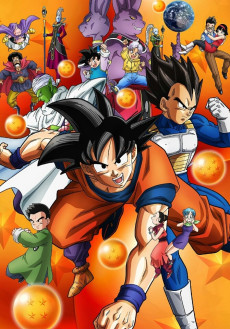
Quake 4’s grim, zero-gravity assault on Stroggos—where Rhino Squad’s armor cracks under plasma fire—echoes Dragon Ball Super’s Tournament of Power: both escalate sci-fi stakes through visceral, physics-defying action spectacle. Unlike most anime battles rooted in ki mysticism, Super grounds its cosmic warfare in tangible spatial logic—planets shatter, arenas fracture, gravity shifts—mirroring Quake 4’s industrial alien architecture and tactical disorientation. That shared commitment to *sci-fi* as tactile, consequential world-building makes their adrenaline feel startlingly symbiotic.

Connected through 2 aesthetic dimensions.

Connected through 2 aesthetic dimensions.

Connected through 2 aesthetic dimensions.
Connected through 2 aesthetic dimensions.
























![Fate/stay night [Heaven’s Feel] III. spring song](https://s4.anilist.co/file/anilistcdn/media/anime/cover/large/bx21719-MSdTlkno0Z0u.jpg)


























Match Dimensions Explained
❓Frequently Asked Questions
Why is Terra Formars considered the closest anime to Quake 4’s vibe?
Because both drop you straight into a brutal, no-BS alien war where humanity’s survival hinges on grotesque biological adaptation—like when Takashi's squad gets infected by the cockroach-like 'Manga' parasites and starts mutating mid-battle, mirroring Quake 4’s infamous 'become one of them' twist. The claustrophobic Mars base assaults and visceral body-horror action (think Akari’s arm splitting open to reveal chitinous blades) hit the same desperate, militarized sci-fi pulse as Rhino Squad’s descent into the alien hive.
Is there an anime adaptation of Quake 4?
No—Quake 4 has never been adapted into an anime. But if you’re craving that exact cocktail of elite-military space invasion + irreversible body horror transformation, Gintama.’s Slip Arc nails it: when Gengai re-engineers Kagura with biomechanical implants and she *literally* tears through Joui’s enemies with alien-grade strength and bleeding chrome tendons, it’s Quake 4’s ‘become one of them’ ethos in Edo-period drag.
How does DAN DA DAN compare to Terra Formars for Quake 4 fans?
Terra Formars leans harder into grim, tactical body horror—like the visceral ‘Honeycomb’ mutation scene where a soldier’s skin calcifies mid-firefight—while DAN DA DAN matches Quake 4’s energy with chaotic, physics-defying spectacle: think Momo’s ‘Spiral’ powers warping gravity during the lunar battle, or Uchuu’s suit cracking open to reveal pulsing organic circuitry, echoing Rhino Squad’s tech-meets-flesh escalation—but with way more fourth-wall-breaking swagger.
What’s the best anime like Quake 4 for that ‘desperate military invasion’ mood?
Go! Go! Loser Ranger! Season 2—it’s shockingly spot-on. When the team storms the alien mothership in Episode 12, their battered suits sparking and helmets cracking under bio-laser fire, it mirrors Rhino Squad’s gritty, grounded chaos. And just like Quake 4’s ‘you may discover the only way to defeat them… is to become one of them,’ the finale reveals their ‘Loser’ armor was *always* symbiotic—growing teeth, shifting joints, and whispering back.