
Getter Robo: Armageddon
Sent to jail after being accused of murdering Getter Robo creator Dr. Saotome, Ryoma Nagare must once again team up with his former comrades and pilot Getter Robo when Saotome returns from the dead and threatens humanity by unleashing his greatest creation - the Shin Dragon. Their efforts, however, are in vain as they fail to stop a nuclear warhead from hitting Shin Dragon, resulting in a massive Getter Ray contamination that wipes out 99% of the planet's population. Thirteen years after this great catastrophe, mankind continues to fight for survival against the Invaders. Out of the remains of the nuclear blast comes Shin Getter, piloted by the artificial human Go. With remnants of the Japanese military by his side, Go - along with co-pilots Kei and Gai - must use Shin Getter to exterminate the Invaders once and for all.
(Source: Anime News Network)
📺Anime Details
📝Editorial Analysis
The air tastes like burnt copper and wet bone. Thirteen years after the detonation, Ryoma Nagare walks across a cracked highway where asphalt splits open to reveal pulsing, bioluminescent veins beneath — not roots, not wires, but living Getter Ray tissue, still metabolizing radiation, still breathing. His hand trembles not from fear, but from the slow, sickening recognition: this isn’t ruin — it’s gestation. The world didn’t die. It mutated. And every rusted hulk of a tank, every half-buried skyscraper fused with fossilized dinosaur vertebrae, every distant, guttural shriek echoing from a crater lined with iridescent, chitinous scales — all of it hums with the same terrible aliveness that birthed Shin Dragon.
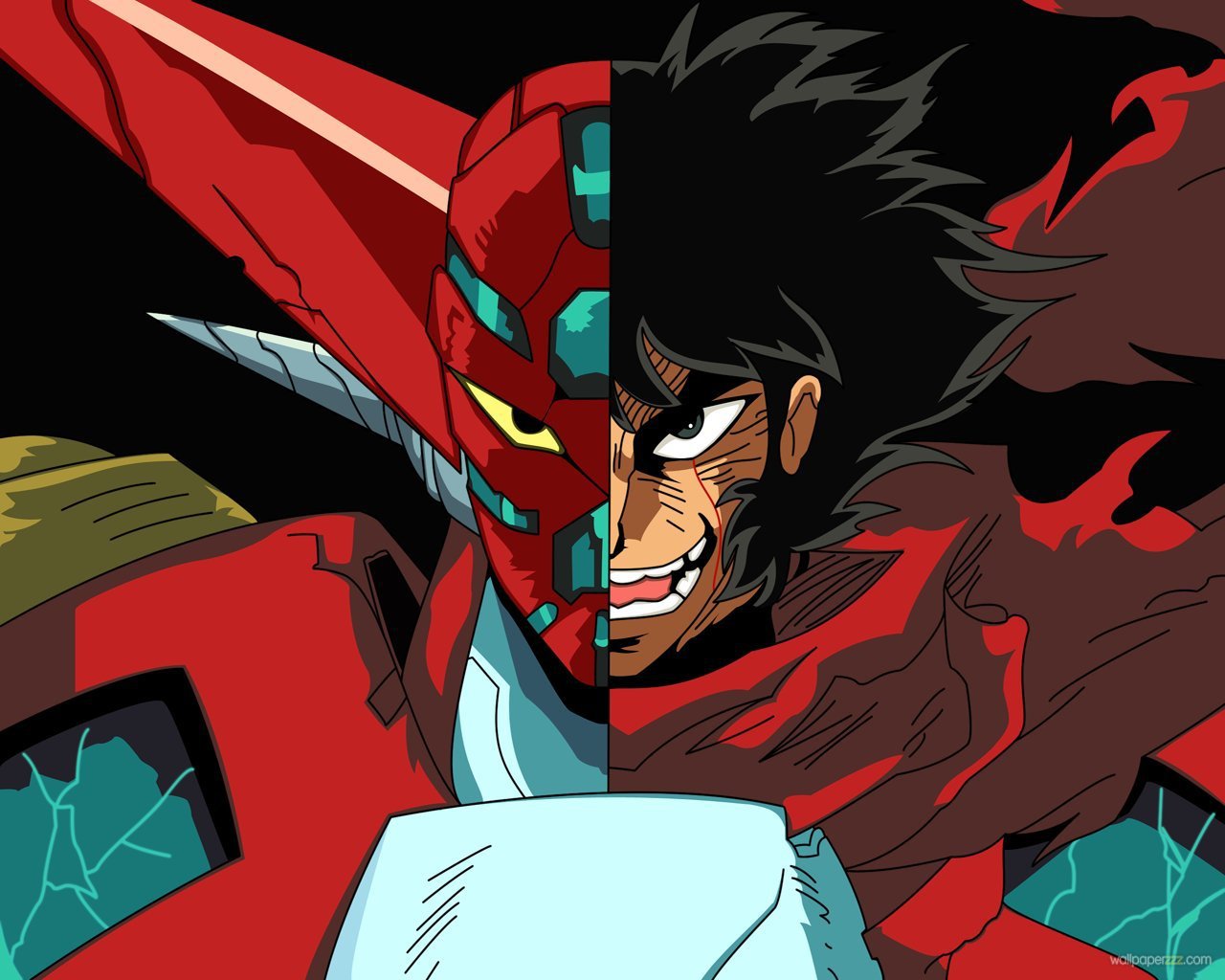
That’s the core vibration of Getter Robo: Armageddon: not despair, but viability in violation. It’s horror dressed in mecha logic — the kind where your own body might betray you mid-pilot sequence, where “survival” means choosing which limb to amputate before the Getter contamination spreads up your spine, where “space” isn’t escape but a vector for something older and hungrier than humanity. This isn’t Shounen triumph. It’s resistance without promise, where victory is measured in seconds of delayed collapse, and every act of heroism leaks into grotesque consequence. You don’t feel empowered watching it — you feel exposed, like your nervous system is one wrong frequency away from resonating with the Shin Dragon’s bio-electric scream.
That raw, unrelenting viability-in-ruin echoes in S.T.A.L.K.E.R.: Shadow of Chernobyl, where the Zone isn’t just dangerous — it’s sentiently hostile, rewriting physics and biology on whim. The description nails it: you fear “radiation, anomalies and deadly creatures, but other S.T.A.L.K.E.R.s” — just like Armageddon’s survivors distrust not only the environment, but each other’s mutated reflexes, their own decaying memories. A player review calls the map “big and beautiful,” but beauty here is uncanny, layered with dread — exactly how Armageddon frames a sunset over a city half-digested by crystalline growths. Both force you to move through decay, not past it — every footstep risks triggering an invisible anomaly or waking something that’s been waiting, patient, in the static.
Then there’s Supreme Commander, whose Infinite War rages for a thousand years — not as spectacle, but as geological time. The description doesn’t glorify scale; it frames war as an ecosystem: “three opposing forces… no room for compromise.” That’s Armageddon’s post-nuke reality too — not factions, but evolutionary pressures. The player review highlights “the scale of the battles,” but what sticks is how the game makes you feel small within systems — like piloting Getter Robo against Shin Dragon isn’t about skill, but about being a single neuron firing inside a collapsing brain. You don’t command armies; you endure them. Survival isn’t crafting armor — it’s learning when to retreat into silence, because even your tactics might be metabolized by the enemy’s next form.
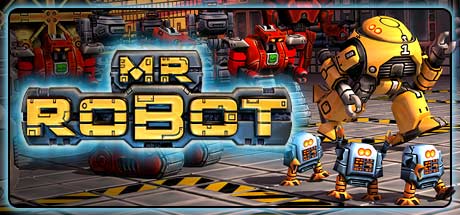
And Mr. Robot, though retro, lands with eerie precision: Asimov, a “lowly service mechanoid” aboard a colony ship carrying frozen humans, must act when the ship’s “computer brain malfunctions.” That’s Ryoma’s arc distilled — a broken man, literally jailed for a crime he can’t remember, reactivated by a system (Saotome’s return) he no longer trusts. The player review notes “light Mega Man Battle Network type exploration and battles,” but the emotional resonance is in the service identity: both Asimov and Ryoma are tools forced to question whether their purpose is salvation — or just another stage of the infection. Their battles aren’t flashy; they’re diagnostic, frantic attempts to isolate the flaw before the whole architecture dissolves.
Who lives for this? Not the fan who wants clean catharsis or heroic certainty. It’s the person who pauses mid-gameplay to stare at a glitched texture — not annoyed, but fascinated — because it looks alive in the wrong way. It’s the viewer who rewatches Armageddon’s opening jail cell scene not for plot, but for the way light fractures across Ryoma’s cuffed wrists, catching the faint, bioluminescent shimmer already crawling under his skin. They don’t seek endings — they seek thresholds: the moment before the scream, the second after the detonation, the breath held between memory and mutation. They love stories where the monster isn’t outside the door — it’s rewriting the lock.
🎮108 Games That Match the Vibe
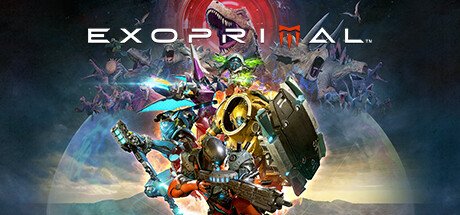

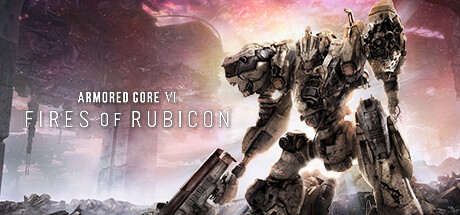

















Match Dimensions Explained
❓Frequently Asked Questions
Why does Mr. Robot feel so different from Getter Robo: Armageddon even though both have mecha and sci-fi?
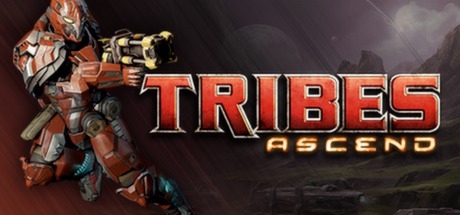
Because Mr. Robot is a retro-styled action-platformer with light Mega Man Battle Network–style exploration and turn-based-ish mechanoid battles—not the over-the-top, three-pilot-fused-mecha chaos of Getter Robo. You play as Asimov, a service mechanoid on the colony ship Eidolon, solving malfunctions and fighting in tight, deliberate encounters—not roaring through cityscapes with triple-rocket fists.
Is there an anime or movie adaptation of Tribes: Ascend like there is for Getter Robo?
No—Tribes: Ascend has no anime or film adaptation. It’s purely a multiplayer FPS built around jetpack-enabled team combat on massive sci-fi battlefields, with weapon DLC from ten expansions. Unlike Getter Robo’s decades-deep anime legacy, Tribes lives entirely in-game: think lightning-fast skiing, orbital strikes, and capturing beacons—not dramatic pilot backstories or fusion sequences.
How does Supreme Commander compare to S.T.A.L.K.E.R.: Shadow of Chernobyl for mecha-heavy military sci-fi?
Supreme Commander delivers massive-scale RTS mecha warfare—think towering experimental units, continent-spanning battles, and The Infinite War’s ideological clash—while S.T.A.L.K.E.R. ditches mechs entirely for gritty survival horror in the Zone, where anomalies, radiation, and mutated creatures dominate. Neither has piloted robots like Getter Robo, but Supreme Commander nails the 'military sci-fi' dimension with strategic depth; S.T.A.L.K.E.R. leans hard into body horror and atmosphere instead.
What’s the best game like Getter Robo: Armageddon if I just want chaotic, fast-paced action without heavy story or crafting?
Tribes: Ascend is your pick—it’s pure, mindless fun with jetpacks, skiing, and explosive team-based combat across huge sci-fi maps. No survival crafting (like in S.T.A.L.K.E.R. or Supreme Commander), no narrative detours (like Mr. Robot’s colony-ship mystery), and zero puzzle-solving (unlike Space Quest). Just grab a rifle, boost downhill, and frag someone mid-air—exactly the adrenaline rush Getter fans crave.