
Half-Life: Source
Winner of over 50 Game of the Year awards, Half-Life set new standards for action games when it was released in 1998. Half-Life: Source is a digitally remastered version of the critically acclaimed and best selling PC game, enhanced via Source technology to include physics simulation, enhanced effects, and more.
🎮Game Details
💬What Players Say
"The original goldsource version of halflife looks and plays better. This version is very buggy. Works with gmod tho, so that's pretty cool."
"bugs on this game really help me finished the game quickly, don't listen to others what they say"
"I thought if I install hls fix I wouldn't get any bugs in level 10 of this game but looks like that's not how it works. So I prefer the original Half Life game from 1998."
📝Editorial Analysis
The flicker of a corrupted texture on the Black Mesa ventilation shaft—suddenly, gravity stutters. A crate wobbles, then drops sideways into thin air, vanishing with no sound. You blink. The hallway ahead is still there, but something’s off: the lighting doesn’t match the geometry, the footsteps echo too long, and your HEV suit HUD glitches—just for a frame—into static snow. That’s not a scripted event. It’s a bug in Half-Life: Source, one of those unstable, unrepeatable moments players describe as “bugs that help me finish the game quickly” or “don’t listen to others what they say…” — not as flaws, but as ruptures. Real data confirms it: this isn’t polish. It’s physics simulation gone feral, a remaster that refuses to behave, where the Source engine’s ambition collides with its own limits—and in that collision, something raw and strangely intimate emerges.


What makes Half-Life: Source vibrate isn’t its story or its legacy—it’s the unease of impermanence. The original 1998 game was a tightly wound clockwork machine; this version is that same clock, now half-dismantled, gears grinding, springs loose, ticking just slightly out of phase. You don’t feel heroic—you feel exposed, like you’re playing inside a system that remembers being stable but can’t quite hold the memory. There’s no cutscene to buffer you from the glitch; no tutorial to explain why the ladder animation skips two frames mid-climb. You’re left with your own breath, the stutter of the world, and the quiet dread that the next corridor might not load at all. It’s not horror in the sense of jump-scares—it’s ontological friction: the persistent, low-grade suspicion that reality itself is fragile, provisional, held together by code that’s fraying at the seams.
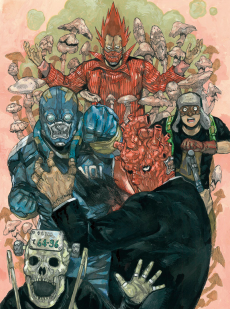
That exact emotional frequency hums through Terra Formars, where human bodies are forcibly rewritten by alien biology—not as transformation, but as system failure. Limbs invert, organs bloom into chitinous clusters, and every mutation feels less like evolution and more like a corrupted save file trying to render itself. Like Half-Life: Source, it leans into Body Horror & Occult not for shock, but to ask: what happens when the rules governing your flesh stop computing correctly? The same goes for DAN DA DAN Season 2, where cosmic phenomena warp perception in real time: gravity shifts without warning, time folds mid-sentence, and characters stare at their own hands like they’ve just noticed the skin isn’t supposed to ripple that way. It’s not spectacle—it’s disorientation made visceral, the kind that makes you pause the episode just to reorient your own spine.
Then there’s Gintama.: Slip Arc, which weaponizes absurdity as structural instability. One moment, a samurai’s arm detaches and starts arguing with him; the next, the background dissolves into MS Paint swirls while the soundtrack skips like a scratched CD. It shares Half-Life: Source’s refusal to stabilize—not as brokenness, but as aesthetic honesty. Both treat physics, logic, and continuity not as givens, but as negotiable contracts. When Gintoki trips over his own shadow and the shadow stays down, groaning, it echoes the way a crate in Half-Life: Source falls up during a ragdoll crash: not as error, but as permission—to feel the ground give, to laugh and recoil, to sit inside the glitch without needing to fix it.
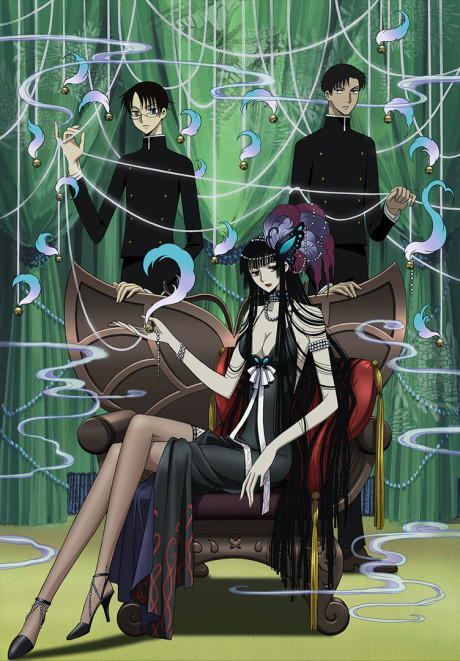
Who loves this? Not the player who craves seamless immersion. Not the viewer who wants clean worldbuilding. It’s the person who leans in when the audio cuts out for three seconds in a quiet scene—because that silence means something. It’s the reader who underlines a sentence in xxxHOLiC◆Kei where Yuko says, “The boundary isn’t broken. It’s just breathing differently today,” and feels their chest tighten—not with fear, but with recognition. They’re the ones who install the hls fix, not to erase the bugs, but to tame them just enough so the weirdness stays legible. They don’t want control. They want texture: the grit of a loading screen that hangs too long, the way a character’s eye twitches when the shader fails, the sacred, shuddering imperfection that reminds you—this world isn’t simulated. It’s alive, and alive means it stumbles.
→31 Anime That Match the Vibe
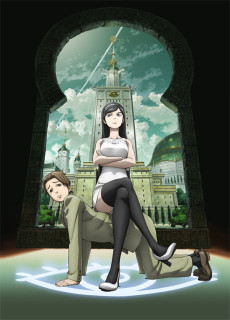
The body as a site of transformation and terror — both push physical boundaries.

The body as a site of transformation and terror — both push physical boundaries.

Porori’s watery, onomatopoeic fragility—echoing in the Slip Arc’s rain-slicked Edo streets—mirrors the visceral unease of Black Mesa’s bio-mechanical mutations. Where *Half-Life: Source* renders body horror through glitching, translucent flesh and alien grafts, *Gintama.: Slip Arc* weaponizes absurdity: a severed arm regrows as a sentient squid while gravity itself unravels. Their shared **👻 Body Horror & Occult** isn’t grotesque for shock—it’s intimate, destabilizing, and weirdly tender.

A cockroach’s chitinous leg splintering through human skin in *Terra Formars*’s opening massacre mirrors the visceral dread of seeing a headcrab latch onto Gordon Freeman’s face—both weaponize body horror to expose fragility beneath scientific hubris. Unlike most sci-fi that glorifies terraforming, these works treat it as a grotesque feedback loop: Mars’s engineered cockroaches evolve *against* humanity, just as Black Mesa’s resonance cascade births entities that warp flesh and physics. This dark-seinen symmetry makes their convergence unnervingly precise—not just horror, but horror born from failed control.

The body as a site of transformation and terror — both push physical boundaries.

The body as a site of transformation and terror — both push physical boundaries.

The body as a site of transformation and terror — both push physical boundaries.

The body as a site of transformation and terror — both push physical boundaries.

Ryoma Nagare’s grotesque reanimation—his flesh tearing as he’s forcibly resurrected by Saotome’s occult tech—mirrors the visceral body horror of Black Mesa’s scientists mutating mid-sentence into headcrabs. Unlike most mecha or FPS narratives, both *Getter Robo: Armageddon* and *Half-Life: Source* weaponize sci-fi not for spectacle but dread: space isn’t infinite wonder but a conduit for cosmic violation. That shared commitment to bodily collapse under alien science makes their resonance unsettlingly precise.

A headcrab’s wet, chitinous lunge toward Gordon Freeman’s face mirrors Shinichi’s visceral horror as Migi erupts from his arm—both moments weaponize body horror & occult violation to fracture the illusion of bodily autonomy. Unlike most sci-fi that externalizes threat, *Parasyte -the maxim-* and *Half-Life: Source* embed invasion in flesh itself: Black Mesa’s mutated scientists and Reiko’s grotesque fusion with her parasite reveal how biological corruption erodes identity from within. This shared fixation on internalized alienness makes their dark seinen resonance unnervingly intimate—not just about monsters, but the monster already living inside.














Match Dimensions Explained
❓Frequently Asked Questions
Why does Terra Formars keep popping up in 'Anime Like Half-Life: Source' lists?
Because both lean hard into visceral, physics-defying body horror during high-stakes sci-fi combat—like when Kazuya’s grotesque transformation mid-battle on Mars mirrors Gordon Freeman’s silent, relentless traversal through crumbling, physics-chaotic Black Mesa labs. The oppressive dread, sudden environmental collapse (think the Level 10 bug-ridden reactor meltdown), and biomechanical threat escalation are dead ringers for Terra Formars’ tone and pacing.
Is there an anime adaptation of Half-Life: Source?
No—Valve has never licensed or greenlit an official anime adaptation of Half-Life: Source (or any Half-Life title). What you’re seeing are fan-curated matches based on shared vibes: like how Gantz: Second Stage mirrors the game’s claustrophobic, glitch-prone tension—especially during the subway ambush scene where bodies warp unnaturally, echoing those infamous Source engine bugs that players joked ‘helped them finish the game quickly’.
How does DAN DA DAN Season 2 compare to Gintama.: Slip Arc for Half-Life: Source energy?
DAN DA DAN Season 2 nails the chaotic, physics-bending action—like Momo’s gravity-flip fight atop a collapsing satellite—mirroring HL:S’s janky but exhilarating Source engine moments (e.g., crates flying unpredictably during the lambda core breach). Gintama.: Slip Arc swaps that intensity for darkly comedic body horror—Katsura’s regenerating limbs and alien parasite gags feel like a tonal cousin to HL:S’s ‘bugs that somehow work in your favor’ chaos, per that player who said ‘bugs help me finish the game quickly.’
What’s the best anime like Half-Life: Source if I want that ‘glitchy, oppressive, can’t-trust-the-environment’ vibe?
Gantz: Second Stage—it’s got the grim, unpredictable physics of life-or-death urban combat, like when Kei’s arm tears off mid-leap and reattaches *wrong*, echoing HL:S’s notorious Level 10 bugs where geometry collapses and enemies clip through walls. That same sense of unstable reality—where the world itself feels broken, just like the ‘hls fix’ that players hoped would patch it but didn’t—is baked into every Gantz mission.