
Hanamonogatari
Second season of the Monogatari Series, part 2/2. Contains the arc Suruga Devil from the Hanamonogatari light novel.
Now that Koyomi Araragi and Hitagi Senjougahara have graduated, few familiar faces remain at Naoetsu Private High School. One of them is Suruga Kanbaru, holder of the Monkey's Paw. When she begins to hear talk of a mysterious being known as the "Devil," who will magically solve any problem, she immediately thinks these rumors are about her and decides to investigate.
Kanbaru discovers the Devil is actually Rouka Numachi, a former rival who provides free advice to those who seek her out now that she can no longer play basketball due to a leg injury. As a collector of misfortune, Numachi enjoys relieving her clients' stress by giving them false hope. Though Kanbaru sees no real harm being done, she reprimands Rouka for lying and heads home, relieved she is not the cause of the rumors. But the next morning, when she finds that her left hand has reverted back to its original form, she may have a reason to worry after all.
📺Anime Details
📝Editorial Analysis
The fluorescent hum of Naoetsu Private High’s empty gymnasium at dusk—Suruga Kanbaru dribbling a basketball alone, the thump-thump-thump echoing like a heartbeat slowed by exhaustion, not exertion. Her sneakers squeak, but no one answers. She stops, breathes, stares at her palm—the Monkey’s Paw—then flicks the ball hard against the far wall. It bounces back, hits her chest, drops. No fanfare. No resolution. Just the quiet weight of a wish she can’t name and a problem she’s already solved, badly.
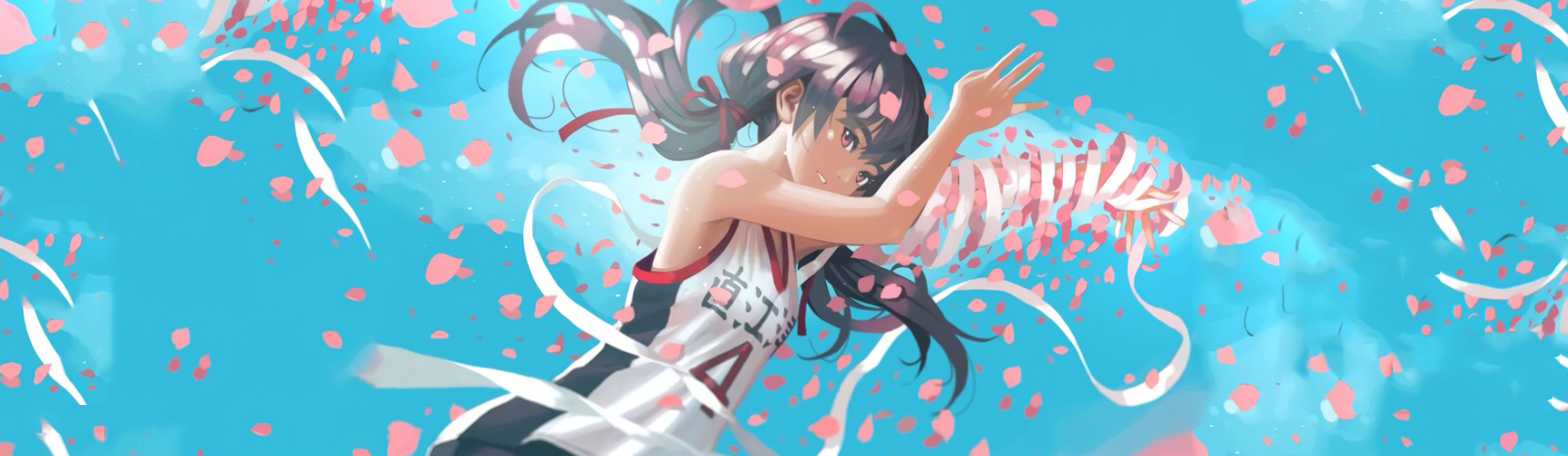
That silence—between the bounce and the fall—is Hanamonogatari’s atmosphere. Not melancholy, not despair, but unmoored gravity: the sensation of standing upright while everything you believed held you down has quietly dissolved. It’s the hush after a suicide attempt that isn’t dramatized as crisis but as residue—lingering in hallway glances, in the way Kanbaru ties her hair too tight, in how she flinches at kindness like it’s a language she’s forgotten how to parse. This isn’t urban fantasy as spectacle; it’s urban fantasy as aftermath. The ghosts aren’t specters in mirrors—they’re the versions of yourself you buried alive so you could keep showing up to class. The philosophy isn’t abstract—it’s the raw calculus of choosing to exist when your own mind feels like borrowed space. And the basketball? Not sport. A metronome. A rhythm to prove your body still obeys something, even if your will won’t speak its name.
Which is why Prince of Persia (2024) resonates—not because of sand or time-bending, but because of its romance & shoujo and adult & dark seinen dimensions colliding in real time. The player review notes it’s “a new prince, new lands and a brand new story completely separate from the sands”—a deliberate severing, just as Kanbaru severs herself from Araragi’s shadow, from Senjougahara’s sharpness, from the safety of being “the sidekick with the paw.” Both works treat transformation as violent intimacy: the Prince doesn’t gain power—he loses control to something older, hungrier, more honest. Like Kanbaru confronting the Devil not as monster, but as mirror: the part of her that believes pain is the only proof she’s real.
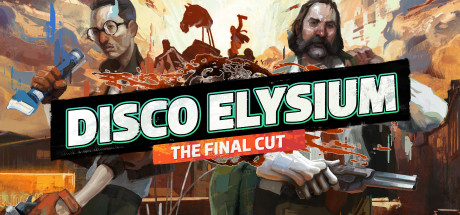
Then there’s Disco Elysium - The Final Cut, whose description names “a detective with a unique skill system” and a city to carve across—exactly how Kanbaru navigates Naoetsu: not with clues, but with skills she didn’t know she had until they betrayed her. The player review quotes: “Capital has the ability to subsume all critiques into itself. Even those who would critique capital end up reinforcing it instead.” That’s Kanbaru’s entire arc—not about economics, but about internalized logic: the belief that self-erasure is the price of belonging, that suffering is the only legitimate currency of care. Both Disco Elysium and Hanamonogatari force you to listen to voices inside your head that sound like truth—but are just old contracts, signed in panic. Neither offers redemption. They offer recognition: the dizzying, terrifying relief of hearing your own voice say, “I am not the problem. I am the one who was told I was.”
And yes—even The Sims™ 4, despite the player review complaining it’s “no fun without dlc,” taps the same nerve. Its description says: “Play with life and discover the possibilities. Unleash your imagination and create a world of Sims that’s wholly unique.” That’s Kanbaru’s quiet rebellion: rebuilding a self from scratch, not through grand gestures, but through mundane sovereignty—choosing her hairstyle, her posture, the exact angle she holds the basketball before she shoots. The game’s broken economy mirrors her fractured sense of value: what counts as “enough”? What counts as “alive”? When the review calls it “awful” for demanding payment to exist fully, it accidentally names the core wound Hanamonogatari explores: the exhausting labor of performing personhood when your inner infrastructure is still under construction.
This pairing isn’t for fans of “deep stories” or “good characters.” It’s for the ones who’ve sat in an empty gym at 5 p.m., wondering why their hands won’t stop shaking after the danger passed. For the ones who recognize the Devil not as a myth, but as the voice that whispers “Just one more sacrifice—and then you’ll be worthy.” It’s for players and viewers who don’t want catharsis—they want witnessing. Who need art that treats recovery not as arrival, but as the slow, gritty relearning of how to hold your own weight—without apology, without applause, and absolutely without magic.
🎮95 Games That Match the Vibe

















Match Dimensions Explained
❓Frequently Asked Questions
Why does Prince of Persia keep showing up in 'Games Like Hanamonogatari' lists?
Because both lean hard into surreal, emotionally charged romance layered with psychological unease—like when the Prince confronts fragmented memories and shifting palace architecture mirroring internal trauma, much like Araragi’s disorienting encounters with apparitions and time loops. It’s not about swords-and-sand; it’s that shared DNA of poetic melancholy, unreliable perception, and intimate, almost claustrophobic character focus—exactly why reviewers flagged its 'Romance & Shoujo' + 'Adult & Dark Seinen' dimensions.
Is there a visual novel or anime adaptation of Hanamonogatari?
No official visual novel or standalone anime adaptation exists—Hanamonogatari is itself the 8th arc of the Monogatari Series anime (2014), adapted directly from Nisio Isin’s light novels. But if you’re craving that same blend of razor-sharp dialogue, metaphysical dread, and romantic ambiguity, Disco Elysium nails it through detective monologues that spiral like Araragi’s inner voice—especially during late-night bar scenes where every choice feels weighted with existential regret and quiet longing.
How does Postal III compare to Stubbs the Zombie for dark comedy and body horror?
Both deliver grotesque physicality and absurdist satire—but Postal III leans into chaotic, fourth-wall-breaking nihilism (think the Dude ranting at NPCs while his pitbull Champ gnaws on a cop’s leg), whereas Stubbs trades dialogue for slapstick gore and environmental storytelling (like reattaching your own severed arm mid-chase). They share 'Body Horror & Occult' + 'Adult & Dark Seinen' dimensions, but Stubbs’ cartoonish physics and level design make its horror feel more playful, while Postal III’s jagged pacing mirrors Hanamonogatari’s jarring tonal whiplash between farce and despair.
What’s the best game like Hanamonogatari if I want that lonely, rain-soaked, late-night introspection vibe?
Disco Elysium — hands down. Picture yourself wandering Martinaise at 3 a.m., soaked and sleepless, hearing your own skills argue in your head like Araragi’s fractured conscience—‘Logic’ snarking while ‘Empathy’ quietly aches over a broken relationship. Its ‘Romance & Shoujo’ dimension isn’t flirty; it’s raw, hesitant, and deeply human, just like Hanamonogatari’s quiet scenes between Araragi and Higuchi under flickering streetlights.