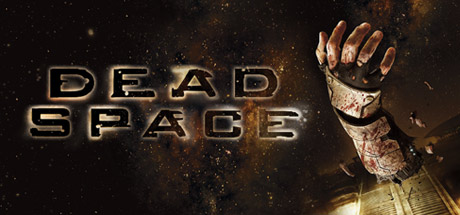
Dead Space (2008)
You are Isaac Clarke, an engineer on the spacecraft USG Ishimura. You're not a warrior. You're not a soldier. You are, however, the last line of defense for the remaining living crew.
🎮Game Details
💬What Players Say
"A true sci-fi horror classic. Amazing story and atmosphere with great visuals that still hold up today. A must play...."
"played this on hard mode, the game didn't end up being being more like medium difficulty is most other games, and certainy if you take a little time looking around the environment to smash and open boxes often times selling ammo is better than having to throw it away for a better item later there is an impossible mode but the game isn't interesting enough to do it all again it was a decently scary experience with the camer, environment and especially the audio work allowing itself to be louder in tense moments the movement is a bit tanky but without locking your movement when aiming, it does allow for a closer view similar to resident evil and while the physics here is pretty cool they do also get pretty silly at times, which also made me realize how much of this game inspired viscera cleanup detail, which is to say most of it and there is a save point roughly evey 5-10 minutes, along with checkpoints alongside the unskippable cutscenes and hints that slow the pace of the game and since issac doesn't talk it does come off a little strange the character they are trying to build up since it's unclear what issac himself is like outside of a few moments but there are actually a bunch of cool concepts that do get utilized within this game which is quite impressive on its own i would say it's worth buying but it will be a good experience rather than a great one"
"Good game, holds up very well. No Origin / EA Play required. It sounds like there might be some bugs on modern Windows but I had zero issues on SteamOS."
📝Editorial Analysis
The airlock door hisses shut behind you—not with relief, but with the slow, hydraulic groan of a coffin sealing. You’re Isaac Clarke, an engineer, not a warrior, not a soldier—just the last line of defense for the remaining living crew aboard the USG Ishimura. Your hands are gloved in industrial-grade synth-leather; your tools are plasma cutters and stasis modules, not rifles. You don’t reload ammo—you craft it, scavenging scrap from corpses and consoles, slicing off limbs to survive another corridor, another flicker of light, another breath that tastes like copper and coolant. That’s not gameplay—it’s weight. Real, physical, suffocating weight—exactly what players mean when they call Dead Space (2008) “a true sci-fi horror classic” whose atmosphere “still holds up today.”
This isn’t dread as spectacle. It’s dread as routine: the way your peripheral vision catches movement just outside the beam of your RIG helmet lamp, the way every vent exhales a whisper of static, the way the ship’s architecture itself feels wrong—too symmetrical, too silent, too hungry. You’re not fighting monsters because you chose to—you’re doing it because the environment insists. The player review noting how “certainly if you take a little time looking around the environment to smash and open bo…” isn’t just about resource hunting—it’s about ritual. Every broken panel, every shattered glass tube, every severed limb is a tiny act of defiance against entropy, against the thing that turned human bodies into grotesque, twitching vectors of infection. You don’t feel powerful. You feel permeable. And that permeability—that sense of being unmoored, both physically and ontologically—is what makes Dead Space vibrate at a frequency few games ever reach.
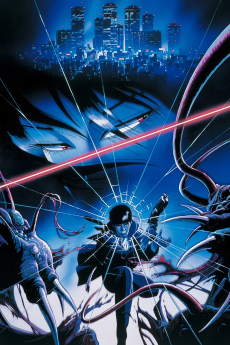
That frequency hums through Getter Robo: Armageddon, where biomechanical fusion isn’t triumph—it’s violation. Like the Ishimura’s necromorphs, Getter’s transformations aren’t upgrades; they’re invasions, reshaping flesh and steel into unstable, screaming hybrids. Both share Sci-Fi & Space, yes—but more crucially, Body Horror & Occult: the terror isn’t that something kills you, but that it rewrites you, stitch by synthetic stitch. Then there’s Terra Formars, where astronauts on Mars don’t battle aliens—they become them, their own biology hijacked, mutated, weaponized. Its Survival & Crafting isn’t about building shelters—it’s about jury-rigging antivenom from your own blood, suturing torn muscle with salvaged polymer, all under crushing gravity and thinner air. Just like Isaac, the characters aren’t heroes—they’re engineers, medics, biologists forced to improvise humanity in real time. And Made in Abyss: Wandering Twilight doesn’t flinch from the cost: descent isn’t adventure—it’s erosion. The Sixth Layer’s curse doesn’t just distort the body; it unmakes intention, turning resolve into tremor, memory into static. Its Adult & Dark Seinen tone matches Dead Space’s refusal to comfort—to let you believe safety exists, or that clarity is possible once the lights go out.
Who lives for this? Not the person who wants catharsis. Not the one craving victory laps or power fantasies. It’s the viewer who watches a character press their palm flat against a vibrating bulkhead and feels the resonance in their own sternum. It’s the player who, after capping frame rate and tweaking mouse sensitivity—not for speed, but for control—finally hears the Ishimura breathe with them, not at them. It’s the reader who lingers on a single panel in Made in Abyss where a character’s smile doesn’t reach their eyes—not because they’re lying, but because their nervous system has already begun its quiet, irreversible unraveling. These pairings speak to those who understand horror not as jump scares, but as continuity: the slow, inevitable bleed between tool and wound, between ship and corpse, between self and the void that’s been waiting—not outside the hull, but inside the design specs all along. That’s why the silence after a necromorph falls isn’t peace. It’s the sound of the next breath holding—trembling, listening, knowing.
→122 Anime That Match the Vibe
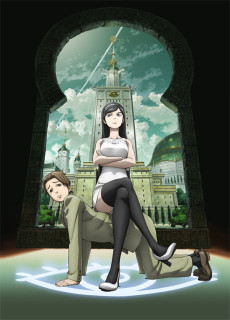
Connected through 2 aesthetic dimensions.
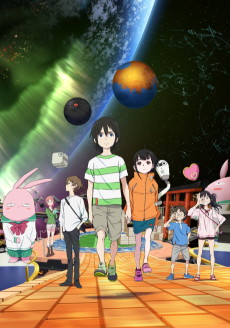
Connected through 4 aesthetic dimensions.

Connected through 2 aesthetic dimensions.

Isaac Clarke’s trembling hands reassembling a plasma cutter aboard the corpse-choked Ishimura mirror Ryoma Nagare’s desperate, guilt-ridden reassembly of Getter Robo—both acts of survival craftsmanship amid escalating body horror. Unlike most mecha narratives, *Armageddon*’s occult resurrection plot and the Ishimura’s Marker-induced mutations fuse sci-fi space dread with visceral, biomechanical violation. This resonance isn’t coincidence: **Survival & Crafting** becomes sacred ritual when tools are all that stand between humanity and unraveling flesh.

Isaac Clarke’s desperate, improvised limb-amputation of a Necromorph aboard the Ishimura mirrors the Terra Formars crew’s visceral, failed attempts to surgically counteract their own grotesque mutations—body horror as engineering failure. Where Dead Space weaponizes zero-G claustrophobia and jury-rigged plasma cutters, Terra Formars (2014 TV series) transplants that same tactical survival into Martian terraforming labs overrun by hyper-evolved cockroach-human hybrids. This resonance isn’t just aesthetic—it’s existential: both treat sci-fi not as wonder, but as a hostile system where biology, machinery, and survival tactics violently collide.

Isaac Clarke’s desperate, zero-G crawl through the Ishimura’s ruptured spine—wrench in hand, suit leaking oxygen—mirrors Cloud Strife’s solitary sprint across Midgar’s rain-slicked, neon-drowned ruins in *Advent Children*, both men armored not by confidence but by trauma and tactical restraint. Unlike most sci-fi action, neither leans on heroism; instead, they anchor spectacle in cyberpunk & dystopia’s grime—exposed wiring, flickering holograms, decaying infrastructure—as if technology itself is a failing organ. That shared insistence on vulnerability amid scale makes their resonance startling: space horror and post-apocalyptic fantasy converging where tactical warfare becomes quiet, bodily survival.

The body as a site of transformation and terror — both push physical boundaries.

The body as a site of transformation and terror — both push physical boundaries.

Isaac Clarke’s trembling hands tightening around a plasma cutter aboard the derelict Ishimura mirror JP’s white-knuckled grip on Redline’s modified “Sweet Pea” as it screams through asteroid-choked void—both men engineers first, warriors by necessity. Unlike most sci-fi action, neither work romanticizes combat or speed; instead, they fuse 🚀 Sci-Fi & Space with visceral, claustrophobic urgency—blood splatter on zero-G corridors, tire smoke boiling in vacuum. That shared dread-of-the-void intensity makes their resonance startling: vulnerability isn’t weakness—it’s the only lens through which survival feels real.

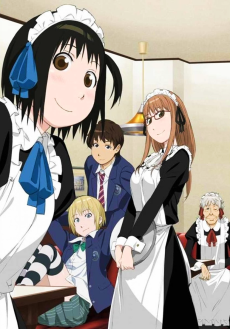
Isaac Clarke’s desperate, non-combatant survival aboard the necrotic Ishimura—sawing limbs to stave off reanimated corpses—mirrors Porori’s eerie, water-dripping silence before cosmic horror erupts in *Gintama.: Slip Arc*’s unused manga interludes. Where *Dead Space* weaponizes body horror as visceral physics-defying dismemberment, *Slip Arc* distorts it through absurdist Shinto-occult logic: a falling droplet (*porori*) becomes a portal to existential dread. This shared sci-fi scaffolding—spacefaring decay meets bureaucratic absurdity—makes their resonance startlingly coherent, not coincidental.










































![Fate/stay night [Heaven’s Feel] III. spring song](https://s4.anilist.co/file/anilistcdn/media/anime/cover/large/bx21719-MSdTlkno0Z0u.jpg)















































Match Dimensions Explained
❓Frequently Asked Questions
Why is Terra Formars recommended for Dead Space fans?
Because like Isaac Clarke on the Ishimura, the crew of the BUGS ship faces grotesque, rapidly evolving alien biology—think the cockroach-human hybrids exploding from walls or mutating mid-fight, mirroring Dead Space’s necromorphs. The claustrophobic zero-G corridors, desperate resource scavenging (like salvaging ammo from corpses), and that gut-churning moment when a teammate’s body *twists* into something unrecognizable? Pure Terra Formars—and it nails the 'engineer-turned-last-line-of-defense' dread.
Is there an anime adaptation of Dead Space?
No—there’s never been an official anime adaptation of Dead Space (2008). EA hasn’t greenlit one, and while fan edits and AMVs exist (especially around the USG Ishimura’s eerie hallways or Isaac’s plasma cutter dismemberments), nothing matches the game’s tone like Getter Robo: Armageddon’s biomechanical horrors or Gantz: Second Stage’s brutal, no-safety-net survival in hostile space.
How does Made in Abyss: Wandering Twilight compare to Terra Formars for Dead Space vibes?
Terra Formars leans harder into sci-fi horror *action*: think Isaac fighting off swarming, body-horror abominations in tight ship corridors. Made in Abyss: Wandering Twilight swaps spaceships for the Abyss’s crushing depths—but delivers similar psychological weight: Nanachi’s mutilated form, Reg’s near-fatal injuries, and that suffocating sense of isolation where every descent feels like stepping deeper into the Ishimura’s derelict bowels. Both punish curiosity—and reward grim resilience.
What’s the best anime like Dead Space if I want that ‘engineer-survivor-in-a-dying-ship’ vibe?
Getter Robo: Armageddon—it’s got Dr. Saotome, a brilliant but haunted scientist forced to pilot biomechanical war machines *inside* a decaying orbital fortress, just like Isaac jury-rigging systems aboard the Ishimura. You’ll spot direct parallels: emergency lights flickering over blood-smeared metal corridors, enemies bursting from vents with jagged, fused bone-and-machine limbs, and that same desperate, non-superhero energy—no flashy powers, just grit, tools, and terrible choices.