
Another
When Kouichi Sakakibara transfers to a new school, he senses a frightening atmosphere in his new class, a secret none of them will talk about. At the center is the beautiful Mei Misaki. Kouichi is immediately drawn to her mysterious aura, but he begins to realize that no one else in the class is aware of her presence. Soon after his arrival, what is known as the Calamity begins, and it claims the lives of many students.
(Source: Sentai Filmworks)
📺Anime Details
📝Editorial Analysis
The fluorescent lights in Class 3-3 hum—not steadily, but with a thin, wavering tremor—like something breathing just out of sync with the rest of the school. Kouichi Sakakibara watches Mei Misaki sit alone at her desk, her profile sharp and still, her hair falling like ink over the collar of her uniform. No one glances her way. Not once. Not even when she lifts her head and meets his eyes—cold, certain, unblinking. The air doesn’t just feel heavy; it feels edited. As if reality itself has been scrubbed clean of her existence—and yet, she remains, a silent correction no one dares to acknowledge.

That’s the ache Another lives inside: not fear of death, but dread of erasure. It’s the horror of being surrounded by people who share your space but not your memory—who laugh in hallways where you just watched someone vanish from a class photo, whose textbooks list names crossed out in red ink you’re not supposed to see. The tragedy isn’t that the Calamity kills. It’s that it unwrites. Every corpse is a punctuation mark in a sentence no one remembers writing. The school isn’t haunted by ghosts—it’s haunted by gaps: gaps in attendance records, in recollection, in consent. You don’t scream because something jumps out—you freeze because your own mind refuses to confirm what your eyes insist is real. That slow, suffocating dissonance between perception and collective denial? That’s the emotional core. It makes you question whether grief is personal—or just another symptom of the curse.
BioShock Infinite shares that same vertigo of fractured consensus. Its description names “Time & Memory” as a core dimension—and the player review admits, however reluctantly, that the game forces you to confront “the Bioshock Infinite we could have gotten.” That phrase aches with the same resignation as Kouichi realizing no adult will ever validate Mei’s presence. Both works trap you in systems where truth is unstable, where every revelation peels back not answers, but layers of suppression. Booker doesn’t just fight enemies—he fights versions of himself erased from history, just as Class 3-3 fights to forget Mei before she’s even fully remembered.
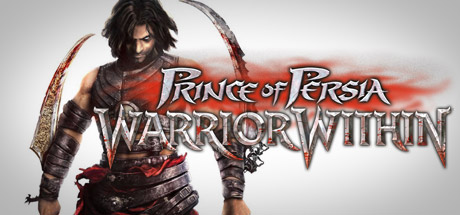
Prince of Persia: Warrior Within mirrors the physical toll of that psychological unraveling. Its description centers on being “hunted by Dahaka, an immortal incarnation of Fate”—a force that doesn’t kill you for breaking rules, but for existing outside them. Like Mei, Dahaka isn’t evil; it’s corrective. And the player review calls the chase “goated”—not for its spectacle, but for its inescapability, its rhythmic, breathless inevitability. That’s the rhythm of Another: not jump scares, but the steady tick toward the next death, the next gap, the next time Kouichi blinks and realizes someone’s desk is suddenly empty—and no one else flinches.
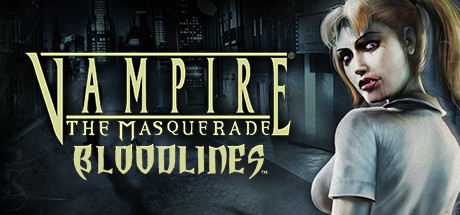
Vampire: The Masquerade – Bloodlines, too, lives in that liminal dread. Its description highlights “Body Horror & Occult” and “Adult & Dark Seinen”—but the player review’s urgent, almost pleading tone (“*BUY IT ON GOG… GOG version comes with it”) reveals something deeper: this is a world that breaks if you don’t patch it, that fails* if you trust the surface. Just like Class 3-3’s fragile social contract—if you don’t perform ignorance, the system collapses. Both demand you navigate layers of deception not as puzzles to solve, but as survival protocols. You don’t “win” the masquerade. You endure it—until your reflection starts looking wrong.
This pairing isn’t for fans of gore or jump scares. It’s for the person who rewatched Another’s final classroom scene—not to see the resolution, but to count how many seconds pass before someone finally looks at Mei. It’s for the player who paused Warrior Within mid-chase just to listen to Dahaka’s footsteps echo one beat too long. It’s for those who read the BioShock Infinite review and felt their throat tighten—not at the critique, but at the quiet, shared exhaustion of living inside a story that refuses to let you settle into certainty. They don’t want catharsis. They want witnessing. They want to stand in the fluorescent hum—and know, bone-deep, that they’re the only one hearing it waver.
🎮74 Games That Match the Vibe




















Match Dimensions Explained
❓Frequently Asked Questions
Why is BioShock Infinite on the 'Games Like Another' list when it's not about time travel?
Great question—it’s not *just* about time travel! 'Another' leans hard into fractured memory and identity collapse, and BioShock Infinite nails that with Booker/Comstock’s looping psychological unraveling—especially in the lighthouse reveal and the baptism scenes. The shared 'Time & Memory' + 'Adult & Dark Seinen' dimensions (plus that gut-punch ending where choice dissolves into inevitability) make it a tonal twin, even without literal time machines.
Is there a movie or anime adaptation of Another?
No official live-action or anime adaptation exists—but Prince of Persia: Warrior Within feels like what an 'Another'-style anime would *sound* like: Dahaka’s relentless, time-bent pursuit mirrors the cursed class reunion logic, and the Prince’s guilt-ridden flashbacks (like the sand-scarred memories of his father’s death) hit that same 'haunted by your own past' vibe fans love in 'Another'. It’s not an adaptation—but it’s spiritually adjacent.
How does Vampire: The Masquerade – Bloodlines compare to Another in terms of horror tone?
Both weaponize dread through helplessness and hidden corruption—but while 'Another' uses quiet school hallways and uncanny classmates, Bloodlines drops you into a rain-slicked, neon-drenched LA where every vampire you meet could be lying, starving, or about to betray you (like Jeanette or Smiling Jack). The Body Horror & Occult + Adult & Dark Seinen overlap isn’t accidental: think of the visceral Nosferatu transformation scene versus 'Another’s' cursed classroom photos—same slow-burn rot, different flavor.
What’s the best 'Another'-like game if I want that oppressive, slow-burn dread but with more action?
Go straight to Prince of Persia: Warrior Within—the Dahaka chase sequences are pure 'Another' tension translated into swordplay: you’re constantly backtracking through crumbling, time-eroded corridors, hearing its breath close behind, knowing one misstep means being erased from existence. That ‘dread + momentum’ combo—plus the Prince’s fragmented memories of the Hourglass Chamber—is exactly what makes it the most kinetic match on the list.