
BioShock™
BioShock is a shooter unlike any you've ever played, loaded with weapons and tactics never seen. You'll have a complete arsenal at your disposal from simple revolvers to grenade launchers and chemical throwers, but you'll also be forced to genetically modify your DNA to create an even more deadly weapon: you.
🎮Game Details
💬What Players Say
"one of the most revolutionary games ever! genuinely changed the gaming world when it was released in 2007."
"It's a good game if you wanna try something different from a normal first person shooter game... I usually play Hitman, Halo or sometimes Call OF Duty but this game is really cool... And have some really good graphics as well......."
"this game is a one time opportunity. Nothing like this will ever come back. Less technology more vision and creativity...."
📝Editorial Analysis
The first time you hear the distant, warped lullaby echoing through Rapture’s flooded halls—while your own breath rasps in your helmet, while a revolver clicks empty and a chemical thrower sputters blue fire—you’re not just playing a shooter. You’re drowning in ideology. Not water. Not even fear. But the suffocating weight of a utopia that weaponized its own ideals until they curdled into splicers, sirens, and silent, staring eyes behind broken glass. That’s the feeling the official description hints at—not just “genetically modify your DNA,” but becoming what you were built to destroy. And the players? They don’t call it “cool” or “different” lightly. One says it changed the gaming world—not with tech, but with vision. Another calls it a one time opportunity, mourning how today’s games trade soul for scale. That ache—the hollowness behind the spectacle, the dread beneath the awe—is BioShock™’s true signature.
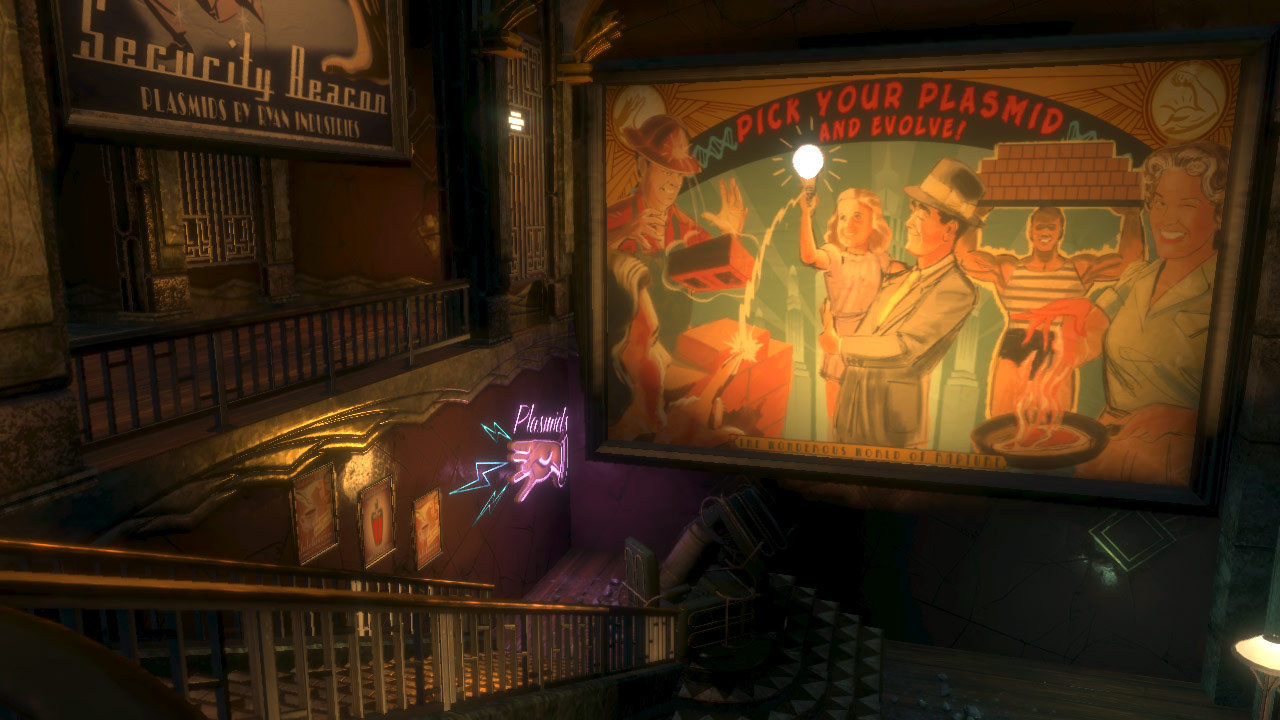


It doesn’t feel like dystopia as backdrop. It feels like dystopia inhaled. Every corridor smells of salt, rust, and something sweetly rotten—like ideology left too long in a pressure chamber. You’re not fighting monsters; you’re navigating the corpse of a philosophy. Objectivism didn’t fail in Rapture—it mutated, bloomed into grotesque self-replication: plasmids as sacraments, ADAM as both drug and divinity, every choice a compromise with your own erosion. That’s why the combat isn’t just tactical—it’s moral vertigo. Revolvers demand precision. Grenade launchers scatter chaos. Chemical throwers dissolve bodies and boundaries. You don’t just reload—you reassess. The player reviews nail it: this isn’t about aiming better. It’s about surviving after you’ve accepted that your power comes from the same rot you’re trying to purge. That’s the feeling: inescapable complicity. Not despair. Not hope. Something colder, sharper—recognition.
Fire Force Season 3 shares that same claustrophobic political thrum—not through pyrokinetic spectacle, but through its architecture of control. Like Rapture’s hidden vents and sealed-off sectors, Tokyo’s infernal districts are stratified by doctrine, surveillance, and sanctioned violence disguised as salvation. Both weaponize belief systems until faith becomes force—and force becomes flesh. The dim label “Political Thriller, Cyberpunk & Dystopia” isn’t decorative: it’s the shared oxygen. You don’t watch Fire Force’s third season for fireballs. You feel the weight of institutions lying to themselves while burning their own foundations.
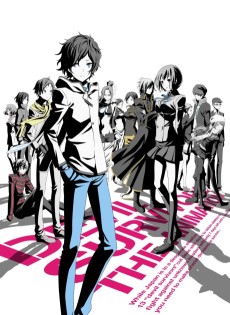
No.6 is even more surgical in its resonance. Its sterile, humming city isn’t underwater—it’s under observation, every gesture parsed, every dissent pre-empted. Like Rapture’s hidden cameras and Big Daddy patrols, No.6’s perfection is enforced through quiet erasure—not explosions, but disappearances. The Adult & Dark Seinen dimension isn’t mood lighting. It’s the refusal to let the protagonist stay naive. When Shion walks past children reciting state doctrine, or when he sees his own reflection in a polished wall that also shows a guard’s silhouette behind him—that’s BioShock™’s DNA: you are always being watched by the idea you helped build.
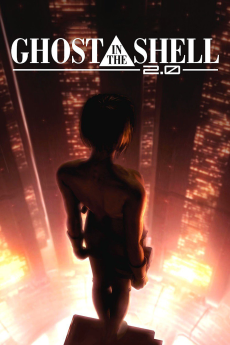
And Ghost in the Shell: Stand Alone Complex 2nd GIG—that slow, rain-slicked descent into Section 9’s moral fog—mirrors BioShock™’s central paradox: the more you optimize yourself (cybernetics, plasmids, neural upgrades), the less certain you become of who is optimizing. Motoko’s ghost isn’t metaphysical—it’s bureaucratic. Like Jack’s final confrontation with Atlas, it’s not about good vs. evil, but whose voice is scripting your rebellion. The Political Thriller dim here isn’t plot scaffolding—it’s the air you breathe. Every negotiation, every data dive, every silent pause before pulling a trigger carries the same gravitas: power doesn’t corrupt. It clarifies—then hollows you out.
This pairing isn’t for fans of “cool powers” or “deep lore dumps.” It’s for the person who replays the Lutece twins’ dialogue not for answers—but for the texture of the lie. For the viewer who watches Fullmetal Alchemist: Brotherhood’s Ishval arc and feels sick not at the blood, but at the minutes-long silence after the order is given. For the player who, after finishing BioShock™, stares at their real-world phone—not because it’s shiny, but because it listens, learns, and adapts… just like Rapture adapted you. They don’t want escapism. They want resonance. The kind that hums in your ribs long after the screen goes dark.
→282 Anime That Match the Vibe

Rapture’s collapsing Art Deco spires echo the fractured Tokyo skyline of *Fire Force* Season 3—both worlds bleed political thriller tension as ideology curdles into apocalypse. Where Fontaine’s propaganda tapes distort truth in crumbling underwater halls, Special Fire Force Company 8 confronts state-sanctioned lies in real-time, their battle against the Evangelist mirroring BioShock’s confrontation with Andrew Ryan’s objectivist ruin. This isn’t just dystopia—it’s cyberpunk as ideological autopsy, dissecting power’s rot with surgical, devastating clarity.

Rapture’s crumbling Art Deco spires and Klein Moretti’s fog-choked, gaslit streets both pulse with the same dread of ideological collapse—where utopian dreams curdle into body horror & occult rot. Unlike most political thrillers, neither flinches from showing how power warps flesh: Fontaine’s plasmid experiments echo the Apostles’ grotesque transformations under Divine Principles. This resonance isn’t superficial—it’s structural, binding Rapture’s fallen objectivism to the Churches’ dogmatic fracturing in *Lord of Mysteries* Season 1’s slow-burn theological warfare.

Shion’s quiet horror as the sterile utopia of No.6 fractures—revealing prison cells beneath flower gardens—mirrors Jack’s first glimpse of Rapture’s collapsed grandeur through a shattered aquarium window. Both unfold as political thrillers where ideology curdles into violence, and privilege masks systemic rot. Unlike most dystopias, neither offers escape: Shion’s trauma deepens in the ruins of his childhood home, just as Jack’s genetic determinism traps him in Rapture’s looping tragedy—dark seinen at its most unflinching.
![[C] - CONTROL - The Money and Soul of Possibility](https://s4.anilist.co/file/anilistcdn/media/anime/cover/medium/bx10163-DGTY24yRLZrt.jpg)
Rapture’s collapsing Art Deco spires mirror the sterile, debt-choked Tokyo of *C*—where financial algorithms replace plasmids as instruments of control. Unlike most political thrillers, both weaponize economic collapse: BioShock’s objectivist dystopia bleeds into *C*’s Sovereign Wealth Fund crisis, exposing how capital becomes a literal, soul-consuming force. This resonance isn’t superficial—it’s cyberpunk & dystopia forged in the same grim alchemy of systemic betrayal.

Connected through 2 aesthetic dimensions.
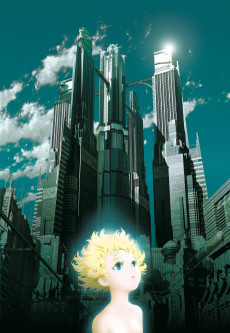
BioShock’s Rapture and Metropolis’s layered cityscape both manifest vertical dystopias where gleaming Art Deco opulence conceals rotting ideological foundations—think Fontaine’s department store mirroring Rotwang’s cathedral spires, or the Little Sisters’ hollow-eyed devotion echoing Maria’s mechanized martyrdom. Their shared cyberpunk pulse thrums in cold blue lighting, oppressive brass-and-st...

Connected through 2 aesthetic dimensions.
Connected through 2 aesthetic dimensions.

Connected through 2 aesthetic dimensions.

BioShock’s crumbling Rapture and Lain’s fragmented Wired share a claustrophobic, decaying digital sublime—glitching neon signage reflecting off wet, abandoned corridors; both drown the viewer in oppressive, low-frequency ambient soundscapes that blur diegetic and non-diegetic space. Fontaine’s charismatic authoritarianism and the Wired’s faceless consensus echo each other’s dread of ideology ma...















































































































































































































![Fate/stay night [Heaven’s Feel] III. spring song](https://s4.anilist.co/file/anilistcdn/media/anime/cover/large/bx21719-MSdTlkno0Z0u.jpg)









Match Dimensions Explained
❓Frequently Asked Questions
Why is No.6 compared to BioShock so often?
Because both plunge you into a gleaming, decaying utopia—No.6’s sterile city of 'Nanba' mirrors Rapture’s Art Deco horror: surface order hiding systemic rot, genetic experimentation on citizens (like No.6’s ‘Manticore’ trials vs. Rapture’s ADAM plasmids), and that gut-punch moment when Shion sees the truth behind the walls—just like Jack discovering Fontaine’s lies in the Pauper’s Drop bathysphere scene.
Is there an anime adaptation of BioShock?
No official anime adaptation exists—but Fire Force Season 3 hits *so* close in tone and structure: its underground city of Tokyo, rigged with authoritarian surveillance and forbidden genetic combustion (like Plasmid powers), plus characters like Shinra grappling with inherited power and moral collapse, feels like BioShock’s dystopian DNA translated into shōnen pacing and visual flair.
Fullmetal Alchemist: Brotherhood vs. Ghost in the Shell: SAC 2nd GIG—which is more like BioShock?
Ghost in the Shell: SAC 2nd GIG edges it out for BioShock fans—it’s got that same chilling political thriller backbone: Section 9 dissecting state-sponsored bio-augmentation scandals (think ADAM ethics debates), the ‘Individual Eleven’ arc’s ideological warfare mirroring Rapture’s civil war, and Major Kusanagi’s existential crisis over identity after neural modification—very much like Jack questioning his own agency post-‘Would You Kindly?’ conditioning.
What’s the best anime like BioShock if I want that ‘soulless tech vs. raw human vision’ vibe?
Go straight to [C] - CONTROL — it’s literally about financial algorithms hijacking human consciousness, and its cold, geometric cityscapes + characters like Mr. Money losing autonomy to systemic forces nail BioShock’s core tension: ‘Less technology, more vision’ (as that player review says). When the protagonist stares at a stock ticker that *breathes*, you’ll feel the same dread as Jack watching the Little Sisters harvest ADAM in silence.