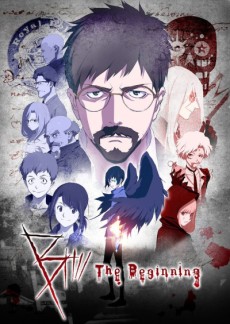
B: The Beginning
In a world powered by advanced technology, crime and action unfold in the archipelagic nation of Cremona. Koku, the protagonist. Keith, the legendary investigator of the royal police force RIS. A mysterious criminal organization. A wide variety of characters race through the fortified city as it is beset by the serial killer, Killer B, and a chain of crimes.
(Source: Netflix, edited)
📺Anime Details
📝Editorial Analysis
Rain slicks the neon-drenched ferroconcrete of Cremona’s lower tiers—not gently, but in cold, insistent sheets that smear the glow of holographic billboards into bleeding halos. Koku stands motionless on a rusted maintenance gantry, bare feet gripping wet metal, breath shallow, eyes fixed on a distant RIS patrol drone humming past like a wasp. His body is wrong: not broken, not wounded—but other. Something folded into his bones, something humming just beneath the skin. You don’t hear it. You feel it—the low thrum vibrating up through the soles, the way light bends around him when he moves, the silence he leaves behind even as sirens wail below. That’s not atmosphere. That’s presence: a fugitive body holding its breath in a city built to surveil, categorize, and erase.
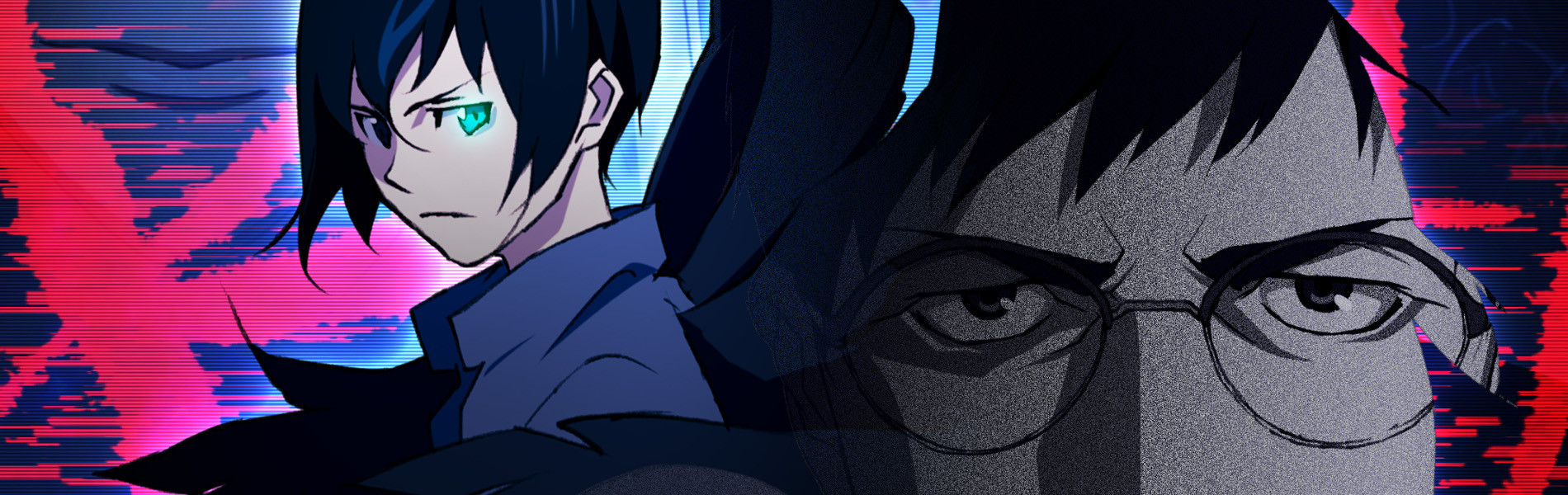
What makes B: The Beginning ache isn’t its plot mechanics or its supernatural rules—it’s the weight of being perpetually misread. Keith isn’t just a detective; he’s a man whose authority is rooted in a system that fractures under scrutiny—RIS, royal police, fortified city, “advanced technology” all presented not as triumphs but as infrastructure of control. Every alleyway hums with surveillance static. Every suspect is already profiled before they speak. Even amnesia here isn’t poetic fog—it’s erasure as policy, body horror not as spectacle but as bureaucratic consequence. You don’t feel wonder watching Koku’s abilities unfold—you feel dread, because his power doesn’t liberate him. It makes him more legible to the machine hunting him. That’s the core sensation: paranoia with nowhere to hide, wrapped in rain-slicked, high-tech melancholy.
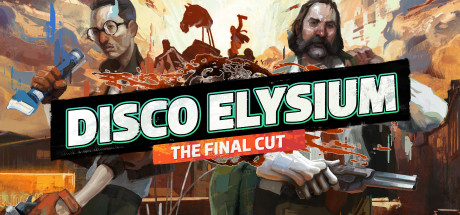
That emotional DNA pulses strongest in Disco Elysium - The Final Cut, where the city of Revachol doesn’t just host the mystery—it is the mystery. Its description calls it a “Political Thriller, Neon Noir,” and the player review nails the suffocation: “Capital has the ability to subsume all critiques into itself. Even those who would critique capital end up reinforcing it instead.” Like Cremona, Revachol offers no clean outside—no wilderness, no off-grid refuge—just layered systems (police, unions, communists, fascists) all feeding the same rot. Keith and Harry Du Bois both walk cities where every door opens into another institution, every confession deepens complicity. The dread isn’t about who killed whom—it’s about realizing the question itself was written by the walls.
Then there’s Max Payne, described as “a fugitive undercover cop framed for murder, hunted by cops and the mob… a man with his back against the wall.” Not just hunted—framed. That word lands like a brick. Koku didn’t choose to be Killer B. Keith didn’t choose to inherit RIS’s legacy of silence. Both are trapped inside narratives authored by forces they can’t name, let alone confront directly. The player review recalls passing the controller after death—“once you died, you passed the controller to the next player”—which mirrors how B: The Beginning distributes trauma: no one bears it alone, but no one escapes it either. The noir isn’t stylistic. It’s structural. The shadows aren’t cinematic—they’re procedural.
And Crash Time 2, flawed as its player review insists (“awful controls… janky physics… no basic support for gamepad”), still shares something vital: it’s set in an open-world autobahn police state, where your job isn’t justice—it’s containment. You chase, escort, investigate—but never dismantle. The description tags it “Adult & Dark Seinen” and “Mystery & Detective,” but what binds it to Cremona is the sheer, grinding bureaucracy of pursuit: red tape, radio chatter, jurisdictional walls, vehicles that fishtail because the world refuses to hold still. It’s not about catching the killer—it’s about staying in rotation, keeping the system humming while the real violence happens off-screen, in unlit corridors and encrypted servers.
This pairing isn’t for fans of “cool powers” or “gritty action.” It’s for the ones who pause mid-episode when Koku blinks and a flicker of static ghosts across his iris—not because it’s cool, but because it hurts to watch someone become evidence of their own erasure. It’s for players who replay Max Payne 2’s final hallway not for the shootouts, but for the way the camera lingers on Max’s hands—trembling, stained, still holding the gun long after the last enemy falls. These are stories for people who recognize exhaustion as a character trait, who feel the weight of institutions in their molars, who know that the most terrifying monster isn’t the one with claws—it’s the one wearing a badge, signing a warrant, updating a database, smiling at you through a security feed. They don’t want escape. They want recognition. And in Cremona’s rain, Revachol’s fog, New York’s snow-slicked alleys—they find it. Raw. Unblinking. True.
🎮91 Games That Match the Vibe













Match Dimensions Explained
❓Frequently Asked Questions
Why does B: The Beginning feel so similar to Max Payne?
It’s all in that brooding, rain-slicked Neon Noir vibe and the way both hinge on a lone, traumatized antihero—Kokuryu’s moral ambiguity and trench-coat intensity echo Max Payne’s weary, bullet-time-fueled descent into conspiracy. Both lean hard into Mystery & Detective dimensions, with Max Payne’s ‘bullet-time’ dodges and noir monologues mirroring Kokuryu’s hyper-precise combat and voiceover-heavy internal conflict.
Is there a B: The Beginning video game adaptation?
No—there’s no official B: The Beginning game, but fans often reach for Disco Elysium when they want that same cerebral, politically charged detective grind. Disco Elysium’s skill-based dialogue (like your 'Logic' or 'Empathy' checks during tense interrogations in Martinaise) delivers the layered moral ambiguity and systemic depth that B’s investigative arcs tease but don’t simulate mechanically.
How does Crash Time 2 compare to Max Payne?
Crash Time 2 swaps Max’s gritty, scripted noir tragedy for janky, open-world Autobahn chases—but both share Adult & Dark Seinen tone and Mystery & Detective DNA. Where Max Payne makes you *feel* every betrayal in a rain-drenched alley, Crash Time 2 drops you into chaotic highway investigations with zero hand-holding (and, per player reviews, 'awful controls' and 'janky physics').
What’s the best game like B: The Beginning if I want that neon-noir political thriller mood?
Disco Elysium — The Final Cut is your top pick: its crumbling city of Revachol, morally fractured cop protagonist, and razor-sharp political writing ('Capital has the ability to subsume all critiques into itself') hit the exact same nerve as B’s shadowy bureaucracy and ideological tension. It scores 83 and shares *all three* core dimensions with B: Mystery & Detective, Political Thriller, and Neon Noir—no other title on the list matches that full triad.