Dangerous Waters
S.C.S. - Dangerous Waters allows you total control over multiple air, surface, and submarine platforms in a modern-day naval environment. Take direct control of individual crew stations and also plan and execute combined arms naval strategies from a top-down 'Commanders Eye' perspective.
🎮Game Details
💬What Players Say
"Old school simulation. Magnificent Mission editor. A testament to the people who made it that it still stands today."
"Got it for a few dollars and put over 20 hours in. If I didn't have some other more modern sims I'd play much longer but I feel at 25 hours I've seen what I want to see. Wish some of the modern ones were as good with there immersive UI...."
"good"
📝Editorial Analysis
The hum of a sonar ping echoing in your headphones—cold, precise, repeating every three seconds—while your fingers hover over the throttle and periscope controls. You’re not playing Dangerous Waters; you’re holding your breath inside a steel tube beneath black water, watching a contact bloom on the passive array display as a faint green smear. No music swells. No UI flashes red. Just the slow, deliberate rotation of the torpedo fire control solution—calculated, silent, irreversible. That’s the game: not spectacle, but weight. The official description nails it—“total control over multiple air, surface, and submarine platforms”—but what lingers isn’t the scale, it’s the stillness before consequence. A player puts in 25 hours and says, “I’ve seen what I want to see.” Not because it’s shallow—but because it trusts you to sit with the gravity of each decision, each toggle, each kilometer of submerged transit.
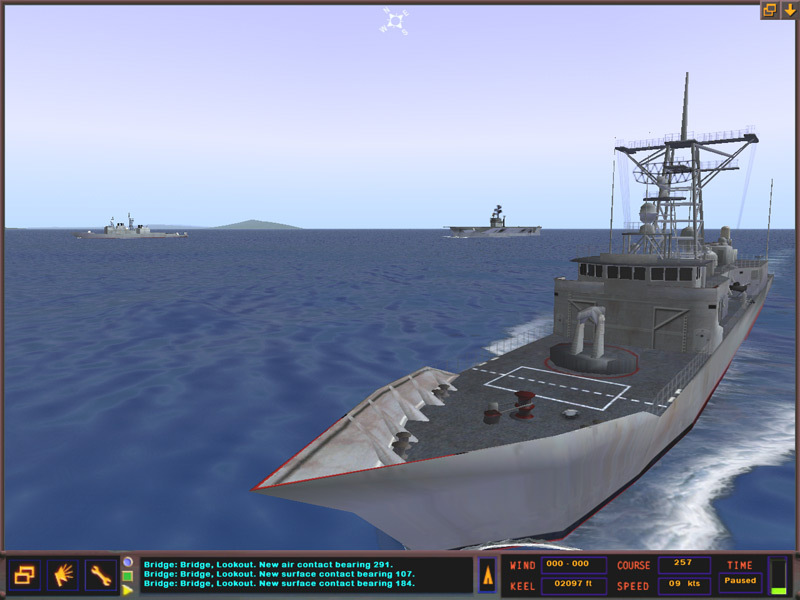
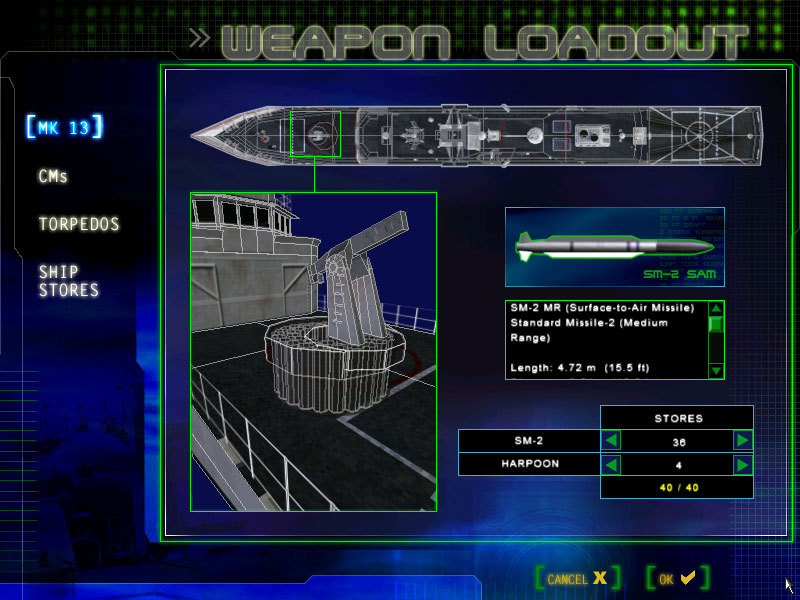
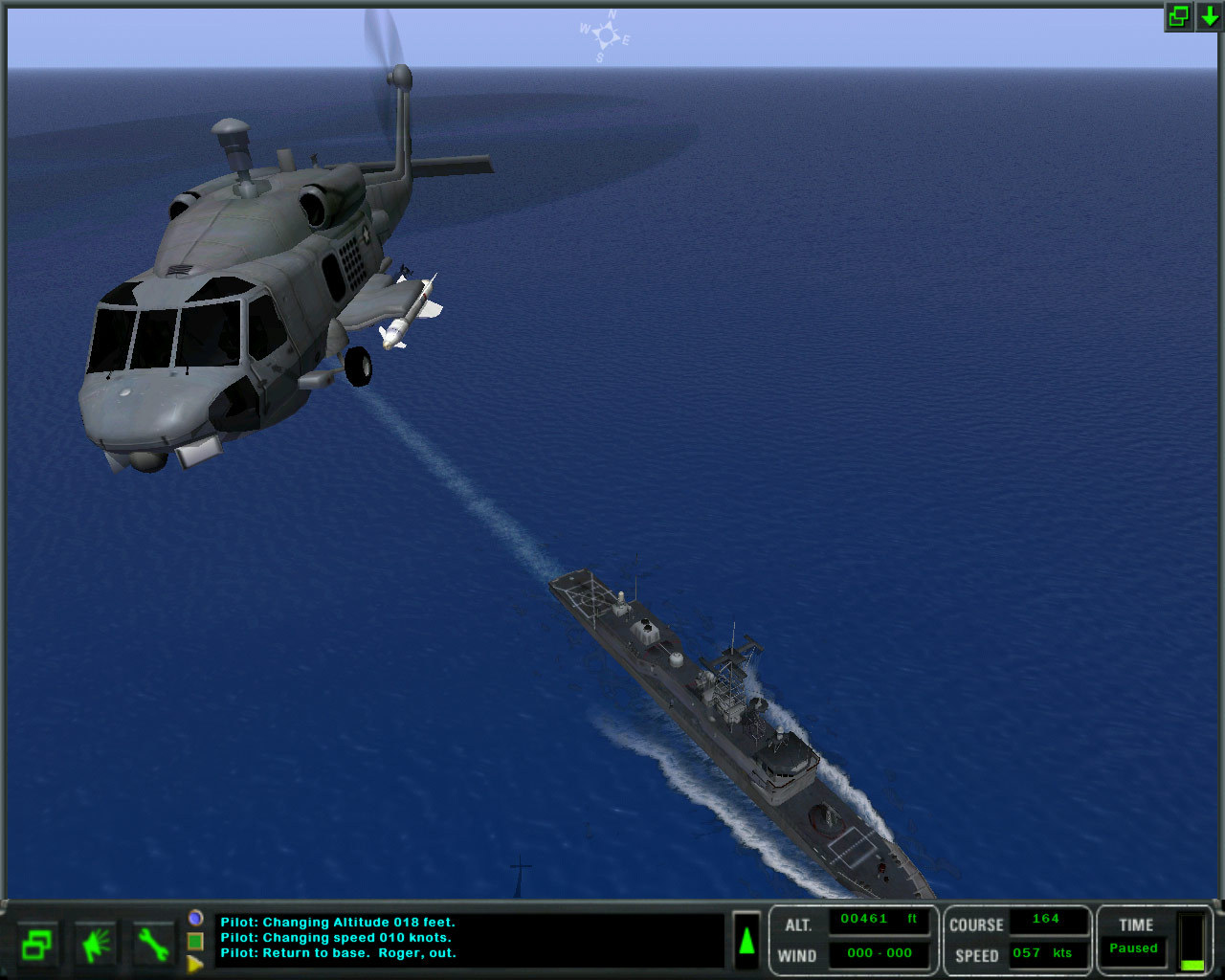
This isn’t tension built on cutscenes or health bars. It’s anticipation, thick and salt-stained. You feel the friction of real-world physics—not as obstacles, but as collaborators in meaning. The mission editor isn’t just a tool; it’s proof that the developers believed in intentionality: every patrol line, every radar sweep altitude, every torpedo depth setting carries moral and tactical weight. You think about logistics, not loot. About signal discipline, not skill trees. About how long it takes for a P-3 Orion to reach a datum—and whether the diesel sub you’re hunting has already gone quiet, listening back. There’s no dopamine rush from headshots here. Just the quiet satisfaction of a perfect intercept vector, or the hollow dread when your ESM suddenly goes dark—and you realize you’ve been painted. It’s professionalism as atmosphere. Not heroism. Not fantasy. Just competence, calibrated, consequential.
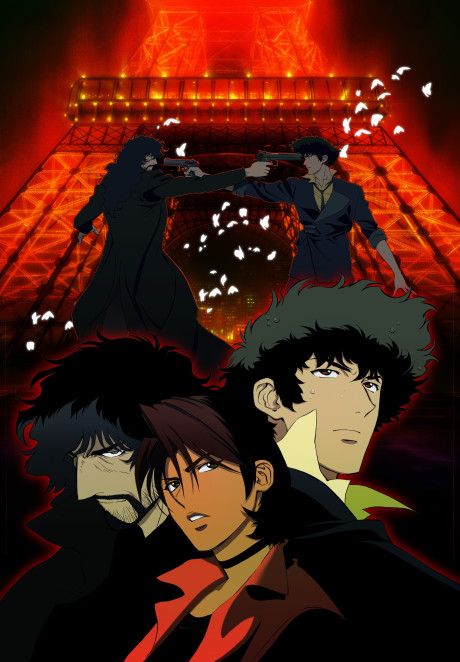
That same emotional frequency vibrates through Darker than Black, where Hei moves through rain-slicked Tokyo alleys not with swagger, but with the hyper-aware stillness of someone who knows one misstep in comms protocol could collapse an entire op. The Neon Noir palette isn’t just aesthetic—it’s operational camouflage: reflections on wet pavement double as radar returns; flickering signs mimic intermittent datalinks. And the Tactical Warfare dimension? Every fight is a chess match played across rooftops and surveillance feeds—no superpower flash, just positioning, timing, and the chilling calculus of collateral damage. Likewise, Noir doesn’t glamorize assassination—it renders it as procedure: briefing rooms lit by single desk lamps, synchronized watch checks, the exact angle needed to drop a sniper round through a ventilation shaft. The Neon Noir gloom isn’t moody—it’s functional, obscuring thermal signatures and radio chatter alike. And Buddy Daddies, at first glance softer, shares the same core rhythm: the quiet precision of parenting as counter-surveillance, diaper bags doubling as gear cases, playgrounds mapped for escape routes—the Tactical Warfare dimension isn’t about guns, but about maintaining cover while holding a child’s hand. All three treat danger not as spectacle, but as ambient pressure—just like adjusting ballast trim at 300 meters while a frigate’s towed array sweeps overhead.
This pairing speaks to the person who replays the same stealth approach in Metal Gear Solid 3 not for the outcome, but for the texture of the grass underfoot—and who watches My Hero Academia Season 4’s Kamino Ward arc not for Deku’s quirk explosions, but for the way Eraser Head’s command voice cuts through chaos with the same clipped authority as a CIC officer calling “All hands, rig for silent running.” They’re the ones who keep a physical notebook for mission notes, who pause anime mid-scene to sketch a tactical overlay on scratch paper, who feel relief when a system boots cleanly—not because it’s flashy, but because it means they can finally begin. They don’t crave victory—they crave verisimilitude, the quiet pride of a job done right, in the dark, without applause.
→40 Anime That Match the Vibe
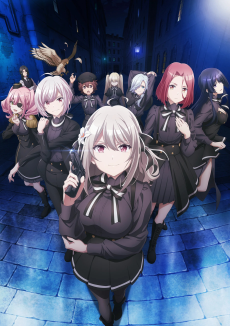
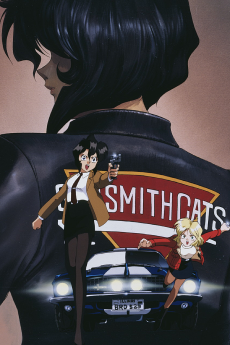
Shadows, cigarettes, and moral ambiguity — noir at its most stylish.

Shadows, cigarettes, and moral ambiguity — noir at its most stylish.

Shadows, cigarettes, and moral ambiguity — noir at its most stylish.

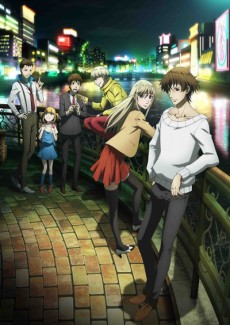
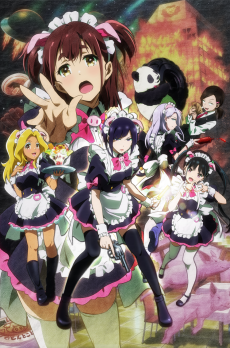
Neon-lit Tokyo docks in *Buddy Daddies*—where Kazuki checks Miri’s coat before a tense stakeout—pulse with the same tactical stillness as *Dangerous Waters*’ sonar-darkened submarine bridge during silent running. 🌃 Neon Noir isn’t just palette-deep: both weaponize domestic quiet (a shared apartment, a periscope’s narrow view) to heighten the weight of split-second decisions. Where *Dangerous Waters* demands station-level precision under electromagnetic silence, *Buddy Daddies* frames fatherhood as its own high-stakes CIC—Rei reloading mid-laundry, Kazuki calculating cover routes while packing bento. Surprisingly potent synergy.
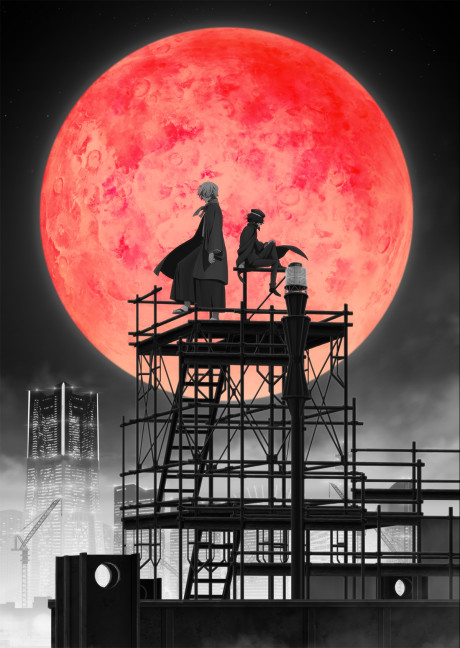
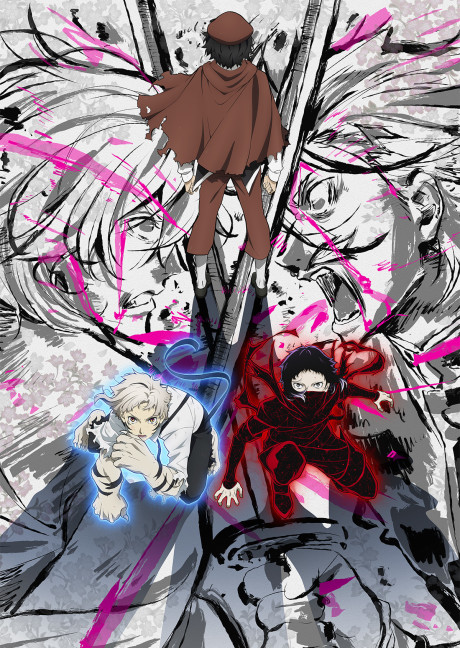
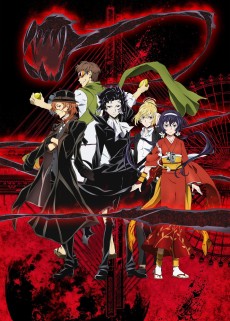
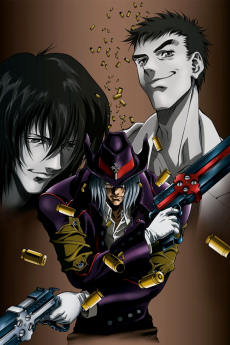
Neon-lit docks in *Bungo Stray Dogs 4*—where Yukichi Fukuzawa’s sword cuts through rain-slicked shadows—echo *Dangerous Waters*’ tense, low-light ASW operations beneath churning black seas. Unlike most tactical media that glorify command, both embrace **Neon Noir**’s moral ambiguity: Fukuzawa’s lone-guardian pivot mirrors the game’s lonely sonar operator listening for ghosts in the deep. This resonance is startling—naval realism and supernatural noir converging on quiet, high-stakes vigilance.
Shadows, cigarettes, and moral ambiguity — noir at its most stylish.
Shadows, cigarettes, and moral ambiguity — noir at its most stylish.
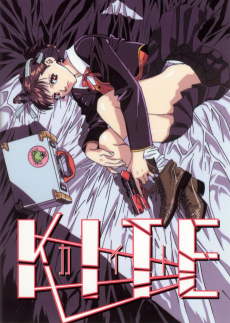
Shadows, cigarettes, and moral ambiguity — noir at its most stylish.

Shadows, cigarettes, and moral ambiguity — noir at its most stylish.
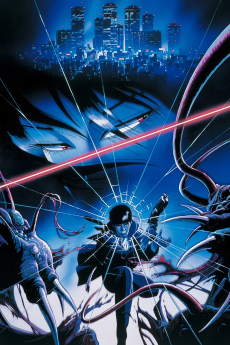
Shadows, cigarettes, and moral ambiguity — noir at its most stylish.
















Match Dimensions Explained
❓Frequently Asked Questions
Why is Darker than Black recommended for Dangerous Waters fans?
Because both lean hard into tactical naval-style coordination—like when Hei and the Syndicate execute multi-layered ops across Tokyo’s rain-slicked rooftops and hidden comms networks, mirroring how you switch between sonar, radar, and torpedo stations in Dangerous Waters. The ‘Neon Noir’ atmosphere and emphasis on real-time intel sharing (think: Hei’s Contractor powers syncing with Misaki’s field command) directly echo the game’s ‘Commanders Eye’ perspective and crew station switching.
Is there an anime adaptation of Dangerous Waters?
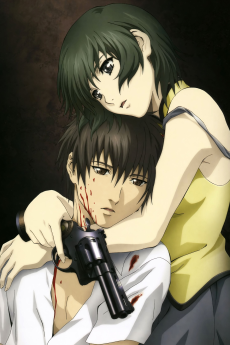
No—Dangerous Waters has never been adapted into an anime. But if you love its vibe, Noir hits closest: it’s not based on the sim, but features actual naval intel tradecraft, like Mireille’s precision sniper takedowns from offshore freighters and Kirika’s covert boarding ops—all grounded in the same ‘Neon Noir + Tactical Warfare’ DNA that makes Dangerous Waters feel so uniquely tense and methodical.
How does Buddy Daddies compare to Dangerous Waters in terms of strategy and pacing?
Buddy Daddies isn’t about fleet commands—but when Rei and Kazuki coordinate a high-stakes extraction from that neon-drenched Osaka port in Episode 10 (with timed distractions, overlapping cover fire, and split-second vehicle swaps), it nails the same tight, multi-role tactical rhythm you get juggling sonar, periscope, and EW systems in Dangerous Waters. Both reward planning, timing, and seamless role-switching—even if one’s got diapers and the other’s got diesel-electric subs.
What’s the best anime like Dangerous Waters if I want that ‘calm, focused, mission-planning’ vibe?
Go straight to Bungo Stray Dogs Season 4—the Port Mafia’s submarine infiltration arc (Episodes 3–5) has Atsushi and Dazai running silent, mapping patrol routes, syncing comms through encrypted channels, and executing layered deception just like your top-down ‘Commanders Eye’ view. It’s not flashy; it’s quiet, precise, and deeply procedural—the exact headspace you’re in when lining up a torpedo solution at 800m in Dangerous Waters.