
91 Days
The "classic mafia drama" takes place during the prohibition era. In the Lawless district the law has no power, the mafia rule the streets, and the illegally made liquor flows freely. At one time Avilio lived in this district, but after a mafia dispute ended in the murder of his family, he went into hiding. Later, Avilio receives a letter from a mysterious person that ignites his passion for revenge and leads him to return to Lawless. There, he infiltrates the Vanetti family and gets close to Nero.
(Source: Anime News Network)
📺Anime Details
📝Editorial Analysis
Rain slicks the cobblestones of Lawless like oil on a blade—cold, reflective, treacherous. You see it in the opening shot: Avilio’s hand, gloved and steady, placing a single white lily on his family’s unmarked grave—not in a cemetery, but beside a rusted rail spur where the train never stops anymore. No music swells. Just the low hum of distant jazz, warped through a broken speaker, and the click of his pocket watch snapping shut. That sound isn’t punctuation—it’s a countdown.
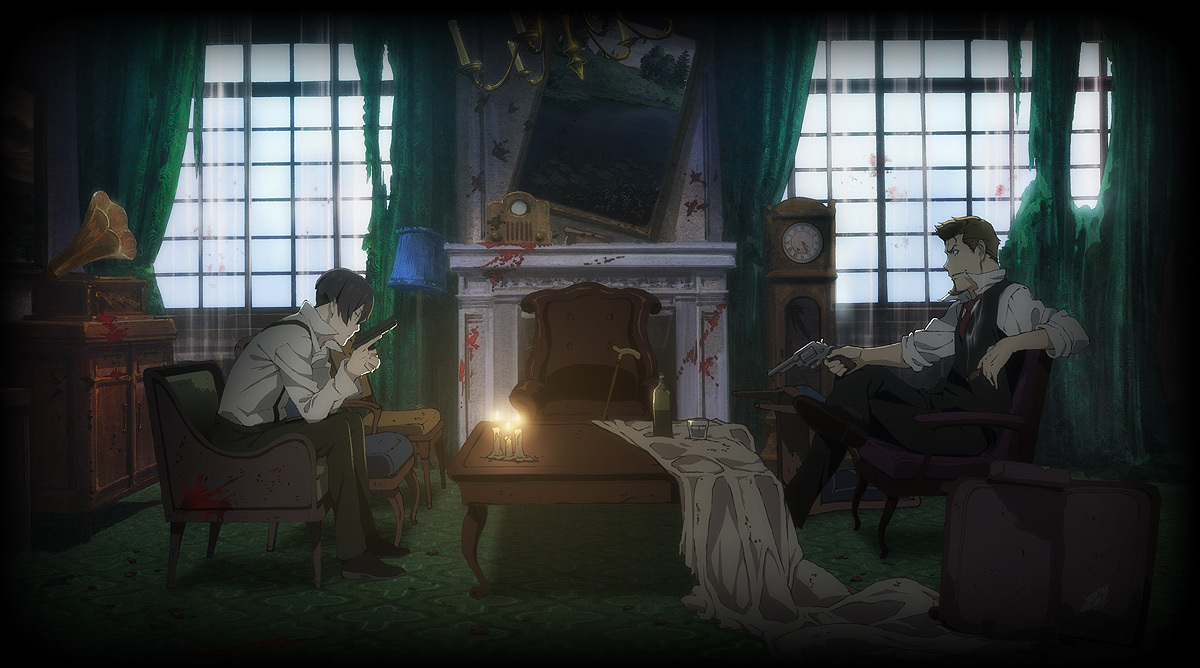
What makes 91 Days ache isn’t its violence or its period detail—it’s the weight of silence between choices. Every glance across a poker table, every pause before a toast, every time Avilio smiles while his knuckles whiten around a glass—it’s all held breath. This isn’t noir as style; it’s noir as physiology. You feel the slow corrosion of loyalty, the way trust calcifies into performance, the way revenge doesn’t ignite—it smolders, low and oxygen-starved, until even the avenger forgets what warmth feels like. It makes you question whether memory is a wound or a weapon—and whether healing requires forgetting, or just better aim.
That same suffocating precision lives in Hitman 2: Silent Assassin. Its description names the core resonance outright: “a retired assassin, forced back into action by treason… you still have a sense of loyalty and justice.” Not righteousness—loyalty. Not vengeance—treason. Like Avilio, Agent 47 doesn’t rage; he recalibrates. Player reviews note how the world feels corrupted, not chaotic—“the dark recesses of a world corrupted by” forces too vast to name, much like the Vanetti family’s grip on Lawless, which isn’t evil because it’s cruel, but because it’s inescapable. And when a reviewer marks graphics as merely “Decent”, it’s not dismissal—it’s surrender to atmosphere over polish, just as 91 Days’ muted palette and deliberate pacing refuse to let you look away from moral erosion.
Then there’s Hitman: Codename 47, whose description nails the choreography of self-erasure: “use stealth and tactical problem solving to enter, execute and exit your assignment with minimum attention and maximum effectiveness.” Avilio doesn’t storm the Vanetti mansion—he becomes its wallpaper. He learns their slang, their superstitions, the exact angle at which Nero Vanetti tilts his hat when lying. His infiltration isn’t hacking a door—it’s learning how to breathe in time with someone else’s pulse. A player review calls it “jank” and “old”—but insists it’s playable only with a community guide. That’s the shared truth: both Avilio and 47 operate inside systems so rigid, so layered with unspoken rules, that survival demands fluency—not firepower. You don’t break the machine. You learn its gears, then slip one tooth out.
And Second Sight, though seemingly distant with its psychic powers, shares the same psychological architecture. Its description frames it as “an atmospheric, psychological thriller narrative with paranormal psychic abilities, stealthy exploration and intense shooter action.” But read deeper: it’s about perception as vulnerability. Avilio’s entire arc hinges on seeing too clearly—recognizing a childhood friend’s lie in the twitch of his left eye, hearing the tremor in a laugh that should be carefree. Second Sight’s protagonist doesn’t just read minds—he feels the dissonance between thought and speech, intention and action. A player calls it “one of my favourite games of all time… despite its age and wonky mechanics,” loving it for “story and mec…”—that trailing ellipsis mirrors Avilio’s own unfinished sentences, his thoughts cut off mid-revelation, always one confession short of catharsis.
This pairing isn’t for fans of cathartic explosions or triumphant last stands. It’s for the ones who rewatch the scene where Avilio lights a cigarette after pulling the trigger—not before—because the delay matters more than the act. It’s for players who reload after a perfect silent takedown just to watch the body slump again, savoring the weight of consequence. It’s for people who understand that dread and devotion sound identical when whispered in a basement bar, and that the most dangerous weapon in any prohibition-era drama—or any tactical stealth game—isn’t the gun in your hand, but the name you’re pretending to forget.
🎮32 Games That Match the Vibe
















Match Dimensions Explained
❓Frequently Asked Questions
Why does Hitman: Codename 47 feel so much like watching 91 Days' Vanno family power struggles?
Because both hinge on cold, calculated infiltration into tightly controlled hierarchies—like when Agent 47 slips into the Sicilian villa in Mission 3, mirroring Avilio’s slow-burn entry into the Vanetti compound. The tension isn’t just in the kill; it’s in reading body language, exploiting faction distrust, and choosing silence over violence—exactly how 91 Days builds dread before its bloody payoffs.
Is there a 91 Days video game adaptation?
No—there’s never been an official 91 Days game adaptation. But if you’re craving that same neon-drenched, morally gray underworld vibe, Assassin’s Creed™: Director's Cut Edition nails the ‘Neon Noir + Political Thriller’ blend with Altaïr navigating Templar corruption in Jerusalem—think Avilio’s journal entries meets rooftop assassinations under moody, rain-slicked lighting.
How does Second Sight compare to Hitman 2: Silent Assassin for psychological tension?
Second Sight leans harder into internal unraveling—like when John Vattic’s psychic flashbacks fracture reality mid-mission, echoing 91 Days’ trauma-driven narration—while Silent Assassin stays external, focused on moral ambiguity (e.g., sparing or killing the traitorous Father in Mission 5). Both hit ‘Adult & Dark Seinen’, but Second Sight weaponizes memory; Silent Assassin weaponizes consequence.
What’s the best game like 91 Days if I want that brooding, rain-soaked revenge mood with zero hand-holding?
Rogue Trooper—it’s got that same isolated, fatalistic grit: you’re Gal, the last Genetic Infantryman trudging across Nu Earth’s poisoned wastelands, voice logs echoing like Avilio’s inner monologues, no tutorials, no exposition dumps—just tactical cover-shooting, grim banter with your bio-chipped squadmates, and a world where loyalty bleeds out as fast as ammo.