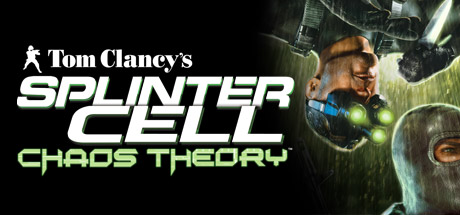
Tom Clancy's Splinter Cell Chaos Theory®
Experience one of the most critically acclaimed stealth-action games of all time. Uncover a conspiracy that hits close to home and stop World War III.
🎮Game Details
💬What Players Say
"This, right here, is peak Splinter Cell. No game in the series is better than this one, despite this one still having its flaws. Graphically, this game may have aged in texture and model fidelity, but the shadows are top-notch...."
"Best stealth game every created. Genre defining. I play it time and time again...."
"Love the game. But this version is terrible. Keeps crashing and if it runs night vision and the other modes are not working."
📝Editorial Analysis
The flicker of a dying streetlamp in Tokyo’s rain-slicked Shinjuku alley—Sam Fisher’s silhouette pressed flat against cold brick, breath held, thermal vision painting the world in pulsing amber heat signatures—that is the heartbeat of Tom Clancy's Splinter Cell Chaos Theory®. Not the explosion, not the takedown, but the pause: the half-second where every muscle locks, your thumb hovers over the trigger, and the game’s silence isn’t empty—it’s charged, thick with consequence. That’s what the player reviews mean when they call it “peak Splinter Cell” and “genre defining”: it’s not about perfection in graphics—those textures have aged—but about how perfectly the tension holds. Ghost mode isn’t a gimmick; it’s a vow whispered into the dark: no contact, no trace, no compromise. You don’t just avoid detection—you erase yourself from causality.
This isn’t just stealth as mechanics. It’s stealth as philosophy. The atmosphere doesn’t thrill you—it weighs on you. Every shadow feels like a moral threshold. Every corridor hums with geopolitical dread—not abstract war, but something close to home, as the official description warns. You’re not saving the world with a shout; you’re stopping World War III with a breath, a wire cut, a silenced step. There’s no heroic score swelling—just rain, radio static, and the low thrum of servers counting down. It makes you think about accountability in the dark, about who pulls strings when no one’s watching, about the quiet cost of being the knife that never gleams. It’s adult, yes—but not in gore or language. In gravity. In the exhaustion behind Sam’s voice, in the way victory feels less like triumph and more like survival deferred.
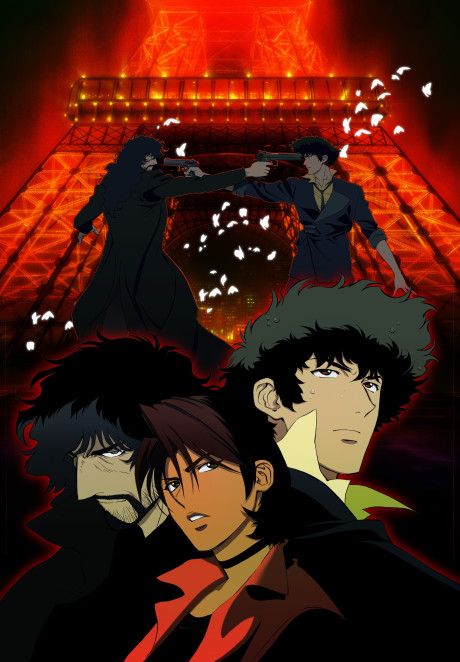
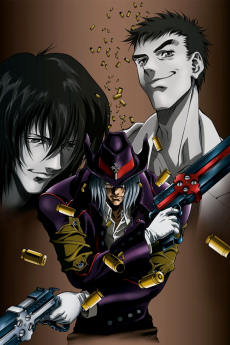
That same gravity pulses through Black Lagoon, where neon bleeds across bullet-riddled docks and violence isn’t cathartic—it’s transactional, weary, inevitable. Like Fisher navigating a compromised embassy, Revy moves through Roanapur knowing every ally has a price and every silence hides a gun. Both live in Neon Noir: not just moody lighting, but a world where light itself is corruptible—refracted through wet pavement, warped by surveillance feeds, always hiding more than it reveals. Tactical Warfare here isn’t choreographed set-pieces; it’s split-second risk calculus—Revy reloading mid-strafe, Fisher disabling a camera while slipping past a guard’s blind spot—both operating in the razor-thin margin between control and chaos.
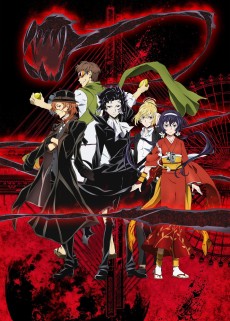
Bungo Stray Dogs 3 shares that same Tactical Warfare precision—but wrapped in literary dread. The battlefield isn’t urban decay, but ideological architecture: characters deploy abilities like encrypted protocols, each move a countermeasure against unseen doctrine. Like Fisher parsing intercepted comms to anticipate a trap, Atsushi reads motive in micro-expressions, in the weight of a pause before speech. And the Adult & Dark Seinen dimension? It’s in how both refuse easy morality—Fisher’s orders blur into personal vendetta; Dazai’s charm masks a mind that weaponizes despair. Neither flinches from the cost of competence.
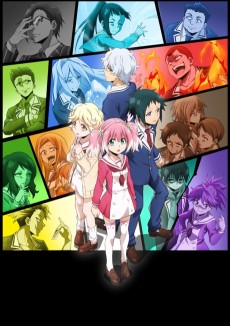
Then there’s AJIN: Demi-Human, where immortality isn’t power—it’s surveillance made flesh. The protagonist isn’t hunted for what he’s done, but for what he is: an anomaly in a system that demands total legibility. Just as Fisher vanishes into infrared shadows only to reappear in a guard’s blind spot, Kei exists outside biometric certainty—his very biology defies the state’s taxonomy. The Neon Noir here is clinical: sterile labs lit by cold blue LEDs, security feeds glitching with his unregistered heat signature. Tactical Warfare becomes existential: evasion isn’t about skill—it’s about being unclassifiable. That same quiet, relentless pressure—the feeling that the system should see you, must see you, yet somehow… doesn’t—is the shared pulse.
These pairings aren’t for fans of flashy action or moral clarity. They’re for the person who replays Tom Clancy's Splinter Cell Chaos Theory® not for the story beats, but for the texture of restraint—who watches Terror in Resonance and feels their chest tighten at the sound of a single piano key echoing in an empty subway tunnel, who pauses B: The Beginning not to admire the animation, but to study how light falls across a sniper’s scope reticle before the shot. They’re the ones who love the weight of a silenced pistol in their hand, the chill of a rain-soaked rooftop, the slow burn of a conspiracy unfolding not in speeches, but in corrupted data packets and half-heard radio chatter. They don’t want heroes. They want operators: flawed, focused, and terribly aware of how thin the line is between ghost and target.
→45 Anime That Match the Vibe
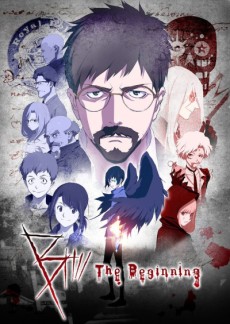
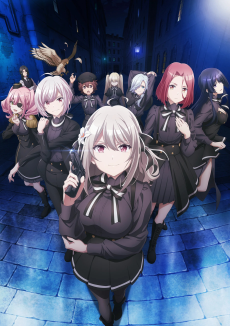
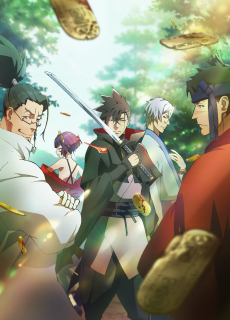
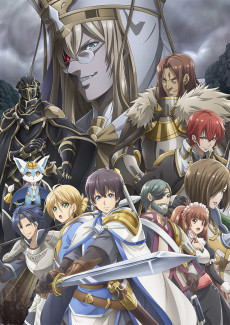
Neon-lit rain slicks the streets of Cremona as Koku vanishes into a ventilation shaft—echoing Sam Fisher’s silent ascent through Tokyo’s server farm in *Chaos Theory*’s pivotal embassy infiltration. 🌃 Neon Noir binds them: not just palette, but moral vertigo—Fisher weighing civilian lives against global war, Keith confronting systemic rot beneath RIS’s polished authority. Unlike most thrillers, neither offers catharsis—only the weight of choices made in shadows where tactics and conscience collide.

Shadows, cigarettes, and moral ambiguity — noir at its most stylish.

Neon-drenched Hong Kong docks in *Chaos Theory*—where Sam Fisher’s silenced pistol echoes against rain-slicked steel—mirror the neon noir of Roanapur’s harbor in *Black Lagoon*’s Season 1, where Revy’s dual Berettas shatter the same humid, morally saturated air. Unlike most tactical thrillers that sanitize violence, both weaponize tactical warfare as intimate, tactile ritual: Fisher’s pixel-perfect ledge takedowns and Revy’s chaotic, close-quarters gunplay share a grim, adult precision rooted in consequence—not spectacle. That shared dark seinen gravity makes their resonance startling: cold professionalism and lawless pragmatism aren’t opposites here, but reflections in the same oil-slicked puddle.
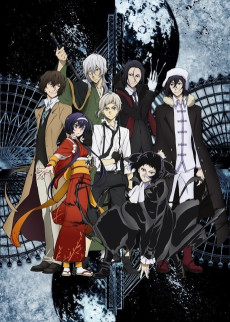
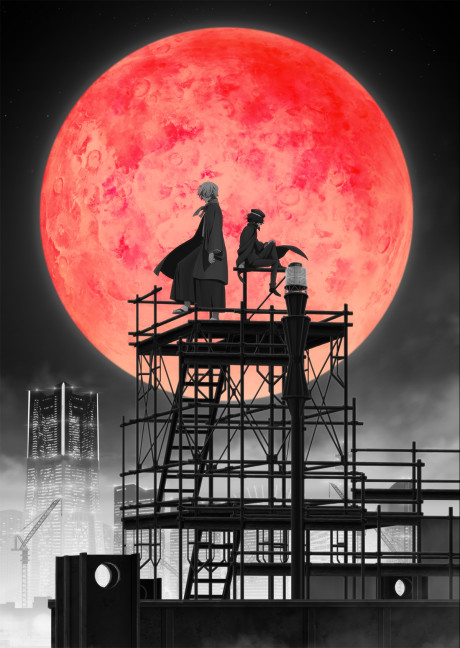
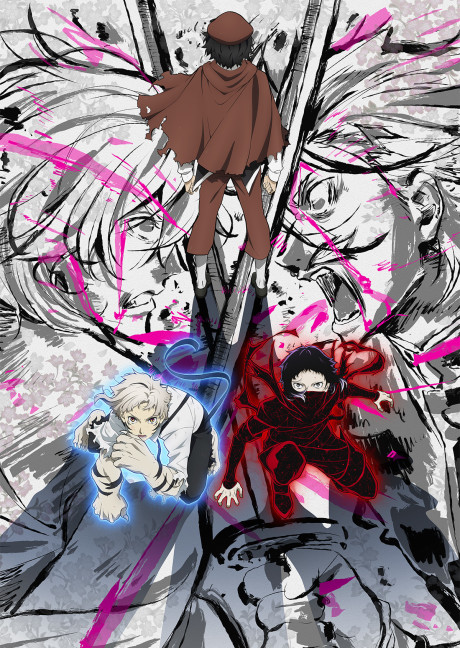
Neon-lit rain slicks the streets of Yokohama as Akutagawa’s black coat flares mid-leap—mirroring Sam Fisher’s silhouette cutting across a Tokyo skyscraper’s glass façade in *Chaos Theory*’s tense embassy infiltration. This shared 🌃 Neon Noir aesthetic deepens both works’ exploration of loyalty fractured by institutional betrayal: Atsushi’s moral crisis during the Port Mafia siege echoes Fisher’s disillusionment when confronting his own agency’s complicity. Unlike most action narratives, neither flinches from the psychological weight of tactical warfare—making their dark, adult resonance startlingly precise.
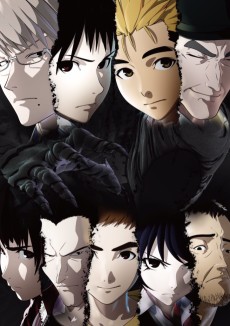
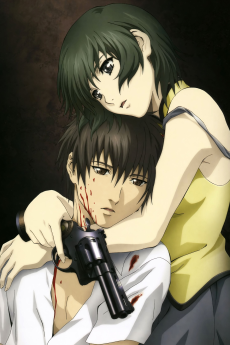
Kei Nagai’s first resurrection—bloodied, disoriented, staring at his own unbroken skin in a sterile morgue—echoes Sam Fisher’s solitary rooftop vigil over Tokyo’s neon-drenched financial district: both confront existential betrayal under the cold glow of 🌃 Neon Noir. Where *Chaos Theory* weaponizes silence and systemic distrust in its tactical warfare, *AJIN* fractures identity itself—Nagai’s immortality isn’t power but evidence of being classified, monitored, hunted by the same shadow-state apparatus Fisher dismantles. That shared 🖤 Adult & Dark Seinen dread—that your body, your loyalty, even your death, is no longer yours—makes their resonance chillingly precise.
Shadows, cigarettes, and moral ambiguity — noir at its most stylish.

Shadows, cigarettes, and moral ambiguity — noir at its most stylish.

Shadows, cigarettes, and moral ambiguity — noir at its most stylish.

Shadows, cigarettes, and moral ambiguity — noir at its most stylish.

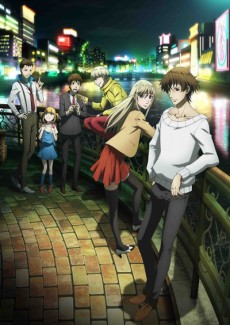
Neon Noir bleeds through both: Sam Fisher’s rain-slicked Tokyo rooftops mirror Nine and Twelve’s graffiti-tagged Shibuya under sodium-vapor glow. Where Chaos Theory weaponizes tactical silence—Fisher’s breath held mid-ventilation shaft—Terror in Resonance fractures time itself, using split-screen edits to echo the same unbearable tension before a detonation. That shared adult & dark seinen weight—no heroes, only consequences—makes their resonance unsettlingly precise: not about stopping terror, but surviving its architecture.














Match Dimensions Explained
❓Frequently Asked Questions
Why does Black Lagoon feel so much like Splinter Cell: Chaos Theory?
Because both hinge on hyper-competent, morally gray operatives moving through hostile urban environments with surgical precision—think Revy’s ambush in the Roanapur docks (S2E3) mirroring Sam Fisher’s takedown of the Russian arms dealer in the Manila embassy raid. The neon-noir lighting, tactical reloads, and emphasis on environmental awareness (like using alleyways and rain-slicked streets as cover) lock in that same tense, grounded stealth-warfare vibe.
Is there an anime adaptation of Splinter Cell: Chaos Theory?
No—there’s never been an official anime adaptation of Chaos Theory or any Splinter Cell game. But if you love its blend of geopolitical conspiracy, night-vision tension, and Ghost-mode discipline, B: The Beginning nails it: Keith’s silent infiltration of the Kokuo HQ (S1E7) uses thermal vision overlays and zero-contact takedowns just like Fisher’s ‘ghost’ runs—no crashes, no broken night vision, just pure tactical execution.
Black Lagoon vs. Bungo Stray Dogs 3—which is closer to Chaos Theory’s vibe?
Black Lagoon wins for raw, grounded stealth-action: Revy doesn’t have superpowers—she uses suppressed pistols, mirrored sunglasses for glare control, and real-world tradecraft like casing routes and disabling comms before entry (S1E9’s port warehouse op). Bungo Stray Dogs 3 leans into flashy ability duels (Atsushi vs. Dazai’s gravity fight), while Chaos Theory—and Black Lagoon—is all about restraint, timing, and consequences when a single noise blows the op.
What’s the best anime like Chaos Theory if I want that ‘Ghost mode’ calm-under-fire feeling?
Terror in Resonance is your pick—it’s built on that exact energy. Nine and Twelve don’t shout or brawl; they surveil subway tunnels with infrared binoculars (S1E4), disable security feeds mid-infiltration, and execute multi-phase ops where silence equals survival. Like Fisher in Ghost mode, their power isn’t strength—it’s patience, prep, and knowing *exactly* when not to pull the trigger.