
Darker than Black
In Tokyo, an impenetrable field known as "Hell's Gate" appeared ten years ago. At the same time, psychics who wield paranormal powers at the cost of their conscience also emerged. Hei is one of the most powerful of these psychic agents, and along with his blind associate, Yin, works for one of the many rival agencies vying to unlock the mysteries of Hell's Gate.
(Source: Anime News Network)
📺Anime Details
📝Editorial Analysis
Rain slicks the Tokyo streets like oil on black glass—neon signs bleed crimson and electric blue into puddles that reflect nothing human. Hei stands beneath a flickering awning, coat collar turned high, watching a surveillance drone drift past like a mechanical moth. His hand doesn’t move toward his weapon. He doesn’t need to. The silence between heartbeats is thick with consequence. Yin isn’t beside him—not yet—but her absence hums louder than any alarm. Ten years since Hell’s Gate tore open the sky, and every choice since has been measured in lost conscience, not time.
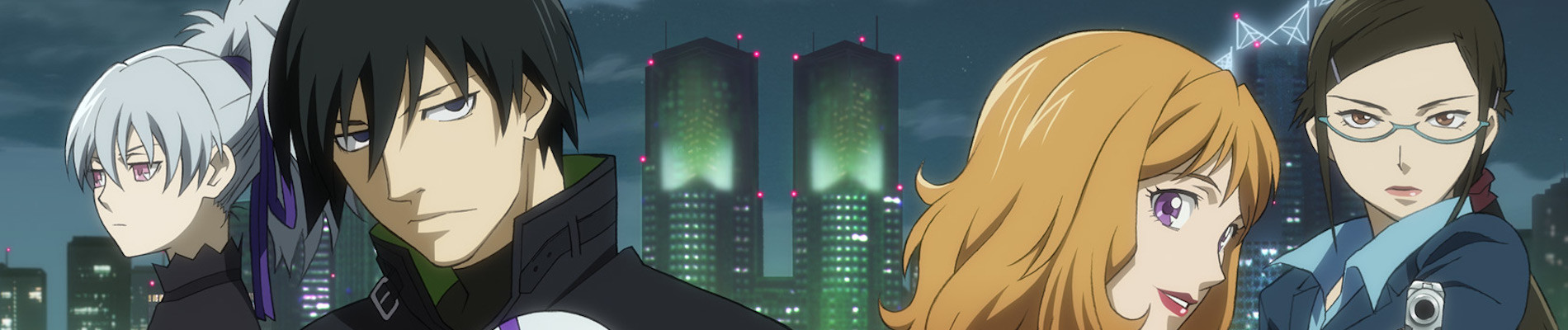
This isn’t just noir—it’s weight. Not the romanticized gloom of cigarette smoke and voiceover monologues, but the physical press of moral erosion: powers that hollow you out, agencies that trade lives like currency, cities built on buried graves. You don’t feel cool watching Darker than Black—you feel complicit. Every rooftop leap, every silenced kill, every lie whispered into a burner phone lands with the dull thud of inevitability. It’s tragedy dressed in tactical gear, grief disguised as protocol. The urban fantasy isn’t magic—it’s infrastructure: surveillance grids, encrypted comms, the quiet hum of servers holding secrets no one’s allowed to name. You think about loyalty when it’s already been auctioned off. You think about justice when the system is the crime.
That same tension lives in Assassin's Creed™: Director's Cut Edition, where player reviews admit the models are “quite dated” but confess no issues with me. Why? Because the game’s soul isn’t in polish—it’s in verticality, in leaning over a Damascus ledge, calculating drop angles while guards patrol below like clockwork. The description calls it a “Political Thriller” nested inside “Tactical Warfare”—exactly how Darker than Black frames its assassins: not mercenaries, but operatives moving through layers of ideology, architecture, and consequence. You don’t sprint to victory—you inhabit the city’s spine, just as Hei inhabits Tokyo’s shadows, each step calibrated against unseen eyes.
Then there’s Hitman 2: Silent Assassin, where the player review cuts straight to the paradox: “You may be a hired killer but you still have a sense of loyalty and justice.” That line could be Hei’s epitaph. The description doesn’t call him a hero—it calls him retired, then forced back. Like Hei’s return to field work after Yin’s fracture, the game’s emotional gravity lives in duty that refuses to expire. Its “Neon Noir” dimension isn’t aesthetic—it’s ethical: neon lights don’t illuminate truth; they cast longer, more ambiguous shadows. You don’t choose morality—you navigate its wreckage, mission after mission, just as Hei does, never clean, never absolved.
And Rogue Trooper, though set on a poisoned alien world, shares the same bone-deep exhaustion. Its description nails it: “Nu Earth: a poisoned planet where endless war rages… with no end in sight.” That’s Hell’s Gate’s legacy—not spectacle, but stasis. A war without fronts, fought by soldiers who’ve forgotten why they’re still standing. Player reviews call it a “good hidden gem… no bullshiet”—a phrase that fits Darker than Black’s refusal to soften its edges. No redemption arcs dangled like bait. Just survival, precision, and the slow realization that some gates, once opened, can’t be closed—only guarded, or exploited, or buried deeper.
This pairing isn’t for fans of power fantasies or triumphant last stands. It’s for the ones who pause mid-episode when Hei stares at his reflection in a rain-pooled window—not to admire the anti-hero, but to wonder what’s missing from his eyes. It’s for players who reload a failed assassination not to win, but to rehearse restraint: who study guard patterns like scripture, who treat a silenced pistol like a scalpel, who understand that the most devastating moment in Hitman: Codename 47 isn’t the shot—it’s the three seconds before, when you hold your breath and realize the target is humming. These are stories for people who know silence isn’t empty—it’s charged. Who feel duty as both anchor and shackle. Who don’t want to save the world—they want to understand what it costs to stand inside its fractures, night after rain-slicked night.
🎮47 Games That Match the Vibe







Match Dimensions Explained
❓Frequently Asked Questions
Why does Assassin's Creed feel like Darker than Black even though it's set in the Middle Ages?
It’s all about that Neon Noir + Political Thriller combo—just like Darker than Black’s Syndicate espionage and moral gray zones, Assassin’s Creed drops you into a web of Templar conspiracies, coded betrayals, and rooftop surveillance in Jerusalem. The stealth-tactical pacing, emphasis on observing targets before striking (like Hei studying his mark in Episode 1), and that constant tension between ideology and survival hit the same nerve.
Is there a Hitman game with the same vibe as Darker than Black’s Contractor abilities and cool detachment?
Absolutely—Hitman: Codename 47 nails it. Like Hei’s precise, emotionless takedowns and reliance on prep over brute force, 47 uses disguises, environmental traps, and pre-mission intel to turn every level into a silent chess match. Even the player review admits it’s janky but deeply rewarding once you lean into its methodical, almost clinical rhythm—very ‘Contractor on assignment’ energy.
How does Desperados 2 compare to Rogue Trooper for that lone-wolf, morally ambiguous sci-fi spy feel?
Rogue Trooper wins hands-down for DTB-style isolation and tech-infused melancholy—it’s Nu Earth’s poisoned wasteland, with your genetically engineered soldier carrying the digitized voices of fallen comrades (like Hei’s fractured loyalties and Banri’s ghostly presence). Desperados 2 is more ensemble-driven and western-tinged, while Rogue Trooper’s grim, atmospheric solo missions and tactical cover-shooting mirror DTB’s quieter, heavier moments—especially the ‘lone warrior against a broken system’ arc.
What’s the best game like Darker than Black if I want that rainy-night, neon-lit, ‘I’m watching you from the roof’ mood?
Assassin’s Creed™: Director’s Cut Edition—no joke. Its 2007-era Jerusalem glows under moody amber lanterns and misty alleyways, and the Eagle Vision mechanic literally lets you scan crowds and rooftops like Hei scanning for Contractors. With its 84 score and strong Neon Noir + Tactical Warfare DNA, it delivers that exact slow-burn, surveillance-heavy, rain-slicked tension you’re after—even if the textures are dated, the *vibe* is pitch-perfect.