
Black Lagoon
Okajima Rokuro is a Japanese businessman in a town full of Japanese businessmen. His normal day consists of social drinking with clients and being kicked around by his bosses. He finally gets a break though, as he's sent by his company to the tropical seas of Eastern China to deliver a disc. But his boat gets hijacked by a band of mercenaries hired to retrieve the disc. Rock (as he is newly dubbed by his captors) catches the interest of the only female merc Revy as she thinks he's worth a ransom, taking him hostage. However, the disc that was stolen has a terrible secret that's unknown to Rock, which causes massive confusion and chaos for both him and his kidnappers.
📺Anime Details
📝Editorial Analysis
The salt-sting of sweat and cordite hangs in the humid air of Roanapur’s docks as Revy fires her twin Berettas—not at an enemy, but into the sky, laughing like a storm breaking. Rock stands frozen beside her, suit jacket torn, tie askew, his face still wearing the slack-jawed disbelief of a man who just watched his entire life dissolve into gunfire and diesel fumes. That moment isn’t about victory or even survival—it’s about unmooring. The world tilts, rules evaporate, and what’s left isn’t chaos for chaos’ sake, but a raw, humming weight: the terrifying freedom of shedding every mask you wore to stay safe.
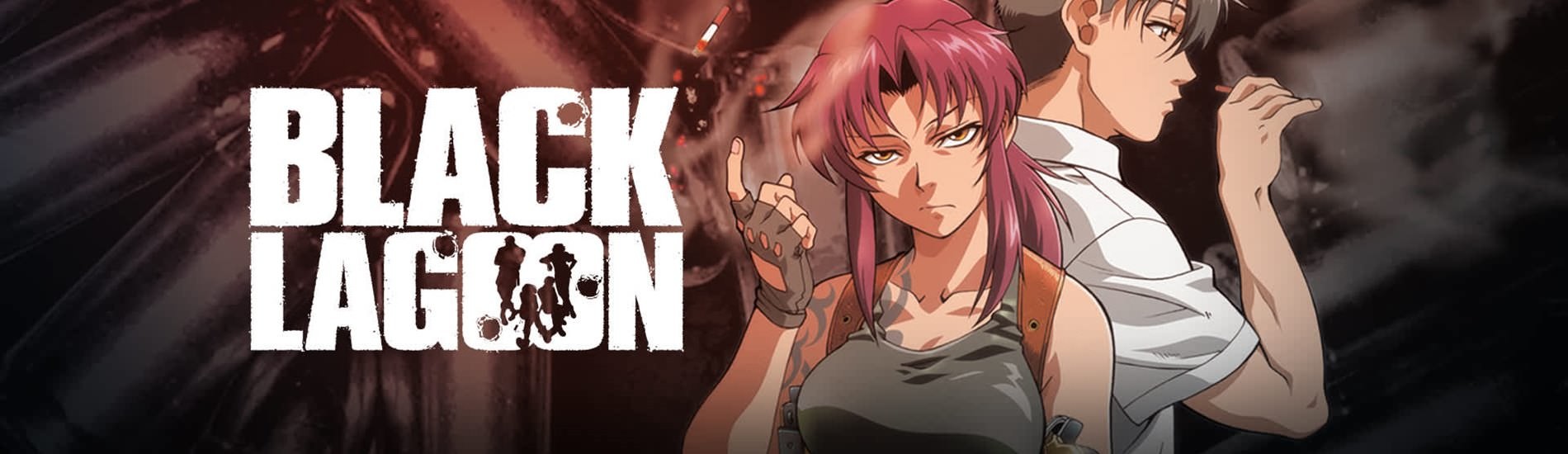
That’s the feeling Black Lagoon lives inside: melancholic exploration of moral erosion, not as tragedy, but as slow, sun-bleached inevitability. It doesn’t romanticize violence—it documents it, with the weary precision of a customs officer tallying contraband. You don’t feel pumped up watching Revy reload; you feel the grit in your teeth, the low throb of exhaustion behind the adrenaline. This is adult not because of gore or language, but because it treats consequence like gravity—inescapable, cumulative, silent until it pulls you under. There’s no redemption arc waiting in the wings, no hidden virtue beneath the cynicism. Just people moving through a world where loyalty is transactional, trust is tactical, and every choice leaves a stain that won’t wash out in the monsoon rain.
That same emotional DNA pulses in Assassin's Creed™: Director's Cut Edition, where the neon noir glow of Jerusalem’s alleyways mirrors Roanapur’s flickering neon signs—not as spectacle, but as atmosphere thick with dread and quiet despair. The player review admits the models are “quite dated,” yet calls it no issue—because what lingers isn’t polish, but the melancholic exploration of a man walking ancient streets he doesn’t belong to, hunting ghosts in a system he can’t change. Like Rock navigating the Lagoon’s cargo hold for the first time, Altaïr moves through spaces heavy with history he didn’t make and power he didn’t choose—every rooftop leap feels less like triumph and more like postponement.
The Tomb Raider trilogy—Legend, Anniversary, and Underworld—all share that adult & dark seinen texture: Lara Croft isn’t a quipping hero, but a woman chasing echoes across decaying temples and flooded ruins, her competence never shielding her from isolation. One reviewer calls Anniversary “the best Tomb Raider game” precisely because it feels lived-in—clunky controls, yes, but also weight, consequence, silence between gunshots. Another notes Underworld’s “exotic locations… designed with incredible attention”—not to beauty, but to tactical warfare within architecture: narrow corridors, crumbling ledges, enemies positioned like sentinels in a godless cathedral. That’s Roanapur’s back alleys refracted through stone and shadow—same tension, same sense that every corner hides either salvation or surrender, and neither comes with fanfare.
And then there’s Tom Clancy's Splinter Cell Chaos Theory®, where the neon noir isn’t aesthetic—it’s psychological. Sam Fisher moves through black sites and corporate lobbies not as a warrior, but as a ghost auditing the rot in the machine. The player review declares it “peak Splinter Cell” not for flash, but for tactical warfare so precise it borders on ritual: light angles matter, breath matters, timing is grief disguised as discipline. That’s Revy counting bullets mid-gunfight, or Dutch pausing before a deal—not to strategize, but to measure how much of himself he’s willing to forfeit this time. The conspiracy isn’t external; it’s the slow realization that the system isn’t broken—it’s working exactly as designed, and you’re just another variable in its calculus.
This pairing isn’t for fans of slick power fantasies or tidy moral binaries. It’s for the person who watches Rock stare at his reflection in a rain-puddled street and feels that hollow click in their own chest—the one that comes when you realize the most dangerous thing about adulthood isn’t danger itself, but how easily you stop flinching. It’s for the player who lingers in Chaos Theory’s ventilation shafts not to rush the mission, but to listen—to the hum of servers, the distant cough of a guard, the silence between heartbeats—and knows that’s where truth lives: not in explosions, but in the weight before them.
🎮43 Games That Match the Vibe



















Match Dimensions Explained
❓Frequently Asked Questions
Why does Tomb Raider: Legend feel so much like Black Lagoon despite being an adventure game?
It’s all in the 'Adult & Dark Seinen' dimension — Lara’s morally ambiguous missions, her cold precision during tactical takedowns (like silently disabling guards in the Thai temple), and that melancholic exploration vibe as she uncovers buried trauma — it mirrors Revy’s gritty pragmatism and the show’s rain-slicked moral gray zones. The game’s tone, especially in cutscenes with her haunted flashbacks and terse dialogue, hits the same nerve as Black Lagoon’s grounded, no-heroes-here realism.
Is there a Black Lagoon video game adaptation?
No — there’s never been an official Black Lagoon game, which is why fans lean hard into titles that match its dimensions: 'Neon Noir', 'Adult & Dark Seinen', and 'Tactical Warfare'. Splinter Cell: Chaos Theory nails the neon-drenched tension (think Hong Kong harbor infiltration at night), while the Tomb Raider trilogy (Legend, Anniversary, Underworld) delivers that same lethal, world-weary female lead energy — Revy’s swagger meets Lara’s silent, brutal efficiency.
How does Assassin's Creed compare to Splinter Cell: Chaos Theory for Black Lagoon vibes?
Assassin’s Creed leans harder into 'Neon Noir' and 'Melancholic Exploration' — picture Altair drifting through Acre’s shadowed alleys at dusk, that quiet dread before a kill — but it lacks the tight, intimate tactical warfare of Chaos Theory. Splinter Cell wins for Black Lagoon-style grit: Sam Fisher’s close-quarters takedowns, the oppressive silence before a guard turns, and that 'no second chances' tension mirror Revy’s barroom shootouts far more closely than Altair’s parkour-assassinations.
What’s the best game like Black Lagoon if I want that rainy, morally exhausted, 'just get the job done' mood?
Go straight to Splinter Cell: Chaos Theory — it’s got the 'Neon Noir' lighting (think flickering signs over wet Tokyo docks), the 'Adult & Dark Seinen' weight (Sam’s weary voiceovers, betrayal-heavy plot), and 'Tactical Warfare' that forces you to think like Revy: precise, ruthless, and always one step ahead. The player review even calls it 'peak Splinter Cell' — that same exhausted competence is exactly what makes Black Lagoon click.