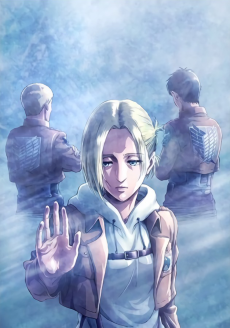
Attack on Titan: Lost Girls
A three-part OVA adapting the "Shingeki no Kyojin: Lost Girls" spinoff novel that will be bundled with the 24th, 25th and 26th limited edition volumes of the manga.
Wall Sina, Goodbye:
Annie Leonhart has a job to do—and a resulting absence that must stay off her record at all costs. With no one else to turn to, she asks her comrade Hitch Dreyse to cover for her. She agrees but puts forward a single condition: Annie must solve the fruitless missing person case Hitch was assigned. The case revolves around Carly Stratmann, a university graduate and the daughter of wealthy businessman Elliot Stratmann. With only a single day to solve the case and the underground of the Stohess District crawling with thugs, Annie must put her all into finding this girl. Yet, every answer she uncovers only leads to further questions—how has the illegal drug coderoin found its way to Stohess, what is Elliot hiding, and where has Carly disappeared to?
Lost in the Cruel World:
With worry for Eren Yeager gripping her heart, Mikasa Ackerman begins to remember. She remembers her conversations with Armin Arlert, her concern for her friends, and most painfully, the time she had almost lost everything. As fear takes control, she begins to experience an alternate version of her past—some things can be changed, but are there events so inescapable that she can't even prevent them in her dreams?
📺Anime Details
📝Editorial Analysis
Rain slicks the cobblestones of Wall Sina’s undercity—not the clean, sunlit stones of the inner districts, but the grimy, oil-stained alleys where steam hisses from corroded pipes and the air tastes of burnt coal and something sharper, metallic, like old blood mixed with opium. Annie Leonhart stands beneath a flickering gaslamp, gloved hand resting on the hilt of a non-regulation blade, her breath shallow, her eyes scanning a doorway that shouldn’t exist on any official map. She isn’t wearing Survey Corps insignia. She isn’t herself—not the Annie who cracks ribs with precision, not the Annie who folds into silence like a knife into sheath. Here, she’s bargaining in whispers, trading favors for time, lying to Hitch Dreyse not out of malice but because truth would unravel them both. That moment—stillness before fracture, the weight of a cover-up heavier than any Titan’s fist—is where Attack on Titan: Lost Girls lives.
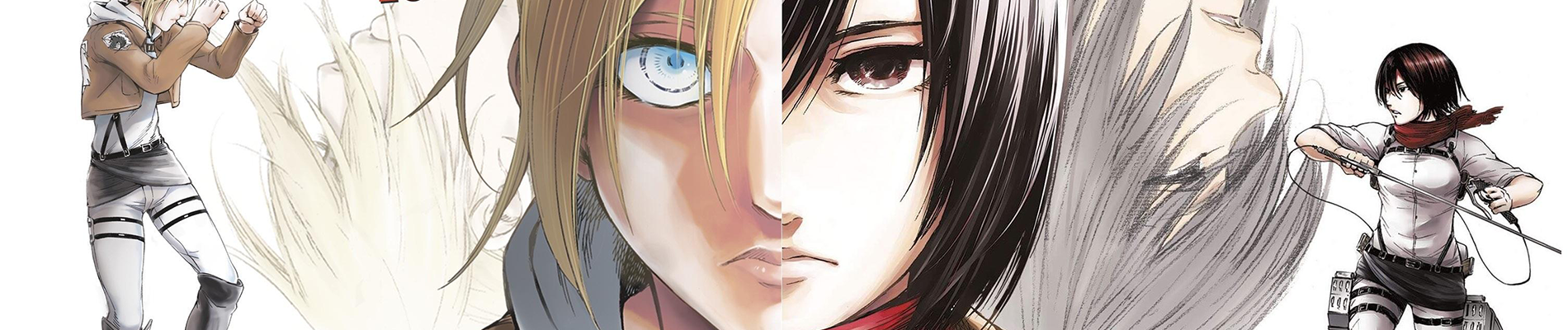
This isn’t the roar of the Colossal Titan or the thunder of ODM gear. It’s the dread of paperwork left unsigned, the itch of a lie settling into your throat, the slow suffocation of loyalty curdling into complicity. The steampunk grit isn’t aesthetic—it’s functional despair: gears grinding on broken promises, brass valves leaking secrets instead of steam. You don’t feel heroic here. You feel cornered, morally porous, watching your own reflection warp in a rain-puddled lens. It’s post-apocalyptic not because the world ended, but because every choice you make chips away at the person you swore you’d stay. Tragedy isn’t spectacle—it’s Hitch agreeing to cover Annie’s absence because she trusts her, and knowing, deep in her gut, that trust is already a liability.
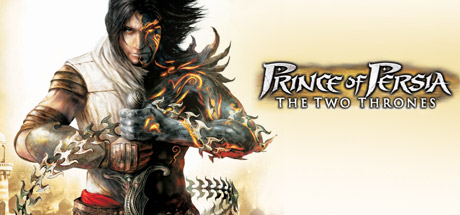
That same emotional gravity pulses through Prince of Persia: The Two Thrones™, where the Prince returns to Babylon expecting peace but finds only ash, betrayal, and a darkness inside himself he can’t outrun—even with time-bending acrobatics. The game’s “Time & Memory” dimension mirrors Annie’s fractured timeline: every flashback isn’t nostalgia, it’s evidence; every corridor she navigates feels like a memory she’s trying to erase. A player calls it “one of my best childhood games… still plays great”—but what lingers isn’t the parkour, it’s the ache of returning home to find your love corrupted, your kingdom hollowed out, your own reflection splitting into light and shadow. Like Annie, the Prince doesn’t fight monsters—he fights what he’s become in the name of duty.
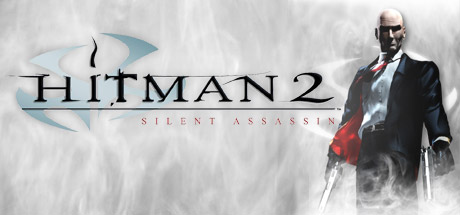
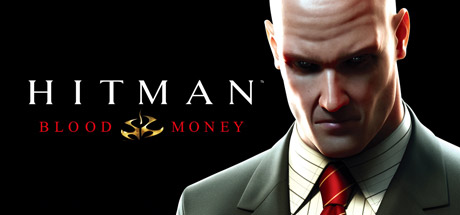
Then there’s Hitman 2: Silent Assassin, where a retired assassin is pulled back into the dark by treason—and forced to navigate a world where loyalty and justice are tactical variables, not ideals. The description nails it: “You may be a hired killer but you still have a sense of loyalty and justice.” Annie isn’t a killer for hire, but she is a weapon calibrated to military logic—and when that logic demands she vanish, she does so with the same chilling efficiency as Agent 47 slipping into a gala uninvited. A player review notes the graphics make you “forget what reality is”—and that’s exactly how Lost Girls feels: reality frays at the edges of classified files, coded radio chatter, and Hitch’s quiet, exhausted nod when Annie asks her to lie. The neon noir isn’t just lighting—it’s the glow of a single monitor in a surveillance van, illuminating Annie’s face as she watches footage she wasn’t meant to see.
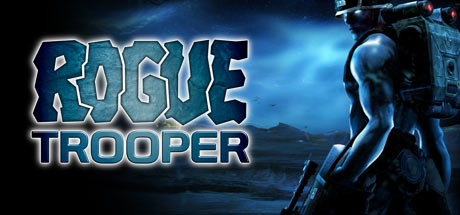
And Rogue Trooper, set on Nu Earth—a poisoned planet where war rages “with no end in sight”—echoes the futility baked into Lost Girls’ missing-person case: “fruitless,” the description says, and that word lands like a stone. Rogue is a lone soldier carrying the digitized consciousness of fallen comrades, fighting a war that has long since stopped making sense. His tactical warfare isn’t about victory—it’s about endurance. A player calls it a “good hidden gem single player game… no bullshiet.” That’s the tone: stripped bare, no grand speeches, just boots on toxic soil, a rifle slung low, and the quiet understanding that some missions exist only to keep the machine running—even when the machine is grinding your soul to dust.
This pairing isn’t for fans of epic battles or clean moral arcs. It’s for the ones who pause mid-gameplay to stare at a rain-lashed window in The Two Thrones, or who replay a Hitman mission three times—not to perfect the takedown, but to delay the moment they have to walk past the guard who reminds them of Hitch. It’s for readers who underline sentences like “she agrees but puts forward a single condition” and feel their chest tighten—not because it’s dramatic, but because they know that condition will cost more than either woman can afford. These are stories for people who understand that the most devastating tragedies aren’t written in blood, but in redacted reports, in the space between two lines of dialogue, in the way someone looks away when they say “I’ll cover for you.”
🎮46 Games That Match the Vibe


Match Dimensions Explained
❓Frequently Asked Questions
Why is Prince of Persia: The Two Thrones listed as similar to Attack on Titan: Lost Girls?
Because both lean hard into time-bending emotional stakes and morally grey intimacy—like when the Prince grapples with Kaileena’s fate across fractured timelines, mirroring Mikasa’s desperate, memory-laced flashbacks to Eren in Lost Girls. The ‘Time & Memory’ dimension ties them together, plus that neon-tinged Babylon aesthetic feels like a grittier, sandstone version of Shiganshina’s moody lighting.
Is there a Hitman game that captures the quiet tension and personal stakes of Lost Girls?
Yes—Hitman 2: Silent Assassin nails that slow-burn intensity, especially in missions like ‘The Meat King’, where you’re not just eliminating targets but navigating layered loyalties and quiet betrayals—much like Mikasa moving through covert ops while wrestling her own conflicted feelings. Its ‘Neon Noir’ mood and tactical pacing (no flashy set-pieces, just careful observation and timing) mirror Lost Girls’ intimate, high-stakes vibe.
How does Desperados 2 compare to Rogue Trooper for tactical stealth fans who loved Lost Girls’ squad-free, lone-operator focus?
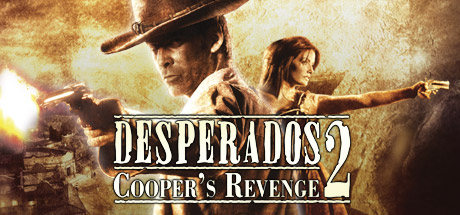
Desperados 2 leans into coordinated team micromanagement (you control 5 distinct outlaws), while Rogue Trooper is pure solo grit—just you, your bio-chipped rifleman Ghost, and Nu Earth’s toxic wastelands—making it way closer to Lost Girls’ solitary, emotionally charged missions. Both share ‘Neon Noir’ and ‘Tactical Warfare’, but Rogue Trooper’s lone-warrior persistence (‘a man who knows no surrender’) echoes Mikasa’s raw, unassisted resolve far more directly.
What’s the best game like Lost Girls if I want that melancholic, rain-slicked, morally heavy atmosphere?
Prince of Persia: The Two Thrones is your top pick—it’s soaked in that same brooding, memory-haunted tone: Babylon’s crumbling grandeur, Kaileena’s tragic arc, and the Prince’s guilt-ridden duality all hit the same emotional notes as Mikasa’s flashbacks and the series’ weighty silences. And with its 83 Metacritic score and unmistakable ‘Time & Memory’ + ‘Neon Noir’ dimensions, it’s the most tonally faithful match on the list.