
Aliens vs. Predator™
Survive, hunt and prey in the deadly jungles and swamps in distinctly new and thrilling first person gameplay.
🎮Game Details
💬What Players Say
"1. Introduction Aliens vs. Predator (2010) gives you three separate campaigns: Alien, Marine, and Predator...."
"Good game overall. If you are playing on modern hardware, you should open Task Manager (assuming you are on Windows) and update game's executable's task priority to normal. For some reason it's set to the lowest value, making a CPU bottleneck and lowering the FPS...."
"I think this game is a lot of fun for Alien and Predator fans. The enemies are quite challenging even on normal difficulty, and the levels are designed for a great solo experience. The story is engaging and does a great job of telling the Predator and Alien universes...."
📝Editorial Analysis
The first time you crouch behind a moss-slicked boulder in the Aliens vs. Predator™ jungle, heart hammering—not from sprinting, but from holding your breath—you realize this isn’t about cover mechanics or reload timers. It’s about the silence before the skitter. The official description nails it: “Survive, hunt and prey in the deadly jungles and swamps in distinctly new and thrilling first person gameplay.” And player review 1 confirms what your pulse already knows: “Each faction feels completely different…” Not just in weapons or speed—but in ontology. As the Alien, you are the ambush. As the Marine, you’re a trembling node of light in a thermal scope, scanning for movement that shouldn’t exist. As the Predator, you’re both god and prey—cloaked, calculating, yet vulnerable to the very swarm you’ve come to cull. That asymmetry doesn’t just shape gameplay—it reshapes your nervous system.
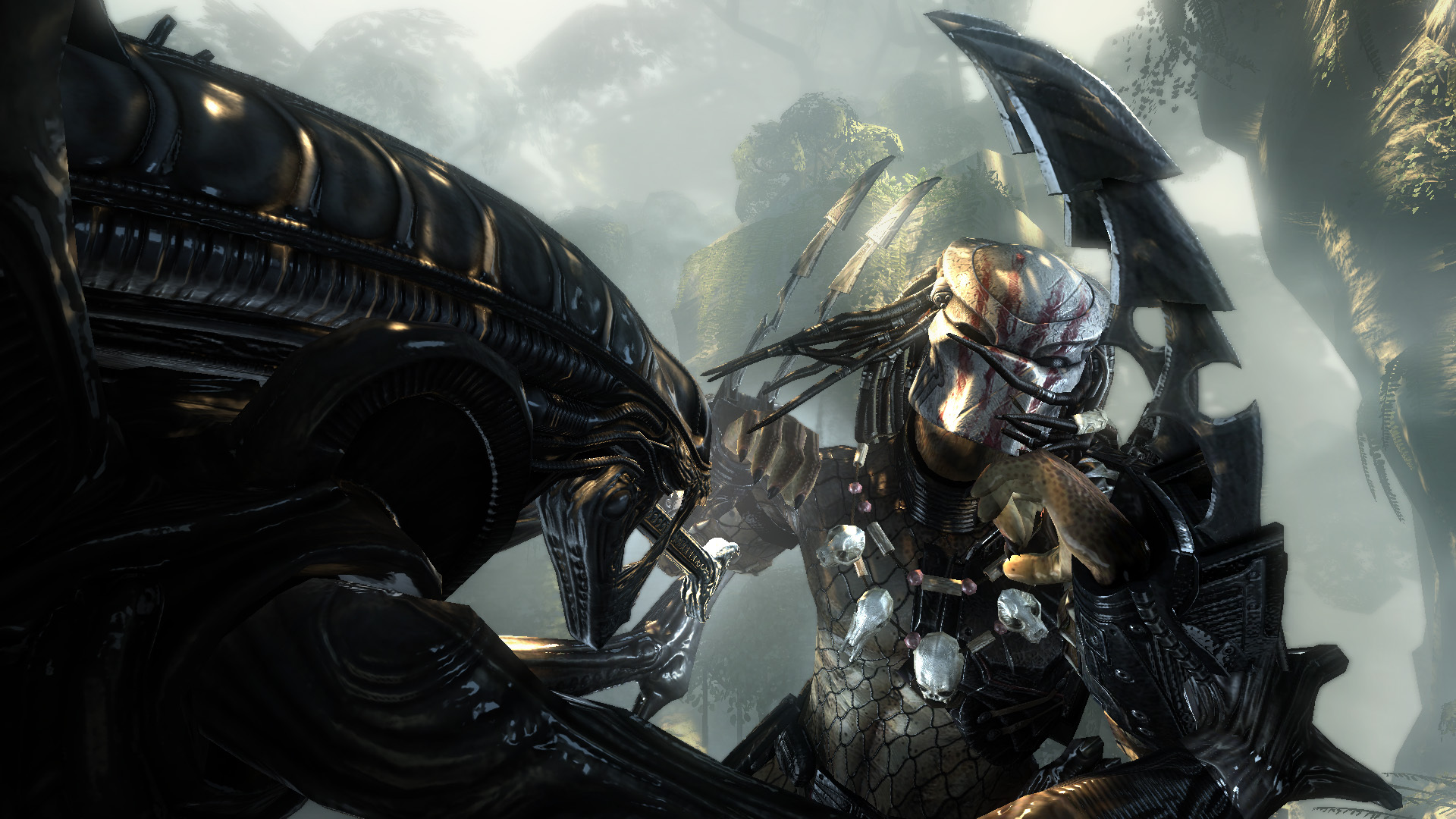
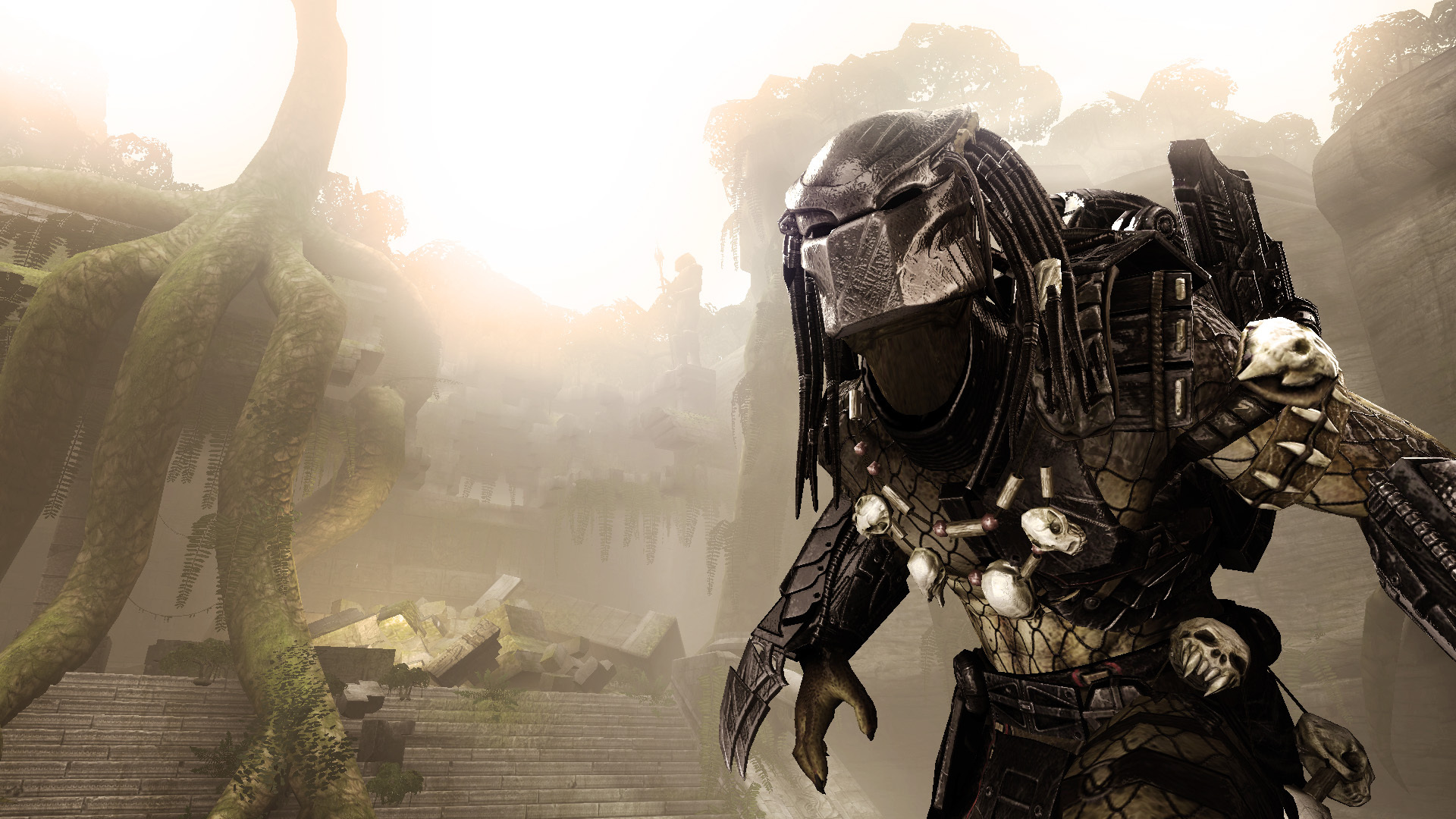
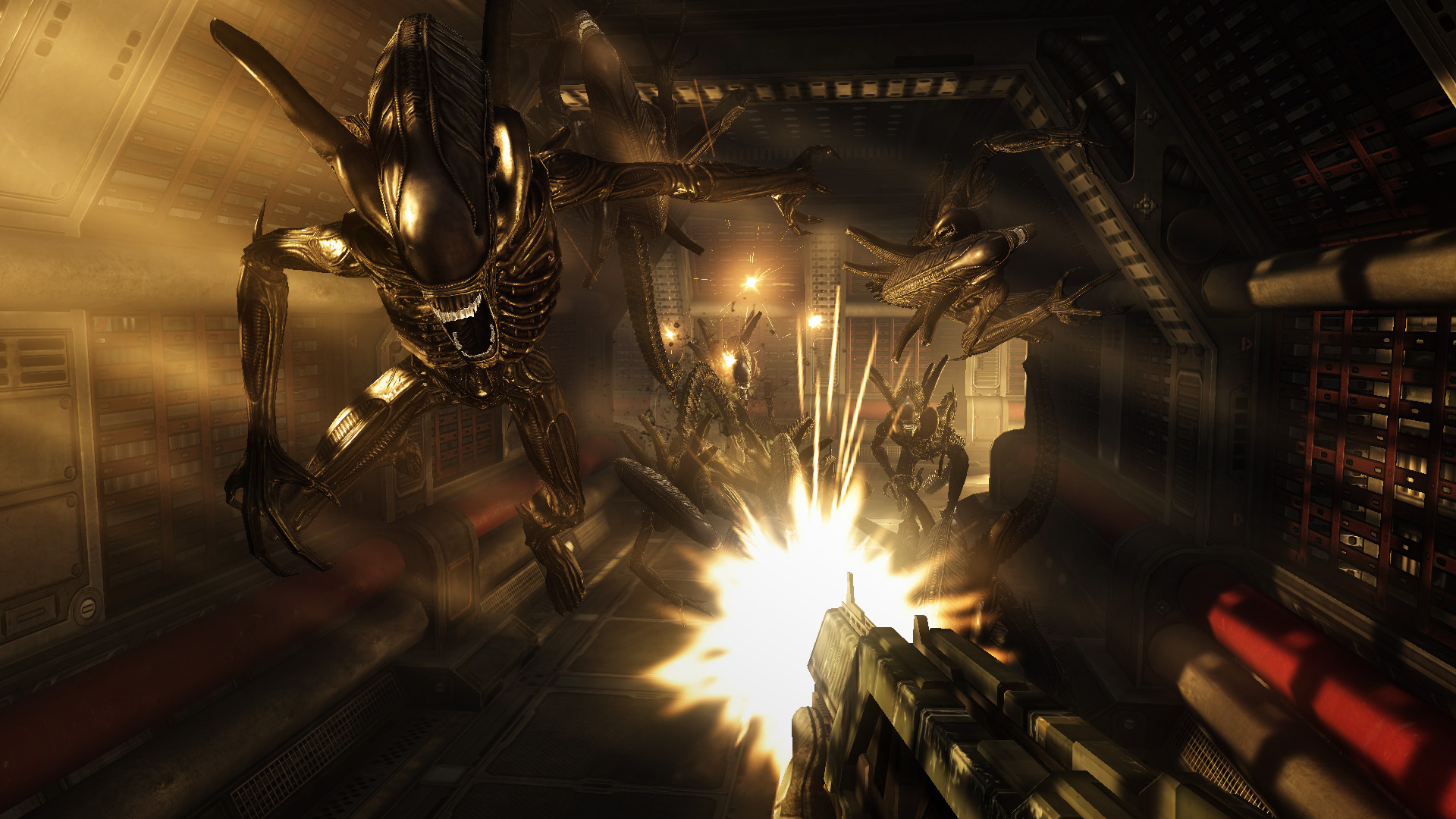
What makes this atmosphere singular isn’t sci-fi tropes or alien designs—it’s the weight of biological consequence. There’s no heroic detachment here. Review 3 says the enemies are “quite challenging even on normal difficulty,” and the levels are “designed for a great solo experience”—which means every corridor, every fog-choked clearing, forces you into intimate, unmediated confrontation with fragility. You don’t outsmart threats; you endure them. You learn the rhythm of the Alien’s tail-sweep by feeling its wind on your neck. You memorize the Predator’s cloaking shimmer not as a visual cue, but as a threat signature—a flicker in the periphery that triggers primal recoil. This isn’t action-as-empowerment. It’s action-as-exposure. Every decision carries the low hum of body horror: the wrong step could mean acid blood on your visor, a facehugger latching mid-breath, or your own spine snapping under chitinous grip. The jungle isn’t a backdrop—it’s an active, breathing antagonist, thick with humidity, decay, and things that learn.
That same suffocating, biologically charged tension lives in Getter Robo: Armageddon, where biomechanical titans aren’t piloted—they mutate, fuse, and devour. Its shared dimensions—Sci-Fi & Space, Survival & Crafting, Body Horror & Occult—aren’t stylistic checkboxes. They’re emotional coordinates. When Getter’s cockpit floods with neural feedback and bone begins to rearrange beneath the pilot’s skin, it mirrors the Marine’s helmet HUD glitching as xenomorph acid eats through his armor—both are stories where flesh is unstable infrastructure. Then there’s Terra Formars, where human bodies are engineered, then overwritten, by insectoid DNA. Its swampy Mars colonies echo the game’s jungles: humid, treacherous, layered with unseen predators—and like the game, it treats survival as a grim craft: jury-rigging tools, reading pheromone trails, learning when to run before the scream starts. No exposition saves you. Just instinct, adaptation, and the slow, chilling realization that your body may no longer be yours to command.
Made in Abyss: Wandering Twilight deepens that dread—not with teeth or claws, but with irreversible transformation. Its descent into the Abyss isn’t metaphorical; it’s physiological, neurological, inescapable. Like the game’s Predator campaign—where thermal vision reveals heat signatures but also exposes your own rising core temperature under stress—the Abyss warps perception from within. Both force you to confront the horror of self-erosion: the moment your limbs twitch with alien reflexes, or your thoughts stutter under the weight of something older than language. And Hell’s Paradise Season 2? It shares that same brutal, tactile Survival & Crafting logic—every wound is stitched with sinew, every poison countered with scavenged venom, every victory measured in scars that breathe. There’s no clean victory, only layered compromises: the Marine’s last grenade, the Assassin’s broken rib cage held together by will and sutures, the Predator’s mask cracked but still humming.
This is for the viewer who watches JoJo’s Bizarre Adventure: STONE OCEAN not for the stands—but for the way Emporio’s fingers twitch after his first Stand awakening, raw and unfamiliar, like muscle memory rewriting itself. For the player who reloads not to win, but to feel the weight of the rifle’s recoil settle differently each time, because their hands are shaking for real. It’s for those who crave stories where danger isn’t externalized—it’s woven into the nervous system, where every breath risks revealing you, every step risks collapsing the ground beneath you, and every victory tastes faintly of acid, spore, or blood. Not spectacle. Sensation. Not power fantasy. Presence.
→77 Anime That Match the Vibe

The body as a site of transformation and terror — both push physical boundaries.

Connected through 2 aesthetic dimensions.

Ryoma Nagare’s grotesque reanimation—his flesh tearing as Getter Robo’s bio-mechanical systems forcibly reintegrate him—mirrors the Predator’s surgical self-mutilation to activate cloaking in *Aliens vs. Predator™*’s swamp ambushes. Where the game weaponizes **Body Horror & Occult** through biomechanical ritual and visceral dismemberment, *Getter Robo: Armageddon* frames resurrection itself as a traumatic, occult violation of bodily integrity—neither work treats flesh as sacred, only as mutable substrate for survival. This uneasy kinship makes their shared dread feel disturbingly coherent, not coincidental.

The body as a site of transformation and terror — both push physical boundaries.

Connected through 2 aesthetic dimensions.

The body as a site of transformation and terror — both push physical boundaries.

Mars’ rust-colored swamps—where Terra Formars’ mutated roach-human hybrids ambush colonists in claustrophobic tunnels—echo the suffocating jungle biomass of Aliens vs. Predator™’s alien-infested rainforests. This shared **Survival & Crafting** tension transforms environments into hostile, breathing entities: characters scavenge, improvise weapons, and bleed while hunted by biologically superior predators. Unlike most sci-fi horror, neither work romanticizes evolution—it weaponizes biology itself, making every wound a grotesque testament to failed terraforming and colonial hubris.

Connected through 2 aesthetic dimensions.

The body as a site of transformation and terror — both push physical boundaries.
The body as a site of transformation and terror — both push physical boundaries.




































![Fate/stay night [Heaven’s Feel] III. spring song](https://s4.anilist.co/file/anilistcdn/media/anime/cover/large/bx21719-MSdTlkno0Z0u.jpg)




















Match Dimensions Explained
❓Frequently Asked Questions
Why is Terra Formars recommended for Aliens vs. Predator fans?
Because both lean hard into claustrophobic, biologically terrifying survival—like when Kazuma’s squad gets ambushed in the Mars tunnel system by hyper-evolved cockroaches that mimic Alien xenomorph behavior: acidic blood, rapid adaptation, and swarm tactics. The game’s Marine campaign’s tense corridor fights and Terra Formars’ ‘Mars Expedition Arc’ share that same desperate, gear-limited scramble to survive against overwhelming biological threats.
Is there an anime adaptation of Aliens vs. Predator?
No official anime adaptation exists—but Terra Formars and Getter Robo: Armageddon hit that same visceral, three-faction power imbalance vibe. In Terra Formars, humans vs. evolved roaches vs. rival human factions mirrors AvP’s Alien/Marine/Predator triad, while Getter Robo’s biomechanical horrors and body horror transformations (like Ryouma’s grotesque fusion with Getter Rays) channel the game’s grotesque, high-stakes physicality.
How does Made in Abyss: Wandering Twilight compare to Terra Formars for AvP-style tension?
Both weaponize environment and biology as enemies: Terra Formars drops you into hostile, airless tunnels where every breath counts and mutations escalate fast (like the ‘Kabuto’ arc), while Made in Abyss: Wandering Twilight traps Reg and Nanachi in the lethal, gravity-warping 5th Layer—where even stillness risks irreversible bodily decay, just like AvP’s jungle/swamp levels where standing still makes you prey. Both demand constant resource management and punish overconfidence.
What’s the best anime like Aliens vs. Predator if I want that gritty, solo-hunt survival vibe?
Hell’s Paradise Season 2—it’s your pick. Think of Gabimaru’s silent, methodical infiltration of the Shinsenkyo’s cursed islands: no HUD, no allies for long stretches, just him using poisoned shuriken and raw instinct to outmaneuver monstrous guardians (like the flesh-melting ‘Nue’), mirroring how the Predator campaign forces you to stalk, tag, and ambush without backup—every kill feels earned, every mistake fatal.