
Land of the Lustrous
In the mysterious future, crystalline organisms called Gems inhabit a world that has been destroyed by six meteors. Each Gem is assigned a role in order to fight against the Lunarians, a species who attacks them in order to shatter their bodies and use them as decorations.
Phosphophyllite, also known as Phos, is a young and fragile Gem who dreams of helping their friends in the war effort. Instead, they are told to compile an encyclopedia because of their delicate condition. After begrudgingly embarking on this task, Phos meets Cinnabar, an intelligent gem who has been relegated to patrolling the isolated island at night because of the corrosive poison their body creates. After seeing how unhappy Cinnabar is, Phos decides to find a role that both of the rejected Gems can enjoy. Houseki no Kuni follows Phos' efforts to be useful and protect their fellow Gems.
📺Anime Details
📝Editorial Analysis
The first time Phos shatters—not in battle, but while falling from a cliff during a simple patrol—the sound isn’t sharp. It’s hollow. A brittle ping, like glass dropped into deep water, followed by silence so thick it vibrates. Their body fractures into glittering shards that scatter across black rock, each piece catching the pale light of the dead moon. No blood. No scream. Just stillness—and then the slow, agonizing reassembly, limb by limb, memory by memory, as if stitching together a self that’s already begun to forget what it was.

That moment isn’t horror in the conventional sense. It’s disorientation. Not fear of death—but dread of unbecoming. Land of the Lustrous doesn’t trade in stakes you can measure in lives saved or cities rebuilt. Its tension lives in the tremor between identity and erosion: every crack is a question, every repair a compromise, every erased memory a quiet betrayal. The world isn’t just post-apocalyptic—it’s post-continuity. Time doesn’t heal; it layers. Bodies don’t age—they accumulate damage. And the Lunarians aren’t villains so much as mirrors: beings who collect, preserve, and aestheticize what the Gems are, stripping them of agency in the name of beauty. This is why the CGI feels so vital—not as a limitation, but as a formal echo: cold, luminous, precise, yet uncanny in its refusal to simulate warmth. You don’t relate to the Gems—you witness their ontological fragility. You feel the weight of memory manipulation not as plot device, but as atmosphere: every conversation hums with the possibility that someone has been rewritten, smoothed over, made safe again at the cost of their edges.
Which is why BioShock Infinite lands with such visceral resonance. Its description names Time & Memory and Body Horror & Occult—but read the player review: “I know that some people are still bitter about the Bioshock Infinite we could have gotten.” That line isn’t about disappointment—it’s about fractured continuity, about mourning a version of meaning that slipped through your fingers. Like Phos watching their own journal entries rewrite themselves, Booker DeWitt walks through realities where choice collapses into recursion, where Elizabeth isn’t just a person but a consequence made flesh, her powers literally unraveling the boundaries of self. Both works treat identity as architecture—elegant, crystalline, and terrifyingly easy to shatter.
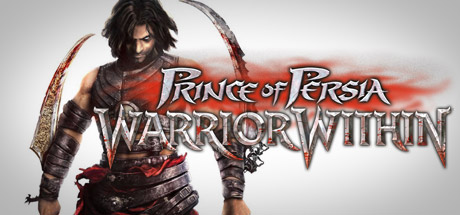
Then there’s Prince of Persia: Warrior Within, whose description explicitly cites Time & Memory, Body Horror & Occult, and Adult & Dark Seinen. Its player review nails the emotional core: “Dahaka chase is still as goated as it was before.” That breathless, hunted exhaustion—being pursued not by an enemy, but by your own inevitability—is pure Phos in Year 300. The Dahaka isn’t just chasing the Prince; it’s enforcing consequence, a living scar of time’s judgment. Like the Gems’ endless war against the Lunarians, the chase isn’t about victory—it’s about endurance under erasure. Every dodge, every stumble, every moment the Dahaka reforms from smoke and shadow echoes how Phos reforms from dust: beautiful, inevitable, and deeply lonely.
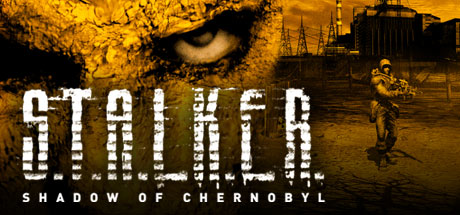
And S.T.A.L.K.E.R.: Shadow of Chernobyl, with its Survival & Crafting and Body Horror & Occult dimensions, offers a different kind of kinship. Its description calls the Zone “a very dangerous place, where you fear not only the radiation, anomalies and deadly creatures, but other S.T.A.L.K.E.R.s”—a world where threat comes from everything, including your own comrades, your own curiosity, your own biology. The player review says: “The story is also really good, I'm intrigued in the whole thing.” That intrigue isn’t about solving a mystery—it’s about sensing the weight of unanswered history, the way the Zone hums with past trauma made physical. Like the Gems’ ruined world, the Zone refuses explanation. It simply is: irradiated, sentient, indifferent. You don’t master it—you learn its rhythms, respect its fractures, and carry your wounds forward, unhealed.
This isn’t for fans of triumphant arcs or cathartic battles. It’s for the ones who pause mid-game when their character’s reflection flickers—just once—in a broken mirror. For readers who underline sentences about forgetting, not because they’re sad, but because they recognize the relief in it. For players who replay Warrior Within not for the combat, but for the way the sand shifts underfoot like time itself refusing to settle. They’re drawn to stories where beauty and breakage share the same grammar—and where the most devastating loss isn’t of life, but of coherence.
🎮76 Games That Match the Vibe
















Match Dimensions Explained
❓Frequently Asked Questions
Why is BioShock Infinite on the 'Games Like Land of the Lustrous' list when it’s not about gem people?
Great question—it’s not about gem people, but it nails the same haunting, layered atmosphere: think Elizabeth’s cage in Comstock House echoing Phosphophyllite’s fragility, or the way Columbia’s decaying grandeur mirrors the Lustrous’ fractured world. The Time & Memory and Body Horror & Occult dimensions (like Songbird’s twisted reality shifts and the Siphon’s grotesque biology) line up tightly with Lustrous’ themes of identity, erosion, and existential dread.
Is there a Land of the Lustrous video game adaptation?
No—there’s no official Land of the Lustrous game yet, which is why fans lean into matches like Prince of Persia: Warrior Within for that same brooding, adult-toned seinen energy. Its Dahaka chase sequences—with their oppressive time-loop tension and visceral body horror—hit the same emotional notes as Kongo’s relentless pursuit or the chilling stillness before a Lunarian attack.
How does Chains compare to Land of the Lustrous in terms of tone and pacing?
Totally different vibe—Chains is a chill, physics-based match-3 game (think linking bubbles like connect-4), with zero lore or angst. It shares only the Emotional Narrative dimension at a surface level: its quiet, meditative flow can echo Phosphophyllite’s introspective moments, but swap out gemstone warfare for bubble chains and you’re in pure zen mode—not melancholy sci-fi tragedy.
What’s the best game like Land of the Lustrous if I want that eerie, slow-burn dread with body horror and ancient secrets?
S.T.A.L.K.E.R.: Shadow of Chernobyl is your pick—it’s got that suffocating Zone atmosphere where every rustle could be a flesh-mutated Pseudogiant or an invisible anomaly warping your body, just like the Lunarians’ uncanny distortions. The survival-crafting loop (scavenging artifacts, patching gear mid-hunt) mirrors how the Lustrous constantly adapt, repair, and confront their own physical fragility—no dialogue needed, just dread in the static.