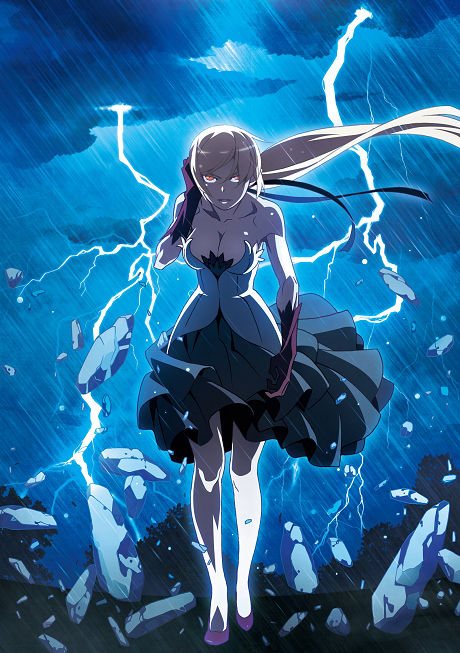
Kizumonogatari Part 2: Nekketsu
First season of the Monogatari Series, part 3/6. Contains the arc Koyomi Vamp from the Kizumonogatari light novel.
In the spring of his second year of high school, Koyomi Araragi met the beautiful vampire Kiss-Shot Acerola-Orion Heart-Under-Blade. Koyomi saved Kiss-shot, who was on the verge of death with all four of her limbs cut off, but only at the expense of becoming her minion and a vampire. “In order to go back to being a human again, you must take back all of Kiss-shot’s limbs.” After receiving advice from Meme Oshino, an expert in the supernatural, Koyomi prepares to go into battle.
Awaiting him are three powerful vampire hunters—Dramaturgy, a giant vampire hunter who is a vampire himself. Episode, a half-vampire who wields an enormous cross, and Guillotinecutter, a quiet man who specializes in killing vampires. Will Koyomi be able to take back Kiss-Shot’s limbs from the vampire hunters? Amidst the soft spring rain, the curtain rises on this fateful blood bath…
(Source: Aniplex)
📺Anime Details
📝Editorial Analysis
The fluorescent hum of a convenience store at 3 a.m., the plastic wrapper of a blood-orange Pocky crinkling too loud in Koyomi Araragi’s trembling fingers — and then, Kiss-Shot’s hand, severed at the wrist, lying on the linoleum like something discarded from a butcher’s tray. Not stylized. Not symbolic. Wet. Veins still glistening under the sickly yellow light. That moment isn’t horror for shock’s sake — it’s intimacy made grotesque, vulnerability made physical, as if the body itself has started confessing secrets it wasn’t meant to tell.
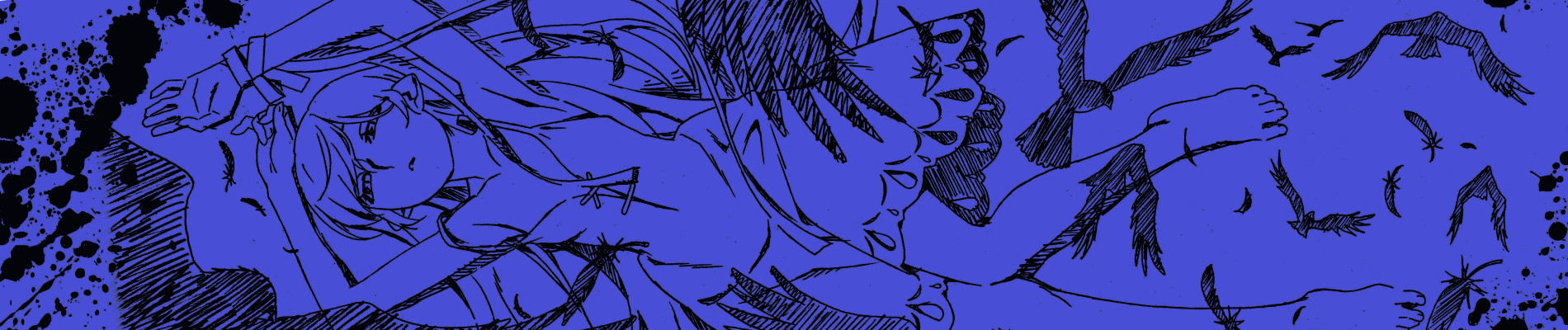
What makes Kizumonogatari Part 2: Nekketsu ache like this isn’t its vampire lore or noir palette — it’s how relentlessly embodied it feels. Every cut is a violation of self; every regrown limb a betrayal of memory; every drop of blood a ledger entry in a debt written in flesh. It doesn’t ask you to understand vampirism — it forces you to taste its metallic aftertaste, to feel the vertigo of age regression not as whimsy but as unmooring, to watch a boy’s coming-of-age unfold not through triumphs, but through the slow, nauseating reassembly of his own anatomy. This isn’t urban fantasy as backdrop — it’s urban fantasy as symptom: the city’s grime, the flicker of neon on wet pavement, the rot beneath polished surfaces — all extensions of Kiss-Shot’s decaying grandeur and Koyomi’s unraveling control. You don’t watch it — you endure its pulse.
That same visceral, unflinching entanglement of identity and anatomy lives in Vampire: The Masquerade - Bloodlines, where “Dark Fantasy, Neon Noir, Body Horror & Occult” aren’t tags — they’re textures. A player review nails it: the game demands you patch it, wrestle with its brokenness just to make it function, mirroring Koyomi’s desperate, jury-rigged attempts to reclaim his humanity limb by limb. Its world doesn’t hide decay behind glamour — it lets you smell the mildew in the Asylum’s basement, hear the wet crack of a ghoul’s jaw resetting mid-conversation, feel your own character’s hunger twist their thoughts into jagged, selfish things. Like Nekketsu, it treats transformation not as power-up, but as erosion — every vampiric discipline fraying your grip on what you were.
Then there’s Thief: Deadly Shadows, where Garrett moves through shadows not as a hero, but as something unseen, something that belongs in the cracks — much like Koyomi, who hides his fangs behind polite smiles and bad jokes, whose very presence in daylight feels like trespassing. The player review calls it “the best stealth game, rich atmosphere and the world feels alive” — and that aliveness is threatening. Light doesn’t illuminate here — it exposes. Sound doesn’t guide — it betrays. Every creak of floorboard, every shift of torchlight, echoes Nekketsu’s claustrophobic tension: you are never safe in your own skin, never certain whether the thing watching you is outside — or inside, waiting for its turn to surface.
And Alice: Madness Returns, with its “Dark Fantasy, Neon Noir, Body Horror & Occult” dimensions, doesn’t just depict madness — it reconstructs perception. Victorian London isn’t a setting; it’s a wound dressed in lace. Wonderland isn’t escape — it’s the body’s subconscious screaming in rotting flora and splintered bone. A player review mentions editing config files manually just to stabilize the experience — a perfect metaphor for Koyomi’s reality: nothing works as intended, nothing holds, and survival depends on constant, exhausting adjustment. When Alice’s ribcage blooms into thorny vines or her reflection peels away like wet paper, it’s not spectacle — it’s the same raw, unmediated bodily betrayal that makes Koyomi stare at his own hands, wondering which parts still belong to him.
This pairing isn’t for fans of “cool vampires” or “gritty stealth.” It’s for the ones who remember holding their breath during that convenience store scene — not out of fear, but because the air felt thick, charged with the weight of something unspeakable and true. It’s for players who don’t skip dialogue trees in Bloodlines, who linger in Thief’s alleys just to hear rain hit rusted metal, who replay Alice’s asylum sequences not for answers, but for the way the walls seem to breathe. They’re drawn to stories where the supernatural isn’t magic — it’s metaphor made flesh, where every scar tells a story no one asked to hear, and every act of survival leaves a stain no amount of neon light can wash clean. Raw. Unsettling. Alive.
🎮71 Games That Match the Vibe



















Match Dimensions Explained
❓Frequently Asked Questions
Why does Vampire: The Masquerade - Bloodlines keep coming up when I search for games like Kizumonogatari Part 2: Nekketsu?
Because both lean hard into that fever-dream blend of Dark Fantasy and Neon Noir—think Koyomi’s blood-soaked stairwell hallucinations mirrored in Bloodlines’ rain-slicked, vampire-run L.A. streets where every alley hides occult dread and body horror (like the Nosferatu’s grotesque transformations). Players even mention how the game’s morally gray dialogue trees and psychological weight—especially during the Asmodeus arc—echo Nekketsu’s tense, character-driven confrontations.
Is there a visual novel or game adaptation of Kizumonogatari Part 2: Nekketsu?
No official game adaptation exists—but fans often reach for Thief: Deadly Shadows when craving that same suffocating, atmospheric tension. Garrett’s stealth through gothic-tinged, fog-choked environments (like the Shalebridge Cradle) mirrors Nekketsu’s claustrophobic pacing and sudden bursts of violence—plus both use light/shadow as narrative tools, just like the scene where Kiss-shot emerges from darkness in the school pool.
How is Alice: Madness Returns different from Assassin’s Creed Director’s Cut Edition for someone who loves Kizumonogatari’s surreal tone?
Alice trades AC’s grounded historical parkour for full-on psychological splatter-fantasy: Victorian London’s repressed trauma literally warps into Wonderland’s body-horror set-pieces (like the Dollhouse boss fight), while AC leans into Dark Seinen grit—its Jerusalem rooftops and Ismaili assassins evoke the same brooding, adult intensity as Nekketsu’s philosophical duels. Both hit the Neon Noir + Dark Fantasy combo, but Alice drowns you in metaphor; AC makes you *feel* the weight of every blade strike.
What’s the best game like Kizumonogatari Part 2 if I want that ‘beautiful but deeply unsettling’ mood?
Alice: Madness Returns is your top pick—its art direction nails that exact vibe: ornate Victorian lace dissolving into fleshy, pulsating corridors, and the Queen of Hearts’ distorted face echoing Kiss-shot’s shifting, predatory allure. Reviewers call it ‘ghastly Wonderland,’ and scenes like the asylum’s clockwork heart chamber channel Nekketsu’s aesthetic whiplash—gorgeous visuals layered over visceral unease, all wrapped in melancholic, story-driven momentum.