Grand Theft Auto 2
🎮Game Details
📝Editorial Analysis
The flicker of a neon sign—SALVAGE YARD—stutters over rain-slicked asphalt as your stolen taxi fishtails into a concrete divider, airbags exploding like startled ghosts. You scramble out just as a police cruiser, its siren warping into a distorted bassline, plows headlong into the wreckage behind you. There’s no pause. No respawn screen. Just the low hum of a broken streetlamp, the acrid tang of burnt rubber in the air, and the sudden, jarring cut to a new mission briefing scrolling across a CRT monitor: “Kill the guy who owns the laundromat. He’s laundering more than socks.” That’s Grand Theft Auto 2—not as nostalgia, not as satire, but as disorientation made systemic: a world where logic frays at the edges, cause dissolves into chaos, and every alleyway breathes with unstable voltage.
What makes it unique isn’t its top-down view or its 1999 release date—it’s the unease of perpetual recalibration. You don’t learn the rules; you survive their collapse. Missions loop, factions betray without warning, weapons misfire with cartoonish malice, and the city itself—Downtown, Residential, Industrial—feels less like a map and more like a nervous system wired backward. It doesn’t ask you to master control. It asks you to endure dissonance: the whine of a dying engine syncing with a synthwave riff, the grotesque charm of a gangster named “Mr. Big” who literally swells mid-chase, the way time stutters when a tank shell hits a bus full of mannequins. This isn’t satire dressed as chaos—it’s chaos recognized as texture, as atmosphere, as the very grammar of place. You don’t feel powerful. You feel exposed, hyper-aware of how thin the membrane is between order and rupture.
That’s why JoJo's Bizarre Adventure: STONE OCEAN lands with such visceral precision—not because of shared plot, but because both weaponize Neon Noir as psychological weather. In STONE OCEAN, fluorescent prison corridors pulse with dread, Stand battles distort anatomy like corrupted sprites, and reality glitches under the weight of occult physics—just like GTA 2’s gravity-defying jumps and enemy AI that sometimes stares blankly at walls before lunging. The Body Horror & Occult dimension isn’t about gore; it’s about violation of expected form: Jolyne’s fingers peeling back into chains, or GTA 2’s pedestrians spontaneously combusting into pixelated confetti after a drive-by. Both treat the human body—and the urban environment—as unstable code waiting to crash.
Then there’s Paprika, where the line between dream logic and surveillance-state architecture blurs into something deeply adult and dark seinen. Its parade sequence—floating TVs, melting faces, office chairs marching like mechanized insects—isn’t surrealism for spectacle. It’s the same fever-dream density as GTA 2’s Industrial District: smokestacks vomiting glitter, security cameras blinking like unblinking eyes, and mission objectives delivered via garbled radio static that sounds like a dying modem. The Neon Noir here isn’t aesthetic—it’s diagnostic: light doesn’t illuminate; it interrogates. And the Body Horror & Occult? It’s in how both works make identity feel porous—whether it’s Paprika slipping between dreamers’ psyches or GTA 2’s player character swapping skins so often he becomes an anonymous vector of mayhem, stripped of backstory, defined only by his next violent pivot.
Kizumonogatari Part 2: Nekketsu shares that same Neon Noir grit—but colder, sharper. The blood isn’t splattered; it’s geometric, pooling in precise crimson polygons beneath a sodium-vapor glow. Like GTA 2’s abrupt camera cuts and clipped dialogue (“You’re dead. Try again.”), Nekketsu refuses catharsis. Its violence is clinical, its horror intimate—not cosmic, but textural: the scrape of fangs on pavement, the wet click of a jaw unhinging, the way shadows congeal into shapes that shouldn’t hold mass. Both reject narrative hand-holding. They trust you to feel the wrongness in the rhythm—the too-long silence before a gunshot, the off-kilter timing of a jump, the way a character’s mouth moves half a beat behind their voice.
Who lives for this? Not the player who wants clean progression or the viewer who craves emotional safety. It’s the one who leans into the glitch: the person who rewinds a cutscene just to watch a car flip three times in slow-mo, then pauses Paprika to trace how a single frame of static mirrors the flicker of a GTA 2 traffic light. It’s the reader who underlines Monogatari’s clinical dissections of desire while simultaneously memorizing GTA 2’s faction reputation decay rates. They don’t seek coherence—they seek resonance in rupture, a shared nerve-end exposed across mediums: the thrill of systems unraveling just enough to let something raw, electric, and unmistakably alive bleed through.
→110 Anime That Match the Vibe

Neon-drenched Miami jail corridors in *STONE OCEAN* pulse with the same synthetic dread as GTA 2’s flickering, rain-slicked urban decay—both weaponize 🌃 Neon Noir to frame confinement as inescapable spectacle. Jolyne’s body unraveling under DIO’s strings mirrors GTA 2’s grotesque, physics-defying car wrecks: 👻 Body Horror & Occult aren’t just motifs but structural logics, warping identity and causality alike. Unlike most prison narratives, *STONE OCEAN*’s ONA format leans into claustrophobic, hallucinatory pacing—just as GTA 2’s fragmented missions reject linear progression, making their shared disorientation feel deliberately, thrillingly unstable.

Neon-drenched alleyways in *Grand Theft Auto 2* pulse with the same disorienting, low-fi cyber-noir anxiety as Paprika’s parade of melting mannequins and fractured cityscapes—both weaponize 🌃 Neon Noir to destabilize consensus reality. Where the game’s anarchic, pixelated chaos mirrors the dream machine’s uncontrolled spillover in *Paprika*’s climactic subway sequence, body horror emerges not through gore but through corrupted identity: a cop’s face glitches into a clown’s grin; a dreamer’s limbs detach like GTA2’s ragdoll physics. This isn’t just stylistic kinship—it’s shared philosophical dread about systems collapsing inward, making their collision unexpectedly profound.

Shadows, cigarettes, and moral ambiguity — noir at its most stylish.
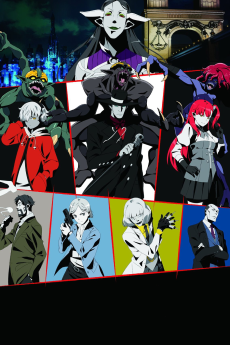
Shadows, cigarettes, and moral ambiguity — noir at its most stylish.

Shadows, cigarettes, and moral ambiguity — noir at its most stylish.
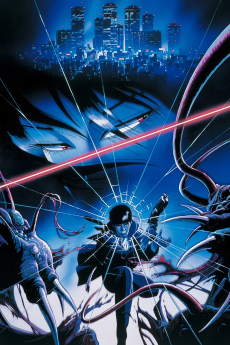
Shadows, cigarettes, and moral ambiguity — noir at its most stylish.
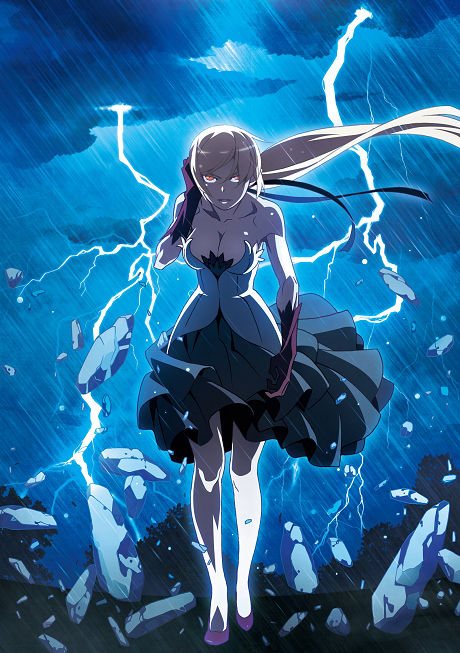
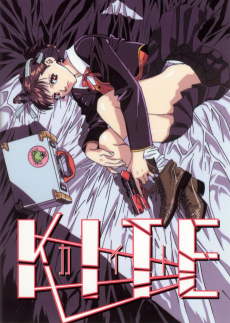
Neon-drenched alleyways in *GTA 2*’s downtown district pulse with the same feverish, synthetic dread as Koyomi’s crumbling apartment during his blood-soaked transformation in *Kizumonogatari Part 2: Nekketsu*. Where the game weaponizes urban decay and glitchy surveillance to evoke existential dislocation, the anime renders vampirism as visceral *Body Horror & Occult*—a grotesque, intimate unraveling mirrored in the game’s chaotic physics and corrupted UI. This isn’t just shared darkness; it’s a mutual obsession with how systems—social, biological, digital—fracture under pressure.
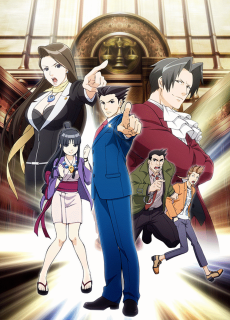
Shadows, cigarettes, and moral ambiguity — noir at its most stylish.
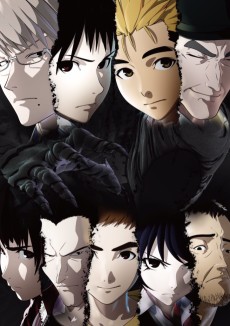
Kei Nagai’s first resurrection—bloodless, silent, and utterly alien in a rain-slicked alley—echoes GTA 2’s grimy, pixelated respawn mechanic: no fanfare, just abrupt reinsertion into a broken system. Where neon noir bleeds into body horror, both weaponize urban decay as moral rot made visible—GTA 2’s anarchic city grids mirror Ajin’s clinical dissections of immortality’s dehumanizing logic. This pairing is startling precisely because it treats survival not as triumph, but as complicity in a darker, occult-tinged machinery.
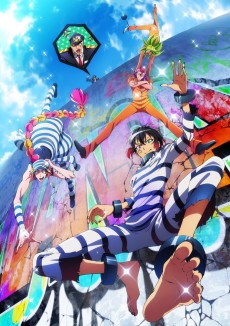
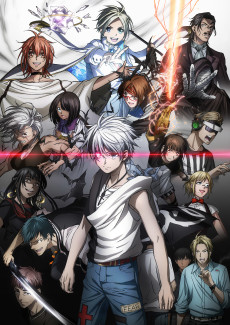
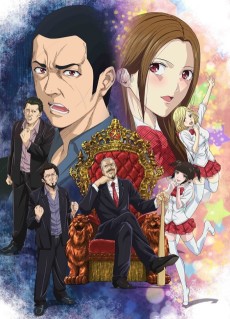
Neon-drenched alleyways pulse with the same synthetic dread in *GTA 2*’s dystopian urban sprawl and *NANBAKA*’s prison-block corridors—both weaponizing 🌃 Neon Noir to frame institutional absurdity as carnival horror. Juugo’s grotesque, recurring body transformations echo *GTA 2*’s glitchy, rubbery physics and surreal vehicle crashes, where 👻 Body Horror & Occult aren’t metaphors but operational logic. Unlike most prison stories, *NANBAKA* treats incarceration like a rogue game engine—glitching, looping, rewriting rules—just as *GTA 2* treats its city like a sentient, mocking simulation.





























![Fate/stay night [Heaven’s Feel] III. spring song](https://s4.anilist.co/file/anilistcdn/media/anime/cover/large/bx21719-MSdTlkno0Z0u.jpg)





Match Dimensions Explained
❓Frequently Asked Questions
Why is JoJo's Bizarre Adventure: STONE OCEAN compared to Grand Theft Auto 2?
It’s not about car chases or open-world crime—it’s the chaotic, rule-breaking energy and neon-drenched urban decay that vibes with GTA 2’s anarchic tone. Think of Jolyne Cujoh’s prison break in Green Dolphin Street Prison, where reality warps mid-fight (like when Foo Fighters splits into jellyfish swarms), mirroring how GTA 2’s gameplay throws physics, factions, and absurdity at you all at once.
Is there an anime adaptation of Grand Theft Auto 2?
No—Rockstar never adapted GTA 2 into an anime, and no official manga or anime spin-off exists. But if you’re craving that same gritty, stylized chaos, Paprika nails it: its surreal Tokyo streets, shifting architecture, and dream-heist sequences (like the parade scene where buildings melt into highways) channel GTA 2’s disorienting, hyper-stylized city logic—just without the cars.
How does Tekkonkinkreet compare to NANBAKA for GTA 2 fans?
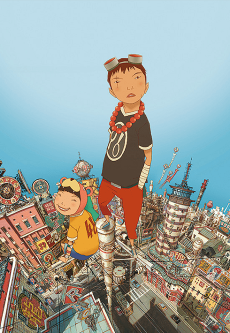
Tekkonkinkreet leans harder into grimy, lived-in urban tension—Black and White’s rooftop chases across Takaramachi’s decaying skyline feel like GTA 2’s top-down chaos made tactile and emotional. NANBAKA, meanwhile, swaps grit for over-the-top prison slapstick (think Hakkai’s rubbery, gravity-defying brawls), giving you more of GTA 2’s cartoonish faction warfare—but less psychological weight.
What’s the best anime like GTA 2 for late-night, neon-noir mood?
Paprika is your go-to—especially the midnight broadcast sequence where the city dissolves into a pulsing, CRT-glitching dreamscape full of floating TVs and distorted ads. It mirrors GTA 2’s signature ‘neon noir’ vibe not through crime plots, but through its saturated palette, fragmented pacing, and that same sense of a city operating on unstable, almost hostile rules—like driving down a street that suddenly turns vertical.