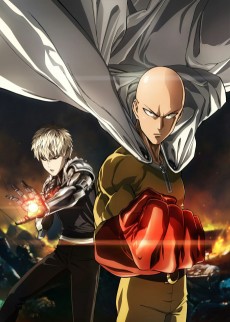
One-Punch Man: Road to Hero
OVA bundled with the 10th volume of the One Punch Man manga. It features an original story by the series' mangaka, ONE, about the secret story of the birth of Saitama's hero suit.
📺Anime Details
📝Editorial Analysis
The fluorescent hum of a cheap tailor’s shop in Z-City at 3 a.m. Saitama stands barefoot on worn linoleum, sleeves rolled, holding a single threadbare red glove—his first real piece of hero gear—not as costume, but as evidence: proof he showed up, that he tried, that the work mattered before the power did. No fanfare. No crowd. Just the smell of polyester glue and stale coffee, and the quiet, stubborn weight of a man stitching himself into a role no one asked him to fill.
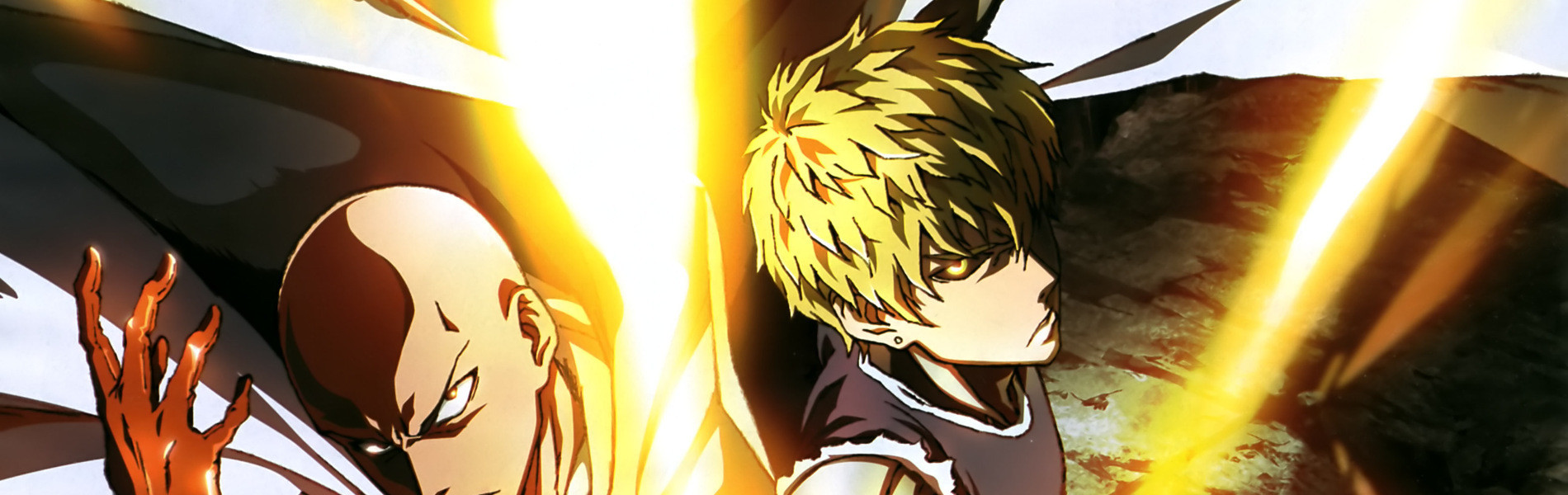
That moment isn’t about spectacle—it’s about labor. One-Punch Man: Road to Hero doesn’t trade in mythic origin tropes; it trades in receipts, bus passes, and the dull ache in your shoulders after eight hours of folding laundry for a side gig. Its atmosphere is tired, surreal, and strangely tender—a world where cosmic threats loom just beyond the pachinko parlor, where heroism isn’t declared in battle cries but in the act of returning a lost wallet before punching a meteor. It’s urban fantasy not as escapism, but as documentary: a Seinen lens trained on the quiet, unglamorous scaffolding beneath the superhero façade—the rent, the résumés, the secondhand suit fittings. You don’t feel awe here. You feel recognition—that flicker of “Yeah, I’ve also ironed a cape at midnight.”
That same emotional DNA pulses through Vampire: The Masquerade - Bloodlines, where the neon-drenched streets of Los Angeles aren’t backdrops—they’re bureaucracies. Like Saitama’s suit, every bloodline choice, every dialogue branch, every failed persuasion roll feels like another shift at a job you didn’t apply for. The player review nails it: “BUY IT ON GOG; if you want to use the steam version you need to download the unofficial patch…” — that’s the vibe. Not polish, but persistence. A game built on duct tape, legacy code, and lived-in exhaustion—just like Saitama’s ill-fitting gloves and the mangaka’s handwritten margin notes on hero registration forms.
Then there’s Second Sight, where psychic powers don’t grant godhood—they interfere. You rewind time not to undo tragedy, but to reposition a chair so a guard won’t spot you. The description calls it “atmospheric, psychological thriller narrative with paranormal psychic abilities, stealthy exploration and intense shooter action”—but what lingers is the fractured focus, the way perception bends under fatigue. Like Saitama staring blankly at a “Hero Association Application Form” while a tornado tears through the next block, the game makes you feel unmoored, yet hyper-attuned to texture: peeling wallpaper, static on a monitor, the hollow echo of footsteps in an abandoned asylum. The player says it’s “one of my favourite games… despite its age and wonky mechanics”—because the wonk is the point. So is the anime’s deadpan timing, its surreal comedy born from cognitive dissonance between scale and salary.
And Max Payne, where every bullet-time dive is less about triumph and more about delaying collapse. “A fugitive undercover cop framed for murder, hunted by cops and the mob”—that’s not plot armor. That’s paycheck anxiety dressed in trench coat noir. Saitama’s monotone narration over shots of him eating cup noodles while a kaiju smashes downtown? Max’s voiceover over rain-slicked alleys, whispering about “the cold urban night”? Same bone-deep weariness. Same refusal to romanticize survival. The player memory—“once you died, you passed the controller to the next player”—mirrors how Road to Hero treats heroism: communal, iterative, deeply human. Not destiny. Just showing up again.
This pairing isn’t for fans of power fantasies or lore dumps. It’s for the person who keeps their hero suit folded in a plastic bag under the bed—not because they’re hiding it, but because laundry day is tomorrow, and the detergent’s on sale. It’s for the player who saves mid-mission not to cheat death, but to check their bank balance in real life. For the reader who highlights ONE’s marginalia about municipal zoning laws in Z-City’s “Hero Licensing Annex.” These are stories for those who know exhaustion isn’t the opposite of meaning—it’s often the only ground where meaning takes root.
🎮24 Games That Match the Vibe


Match Dimensions Explained
❓Frequently Asked Questions
Why does One-Punch Man: Road to Hero feel so different from Max Payne even though they’re both on the same 'Games Like' list?
Great question—it’s all about tone vs. execution. Road to Hero leans into over-the-top anime spectacle with Saitama’s instant-KO punches and goofy cutscenes, while Max Payne delivers gritty, rain-slicked noir with bullet-time shootouts, tragic monologues, and that iconic 'Vodka and vengeance' vibe. They share the 'Neon Noir, Adult & Dark Seinen' dimension because both explore disillusioned heroes in morally gray urban hells—but Max Payne’s slow-burn despair and cinematic cover-shooting (like the subway shootout in Chapter 4) couldn’t be further from Saitama’s one-punch absurdity.
Is there a One-Punch Man anime game adaptation besides Road to Hero?
No—Road to Hero is the *only* official One-Punch Man console/PC game adaptation to date. There’s no Vampire: The Masquerade-style reimagining or Assassin’s Creed-style historical twist; just this beat-’em-up with story mode covering the early manga arcs (like the Deep Sea King fight) and arcade brawling as Genos, Saitama, or even Mumen Rider. All the other titles on the match list—like Second Sight or GTA 2—are stylistic *parallels*, not adaptations.
How accurate is the 'Neon Noir, Adult & Dark Seinen' label across these games?
Surprisingly consistent—even for older titles. Max Payne nails it with its noir voiceover, betrayal themes, and that brutal ‘bullet-time dive’ mechanic during the drug lab raid. Second Sight earns it through its psychological unraveling (like the asylum sequence where your psychic powers glitch reality), and Vampire: The Masquerade – Bloodlines dives deep into moral decay—say, choosing whether to feed on a terrified journalist in Santa Monica’s neon-drenched alleys. All five games hit that mature, atmospheric, morally ambiguous sweet spot—even if GTA 2’s satire is more cartoonish than somber.
What’s the best game like Road to Hero if I want that same adrenaline rush but with deeper stealth and psychic powers?
Second Sight—hands down. It swaps Saitama’s brute-force punches for telekinesis, mind control, and remote viewing, letting you flip guards upside-down mid-air or possess a guard to walk past lasers (just like Genos analyzing enemies before striking). The tension of sneaking through the Siberian research facility—where every corridor feels claustrophobic and your powers drain under stress—gives that same 'power fantasy meets consequence' thrill, but with way more cerebral pacing than Road to Hero’s button-mashing.