
Chainsaw Man
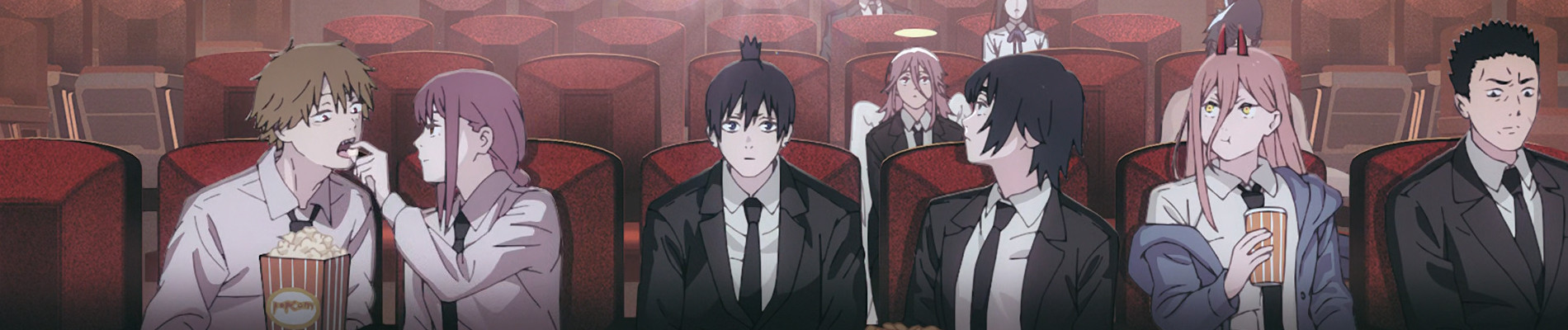
Denji is a teenage boy living with a Chainsaw Devil named Pochita. Due to the debt his father left behind, he has been living a rock-bottom life while repaying his debt by harvesting devil corpses with Pochita.
One day, Denji is betrayed and killed. As his consciousness fades, he makes a contract with Pochita and gets revived as "Chainsaw Man" — a man with a devil's heart.
(Source: Crunchyroll)
📺Anime Details
📝Editorial Analysis
The smell of wet pavement and copper hits before the chainsaw even roars — Denji’s chest splitting open, ribs peeling back like rusted hinges as Pochita erupts from his sternum, blood steaming in the rain-slicked alley behind a bankrupt debt-collection office. Not heroic. Not cinematic. Just wet, heavy, necessary. His scream isn’t rage — it’s relief. A body finally stopping its slow collapse.
That moment isn’t about power fantasy. It’s about exhaustion made manifest. Chainsaw Man doesn’t trade in mythic scale or cosmic stakes — it lives in the grime between paychecks, the hollow echo of a fridge with nothing inside, the way your own heartbeat sounds too loud when you’re waiting to be betrayed. Its urban fantasy isn’t glittering towers or hidden academies — it’s fluorescent-lit convenience stores at 3 a.m., cracked tile in public bathhouses, the sticky residue of cheap energy drinks on a desk cluttered with unpaid bills. The horror isn’t just demons — it’s how easily your body becomes collateral, how fast loyalty curdles into calculation, how love gets priced, weighed, and discarded like expired meat. You don’t feel empowered watching Denji fight — you feel recognized. Seen, in your own quiet desperation, your own hunger that’s equal parts physical and existential.
Which is why Max Payne lands like a gut punch in the same place. Not because of bullet-time or noir tropes — but because Max is a man with nothing to lose in the violent, cold urban night. Framed. Hunted. Alone. His world isn’t stylized; it’s leaking — rain blurs neon signs into bleeding smears, hallways stretch too long, and every gunshot echoes like it’s firing inside your skull. That player review — “once you died, you passed the controller to the next player” — says everything: death isn’t failure. It’s ritual. A shared, grim acknowledgment that survival is temporary, dignity is negotiable, and the only thing left to do is keep moving forward, even if your knees are shaking. Like Denji reviving with a devil’s heart beating where his own used to be, Max’s resilience isn’t strength — it’s refusal to stop breathing. Both exist in that same exhausted, tactile reality where pain has weight, and hope is just the next breath you haven’t taken yet.
Then there’s Hitman 2: Silent Assassin, where you step into the shoes of a retired assassin, forced back into action by treason. The description nails it: “You may be a hired killer but you still have a sense of loyalty and justice.” That contradiction — professional detachment warring with deep, unspoken moral gravity — mirrors Denji’s arc with chilling precision. He doesn’t choose vengeance; he’s reconstituted by it. His body becomes a weapon not through training, but through violation — shapeshifting not as transformation, but as violation made permanent. The player review’s fragmented tone — “You forget what reality is”, the hesitant checkbox for graphics — mirrors how Chainsaw Man destabilizes perception: one moment you’re laughing at a dumb joke in a ramen shop, the next you’re staring at a friend’s severed jawline dangling by sinew. Both works weaponize disorientation — not for spectacle, but to make you feel how thin the membrane is between routine and rupture.
And Grand Theft Auto 2, though less documented here, pulses with the same neon noir and body horror & occult undercurrent — a city that doesn’t care if you live or die, where identity is fluid, contracts are broken before they’re signed, and every alley hides either salvation or slaughter. Its chaotic, low-fidelity grit mirrors the anime’s refusal to polish its despair — no glossy filters, no heroic lighting. Just flickering signs, bad wiring, and the constant hum of something wrong beneath the pavement.
This pairing isn’t for fans of clean triumphs or tidy resolutions. It’s for the ones who’ve ever stared at their reflection after a sleepless night and wondered if their eyes look hungrier than usual. For players who replay a level not to win, but to survive it differently — quieter, slower, more aware of the floorboards creaking underfoot. For viewers who don’t flinch at gore, but lean in at the silence right before it happens — that split second where Denji’s breath hitches, Max’s knuckles whiten on his gun, Agent 47 pauses mid-step in a sunlit garden — all of them holding space for the unbearable lightness of being used up, and somehow, impossibly, still here.
🎮6 Games That Match the Vibe


Match Dimensions Explained
❓Frequently Asked Questions
Why does Chainsaw Man's vibe match Max Payne so well?
Because both drown you in neon-drenched urban despair with brutal, personal stakes—Max’s grief-fueled rampage through rain-slicked alleys mirrors Denji’s raw, visceral rage after Aki’s death. The slow-mo bullet-time in Max Payne isn’t just a mechanic—it’s emotional punctuation, like when Denji revs his chainsaw mid-air, and that ‘Neon Noir + Body Horror & Occult’ overlap hits hard (score: 61).
Is there a Chainsaw Man video game adaptation?
No—not yet. There’s no official Chainsaw Man game, which is why fans lean into titles like Hitman 2: Silent Assassin for that same morally gray, high-stakes tension: think Aki’s stoic precision vs. Agent 47’s silent, surgical justice in Osaka or the Vatican. It’s not canon, but the Tactical Warfare + Neon Noir + Body Horror & Occult blend (score: 56) scratches that exact itch.
How is Hitman 2: Silent Assassin different from Grand Theft Auto 2 for Chainsaw Man fans?
GTA 2 is chaotic, satirical, and cartoonishly violent—like watching Power’s reckless chaos in Shibuya without consequences—while Hitman 2 is tightly wound, methodical, and steeped in betrayal and quiet dread (think Makima’s calm menace). Both share Neon Noir and Body Horror & Occult vibes, but GTA 2 (score: 58) leans into absurd anarchy, whereas Hitman 2 (score: 56) delivers psychological weight and tactical restraint.
What’s the best Chainsaw Man-like game if I want that gritty, emotionally exhausted, rain-soaked mood?
Max Payne—hands down. That opening sequence where Max stumbles through a blood-smeared apartment after his family’s murder? It’s the emotional gut-punch of Denji losing Aki, all wrapped in noir shadows, heavy rain, and voiceover that’s equal parts weary and furious. With its 61-scored Neon Noir + Body Horror & Occult + Tactical Warfare combo, it’s the closest thing to playing a Chainsaw Man episode written by David Fincher.