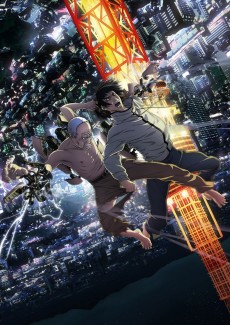
INUYASHIKI LAST HERO
Ichiro Inuyashiki is down on his luck. While only 58 years old, his geriatric looks often have him written off as a pathetic old man by the world around him and he's constantly ignored and disrespected by his family despite all that he's done to support them. On top of everything else, his doctor has revealed that he has cancer and it appears that he has little time left in this world. But just when it seems things couldn't get any worse, a blinding light in the night sky strikes the earth where Ichiro stands. He later wakes up to find himself unscathed, but he soon starts to notice that there's something…different about himself.
(Source: Crunchyroll)
📺Anime Details
📝Editorial Analysis
The rain in INUYASHIKI LAST HERO doesn’t glisten—it soaks. It clings to Ichiro Inuyashiki’s thin coat as he stands alone on a Tokyo overpass, breath fogging in the cold, his trembling hand gripping the railing like it’s the only thing keeping him from dissolving into the city’s indifferent hum. His reflection in a puddle isn’t distorted by ripples—it’s blurred by tears he won’t let fall. Not yet. Not while his daughter snaps a selfie beside him without looking up, not while his wife sighs at his “useless” suggestion about dinner, not while the diagnosis—terminal, aggressive, no remission—echoes in his skull like a metronome counting down to silence. That moment isn’t about power. It’s about weight: the crushing, unrelenting weight of being seen as already gone.
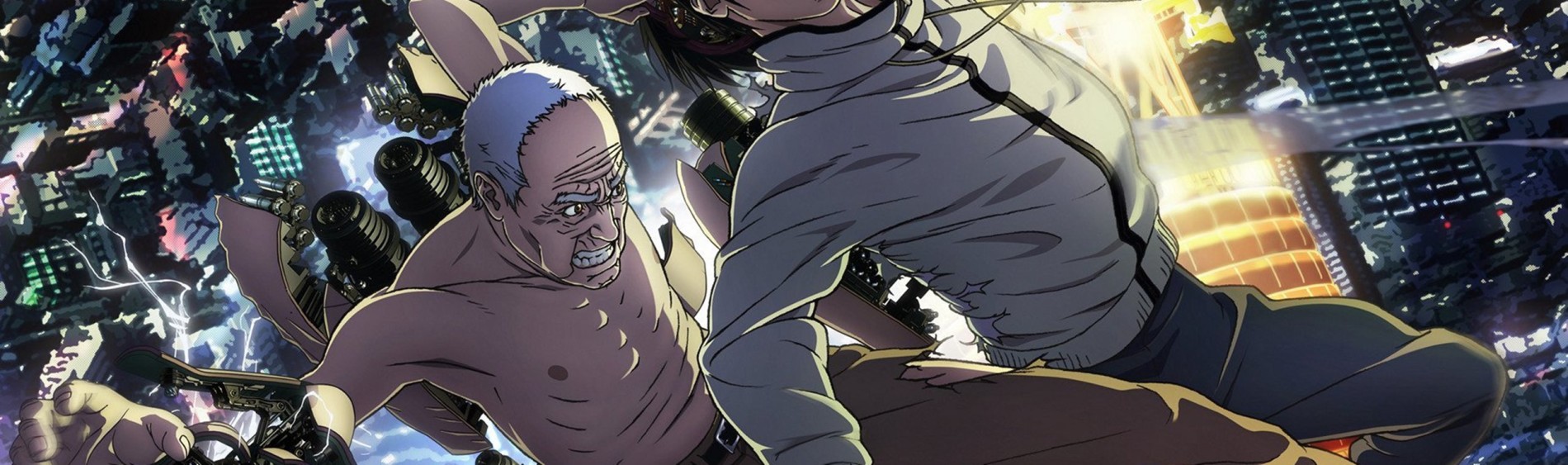
What makes INUYASHIKI LAST HERO ache so deeply isn’t its cyborg premise or CGI sheen—it’s how relentlessly it refuses catharsis. This is seinen not as demographic but as condition: the slow erosion of dignity, the quiet horror of irrelevance in a world that measures worth in productivity and youth. The transformation into a weapon doesn’t feel like liberation—it feels like amputation. Every act of heroism is shadowed by the knowledge that Ichiro’s body is now alien, his empathy stretched thin over titanium sinews, his compassion a choice he must consciously re-make, second after second, against the cold logic of his new form. You don’t feel empowered watching him save strangers—you feel exhausted, because his kindness is an act of will against entropy, against time, against the very architecture of his own erasure.
That same emotional gravity pulses through Vampire: The Masquerade – Bloodlines, where the player doesn’t ascend—they unravel. Its Dark Fantasy, Neon Noir, Adult & Dark Seinen dimensions mirror Inuyashiki’s urban isolation: a world slick with rain-slicked pavement and moral grease, where every dialogue choice carries the fatigue of centuries-old hunger and human fragility. A player review nails it: the game demands patches just to function, much like Ichiro’s body demands constant recalibration—not for glory, but to keep breathing. Both force you to inhabit a self that’s fundamentally broken, then ask you to love anyway.
Then there’s BioShock™, whose Cyberpunk & Dystopia, Adult & Dark Seinen, Body Horror & Occult framework resonates with terrifying precision. Rapture isn’t just a ruined city—it’s a monument to the lie that transcendence erases consequence. Like Ichiro’s cybernetic rebirth, Jack’s genetic rewriting promises control—but delivers violation. The player review calls it “revolutionary” for changing how games think about agency—and that’s the core link: both INUYASHIKI LAST HERO and BioShock™ treat power not as freedom, but as a wound that never scabs. The horror isn’t in the gore or the guns—it’s in the realization that your upgraded body remembers the shape of your old grief.
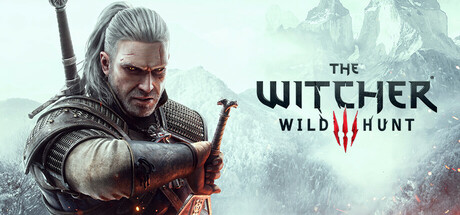
And The Witcher 3: Wild Hunt, with its Emotional Narrative, Adult & Dark Seinen depth, shares that same bone-deep weariness. Geralt doesn’t save the world with fanfare—he saves one person, then another, then another, each victory fraying him further. The player review celebrates DLC announced eleven years later, proof that this world—and its emotional labor—refuses to be discarded. Like Ichiro walking home after stopping a massacre, Geralt rides off into mist not triumphant, but tired, carrying the weight of every life he couldn’t save. Neither story offers clean answers—only the quiet, stubborn insistence on continuing.
This pairing isn’t for fans of spectacle or wish-fulfillment. It’s for the person who watches Ichiro kneel in the rain to comfort a crying child after he’s torn apart a terrorist cell—and feels their throat tighten not at the violence, but at the effort it takes him to stay gentle. It’s for the player who reloads a failed persuasion in Bloodlines not to win, but to hear the vampire’s voice crack one more time with exhaustion. It’s for those who understand that dignity isn’t something you’re born with—it’s something you rebuild, daily, in the wreckage of your own body, your own time, your own fading light. They don’t want heroes. They want witnesses. And these stories—gritty, unflinching, tender in their despair—let them bear witness without flinching back.
🎮96 Games That Match the Vibe






















Match Dimensions Explained
❓Frequently Asked Questions
Why does INUYASHIKI LAST HERO feel so similar to BioShock despite the different settings?
Both lean hard into body horror & occult themes layered over adult, morally gray storytelling—like Inuyashiki’s grotesque cybernetic transformation mirroring BioShock’s Little Sisters and ADAM mutations. The oppressive, decaying atmosphere of Rapture hits the same emotional weight as Tokyo’s quiet dread post-accident, especially during introspective, dialogue-heavy moments where power comes with horrific cost.
Is there an anime or live-action adaptation of Vampire: The Masquerade - Bloodlines that captures the same vibe as INUYASHIKI LAST HERO?
No official anime or live-action adaptation exists—but Bloodlines’ GOG version (with its built-in unofficial patch) nails the same dark fantasy + neon noir + adult seinen blend as INUYASHIKI. Think of Malkavian clan scenes dripping with psychological unease and rain-slicked L.A. streets lit by flickering signs—very much like Inuyashiki’s lonely night walks through a corrupted, glittering Tokyo.
How does Assassin's Creed Director's Cut compare to The Witcher 3 for someone who loved INUYASHIKI's emotional weight and moral ambiguity?
Assassin’s Creed (Director’s Cut) leans into systemic tension and silent observation—like watching Inuyashiki quietly assess a rooftop before acting—while Witcher 3 delivers raw, character-driven sorrow (Ciri’s trauma, Geralt’s helplessness) that mirrors Inuyashiki’s grief and paternal resolve. Both score 74 and 72 respectively in Adult & Dark Seinen, but Witcher 3’s emotional narrative dimension gives it deeper resonance for fans of Inuyashiki’s quieter, heavier moments.
What’s the best game like INUYASHIKI LAST HERO if I want that mix of tragic heroism and visceral melee combat?
Dark Messiah of Might & Magic is your best bet—it’s got that grounded, punishing melee system where every swing feels consequential (like Inuyashiki’s first clumsy, desperate fights), plus emotional narrative beats around identity and sacrifice. Its Source Engine grit and need for a community patch echo Bloodlines’ DIY charm, and reviewers even call it ‘a fantastic melee combat game that still holds up’—perfect for fans who love how Inuyashiki’s physicality evolves alongside his conscience.