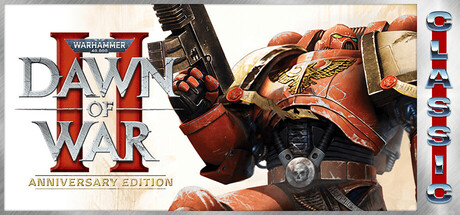
Warhammer 40,000: Dawn of War II - Anniversary Edition (Classic)
All of Warhammer 40,000: Dawn of War II in one package. Play the award-winning real-time strategy game in all its glory, including three full campaigns, six multiplayer factions, and a full co-op Last Stand mode with eight unique heroes.
🎮Game Details
💬What Players Say
"Use to play it and the epxansions all the time when they originally came out. Recently reinstalled to play the campaigns again and it doesn't work."
"This Review is for anyone looking for the Retribution DLC in the anniversary edition or having issues playing on a modern PC. This is what I have found that works for both DoW 1&2.( Check my DoW review for help with that one as it has way more issues to actually run) To play the DLC you have to install it as a total separate game (Specifically Retribution as Chaos Rising is somehow in the anniversary edition)...."
"Does not start Maybe a Problem with Windows 11 or my CPU Tried all workarounds but nothing works and Publisher/Developer does not care."
📝Editorial Analysis
The screen flickers—black, then static, then the grimy HUD of a Space Marine’s helmet visor snapping into focus. No fanfare, no orchestral swell—just the low thrum of a dying starship’s reactor and the ragged breath of a man who’s already buried three squads this week. That’s Warhammer 40,000: Dawn of War II - Anniversary Edition (Classic) in its rawest pulse: not spectacle, but exhaustion. Not triumph, but continuance. The official description promises “all of Dawn of War II in one package”—three campaigns, six factions, co-op Last Stand—but the player reviews whisper something truer: “Does not start.” “Whatever they’ve done… doesn’t work.” “Publisher/Developer does not care.” That dissonance—the gap between the game’s intended grandeur and its stubborn, glitching refusal to boot on modern hardware—isn’t a bug. It’s texture. It’s the 41st Millennium leaking through the seams.
What makes this game’s atmosphere singular isn’t its lore-dense universe or tactical layering—it’s how it weaponizes futility. You don’t command armies; you shepherd fragments of broken units across irradiated ruins, watching veterans lose limbs, morale, and names mid-mission. There’s no clean victory screen—just a cut to black, then the next deployment order scrolling past like another tax notice from the Imperium. It’s gritty, yes—but more precisely, it’s weary. It makes you feel the weight of centuries pressing down on every decision, every reload, every failed patch attempt. You think about entropy—not as theory, but as rust on ceramite, as corrupted save files, as a beloved campaign that simply won’t launch no matter how many workarounds you try. This isn’t dystopia as set design. It’s dystopia as system failure—a universe where even the tools meant to sustain you have long since begun to rot.
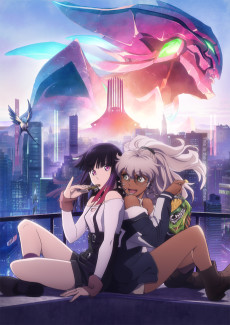
That same exhausted resonance hums through Final Fantasy VII: Advent Children—not in its angelic wings or silver-haired heroes, but in its tactical warfare grit: the way Cloud fights with a body still rejecting its own cells, how every bullet-riddled street in Edge feels salvaged from collapse, how victory smells like ozone and blood instead of glory. Its cyberpunk & dystopia isn’t neon-lit rebellion—it’s infrastructure barely holding, just like DoW II’s patched-together executable refusing to run on Windows 11. Then there’s Memories, specifically its “Magnetic Rose” segment—where deep-space salvage becomes psychological excavation, where memory itself is a hostile environment. Its sci-fi & space dread mirrors DoW II’s claustrophobic ship interiors and derelict orbital platforms: no vast vistas, only corridors humming with unseen decay, where the enemy isn’t always out there—it’s the corrupted firmware, the failing life support, the save file that vanished after a crash. And TRIGUN STAMPEDE—not for its charm, but for its tactical warfare choreography under duress: Vash reloading mid-fall, his coat torn, his aim fraying at the edges, fighting not for conquest but to keep one more civilian breathing five minutes longer. Its cyberpunk & dystopia isn’t chrome and rain—it’s dust-choked settlements running on jury-rigged tech, where every repair feels temporary, every ceasefire fragile—exactly like trying to coax DoW II’s Last Stand mode into life with a registry edit and prayer.
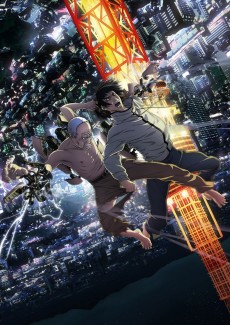
This pairing isn’t for the lore collector or the trophy hunter. It’s for the person who replays a campaign knowing the ending, just to feel the rhythm of the squad’s footsteps again—even when the game stutters on launch. It’s for the viewer who watches AJIN: Demi-Human not for the immortality gimmick, but for the body horror & occult of identity unraveling under bureaucratic violence—the same way DoW II makes you question whether your sergeant is still him, or just the last working subroutine in a decaying neural lace. It’s for the one who finds beauty in the crackle before silence, in the glitch before the crash—in the stubborn, unglamorous act of trying to make something work, again and again, in a universe that has long stopped promising it will. They don’t want polish. They want grain. They want the truth in the error message. They want the war—and the waiting.
→49 Anime That Match the Vibe
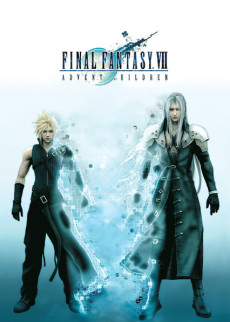
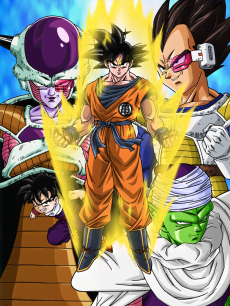
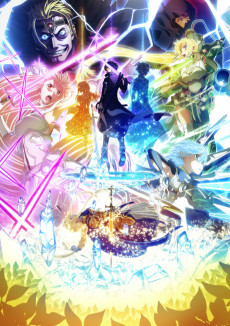
Geo-stigma’s creeping, flesh-warping horror in *Advent Children* mirrors the bio-mechanical decay of Dawn of War II’s Tyranid infestations—both weaponize bodily violation as existential dread. Unlike most sci-fi, neither offers clean victories: Sephiroth’s spectral return and the Blood Ravens’ desperate last stands embody Tactical Warfare where survival demands sacrifice, not salvation. This shared Cyberpunk & Dystopia logic—where hope is tactical, not ideological—makes their bleak resonance startlingly intimate.
Both dive into neon-soaked futures where technology blurs the line between human and machine.

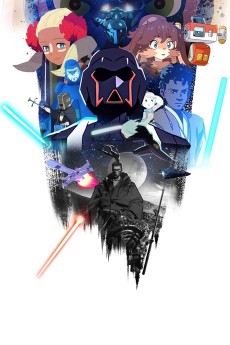
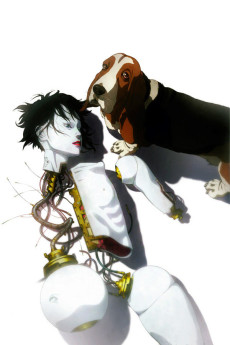
Magnetic Rose’s decaying space station—its corridors echoing with ghostly opera and corrupted AI—mirrors Dawn of War II’s grimy, claustrophobic trench warfare on Aurelia, where every cover point feels like a tomb. Unlike most tactical sci-fi, both weaponize 🌆 Cyberpunk & Dystopia not for spectacle, but as psychological pressure: Kowalski’s trauma fractures under the station’s illusions just as the Force Commander’s psyche frays amid escalating xenos horrors. That shared dread—that technology doesn’t fail, it *remembers*—makes their darkness feel chillingly reciprocal.

Vash’s sun-blasted, crumbling cityscapes in *TRIGUN STAMPEDE* echo the irradiated ruins of Aurelia where Dawn of War II’s Blood Ravens fight—both worlds wear their cyberpunk & dystopia like scar tissue. Unlike most space operas, neither flinches from the tactical weight of violence: Vash’s trembling hands after a near-miss mirror the squad-level exhaustion in DoW II’s Last Stand co-op. That shared grit—where sci-fi scale meets human-scale consequence—makes their resonance startlingly intimate.

Both dive into neon-soaked futures where technology blurs the line between human and machine.
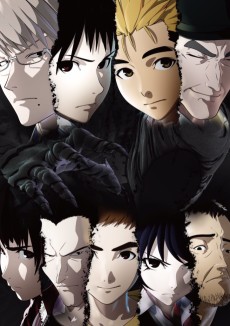
Kei Nagai’s first resurrection—bloodied, disoriented, staring at his own severed hand reknitting in real time—hits with the same visceral dread as a Space Marine’s armor cracking open to reveal writhing biomechanical corruption. Unlike most tactical media, both *Dawn of War II* and *AJIN* weaponize body horror not for shock alone, but as systemic collapse: flesh becomes battlefield, identity fractures under relentless cyberpunk dystopia. This pairing is startlingly coherent—tactical warfare here isn’t abstract strategy, but intimate, grotesque negotiation with violated corporeality.

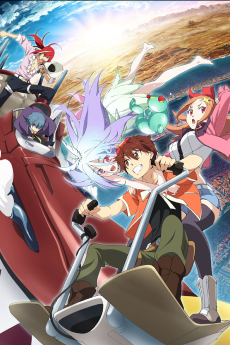
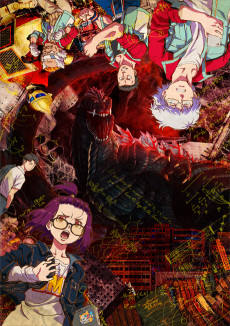
JP’s neon-drenched, gravity-defying crash through Redline’s orbital racetrack mirrors the desperate, high-velocity charge of Dawn of War II’s Blood Ravens as they breach a Tyranid hive ship—both hurtling toward annihilation with grim exhilaration. Unlike most sci-fi spectacles, neither flinches from visceral, kinetic chaos: one in blistering engine roars and tire smoke, the other in bolter fire and screaming marines. Their shared cyberpunk & dystopia isn’t just aesthetic—it’s existential: glory forged in ruin, where speed and sacrifice blur into the same crimson smear.
Both dive into neon-soaked futures where technology blurs the line between human and machine.
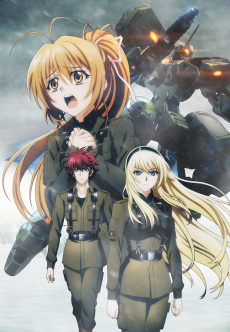
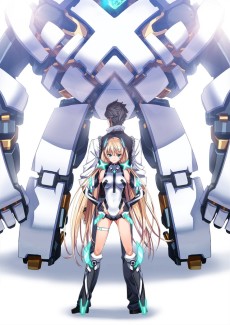
Kazane Hiyori’s desperate, clockwork-implanted solitude in *The Angeloid of Clockwork* echoes the grim, biomechanical dread of Dawn of War II’s Blood Ravens as they purge corrupted worlds—both steeped in **Cyberpunk & Dystopia**, where flesh and machine fuse under crushing ideological weight. Unlike most sci-fi pairings, neither offers escape: Hiyori’s tragic precision mirrors the game’s unrelenting attrition, where victory feels like delayed collapse. That shared exhaustion—of bodies reforged, of hope rationed—is what makes their resonance so unexpectedly raw.
Both dive into neon-soaked futures where technology blurs the line between human and machine.
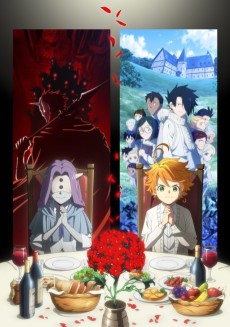

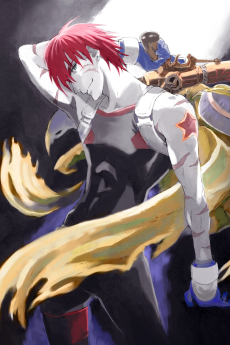
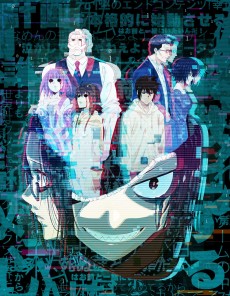
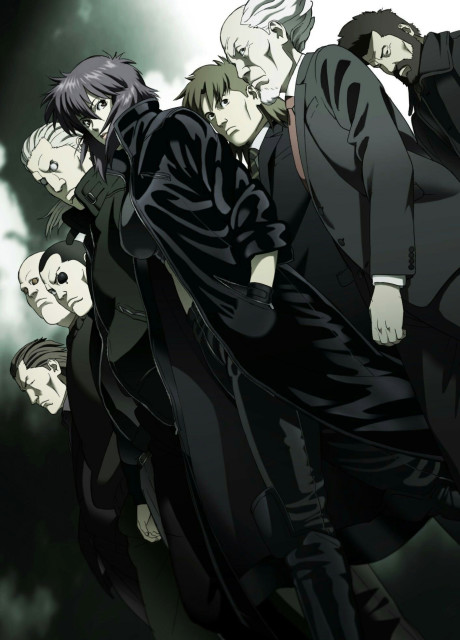









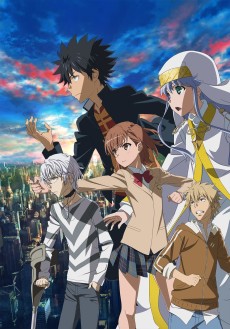
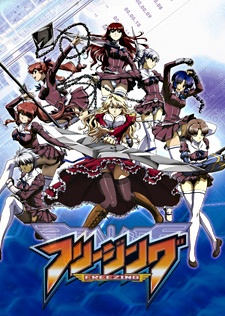

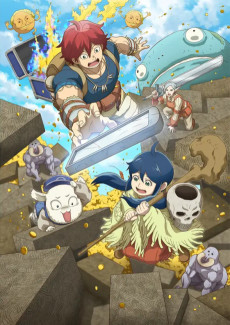
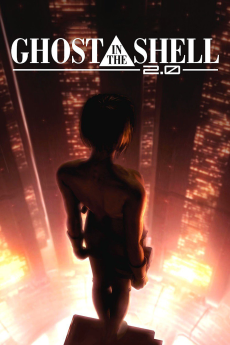
Match Dimensions Explained
❓Frequently Asked Questions
Why does Final Fantasy VII: Advent Children feel like Dawn of War II’s anime cousin?
Because both lean hard into tactical warfare in a crumbling sci-fi dystopia—think Sephiroth’s aerial duels mirroring the Blood Ravens’ precision squad-based firefights on Typhon, or the way Advent Children’s Mako-reactor ruins echo DoW II’s war-torn, corpse-strewn battlefields. The score (67) and shared dimensions—Cyberpunk & Dystopia, Sci-Fi & Space, Tactical Warfare—aren’t flukes; it’s that same grim, kinetic intensity where every shot matters and consequences are visceral.
Is there an official anime adaptation of Dawn of War II: Anniversary Edition?
No—there’s never been an official anime adaptation of Dawn of War II, Anniversary Edition or otherwise. The game itself remains purely interactive: six factions (like the Space Marines’ 4th Company and Ork Boyz), three full campaigns, and Last Stand co-op with heroes like Avitus or Thaddeus. If you’re craving that vibe in anime form, TRIGUN STAMPEDE (score 63) nails the same blend of tactical skirmishes and existential dread across its desert wastelands.
How does TRIGUN STAMPEDE compare to AJIN: Demi-Human for Dawn of War II fans?
TRIGUN STAMPEDE leans into large-scale, chaotic tactical warfare—like Vash’s gunplay amid collapsing cities—mirroring DoW II’s squad coordination and faction clashes (Orks vs. Tyranids). AJIN, meanwhile, trades battlefield scale for intimate body horror and moral ambiguity—think Kaito’s regeneration scenes echoing DoW II’s brutal, close-quarters melee kills—but both share that 63–62 score range and hit Cyberpunk & Dystopia + Tactical Warfare head-on.
What’s the best anime like Dawn of War II if I want that gritty, squad-based, last-stand-in-the-rubble vibe?
Memories (score 64) is your pick—it’s got that raw, grounded sci-fi grit: the ‘Stink Bomb’ segment’s claustrophobic urban combat and desperate teamwork feels ripped from a DoW II Last Stand wave, especially when squads improvise under fire like the Blood Ravens holding Sector 13. No flashy magic or mecha—just tight tactics, oppressive atmosphere, and the same Cyberpunk & Dystopia / Sci-Fi & Space / Tactical Warfare DNA.