
Ghost in the Shell: Stand Alone Complex 2nd GIG
In a futuristic world where the internet and cybernetics has blurred the borders between societies; the members of Public Security Section 9 are reinstated to assist in solving numerous cases of cyber crime.
A spate of similar crimes committed by separate suicidal groups known as "The Individual Eleven" becomes the core focus for Section 9 as war approaches in the form of refugees flooding into the country.
(Source: Anime News Network)
📺Anime Details
📝Editorial Analysis
Rain slicks the neon-drenched streets of New Port City—not in sheets, but in slow, viscous sheets that catch the fractured glow of holographic billboards flickering “Refugee Processing Zone 7”, “Section 9 Authorized Access Only”, “System Integrity: 92.4%”. A single drop hangs, trembling, at the edge of Motoko Kusanagi’s coat collar before falling—not onto pavement, but onto the cracked screen of a discarded cyberbrain implant, its last log entry blinking faintly: “I did not choose to die. I was routed.” That silence after the drop hits—the hollow resonance inside the hollowed-out shell of a public phone booth where she stands alone—is the show’s truest heartbeat.

This isn’t dread as adrenaline or despair as spectacle. It’s the weight of continuity—of systems humming just loud enough to drown out dissent, of policies drafted in sealed rooms while refugees sleep under overpasses wired with surveillance drones that mistake shivering for threat escalation. You don’t feel hunted; you feel catalogued. Every conversation in Ghost in the Shell: Stand Alone Complex 2nd GIG carries the low thrum of bureaucratic inevitability—like watching a legal memo draft itself mid-sentence, signed by no one and enforced by everyone. It makes you question not who you are, but which version of you gets archived, which gets flagged, which gets quietly overwritten when the next emergency decree rolls out at 3:17 a.m.
That emotional DNA—quiet erosion, institutional vertigo, the exhaustion of staying human inside a machine-built world—pulses strongest in three games. BioShock™, with its “political thriller” and “cyberpunk & dystopia” dimensions, doesn’t just mirror the aesthetic—it replicates the suffocation of ideological architecture. Its player review calls it “revolutionary” not for guns or graphics, but because it makes ideology tactile: every plasmid purchase, every audio diary, every collapsed splicer is a consequence of Rapture’s failed utopia—just as every Individual Eleven suicide bombing in 2nd GIG is a symptom of systemic exclusion masked as national security. Both force you to walk through the ruins of someone else’s certainty—and realize your boots are made of the same brittle idealism.
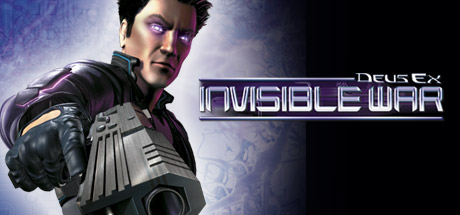
Then there’s Deus Ex: Game of the Year Edition, tagged identically: “cyberpunk & dystopia,” “political thriller,” “adult & dark seinen.” Its description nails the texture: “The world's economies are close to collapse… an ages old conspiracy bent on world dom…” — that trailing “dom” feels intentional, like a system glitching mid-sentence, exactly how Section 9’s investigations fracture across layers of plausible deniability. The player review says it gives you “all options with one hit of the esc key”—and that’s the shared ache: total agency within a cage so finely engineered you can’t tell where the bars end and the air begins. You choose dialogue trees, hacking paths, stealth routes—but the ending still lands like a verdict handed down from a server farm in Geneva.
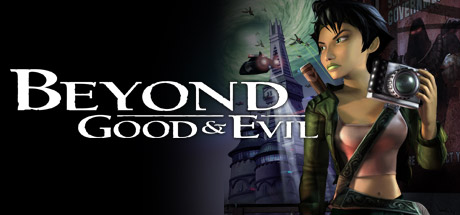
Even Beyond Good and Evil™, lower-scoring but sharing those same “political thriller” and “cyberpunk & dystopia” dimensions, resonates in its quietest moments: Jade documenting propaganda feeds while her pig companion Pey’j reroutes power to hide their signal. Its player review urges playing the “20th Anniversary edition”—a nod to endurance, to preservation against decay—mirroring how 2nd GIG treats memory itself as contested infrastructure. When Section 9 sifts through refugee camp logs or reassembles fragmented neural traces from a dead bomber, they’re not solving crimes—they’re performing archaeology on real-time history, just as Jade does when she uncovers the Alpha Sections’ censorship protocols.
This pairing isn’t for fans of “cool cyborgs” or “epic shootouts.” It’s for the person who pauses mid-episode to stare at their own login screen, wondering what metadata their browser just leaked. For the player who saves before reading a faction’s manifesto—not to avoid consequences, but to sit with the discomfort of recognizing their own logic inside the villain’s speech. It’s for those who feel tired in the right way: the kind of fatigue that comes from holding two truths at once—that the system is broken, and that you’ve already adapted to its fractures. That’s where Motoko stands in the rain. That’s where you reload your save. That’s where the ghost hums—not in the shell, but between the lines.
🎮40 Games That Match the Vibe






























Match Dimensions Explained
❓Frequently Asked Questions
Why does BioShock get compared to Ghost in the Shell: Stand Alone Complex 2nd GIG so often?
Because both dive deep into political paranoia and identity crises in decaying, hyper-technologized societies—think BioShock’s Rapture with its failed utopian ideology mirroring 2nd GIG’s ‘Individual Eleven’ terrorist arc and Section 9’s moral tightrope. You’ll feel that same weight when confronting Fontaine’s propaganda reels or listening to Motoko’s quiet monologues about consciousness—plus BioShock’s plasmid-augmented combat and environmental storytelling echo the show’s blend of cerebral tension and visceral action.
Is there a Ghost in the Shell game adaptation that actually captures 2nd GIG’s tone?
No official Ghost in the Shell game adapts 2nd GIG directly—but Deus Ex: Game of the Year Edition nails its vibe best: you play as JC Denton navigating global conspiracies, corporate overreach, and cybernetic identity questions just like Major Kusanagi and Batou do in episodes like ‘Standalone Complex’ or ‘The Laughing Man’. Its branching dialogue, stealth-tactical options, and morally gray world-building hit that exact adult, dark seinen pulse.
Deus Ex vs. Assassin’s Creed: which one feels more like 2nd GIG’s blend of espionage and philosophy?
Deus Ex wins hands-down for that 2nd GIG energy—it’s all about surveillance states, media manipulation (like the ‘Laughing Man’ broadcast hijacks), and choosing how much of your humanity to sacrifice for the mission. Assassin’s Creed leans harder into historical spectacle and parkour-driven action; while it shares the political thriller dimension (e.g., Altaïr exposing Templar control), it lacks the cybernetic introspection and systemic dystopia that make 2nd GIG—and Deus Ex—so hauntingly resonant.
What’s the best game like 2nd GIG if I want that slow-burn, rain-soaked Tokyo noir mood with investigative depth?
Beyond Good and Evil is your pick—Jade’s gritty reporting on the DomZ conspiracy in Hillys mirrors 2nd GIG’s Section 9 investigations: think rooftop stakeouts, encrypted data trails, and uncovering state lies while dodging authoritarian forces. The moody, lived-in cityscapes, noir-tinged dialogue, and loyal ally dynamic (Pey’j ↔ Batou) deliver that exact atmospheric, thoughtful, slightly melancholic vibe—especially in the polished 20th Anniversary edition.