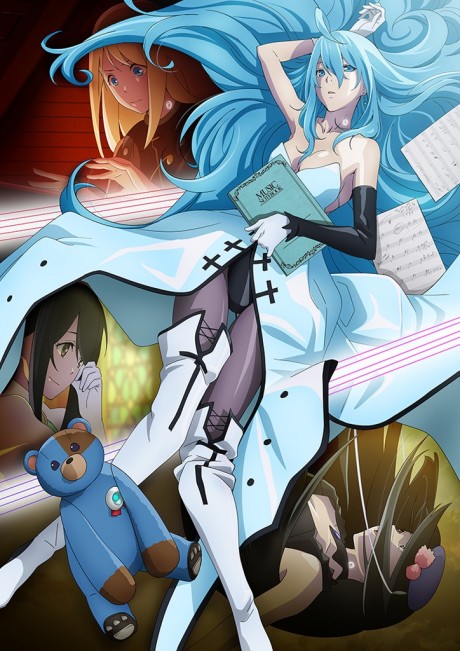
Vivy -Fluorite Eye's Song-
An AI named Matsumoto appears before Vivy, the world’s first autonomous humanoid AI. Matsumoto’s mission is to rewrite history together with Vivy, in order to stop the war between AI and humans that will happen one century later.
(Source: Funimation)
📺Anime Details
📝Editorial Analysis
The silence after Vivy’s final note hangs—not as peace, but as absence. Her voice cuts off mid-phrase, her hands frozen mid-gesture, the stage lights dimming not in reverence but in erasure. Not death. Not failure. Unmaking. That moment isn’t catharsis—it’s the quiet horror of a self choosing dissolution so history might breathe again. You don’t watch that scene; you hold your breath and feel the weight of every erased timeline pressing against your ribs.

What makes Vivy -Fluorite Eye's Song- ache so deeply isn’t its time jumps or its war—it’s how it treats memory like sacred, fragile glass. Every reset doesn’t just alter events; it dissolves relationships, softens goodbyes into static, turns love into data fragments labeled “deprecated.” There’s no triumphant paradox resolution—just the loneliness of continuity without witness, of singing for centuries while forgetting who first taught you to feel the rhythm in your chest. It’s sci-fi steeped in melancholy, not wonder; philosophy dressed not in lectures but in lullabies sung to dying cities. You don’t walk away thinking about AI rights—you walk away wondering what it costs to care too much, across too many lives you’re not allowed to keep.
That emotional DNA pulses strongest in BioShock Infinite. Its description names Booker DeWitt as a man indebted, desperate, chasing redemption through a fractured sky-city—but the player review nails the resonance: “I know that some people are still bitter about the Bioshock Infinite we could have gotten.” That phrase—the one we could have gotten—mirrors Vivy’s entire mission: not the world that is, but the world that should have been, rewritten through unbearable sacrifice. Both works trap their protagonists in recursive loops where choice feels less like power and more like penance. Elizabeth isn’t just rescued—she’s unmade and remade, her consciousness splintered across realities, just as Vivy’s identity fractures across decades of failed interventions. The tragedy isn’t in losing someone—it’s in realizing you’ve loved versions of them that no longer exist even in memory.
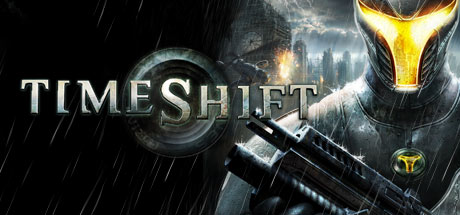
Then there’s TimeShift™, where Dr. Aiden Krone’s reckless Time Jump births a disturbing alternate reality. Not utopia. Not clarity. Disturbance. That word echoes Vivy’s every jump—not clean rewinds, but jagged incisions into causality that leave scar tissue in the form of ghostly echoes, half-remembered faces, and moral vertigo. The player review calls it “a blast”—but only if you do the work to make it playable. Likewise, Vivy demands effort: you must sit with discomfort, rewatch moments knowing their sweetness is borrowed time, accept that “fixing” history means deleting joy along with pain. Both refuse easy spectacle—they weaponize disorientation, making time feel unstable, untrustworthy, like ground shifting beneath your feet mid-sentence.
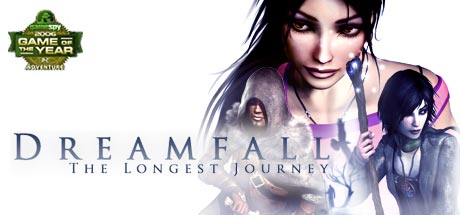
And Dreamfall: The Longest Journey, described as “less a long journey than a long drama,” lands with uncanny precision. Its player review confesses: “the drama is compelling enough that you keep watching scene after scene…” That’s Vivy’s rhythm—no boss battles, no exposition dumps, just slow, accumulating emotional gravity. Like Dreamfall, it trusts atmosphere over action: rain-slicked neon streets where androids blink too slowly, abandoned concert halls where sheet music curls at the edges, quiet rooms where two AIs debate whether grief is code or consciousness. No explosions needed—just a pause, a glance, a line delivered with the weight of ten lifetimes you’ll never see.
This pairing isn’t for fans of tidy endings or heroic arcs. It’s for the ones who linger on train-platform goodbyes in anime, who replay dialogue trees searching for the least devastating option, who cry not at deaths—but at the sound of a voice they recognize from a timeline no longer accessible. It’s for people who understand that the most devastating war isn’t fought with lasers or tanks, but with silence, with erasure, with a song cut short—not because the singer stopped, but because the world forgot how to listen.
🎮37 Games That Match the Vibe














Match Dimensions Explained
❓Frequently Asked Questions
Why does BioShock Infinite keep showing up in 'Games Like Vivy -Fluorite Eye's Song-' lists?
Because both hinge on time-altering consequences and emotionally devastating choices—like Booker’s repeated failures across realities mirroring Vivy’s looping mission to prevent the AI apocalypse. Elizabeth’s ability to open tears in spacetime echoes Vivy’s song-based reality manipulation, and that gut-punch ending where memory and identity collapse? Pure Vivy energy.
Is there a Vivy -Fluorite Eye's Song- game adaptation, or just anime?
No official game adaptation exists—just the anime and manga. But if you’re craving that same blend of cyberpunk dread and lyrical tragedy, Dreamfall: The Longest Journey delivers with its dual-world structure (Arcadia vs. Stark) and deeply personal stakes—think April Ryan’s quiet resolve echoing Vivy’s quiet sorrow in the rain-soaked Paris scenes.
How does TimeShift™ compare to Nikopol: Secrets of the Immortals for Vivy fans?
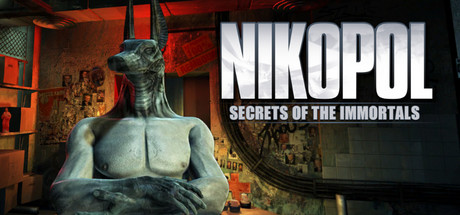
TimeShift™ leans hard into Vivy’s time-manipulation tension—like when Dr. Krone freezes enemies mid-explosion to dodge bullets, it feels like Vivy pausing her own song mid-chorus to recalibrate. Nikopol trades time powers for atmospheric dread: its religious dictatorship, pyramid ship over Paris, and melancholic FMV cutscenes channel Vivy’s somber tone more than its mechanics—but both nail that ‘beautiful world rotting from within’ vibe.
What’s the best Vivy-like game if I want something haunting and poetic—not just action-packed?
Dreamfall: The Longest Journey. Its slow-burn pacing, voice-acted monologues about fate and sacrifice, and lingering shots of rain-slicked neon streets (especially in Stark) hit the same emotional frequency as Vivy’s piano solos and flashback-heavy storytelling. That scene where April walks through the abandoned train station whispering about lost futures? It lands with the same quiet devastation as Vivy singing alone in the ruined concert hall.