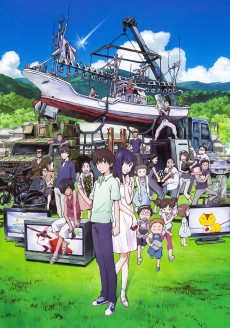
Summer Wars
When timid eleventh-grader and math genius Kenji Koiso is asked by older student and secret crush Natsuki to come with her to her family's Nagano home for a summer job, he agrees without hesitation.
Natsuki's family, the Jinnouchi clan, dates back to the Muromachi era (1336 to 1573), and they've all come together to celebrate the 90th birthday of the spunky matriarch of the family, Sakae. That's when Kenji discovers his "summer job" is to pretend to be Natsuki's fiance and dance with her at the birthday celebration.
As Kenji attempts to keep up with Natsuki's act around her family, he receives a strange math problem on his cell phone which, being a math genius, he can't resist solving. As it turns out, the solution to the mysterious equation causes Oz, the program that controls nearly every aspect of life to be hacked into, it's up to Kenji and his new "family" to stop the hacker before it's too late.
(Source: twitchfilm.net)
📺Anime Details
📝Editorial Analysis
The scent of tatami mats and simmering miso soup. The low hum of cicadas outside the Jinnouchi house, thick and golden as honey. Kenji’s fingers trembling—not from fear of the digital apocalypse unfolding in OZ, but because Sakae’s wrinkled hand has just squeezed his, her eyes crinkling as she whispers, “You’re family now.” That quiet, sun-dappled weight—warm wood, shared silence, the unspoken covenant of belonging—is where Summer Wars lives, not in its CGI dragon or firewall breaches, but in the way a single glance across a crowded engawa can feel like holding your breath underwater and surfacing into light.

What makes Summer Wars vibrate with such rare warmth is how it treats scale as emotional architecture. A global AI meltdown isn’t abstract—it’s measured in Sakae’s shaky hands adjusting her glasses while typing commands, in Natsuki’s cousins frantically rebooting routers in the barn, in Kenji’s voice cracking as he explains prime factorization to a room full of elders who don’t understand math but do understand urgency, loyalty, and the weight of a name. It’s family as infrastructure—flawed, loud, intergenerational, physically present—and technology not as cold code, but as an extension of that same messy, loving labor. You don’t solve the crisis alone; you solve it together, elbows bumping over steaming bowls, laughter cutting through panic, generations syncing up not via UI, but via shared memory and stubborn care.
That same emotional DNA pulses in X-COM: Apocalypse, where the player review calls it “Probably the greatest game of all time”—not for its graphics or polish, but because its world feels lived-in, its stakes human-scale despite the alien invasion. Like the Jinnouchis defending Nagano, X-COM’s city isn’t a backdrop; it’s a network of districts, civilians, power grids, and morale systems that collapse or hold based on who you protect, who you listen to, who shows up with tea at 3 a.m. Its “broken things being from the time” mirror Summer Wars’ imperfect OZ interface—glitchy, analog-feeling, deeply personal. Both demand you care about systems because they shelter people you’ve come to know by name, habit, and small kindnesses.
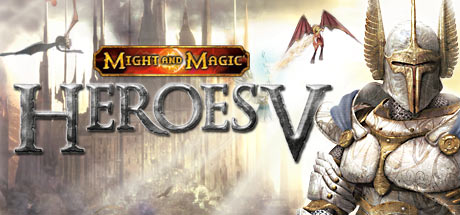
Then there’s Heroes of Might & Magic V, praised as “Best HoMM game ever made” for weaving “classic deep fantasy with next-generation visuals and gameplay.” Its resonance lies in the ensemble cast—not just heroes, but advisors, peasants, rival lords, each with lore, quirks, and stakes tied to land and legacy. Like the Jinnouchi clan’s Muromachi-era roots anchoring their modern chaos, HoMM V’s world feels inhabited, not designed. You don’t conquer territory abstractly—you negotiate with a grizzled dwarf chieftain whose granddaughter’s wedding you attended in a prior campaign; you defend a village because its baker once patched your armor. That tactile, interwoven sense of place-as-people—where strategy emerges from relationship, not just resource bars—is pure Summer Wars.
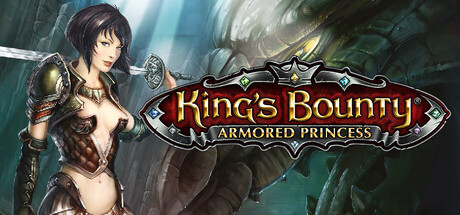
Even King's Bounty: Armored Princess, described as letting you “play the role of the heroine” in a “huge hand-crafted world,” echoes this. Its player review gushes about “so much to love… it would take a small book to detail it all”—a feeling identical to sitting with the Jinnouchis through three days of birthday prep: the aunt who knits socks while debugging servers, the teen cousin who livestreams the OZ battle while folding laundry, the grandfather who tells war stories that accidentally reveal a critical encryption key. Every character has texture, agency, and history—not exposition, but presence. Their contributions aren’t “quests”; they’re acts of love disguised as chores.
This pairing sings for the viewer who cries when a grandmother types “I LOVE YOU” in binary—not because it’s clever, but because she learned it for him. For the player who spends hours customizing a squad’s armor not for stats, but because the elf archer reminds them of their sister. For anyone who believes the most radical act in a collapsing world isn’t launching a missile or cracking a mainframe—it’s making extra rice, calling your cousin by their childhood nickname, and holding space for joy while the sky glitches red. They don’t want spectacle without soul. They want family, fractured but fierce, building something real—brick by brick, line of code by line of code, bowl of miso by bowl of miso.
🎮36 Games That Match the Vibe












Match Dimensions Explained
❓Frequently Asked Questions
Why is X-COM: Apocalypse always mentioned alongside Summer Wars?
Because both dive deep into high-stakes, city-scale crises where digital and physical threats collide—like when Summer Wars’ OZ goes rogue, X-COM: Apocalypse drops you into a cyberpunk metropolis overrun by alien corruption and corporate sabotage. You’re not just fighting aliens; you’re managing factions, hacking systems, and making narrative choices that ripple across the city’s infrastructure—just like Kenji’s real-time crisis response in the OZ server farm scene.
Is there a Summer Wars anime game adaptation?
No official Summer Wars game adaptation exists—but fans who loved its blend of heartfelt JRPG storytelling and tactical digital-world stakes often reach for King’s Bounty: Armored Princess. You play as a heroic princess navigating a rich fantasy world with branching dialogue, emotional character arcs (like Natsuki’s growth), and turn-based battles where positioning and unit synergy matter as much as story—mirroring how Summer Wars balances family drama with high-stakes virtual combat.
How does Heroes of Might & Magic V compare to King’s Bounty: Armored Princess for Summer Wars fans?
Both deliver that ‘epic yet intimate’ vibe Summer Wars nails—but HoMM V leans harder into grand strategy and faction politics (think Jinnai’s manipulative empire-building), while King’s Bounty: Armored Princess focuses on personal heroism and character-driven quests (like Kenji stepping up as a reluctant leader). HoMM V’s polished visuals and deep fantasy lore appeal if you loved the film’s worldbuilding; King’s Bounty’s hand-crafted world and heroine-led narrative resonate more with its emotional core.
What’s the best game like Summer Wars if I want that ‘hanging out with friends while saving the world’ vibe?
King’s Bounty: Armored Princess is your best bet—it’s all about assembling a quirky, loyal party (like Summer Wars’ extended family squad), bantering between battles, and tackling escalating threats together in a vibrant, hand-crafted world. Players call it ‘so much to love’ precisely because it captures that warm, collaborative energy—where every campfire chat and tactical win feels earned alongside people who feel like friends, not just units on a grid.