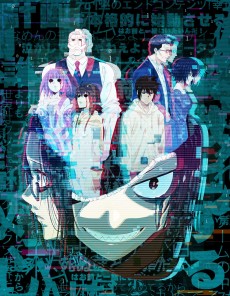
GOOD NIGHT WORLD
In the online game "Planet," there is a powerful team of four players. This team goes by the name "The Akabane Family," and its members are a pseudo-family that only exists in the game. Although they aren't aware of it, these four players are actually a broken family in real life. A shut-in older brother. A high-achieving younger brother. A father who is not respected by his own children. A mother who neglects her own household. They do not know the warmth of family. They also don't know that the warmth of their online family is only a passing feeling. And most of all, they don't know they are a real family. Centered on the deeds of the Akabane Family in the online game "Planet," the story features battles against monsters, clashes with other guilds, and the machinations surrounding "Black Bird," the final objective of the game. The tale takes a major turn as it entangles the real world and this real family.
(Source: Netflix)
📺Anime Details
📝Editorial Analysis
The silence between heartbeats—when the AR overlay flickers, just for a frame, and the Akabane Family’s avatars freeze mid-laugh in Planet, their glowing avatars hovering over a neon-lit plaza that doesn’t exist anywhere but inside four separate, darkened rooms. That’s the moment. Not the boss fight, not the betrayal—but the lag. The microsecond where the game stutters, and for the first time, you see the absence: no shared breath, no overlapping voices, just four disconnected headsets feeding into one fragile illusion of kinship.
What makes GOOD NIGHT WORLD ache like nothing else is how it weaponizes distance. Not physical distance—though yes, they’re estranged—but the unbearable intimacy of proximity without contact: a father scrolling past his son’s closed door; a mother reheating dinner twice because no one came to eat; two brothers sharing Wi-Fi but never a sentence. It’s not melancholy—it’s static, the low hum of unspoken grief vibrating through every pixelated gesture, every delayed voice chat ping. You don’t feel sad watching it—you feel recognized, as if the show has mapped the exact shape of your own quiet isolation and named it aloud. It’s psychological not because of twists, but because it treats emotional withdrawal like gravity: invisible, inescapable, bending every relationship toward collapse—even when everyone’s still breathing the same air.
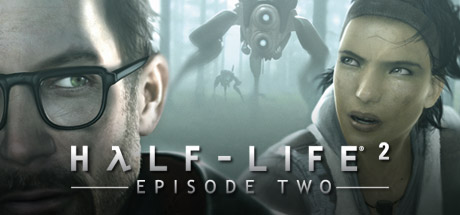
That same gravity pulls hard toward Half-Life 2: Episode Two, where Gordon Freeman walks through ruins of a world that used to be connected—a civilization shattered by rupture, now surviving in fractured pockets, communicating across broken networks, trusting only the faintest signal from allies who may already be gone. Its body horror isn’t just grotesque mutation—it’s the slow erosion of agency, of coherence, of self amid systems collapsing inward. Like the Akabane Family, Freeman moves through spaces built for collaboration that now only echo with absence. And the player review nails it—not with praise for action, but with that raw, almost embarrassed pride in owning something unlisted, something hidden, something not meant to be found: just like how these four players hide their real names behind avatars, treating connection like contraband.
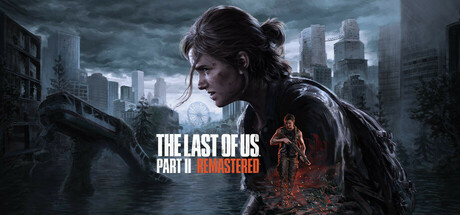
Then there’s BioShock™, where Rapture isn’t just a drowned city—it’s a family ideal turned monstrous, a utopia built on denial, where “would you kindly” isn’t just mind control but the polite, suffocating language of obligation without love. Its body horror & occult dimensions mirror the anime’s quiet unraveling: skin grafts, spliced DNA, plasmid mutations—all literal manifestations of trying to force wholeness onto broken foundations. The player review calls it “revolutionary,” not for its guns, but for how it made you feel complicit in the decay—and that’s the same gut-punch GOOD NIGHT WORLD delivers when you realize the Akabane Family’s in-game hugs are more tender than anything they’ve exchanged IRL in years.
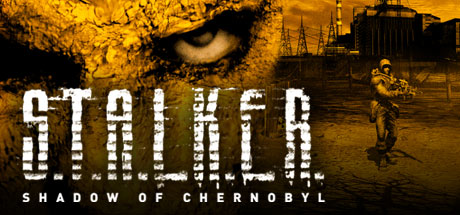
Even S.T.A.L.K.E.R.: Shadow of Chernobyl resonates—not through spectacle, but through its Zone: a place where radiation doesn’t just burn flesh, but warps memory, distorts time, makes you question whether the person beside you is real or a phantom of your own exhaustion. Its map is “big and beautiful,” yes—but the player review zeroes in on what sticks: survival, fear, and being intrigued by “the whole thing.” That’s the same pull—the fascination with how much damage a person can absorb before they stop recognizing themselves. The Akabane Family doesn’t explode. They fade, pixel by pixel, into their own augmented ghosts.
This pairing isn’t for fans of “deep stories” or “cool aesthetics.” It’s for the person who’s ever muted their mic mid-voice chat just to hear their own breath again. For the one who’s stared at a family photo and felt nothing, then opened a game and wept at an NPC’s scripted farewell. For those who know the precise weight of a headset resting too long behind the ears—and how, sometimes, the most real warmth you’ll get all week is the heat radiating off your laptop, humming softly while four strangers pretend to be family.
🎮69 Games That Match the Vibe












Match Dimensions Explained
❓Frequently Asked Questions
Why does GOOD NIGHT WORLD match with BioShock so closely?
It’s all about that oppressive, decaying underwater dystopia—Rapture’s leaking halls and moral rot echo GOOD NIGHT WORLD’s surreal, collapsing reality. Both lean hard into Body Horror & Occult themes (think Little Sisters fused with parasitic entities) and share that Adult & Dark Seinen tone where every corridor feels like a psychological trap. Players even call BioShock 'one of the most revolutionary games ever' for how it weaponizes atmosphere just like GOOD NIGHT WORLD does.
Is there a GOOD NIGHT WORLD anime or movie adaptation?
Not yet—and honestly, it’s unlikely anytime soon. The game’s deeply internal, fragmented storytelling (like drifting between lucid dreams and body-horror flashbacks) doesn’t translate easily to linear media. That said, if they *did* adapt it, BioShock Infinite’s layered metaphysics and Elizabeth’s reality-bending moments would be the closest tonal blueprint—not as source material, but as proof that this kind of dense, symbol-heavy world *can* work on screen.
How is GOOD NIGHT WORLD different from S.T.A.L.K.E.R.: Shadow of Chernobyl?
Both drop you in a hostile, anomaly-riddled Zone—but S.T.A.L.K.E.R. leans into grounded survival: scavenging ammo, checking Geiger counters, and dodging bloodsuckers in the fog-drenched Exclusion Zone. GOOD NIGHT WORLD swaps radiation for psychic decay, replaces mutants with shifting cult rituals, and trades open-world dread for tightly scripted, surreal set-pieces (like waking up inside a breathing cathedral). Fans praise S.T.A.L.K.E.R.’s 'big and beautiful' map—but GOOD NIGHT WORLD’s horror lives in its claustrophobic, dream-logic pacing.
What’s the best game like GOOD NIGHT WORLD if I want that slow-burn, eerie, adult horror vibe?
Half-Life 2: Episode Two is your strongest match—it nails that same suffocating, post-apocalyptic unease, especially in the haunting White Forest sequences where alien technology bleeds into human desperation. Like GOOD NIGHT WORLD, it avoids jump scares in favor of lingering dread: think Dr. Kleiner’s lab flickering under Combine surveillance, or Alyx’s quiet, weary resolve amid collapsing reality. One player even called it 'unlisted' on Steam—like finding a forbidden chapter of the same dark story.