Half-Life 2: Episode One
Half-Life 2 has sold over 4 million copies worldwide, and earned over 35 Game of the Year Awards. Episode One is the first in a series of games that reveal the aftermath of Half-Life 2 and launch a journey beyond City 17. Also features two multiplayer games. Half-Life 2 not required.
🎮Game Details
💬What Players Say
"I can understand why people liked it so much back then but nowadays it's mid if not ♥♥♥♥."
"Its probably the weakest in the series but I would still recommend playing it as it is still a valve half-life gameplay, so the gameplay is good. But feels like a little step back."
"it is short and boring, and takes place in the weakest environment of half-life 2"
📝Editorial Analysis
The flicker of emergency lights in the crumbling subway tunnels beneath City 17—dust motes swirling in fractured beams, distant Combine alarms stuttering like dying hearts—isn’t just atmosphere. It’s exhaustion. Not the heroic kind. The kind where your fingers ache from holding the gravity gun too long, where every corridor feels like it’s been walked before, and the weight of survival isn’t thrilling—it’s heavy, gritty, unrelenting. That’s Episode One: not a victory lap, but the slow, stumbling breath after the explosion—“a little step back,” as one player put it, “short and boring,” set in “the weakest environment” of Half-Life 2. And yet—the official description insists it’s the first in a series that launches “a journey beyond City 17.” That tension—between fatigue and forward motion, between diminished scale and unresolved stakes—is the game’s quiet pulse.
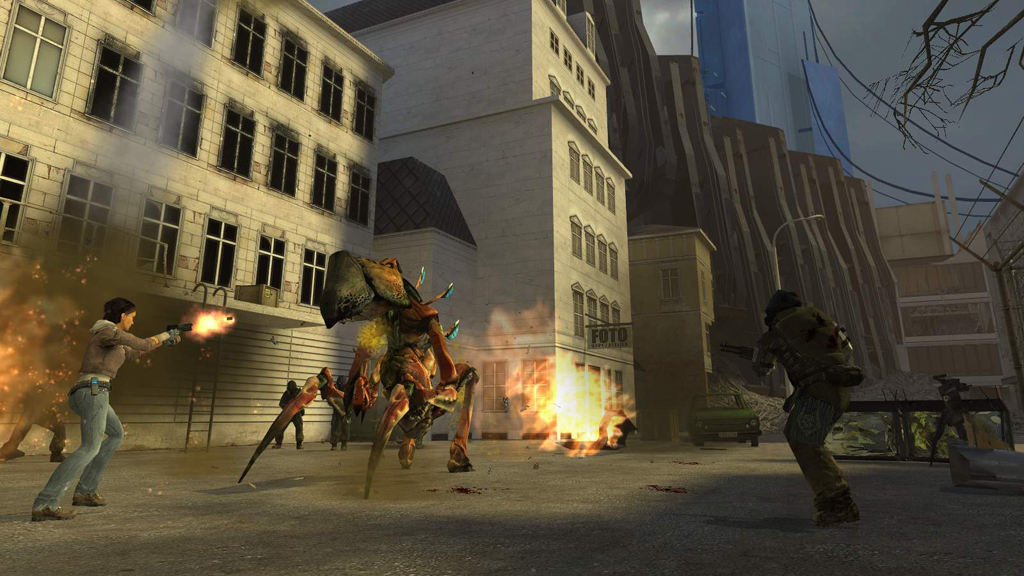
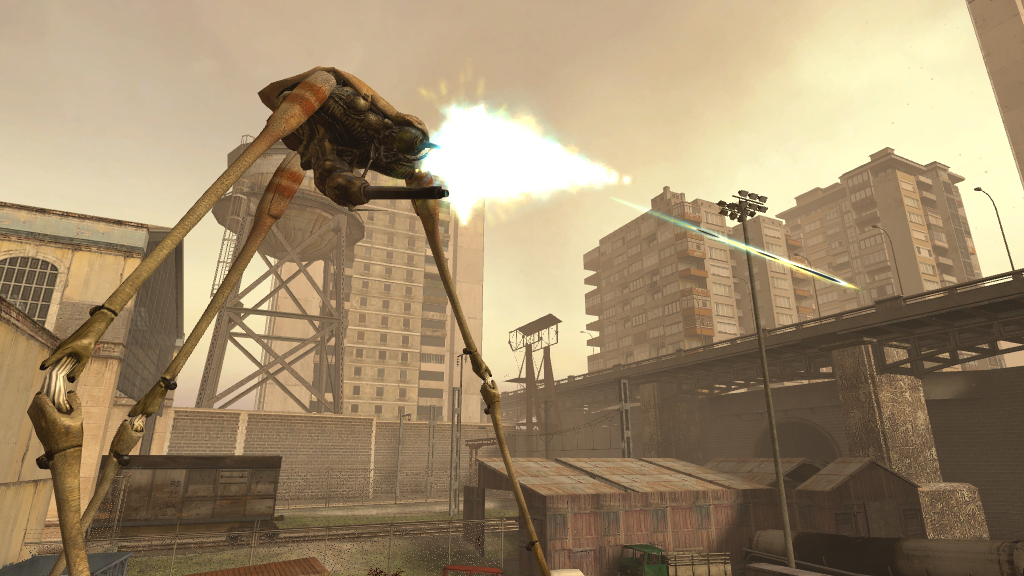
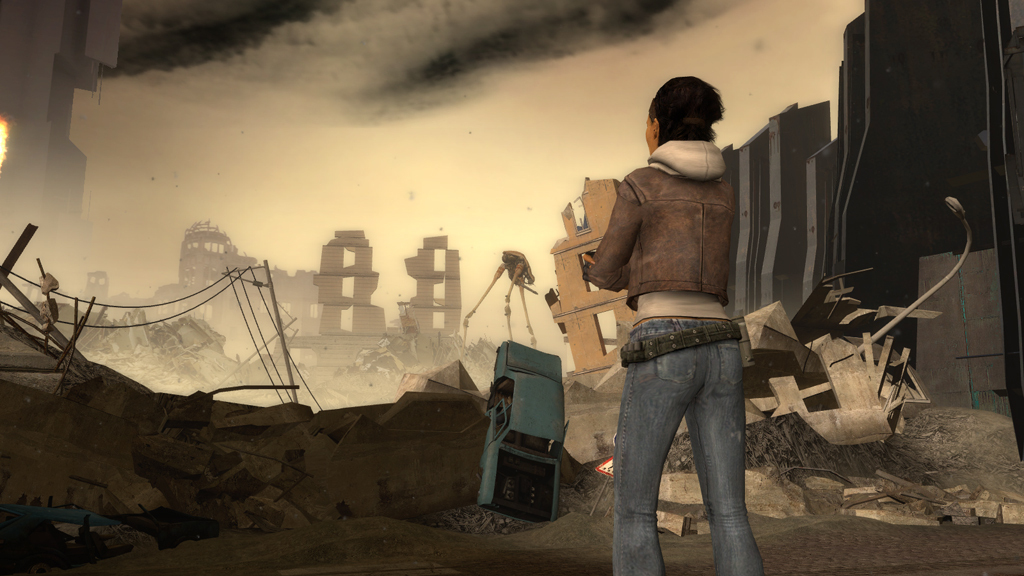
What makes this feeling unique isn’t dystopia as spectacle, but dystopia as aftermath. There are no grand monologues from alien overlords here—just Alyx’s tired voice over radio static, Gordon’s silent, shoulder-deep labor in collapsing infrastructure, the constant low hum of failing systems. It’s not about rebellion’s spark; it’s about keeping the ember alive while the walls literally crumble around you. You don’t feel powerful—you feel necessary, and barely so. That’s why players call it “mid if not ♥♥♥♥” today: its pacing refuses catharsis. Its dread isn’t cinematic—it’s structural, baked into the architecture of broken transit hubs and flickering server rooms. You’re not escaping the world—you’re salvaging it, piece by unstable piece. That’s the feeling: resistance as maintenance, hope as a temporary pressure seal on a ruptured pipe.
That same worn-down, mechanically intimate sci-fi sensibility echoes in Redline, where chrome-plated cars scream across irradiated deserts not for glory, but because the race is the economy, the culture, the only thing holding society together—and even then, it’s fraying at the seams. Its cyberpunk isn’t sleek corporate noir; it’s grease-stained, jury-rigged, vibrating with analog urgency. Like Episode One’s subway tunnels, Redline’s tracks are infrastructure pushed past breaking point—both demand you feel the strain in the physics, the heat, the near-miss vibrations. Then there’s Heaven’s Lost Property the Movie: The Angeloid of Clockwork, whose ruined clockwork city isn’t a backdrop—it’s a character defined by decayed elegance and ticking fragility. Its sci-fi isn’t about conquest or discovery, but about repairing meaning in a world where time itself is glitching—mirroring Episode One’s desperate, hands-on scramble to stabilize a collapsing reality. And Final Fantasy VII: Advent Children—yes, the one with the rain-soaked Midgar ruins—doesn’t offer clean rebirth. It offers characters limping through poisoned air, bodies scarred by old wars, fighting not for new worlds but for breath, for stillness, for a single unbroken moment amid perpetual aftershock. Its cyberpunk dystopia isn’t futuristic—it’s post-traumatic, just like City 17’s trembling foundations.
Who loves these pairings? Not the person craving explosive set-pieces or mythic ascents. It’s the viewer who leans in when the camera lingers on a cracked control panel, who feels a jolt when a character wipes grease off their brow mid-crisis, who finds poetry in the whine of an overtaxed engine or the hiss of a failing coolant line. It’s the player who remembers how good it felt to finally realign that broken rail switch—not because it unlocked a boss, but because for three seconds, the train didn’t derail. It’s the anime fan who watches TRIGUN STAMPEDE not for Vash’s grin, but for the way his boots sink into dust that hasn’t seen rain in decades—the quiet dignity of endurance in a world that’s already lost its center. These aren’t stories about saving everything. They’re about saving enough. And that—enough, tired, persistent, fragile—is where they all meet.
→52 Anime That Match the Vibe

JP’s neon-drenched, gravity-defying crash through Redline’s orbital racetrack mirrors Alyx Vance’s frantic sprint through City 17’s crumbling, Combine-scarred streets—both hurtling through collapsing worlds where sci-fi isn’t backdrop but pressure cooker. Unlike most dystopias built on silence or oppression, these works weaponize velocity: Redline’s five-year tournament and Episode One’s ticking citadel meltdown fuse cyberpunk & dystopia into breathless, physics-bending urgency. That shared adrenaline—rooted in tangible stakes, not spectacle—makes their resonance startlingly visceral.

A crumbling City 17 skyline—crisscrossed by Combine scanners and flickering holograms—echoes the fractured clockwork heavens of Kazane Hiyori’s final sacrifice in *The Angeloid of Clockwork*, where celestial mechanics collapse under emotional weight. Unlike most sci-fi pairings, this resonance isn’t about tech but about *dystopia as embodied trauma*: Alyx Vance’s exhausted vigilance mirrors Kazane’s quiet unraveling amid apocalyptic precision. Their shared **Cyberpunk & Dystopia** aesthetic transforms decay into intimacy—wires and gears hum with grief, not just spectacle.

Connected through 2 aesthetic dimensions.
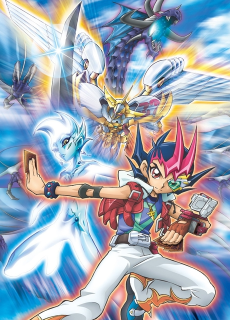
Connected through 2 aesthetic dimensions.
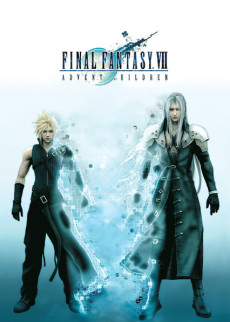
A crumbling City 17 under perpetual orange haze mirrors Midgar’s skeletal ruins—both worlds breathe the same exhausted, rain-slicked cyberpunk air. Unlike most sequels fixated on escalation, *Episode One* and *Advent Children* dwell in fragile recovery: Alyx’s quiet vigil beside Gordon’s stasis pod echoes Cloud’s solitary walks through Sector 5’s overgrown church, haunted by Geo-stigma’s invisible decay. Their resonance lies precisely in how sci-fi dread curdles into intimate, bodily vulnerability—when the apocalypse ends, the real work begins.
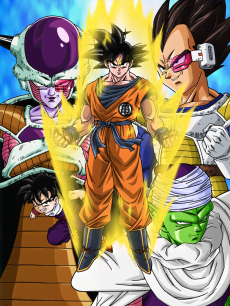
A crumbling City 17 skyline—crisscrossed by Combine scanners and flickering holograms—echoes the fractured, high-stakes urgency of *Dragon Ball Z Kai*’s Cell Saga climax, where Earth’s survival hinges on split-second choices amid collapsing arenas. Unlike most sci-fi dystopias, both weaponize cyberpunk & dystopia not for spectacle alone, but as pressure-cookers that strip characters down to raw resolve: Gordon’s silent endurance mirrors Gohan’s reluctant, world-saving ascension. This pairing surprises—not through genre overlap, but how each compresses apocalyptic stakes into intimate, bodily struggle.
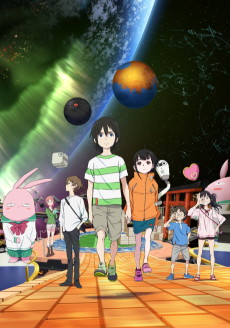
Connected through 2 aesthetic dimensions.

Vash’s sun-bleached, rust-scabbed frontier towns in *TRIGUN STAMPEDE* mirror City 17’s crumbling Brutalist concrete and flickering neon—both worlds wear dystopia like weathered skin. Where Episode One traps players in claustrophobic subway tunnels choked with strider echoes and desperate survivors, *STAMPEDE*’s wide-shot deserts amplify isolation through silence and scale, yet both anchor hope in quiet acts of mercy amid systemic collapse. This resonance isn’t just cyberpunk aesthetics—it’s how each frames resilience as tender, stubborn, and deeply human against indifferent machinery.
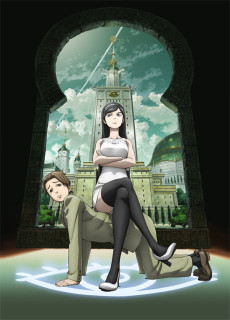
Connected through 2 aesthetic dimensions.
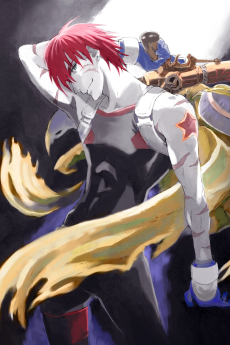
Connected through 3 aesthetic dimensions.





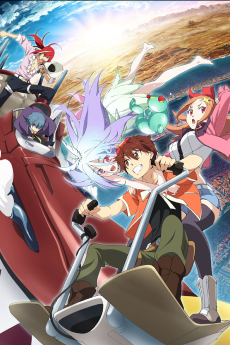

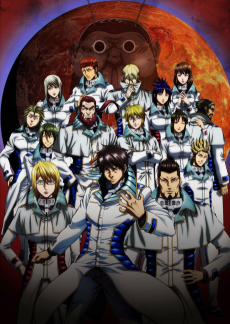



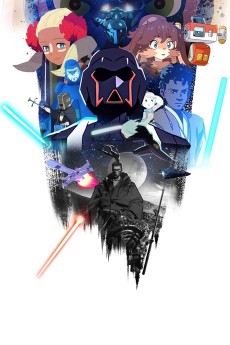


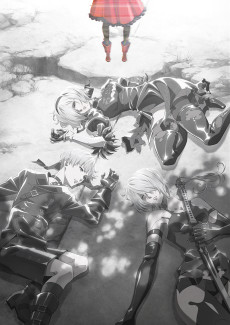









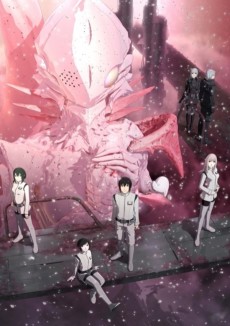









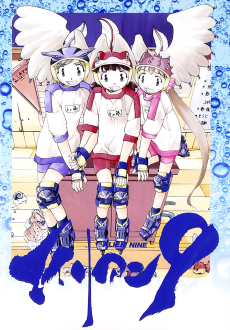




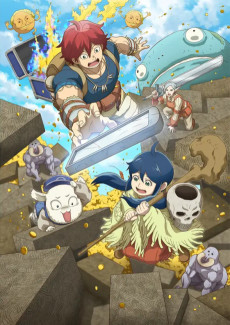
Match Dimensions Explained
❓Frequently Asked Questions
Why is Redline considered the closest anime to Half-Life 2: Episode One?
Redline nails that same oppressive, high-stakes urgency you feel sprinting through City 17’s collapsing subway tunnels—especially during its climax where JP and Sweet Pea race through a crumbling, neon-drenched metropolis under constant artillery fire. Like Episode One’s frantic Citadel meltdown sequence, Redline trades exposition for kinetic survival, with zero hand-holding and physics-based chaos (think gravity shifts, debris fields, and real-time environmental collapse) that mirror Valve’s signature 'reactive world' design.
Is there an anime adaptation of Half-Life 2: Episode One?
No—there’s never been an official anime adaptation of Episode One (or any Half-Life game). Valve has kept the IP strictly in-game, so all anime matches like Final Fantasy VII: Advent Children or TRIGUN STAMPEDE are *thematic parallels*, not adaptations. That said, Advent Children’s Midgar ruins, Shinra Tower collapses, and Cloud’s desperate sprint through collapsing infrastructure echo Episode One’s pacing and stakes—even down to how both use verticality and crumbling architecture as narrative pressure.
How does TRIGUN STAMPEDE compare to Heaven’s Lost Property the Movie in capturing Episode One’s vibe?
TRIGUN STAMPEDE leans harder into Episode One’s grounded dread: Vash’s quiet tension in the ruined city of July mirrors Gordon’s silent traversal through City 17’s rubble-strewn streets—no flashy powers, just tight corridors, flickering lights, and ever-present Combine patrols. Heaven’s Lost Property the Movie goes bigger and more surreal (think Angeloid transformations mid-air over clockwork cityscapes), which feels closer to HL2’s Citadel spectacle than Episode One’s claustrophobic, ticking-clock evacuation—so if you want *that* specific ‘running while the world implodes’ vibe, STAMPEDE wins.
What’s the best anime like Half-Life 2: Episode One for that ‘desperate escape from a collapsing dystopia’ mood?
Final Fantasy VII: Advent Children is your top pick—it’s got that exact breathless, time-pressured evacuation energy: Cloud racing across fractured Midgar highways while the city literally disintegrates overhead, just like Gordon and Alyx scrambling up the Citadel’s failing core. The score hits hard, the environments feel lived-in and decaying (not just ‘ruined’), and every action scene serves the urgency—no filler, no detours, just pure survival momentum, exactly how Episode One’s final 45 minutes play out.