
Kaiba
It is now possible to store memory data, so that the death of your body is not actually "death". As memories are stored in databanks, they can be "transferred" to new bodies. Because so-called "memory trading" now occurs, it is now possible to steal memories and illegally alter them.
Society has fallen apart as authority has become lost and stagnant.
One day, a man awakens in a ruined room. His name is Kaiba. He has no memories, but he does have a pendant with a picture of an unknown woman inside.
In the skies are roiling clouds and electrical storms, impossible to pass without losing one's memories; above them lies the elusive realm of the rich and powerful, who barter others' bodies and memories for their own enjoyment and longevity. Below lies a troubled and dangerous world where good bodies are hard to come by and real money is scarce.
After suddenly being attacked, Kaiba escapes into space, and during his travels meets all sorts of people and regains his memories. Throughout it, he continues to be troubled by the world's problems, as well as his own existence. And what of the woman in the pendant, Neiro?
📺Anime Details
📝Editorial Analysis
The air in that first room is thick—not with dust, but with absence. Kaiba wakes on cracked concrete, breath shallow, fingers curling around a pendant that’s warm despite the chill. The photo inside is blurred at the edges, a girl’s face half-lost—not gone, but unmoored. There’s no alarm, no siren, just the low hum of a dead city bleeding through the walls and the quiet, horrifying weight of knowing your memories were taken, not lost.

That’s the feeling Kaiba lives inside: not despair, exactly—but dislocation. Not dystopia as spectacle, but as texture: the way light catches on rusted data conduits, how silence stretches between characters like a physical gap, how love isn’t declared but retrieved, piece by fragile piece, from corrupted files and stolen bodies. It makes you feel vertiginous—like standing on a platform suspended between identities, where every “I” is provisional, every “you” potentially a ghost wearing someone else’s skin. It doesn’t ask who are you?—it asks whose question is this? And the answer shifts with every memory swap, every body transfer, every glance at that pendant’s fading image.
BioShock Infinite shares that vertigo. Its description names Booker DeWitt as “indebted to the wrong people,” his slate needing wiping—not erased, but overwritten, like a corrupted memory file. The player review admits the bitterness some feel about “the Bioshock Infinite we could have gotten”—a line that echoes Kaiba’s own fractured narrative: both works build worlds where identity is editable, and the tragedy isn’t just loss, but the multiplicity of losses—the selves you’ve been, the selves you’ve erased, the selves you’re forced to inherit. When Booker walks through Columbia’s gilded rot, or Kaiba drifts through the orbital slums of Neo-Neo, it’s the same hollow resonance: nothing is original, nothing is safe, and even redemption feels like a patch.
Then there’s BioShock, where Rapture’s collapse isn’t political theater—it’s neurological decay made architecture. The description calls it “a shooter unlike any you’ve ever played,” but what lingers isn’t the weapons—it’s the audio diaries whispering fragmented truths, the Little Sisters’ vacant eyes reflecting your own moral erosion. That matches Kaiba’s quiet horror: no grand villain, just systems rotting from within, where “memory trading” isn’t sci-fi gimmickry but economic violence, and brainwashing wears the soft face of convenience. One player calls it “revolutionary”—not for its tech, but because it made players feel complicit in their own unraveling, just as Kaiba does when he stares into a mirror and wonders whose reflection he’s seeing.
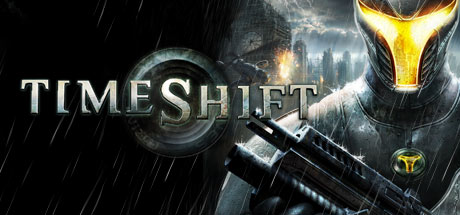
TimeShift™ lands even closer in tactile rhythm. Its description centers Dr. Krone’s “Time Jump across the space-time continuum—a reckless act with frightening consequences.” That phrase—frightening consequences—is pure Kaiba: not time travel as spectacle, but as collateral damage. The player review calls it “a little 4 hour game… a blast, but it takes a little work to get it into a playable state.” That friction—the effort to access coherence—mirrors Kaiba’s structure: scenes dissolve mid-thought, timelines fold without warning, bodies change like channels. You don’t solve the mystery—you stumble through its afterimage, just as Krone stumbles through his warped reality.
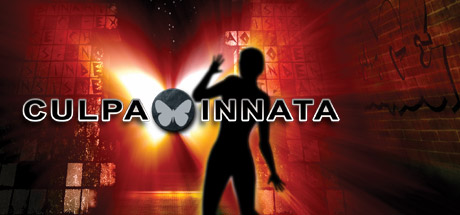
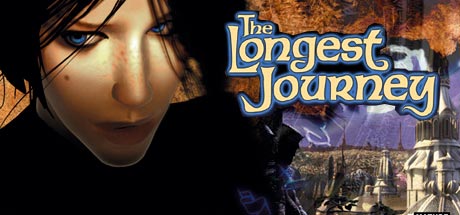
Who would love these pairings? Not just fans of “sci-fi with sad endings.” Someone who watches Kaiba and feels recognized in its silences—who reads a BioShock audio diary and hears the echo of Kaiba’s pendant clicking open in an empty room. Someone who doesn’t want answers, but resonance: the kind that hums in your ribs when April Ryan steps between worlds in The Longest Journey, or when Culpa Innata’s “perfect society” reveals its sterile, smiling dread. They’re the ones who replay a scene not to understand it, but to linger in its unresolved ache—because for them, memory isn’t data to be stored. It’s breath. It’s weight. It’s the fragile, flickering thing that keeps you from floating away.
🎮98 Games That Match the Vibe












Match Dimensions Explained
❓Frequently Asked Questions
Why does Kaiba’s time-loop storytelling feel so similar to BioShock Infinite’s ending?
Because both hinge on fractured timelines and identity collapse—Kaiba’s memory shards mirror Booker/Comstock’s recursive baptism paradox, and Elizabeth’s ability to open tears across realities directly echoes Kaiba’s fragmented consciousness jumping between bodies and eras. BioShock Infinite (score 83) nails that gut-punch revelation where choice dissolves into inevitability, just like Kaiba’s final confrontation with his own stolen memories.
Is there a Kaiba anime adaptation of The Longest Journey?
No—but the *reverse* connection is real: The Longest Journey (score 80) was actually adapted *into* a beloved point-and-click adventure game, not the other way around. Its dual-reality structure (Stark vs. Arcadia), April Ryan’s quiet determination, and philosophical detective work make it a spiritual cousin to Kaiba’s layered worldbuilding—just without the body-swapping or neural decay.
BioShock vs. TimeShift: which one captures Kaiba’s ‘time as weapon’ vibe better?
TimeShift™ (score 80) wins hands-down—it’s built *entirely* around manipulating time as a tactical tool, just like Kaiba’s chronal instability lets him rewind, freeze, and fracture moments mid-fight. BioShock leans more into ideological dystopia and audio logs; TimeShift drops you straight into Dr. Krone’s unstable time-jump, complete with glitching environments and reality-warping consequences—very Kaiba-core.
What’s the best Kaiba-like game if I want that melancholy, rain-slicked cyberpunk mystery vibe?
Culpa Innata (score 82) nails it—its World Union feels like Rapture crossed with Neo-Kyoto: sterile surfaces hiding rot, surveillance everywhere, and a lone investigator (you) peeling back layers of engineered utopia. It’s got the same slow-burn dread and noir pacing as Kaiba’s early episodes, especially when chasing clues through empty arcologies and corrupted data vaults.