
Natural Selection 2
A fast paced multiplayer shooter that pits aliens against humans in a strategic and action-packed struggle for survival!
🎮Game Details
💬What Players Say
"If you like the Subnautica games and also like pvp games that mix FPS combat with some Top Down Commander Strategy, give this game a try. This game is what happens when the Kharaa from Subnautica gets out of control. No joke...."
"It's been well over a decade since I last played this, so going into it I didn't remember anything about this game. I was surprised to see multiple servers with full capacity. Ended up joining a random lobby and played for the marines...."
"This game still slaps even vs bots, it's not in its golden era but man, for £4 if you can convince some of your friends to pick it up and do a "us vs bots" game, it can be alot of fun. The AI can be a bit braindead, but put up a decent fight against the players and there's mods that help improve the AI. Would pick it up if you enjoy a fast paced FPS with RTS elements."
📝Editorial Analysis
The air crackles—not with electricity, but with urgency. You’re crouched behind a shattered bulkhead in a derelict orbital station, rifle hot in your hands, breath shallow. On your HUD, a red pulse blinks: Commander’s order—hold Sector Gamma until the hive is breached. Across the comms, a voice snaps, “Kharaa on the vents—now.” You pivot, fire, and in that split second between muzzle flash and scream, you’re not just shooting—you’re orchestrating, reacting, adapting, surviving—exactly as the official description promises: a “fast paced multiplayer shooter that pits aliens against humans in a strategic and action-packed struggle for survival!” It’s the kind of moment Player Review 1 evokes when they compare it to Subnautica’s Kharaa—not as lore, but as presence: something ancient, adaptive, deeply alien, pressing in from every shadowed corridor and ventilation shaft. And yes—there are still full servers, as Review 2 notes, humming with players who remember how to breathe in sync with their squad, even after a decade.


What makes Natural Selection 2’s atmosphere so singular isn’t its sci-fi setting or its FPS/RTS hybrid mechanics—it’s the weight of interdependence. This isn’t a game where you lone-wolf your way to victory. You feel the tension of being one node in a nervous system: the human commander staring down at a top-down map, issuing orders while bullets ricochet overhead; the alien skittering up a wall, sensing pheromone trails, flanking blind; the medic sprinting across open ground, knowing one misstep means the whole front collapses. There’s no safety in isolation—only fragile coordination. That’s why Review 3 praises “us vs bots” sessions: it’s not about AI difficulty, but about relearning trust, about feeling the relief when your friend drops a heal just as you reload, or the dread when comms go silent mid-push. It’s a world that feels lived-in, impermanent, and dangerously alive—less like a battlefield, more like a failing life-support system holding its breath.
That same charged, high-stakes cohesion lives in Redline. Its racing isn’t just speed—it’s desperation made kinetic. The chrome-and-neon sprawl of Roboworld, the flicker of holographic ads over crumbling infrastructure, the way every overtake feels like dodging orbital debris—this is Cyberpunk & Dystopia fused with Competitive Spirit so raw it vibrates. Like NS2’s humans scrambling to reinforce a breached airlock, Redline’s racers don’t just compete—they defy entropy, pushing machines and bodies past breaking point in a universe that rewards audacity with survival. Both make you feel the grit beneath your nails and the pulse in your throat.
Then there’s Final Fantasy VII: Advent Children, where Tactical Warfare isn’t abstract—it’s physical. Watch Sephiroth descend through Midgar’s ruins, not as a boss, but as a force of recalibration: his movements reconfigure space, his presence forces Cloud and the others to adapt in real time, shifting cover, swapping roles, improvising defense. The rain-slicked streets aren’t backdrops—they’re terrain with memory, layered with history and consequence. Just like NS2’s maps, where every vent, lift, and collapsed corridor tells a story of prior skirmishes, every explosion in Advent Children echoes with tactical weight—not spectacle, but consequence. You don’t watch the fight; you track the angles, the retreat paths, the moments where strategy becomes instinct.
And TRIGUN STAMPEDE—oh, that sun-blasted, sand-choked world where Vash doesn’t dodge bullets away from people, but toward them, shielding civilians mid-combat, turning firefights into human logistics problems. His fights are less about winning and more about preserving coherence—keeping a town intact, keeping trust unbroken, keeping hope operational. That’s NS2’s soul: not domination, but endurance. When your team holds a chokepoint for three minutes straight, rotating medics, calling out flankers, patching armor mid-firefight—that’s Vash’s ethos translated into networked latency and voice comms. It’s Tactical Warfare with heartbeat.
This pairing sings for the player who replays the same 90-second firefight three times—not to win, but to perfect the rhythm; for the anime fan who rewinds not for dialogue, but for the way light catches on a blade mid-dodge, or how a commander’s hand trembles just once before issuing an order that will cost lives. It’s for those who love the hum of shared focus—the silence between commands, the shared breath before the push, the unspoken trust that turns chaos into something almost beautiful. Not heroes. Not villains. Just people—adapting, holding on, together.
→40 Anime That Match the Vibe

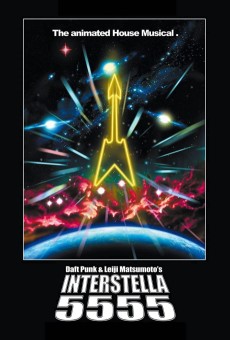
JP’s blistering, near-suicidal drift through Roboworld’s neon-drenched canyon—tires screaming, chassis sparking—mirrors the frantic, high-stakes chaos of Natural Selection 2’s Hive versus Forward Base skirmishes. Where Redline weaponizes velocity and razor-thin margins in its single, universe-defining race, NS2 transforms every map into a contested circuit of movement, adaptation, and split-second tactical acceleration—both thrumming with unrelenting **Competitive Spirit**. That shared breathless intensity, rooted in sci-fi stakes and dystopian grit, makes their synergy feel less like coincidence and more like kinetic inevitability.
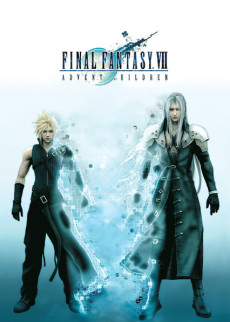
Geo-stigma’s creeping, bioluminescent decay in *Advent Children* mirrors the visceral, organic horror of NS2’s Khara—alien biomass that corrodes steel and flesh alike. Where Cloud battles corrupted Lifestream energy in Midgar’s rain-slicked ruins, NS2 players fight amid flickering neon-lit command centers and collapsing bio-mechanical hives, fusing 🌆 Cyberpunk & Dystopia with 🎯 Tactical Warfare under relentless pressure. This isn’t just shared grit—it’s a rare synergy where biological dread and human resilience collide in real-time chaos.
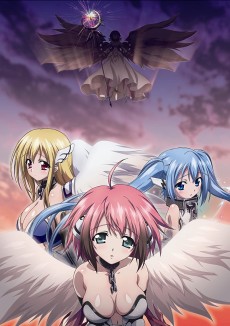
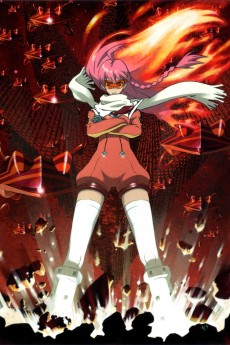
Kazane Hiyori’s desperate, rain-slicked flight through Neo-Tokyo’s decaying clockwork towers—where gears grind and time itself frays—mirrors the claustrophobic, biomechanical dread of Natural Selection 2’s alien-infested server rooms and dripping hive corridors. Unlike most sci-fi pairings, this resonance isn’t in plot but in *Cyberpunk & Dystopia*: both weaponize industrial decay as emotional texture, turning rust, exposed wiring, and malfunctioning tech into shared metaphors for fragile humanity. It’s startling how Kazane’s quiet grief and the game’s silent, tense build-ups before a team wipe vibrate at the same anxious frequency.
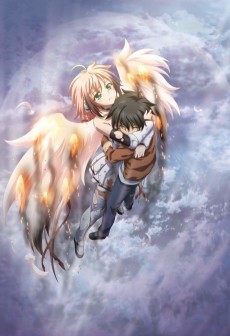
Connected through 2 aesthetic dimensions.
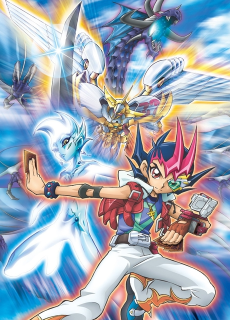
Connected through 2 aesthetic dimensions.
Connected through 3 aesthetic dimensions.
Connected through 2 aesthetic dimensions.
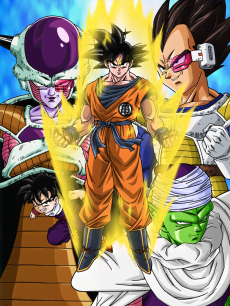
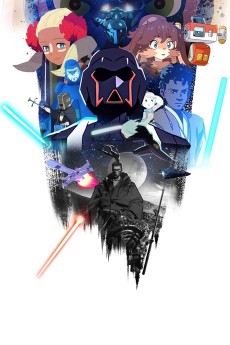
A desperate human marine scrambling through flickering neon-lit corridors of the *Khara* outpost—sweat-stung eyes tracking alien bio-luminescence overhead—feels kin to Gohan’s charged, breathless stand against Cell in the Hyperbolic Time Chamber. Unlike most sci-fi action pairings, this resonance thrives in shared cyberpunk & dystopia textures: grimy tech, bodily transformation under pressure, and survivalist urgency distilled into split-second choices. *Kai*’s tighter pacing and restored manga gravity mirrors NS2’s stripped-down, high-stakes asymmetry—neither wastes a frame on fluff.
Connected through 3 aesthetic dimensions.

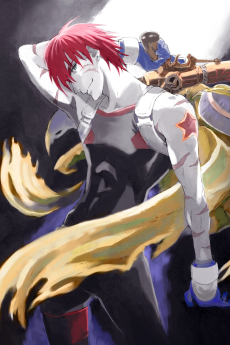
Vash’s serene smile amid the crumbling, rain-slicked neon sprawl of July City mirrors the tense calm before a Natural Selection 2 hive assault—both unfold in worlds where 🌆 Cyberpunk & Dystopia isn’t backdrop but pressure cooker. Unlike most pacifist heroes, Vash’s restraint is tactical, not passive; like a human commander holding choke points against alien swarms, his non-lethal precision demands spatial awareness and split-second risk calculus. That shared weight of responsibility—carried by Meryl’s notebook and a squad’s comms channel—makes their resonance startlingly grounded.








Match Dimensions Explained
❓Frequently Asked Questions
Why is Redline recommended for Natural Selection 2 fans?
Redline nails that same high-octane, team-based sci-fi chaos—think the frantic alien-vs-human base assaults in NS2, but swapped for neon-drenched hoverbike races where strategy matters as much as reflexes. The competitive spirit dimension (72 score) mirrors NS2’s tense commander-to-soldier coordination, like when your squad has to hold the refinery while the enemy hacks the control node.
Is there an anime adaptation of Natural Selection 2?
Nope—NS2 has never been adapted into an anime. But if you’re craving that same vibe, Final Fantasy VII: Advent Children (70 score) delivers tactical warfare with real stakes: watch Cloud and Sephiroth clash in Midgar’s ruined streets, where environmental destruction and squad-level positioning echo NS2’s human-alien skirmishes around vents and hives.
How does TRIGUN STAMPEDE compare to Natural Selection 2 in terms of strategy and action?
TRIGUN STAMPEDE shares NS2’s blend of grounded tactics and explosive action—like Vash calculating angles and cover during the July City siege, then flipping into full-on FPS-style evasion, just as NS2 players duck behind crates while calling out alien flankers. Both lean hard into Sci-Fi & Space + Tactical Warfare (64 score), with moments where one wrong move collapses the whole plan.
What’s the best anime like Natural Selection 2 if I want that ‘us vs bots’ chaotic fun with friends?
Heaven’s Lost Property the Movie: The Angeloid of Clockwork (67 score) is your pick—it’s got that same playful-but-lethal energy: imagine teaming up with friends to fend off malfunctioning angeloids in clockwork cityscapes, complete with improvised weapons and last-second hive-defense scrambles, just like those £4 ‘us vs bots’ NS2 sessions where the AI throws everything—including a surprise larva swarm—at your base.