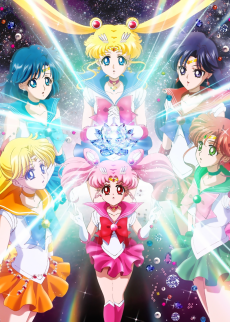
Sailor Moon Crystal
Tsukino Usagi is a clumsy crybaby, but otherwise very cheerful 8th grade student. One day she meets a cat named Luna with a crescent moon on her head, and is transformed into the sailor-suited guardian of love and justice, Sailor Moon! As a chosen guardian of justice, Usagi has a mission … to find her comrades; to find the Phantom Silver Crystal; and protect the Princess. However, Queen Beryl of the Dark Kingdom also seeks the terrible power of the Silver Crystal, and sends her agents into the city where Usagi lives; triggering the start of a fierce battle.
Will Sailor Moon be able to find the other Sailor Guardians, and if she does, together can they find the Phantom Silver Crystal and protect the Princess?!
📺Anime Details
📝Editorial Analysis
The first time Usagi transforms—her hair lifting like spun moonlight, the ribbon snapping taut across her chest, that breathless “Moon Prism Power, Make Up!” echoing not as a shout but as a sudden, quiet certainty—it doesn’t feel like power arriving. It feels like recognition. Like something long buried in her bones finally remembering its own name. Her knees wobble. Her voice cracks. She stumbles mid-air and catches herself on instinct—not because she’s ready, but because the light holds her up.
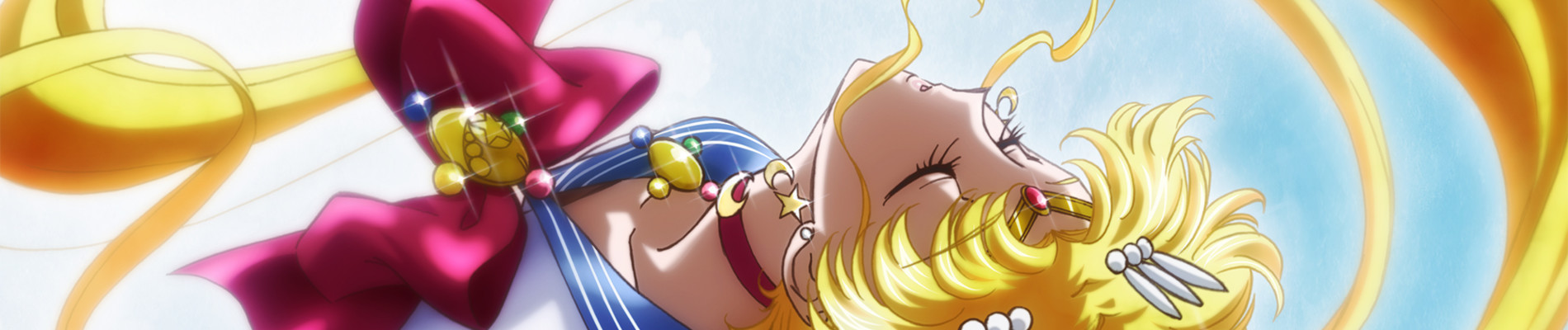
That’s the heart of Sailor Moon Crystal: not invincibility, but reclamation. Every henshin is a return—not just to a magical identity, but to a self already whole, already worthy, already remembered, even when Usagi can’t yet believe it. The Dark Kingdom isn’t just an enemy; it’s the echo of amnesia—the erasure of love, of legacy, of girlhood as sacred, sovereign, and space-bound. The Silver Crystal isn’t a weapon. It’s memory made luminous. And the city of Tokyo? Not backdrop—it’s alive with myth, humming beneath subway grates and shrine gates, where ancient queens sleep in comet dust and junior high classrooms double as cosmic waystations.
What makes Sailor Moon Crystal vibrate at this particular frequency isn’t its mahou shoujo trappings or even its planetary lore—it’s how deeply it treats feeling as ontological truth. Grief reshapes time. Love rewrites physics. A tear isn’t weakness—it’s gravitational pull. The show doesn’t ask Usagi to “grow into” her power. It asks her to trust what she already carries: tenderness as armor, vulnerability as compass, romance not as subplot but as axis—the force that bends fate, heals fractured timelines, and reassembles lost civilizations from starlight and shared breath.
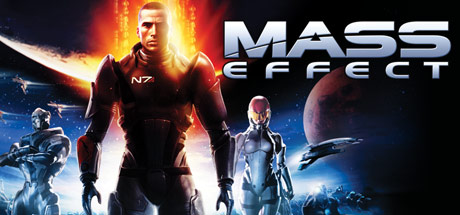
That emotional DNA pulses strongest in Mass Effect (2007). Not the trilogy’s grander arcs, but this game—the one where Shepard’s first real choice isn’t about galactic war, but whether to hold Liara’s hand in the ruins of Thessia and say “I’m here” while her world dissolves. The description calls it Romance & Shoujo—and yes, it’s there: not in tropes, but in how intimacy becomes tactical, how trust recalibrates entire missions, how love isn’t earned through feats but practiced in quiet exchanges, in choosing someone’s safety over protocol, in letting your guard down because you’re certain of their gravity. One player nails it: “None of the follow-ups really captured what this game did.” Because only this one lets romance breathe like oxygen—not decoration, not reward, but atmosphere.
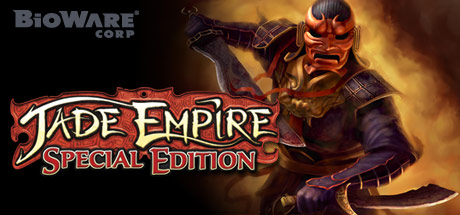
Then there’s Jade Empire™: Special Edition, where mythology isn’t set dressing but breath. Its description names Emotional Narrative and Mythology & Folklore—but what binds it to Usagi’s journey is how spirits live in stone and sorrow alike, how ancestors speak through tea steam and cracked tiles, how every martial stance is also a prayer. That Reddit workaround fans cite—copying steam.dll to launch—mirrors Usagi’s own struggle: sometimes the magic won’t ignite until you reinstall the foundation, until you patch the broken link between belief and form. The game’s open palm/closed fist duality echoes Sailor Moon’s core tension: justice isn’t rigid law—it’s adaptation, mercy folded into fury, compassion sharpened by clarity.
And BioShock Infinite, for all its sky-cities and quantum ladders, shares that same aching resonance with memory. Its description cites Time & Memory and Sci-Fi & Space—but what lands like a physical blow is Elizabeth’s hands, always reaching, always remembering before she knows why. Like Usagi waking with phantom tears for a princess she hasn’t met, Elizabeth’s power isn’t control—it’s recognition across fractures. The player review hints at disappointment—but the ache is the point. Some truths don’t resolve. They reverberate. Just as Usagi’s love for Mamoru isn’t a destination, but a frequency she tunes into across lifetimes.
This pairing isn’t for fans of “strong female leads” as archetypes. It’s for the ones who still flinch when someone says “you’ll understand when you’re older”—because they already feel the weight of centuries in their chest. It’s for players who save before every dialogue choice not out of fear of failure, but reverence for consequence. For viewers who watch Usagi cry after the battle—not from exhaustion, but from the sheer, staggering relief of being known, fully, finally, by the universe itself. These stories don’t offer escape. They offer witness. And in that witnessing—tender, stubborn, star-salted—they make space for you to remember, too.
🎮79 Games That Match the Vibe






Match Dimensions Explained
❓Frequently Asked Questions
Why does Jade Empire feel like Sailor Moon Crystal despite having no magical girls?
Because Jade Empire nails the same emotional narrative beats and shoujo-tinged romance you love in Sailor Moon Crystal—think Usagi’s vulnerability and growth mirrored in your martial arts journey, with choices that shape relationships like your bond with Dawn Star or Sagitta. The mythology & folklore dimension also echoes the show’s blend of ancient Japanese spiritual themes and personal transformation, all wrapped in lush, expressive visuals.
Is there a Sailor Moon Crystal video game adaptation?
No—there’s never been an official Sailor Moon Crystal video game adaptation. The closest matches are games that share its core vibes: Jade Empire™ (for emotional narrative + romance & shoujo) and Mass Effect (2007) (for heartfelt character bonds, squad-based loyalty moments reminiscent of the Sailor Guardians’ dynamic, and that earnest, idealistic tone).
Jade Empire vs. Mass Effect (2007): which one captures Sailor Moon Crystal’s ‘found family’ energy better?
Jade Empire wins for pure shoujo warmth—it’s got Dawn Star’s gentle mentorship, Master Li’s stern-but-caring guidance, and branching dialogue where your kindness literally unlocks new relationship paths, just like Usagi earning trust from Rei or Makoto. Mass Effect (2007) delivers found family too (Shepard’s crew feels like a scrappy, loyal Guardian team), but Jade Empire’s intimate, character-driven storytelling and romance & shoujo dimension make it the closer match for Crystal’s heartfelt sisterhood.
What’s the best Sailor Moon Crystal-like game if I want something dreamy, emotional, and full of quiet character moments?
Jade Empire™: Special Edition is your perfect match—it’s built on emotional narrative and romance & shoujo dimensions, with scenes like your first quiet conversation with Dawn Star under the willow trees, or choosing compassion over vengeance during pivotal story branches. The player review even calls out its emotional resonance, and unlike Loki or Rise of the Argonauts (which lean hard into action spectacle), Jade Empire lingers in those tender, human moments—just like Crystal’s café chats or Usagi’s late-night reflections.