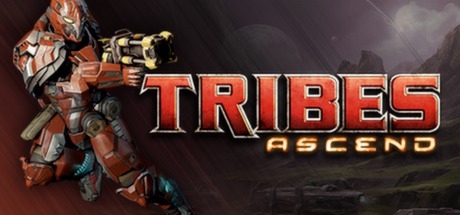
Tribes: Ascend
This edition packages weapon DLC from ten previous expansions as well new featured content.
🎮Game Details
💬What Players Say
"Man, I used to love this game. Just mindless fun. All be it, it could have been expanded or had much added to it, sadly it had so much potential that went unused but was a decent game at the time...."
"A DIAMOND IN THE ROUGH!!!"
"I like it!"
📝Editorial Analysis
The rush—not just speed, but the sheer, breathless lift of launching downhill on skis across frozen tundra, jetpack flaring blue-white, enemy tracer fire stitching the air behind you like angry fireflies—this is Tribes: Ascend at its purest. Not strategy. Not lore. Not even winning. It’s that split-second where gravity surrenders, your fingers lock, and the world narrows to vector, velocity, and the thrill of motion so absolute it feels like flying through thought itself. That’s what Player Review 1 meant by “mindless fun”—not emptiness, but clarity: a game stripped down to kinetic joy, unburdened by narrative weight or mechanical bloat. And yet, that same review sighs over “so much potential that went unused”—a quiet ache for what could’ve been, echoing in the hollow echo of an abandoned server list, the DLC bundles stacking up like unopened promises in the official description.
What makes Tribes: Ascend’s atmosphere singular isn’t its sci-fi setting or its team-based combat—it’s the emotional physics it enforces. It makes you feel weightless and grounded at once: grounded in the tactile crunch of snow under skis, the gut-punch recoil of the Spinfusor, the precise timing of a grenade bounce off ice; weightless in the soaring, almost spiritual release of chaining boosts, slides, and jumps into one seamless arc across kilometers of open map. It doesn’t ask you to think about war—it asks you to inhabit velocity as ideology. There’s no dread, no gritted-teeth survivalism—just exhilaration as doctrine, flow as battlefield language. You don’t strategize terrain—you dance with it. That’s why Player Review 2 calls it a “DIAMOND IN THE ROUGH”: not broken, but unpolished, shimmering with raw, untamed energy—“so dreamy” precisely because it refuses to settle into convention.
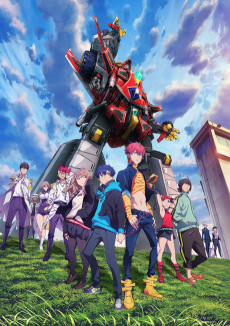
That same untamed, physics-defying exhilaration pulses through Gurren Lagann The Movie: The Lights in the Sky are Stars—where mecha don’t walk, they spiral, punching holes through dimensions with spiral energy that mirrors Tribes’ own impossible momentum. Both reject inertia as law; both treat space not as distance to cross, but as canvas to paint with motion. The shared dimension isn’t just “Mecha & Military Sci-Fi”—it’s the feeling of scale bending to human will, of propulsion becoming poetry. Likewise, Gridman Universe shares that same ecstatic, almost cartoonish disregard for physical limits: the way Gridman’s attacks warp perspective, how cityscapes become playgrounds for vertical, multi-layered chaos—exactly like Tribes’ maps where rooftops, cliffs, and sky-lanes exist not as cover, but as ramps for perpetual motion. The “Action Spectacle” dim isn’t about flash—it’s about shared grammar: every explosion, every boost flare, every mid-air reversal serving the same sacred rhythm—forward, upward, faster. And Tiger & Bunny, though grounded in urban realism, channels that same joyful intensity: heroes don’t just fight—they perform, their powers synced to music, their clashes choreographed like aerial ballets across neon-drenched skyscrapers. The “Action Spectacle” here isn’t spectacle for show—it’s spectacle as belief, mirroring Tribes’ unwavering faith in movement as meaning.
This pairing sings loudest for the player who still has muscle memory for a perfect downhill slide—and the anime viewer who rewinds the Gurren Lagann spiral drill not to study the animation, but to feel that surge in their chest again. For the person who doesn’t just watch Gridman leap between buildings—they lean into the screen, shoulders shifting instinctively, as if bracing for takeoff. For the one who watches Kotetsu’s final sprint in Tiger & Bunny and doesn’t see a hero’s last stand, but recognizes the exact same lift, the same defiant, airborne lightness they felt launching off a Tribes ridge at 3 a.m., alone on a near-empty server, chasing nothing but the next horizon—and the pure, uncomplicated, blinding joy of going faster than sense allows.
→178 Anime That Match the Vibe

That sky-splitting final ascent of the Tengen Toppa Gurren Lagann—punching through cosmic layers into starlight—mirrors Tribes: Ascend’s jetpack-fueled verticality, where players vault from canyon floors to orbital altitudes in seconds. Unlike most military sci-fi, both weaponize *mecha & military sci-fi* spectacle not for grim realism, but as pure kinetic poetry: Simon’s drill isn’t just a tool, it’s the same ecstatic engine as Ascend’s ski-jump-and-boost combat rhythm. The movie’s post-Teppelin peace makes its sudden, gravity-defying escalation feel earned—and thrillingly parallel to Ascend’s own DLC-laden expansion of scale.

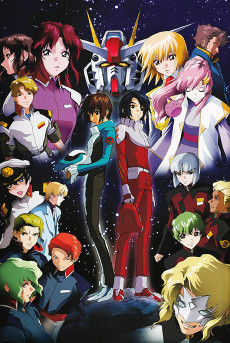
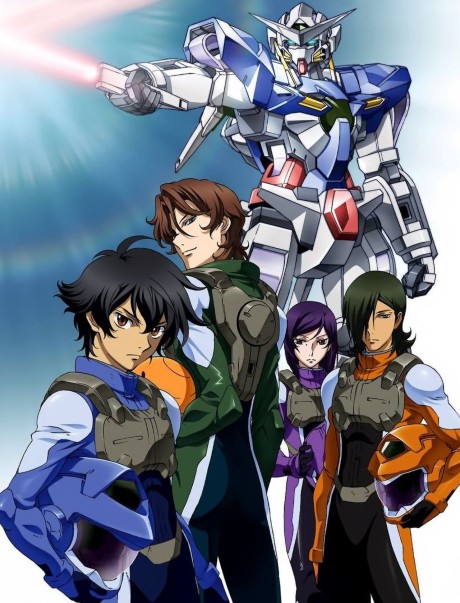
Lelouch’s Zero Requiem—where tactical genius, betrayal, and sacrificial spectacle collide—echoes Tribes: Ascend’s high-speed, team-synchronized combat, where victory hinges on coordinated flanking, precise weapon timing, and split-second role-switching. Unlike most military sci-fi, both commit fiercely to the *Mecha & Military Sci-Fi* dimension: Britannia’s Knightmare Frames and Tribes’ jetpack-armored soldiers aren’t just tools—they’re extensions of identity, discipline, and ideological warfare. The resonance feels startlingly organic: cold calculus meets visceral motion, strategy made kinetic.

Connected through 3 aesthetic dimensions.

Connected through 4 aesthetic dimensions.

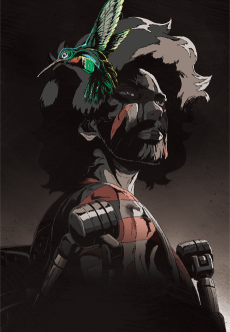
*Tribes: Ascend* and *Redline* mutually inhabit a hyperkinetic, sun-blasted dystopia where velocity is theology—think the blistering ascent up Frozen Valley’s ice cliffs mirroring Redline’s molten-track sprint across Roboworld’s scorched arena. Both fuse chrome-plated sci-fi with analog grit: flickering HUDs, exhaust-scorched armor, and cockpits vibrating with raw engine feedback. Their competi...

Gale’s flaming jetpack scream across Promare’s neon-drenched Neo-Geofront mirrors Tribes: Ascend’s gravity-defying ski-jump combat—both weaponize velocity as spectacle. Unlike most mecha or military sci-fi, they fuse kinetic movement with pyrotechnic identity: Burnish aren’t just fire-wielders; their bodies *are* combustion engines, echoing Ascend’s jetpack-and-skis mobility as core to self-expression. This shared obsession with propulsion-as-persona makes their sci-fi feel urgently physical, not just technological.

Connected through 2 aesthetic dimensions.

Connected through 3 aesthetic dimensions.

Connected through 3 aesthetic dimensions.
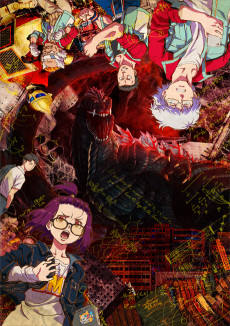
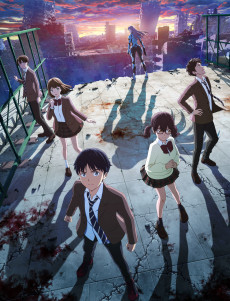
Gauma’s gravity-defying kaiju battles—where he leaps across cityscapes like a human artillery round—echo Tribes: Ascend’s signature jetpack-and-skiing combat, where momentum turns terrain into a weapon. 🤖 Mecha & Military Sci-Fi isn’t just backdrop here; it’s kinetic grammar—Yomogi’s clumsy first sync with Dynazenon mirrors a rookie’s fumbled loadout swap mid-flag-run. Unlike most mecha or FPS pairings, this resonance lives in the *physics of intention*: every jump, slide, or transform commits fully to motion as meaning.





























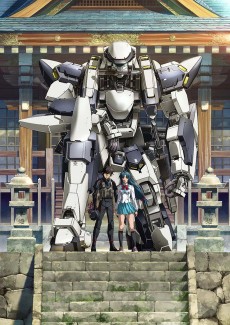

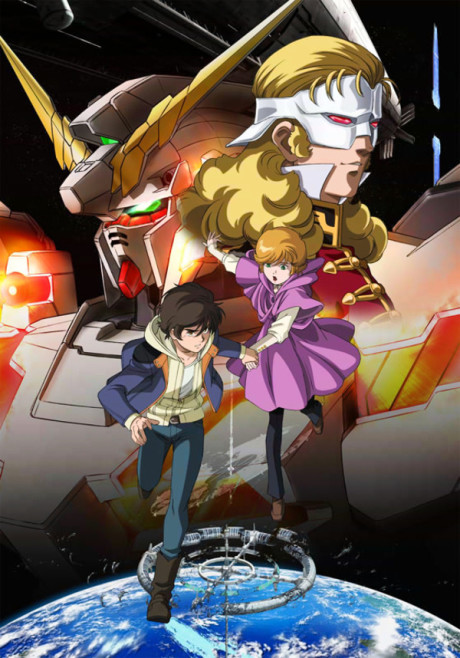




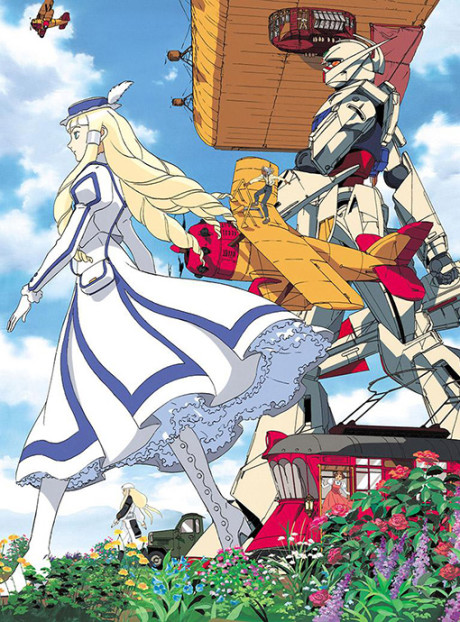


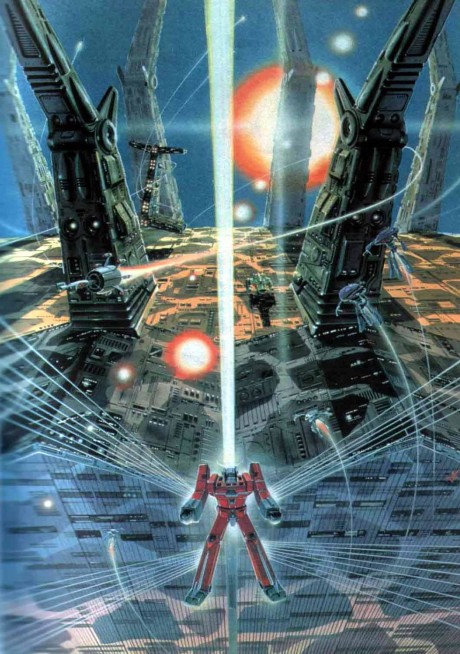


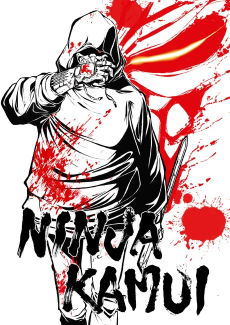

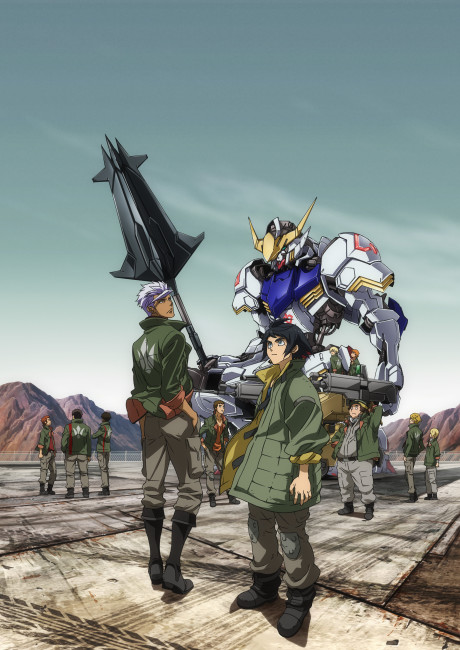





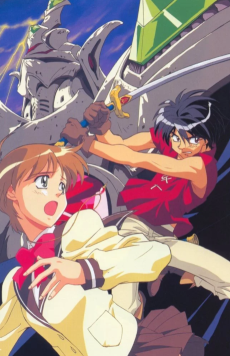






















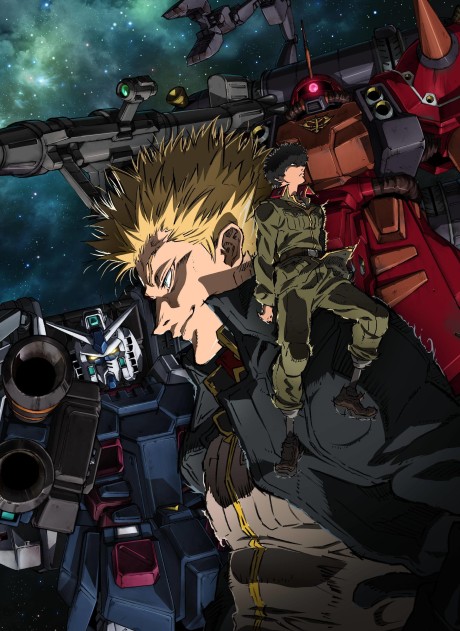




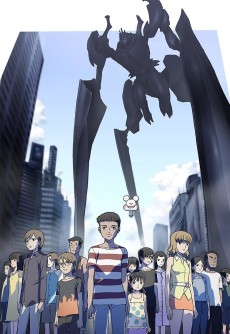
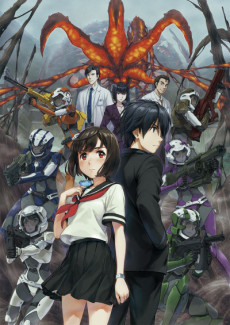





























































Match Dimensions Explained
❓Frequently Asked Questions
Why is Gurren Lagann The Movie recommended for Tribes: Ascend fans?
Because both are pure, unapologetic action spectacles built on high-speed movement and over-the-top combat—think Simon’s spiral energy drills clashing like Tribes’ ski-and-shoot momentum, or the final battle’s gravity-defying mecha ballet mirroring how Tribes players chain jumps, boosts, and flag captures across snowy, open arenas. It nails that same adrenaline-fueled, physics-bending rush where skill and spectacle are inseparable.
Is there an anime adaptation of Tribes: Ascend?
Nope—Tribes: Ascend never got an official anime adaptation. But if you’re craving that same blend of military sci-fi, team-based objective play, and sleek, armored combat, Code Geass delivers hard: Lelouch’s tactical command of Knightmare Frames during the Battle of Narita feels *exactly* like calling out enemy positions and coordinating flag pushes with your squad in Tribes’ wide-open maps.
How does Tiger & Bunny compare to Gridman Universe for Tribes: Ascend vibes?
Both nail Tribes’ ‘fast, flashy, team-driven action’ energy—but Tiger & Bunny leans into colorful heroics and urban arena combat (like Barnaby’s speed bursts mimicking Tribes’ jetpack timing), while Gridman Universe goes full meta-arena chaos: the Hyper Agent battles inside the digital cityscape—with its layered terrain, instant respawns, and real-time HUD overlays—feel like playing Tribes’ Capture the Flag mode inside a living video game interface.
What’s the best anime for that ‘mindless fun, high-speed momentum’ vibe Tribes: Ascend fans love?
Promare is your answer—especially the blazing highway chase and the molten climax where Galo and Lio duel mid-air on collapsing bridges. Its relentless pace, zero downtime, and emphasis on raw movement (sliding, boosting, aerial repositioning) mirrors how Tribes players chain ski-jumps and boost burns across vast, open terrain—no filler, just fire, speed, and constant forward motion.