
Mobile Suit Gundam Seed Destiny
📺Anime Details
📝Editorial Analysis
The cockpit of the ZAKU WARRIOR shudders—not from impact, but from the raw, unfiltered tremor in Shinn Asuka’s voice as he screams “I won’t lose!” into static, his knuckles white on the controls, tears cutting through grime, the viewport bleeding orange fire and shattered debris. There’s no triumphant music—just the groan of stressed metal, a distant explosion’s bass thump, and the suffocating weight of a war that has already taken everything he loved. That moment isn’t about victory. It’s about desperation, about a boy whose grief is weaponized before he even understands what he’s mourning.
What makes Mobile Suit Gundam Seed Destiny ache so deeply isn’t its space battles or mecha specs—it’s how it traps you inside the exhaustion of ideology. This is war seen through the eyes of teenagers who’ve buried parents, friends, lovers—whose memories are edited, whose loyalties are rewritten, whose rage is mistaken for resolve. You don’t feel heroic watching Shinn spiral; you feel claustrophobic. The military hierarchy isn’t structure—it’s a cage. The “real robot” aesthetic doesn’t mean realism—it means weight: every launch, every landing, every missed shot carries physical and emotional drag. And the romance? It’s less love story, more shared trauma stitched together with silence and bad timing. You walk away not exhilarated, but drained, haunted by the quiet seconds after a battle ends—when the adrenaline drops and all that’s left is the hollow echo of a name whispered too late.
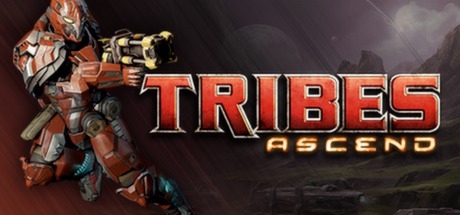
That same exhausted gravity pulses through Tribes: Ascend, not in its gameplay—which players call “mindless fun”—but in its atmosphere: a zero-gravity arena where momentum is law, where you’re perpetually sliding, chasing, falling just short, your jetpack sputtering as you skim across frozen tundras under alien stars. The player review admits it “could have been expanded… had so much potential that…”—a line echoing Seed Destiny’s own structural sigh: both promise grand scale, then leave you orbiting unresolved tensions, chasing ideals that evaporate like thruster vapor. The military sci-fi dimension isn’t about doctrine—it’s about the loneliness of command in empty space, the way a lone scout races across a vast, indifferent map, just as Shinn races toward a truth he can’t yet name.
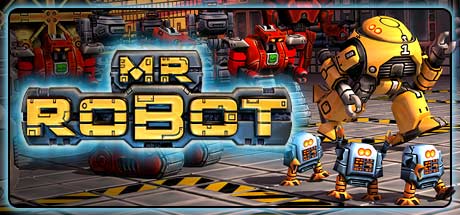
Then there’s Mr. Robot, where Asimov—a lowly service mechanoid aboard the interstellar colony ship Eidolon—must act when the ship’s computer brain malfunctions. The description frames him as “a lowly service mechanoid”, not a pilot, not a hero—just a cog suddenly forced to think like a conscience. The player review calls it “retro”, with “light Mega Man Battle Network type exploration and battles”—small-scale, intimate, tactile. That’s the DNA match: Seed Destiny’s most devastating moments aren’t fleet engagements—they’re cramped bridge confrontations, whispered confessions in dim med-bays, the slow realization that the enemy isn’t across the battlefield, but standing beside you in uniform. Like Asimov navigating corrupted systems with limited tools, Shinn navigates corrupted narratives with limited memory—and both stories live in that fragile, trembling space between function and feeling.
And Exoprimal, with its tactical warfare and sci-fi & space dimensions, lands hardest in its rhythm: waves of biomechanical threats descending, squads coordinating under pressure, armor cracking, comms breaking up—not as spectacle, but as relentless attrition. The score (74) is lower, but the resonance is sharper: this isn’t about winning. It’s about holding a line while your squad fractures, about making split-second calls with incomplete intel, about watching allies fall not in slow motion, but in brutal, staccato cuts—exactly how Seed Destiny stages its tragedies. No fanfare. Just a body hitting the deck. A dropped helmet rolling. A radio crackle fading into dead air.
This pairing isn’t for the casual fan who wants clean arcs or cathartic endings. It’s for the viewer who rewatches Kira’s final confrontation not for the duel, but for the silence before he raises his hand—not knowing if it’s surrender or salvation. It’s for the player who lingers in Horizon Forbidden West’s ruins not to loot, but to stare at weathered murals of forgotten wars, tracing the same exhaustion in ancient stone that Shinn wears in his posture. It’s for anyone who recognizes grief not as a scene, but as a texture—the grit in the throat, the lag in reaction time, the way hope doesn’t blaze—it flickers, stubborn and small, in the dark between explosions.
🎮16 Games That Match the Vibe







Match Dimensions Explained
❓Frequently Asked Questions
Why does Horizon Zero Dawn keep showing up in Gundam Seed Destiny game lists?
Because both hinge on massive, piloted war machines clashing in cinematic, morally charged battles—like Aegises tearing across the ruins of Meridian while Kira’s Freedom dodges beam saber strikes. Horizon’s mechanical ‘machines’ (Sawtooth, Thunderjaw) function like mobile suits: they’re faction-aligned, have distinct weak points you exploit mid-combat, and their lore ties directly to lost human wars—just like the Clyne Faction vs. Earth Alliance conflict.
Is there a Mobile Suit Gundam Seed Destiny game adaptation?
No official standalone game exists—but Exoprimal nails the *vibe*: it’s a 5v5 tactical arena where you drop into powered exosuits (think Strike Dagger-tier agility) to fight biomechanical leviathans *and* enemy players, with real-time team coordination, beam rifle spam, and even a ‘Destiny Plan’-esque urgency as the timer ticks down. It’s not canon, but the pacing and mecha-scale chaos feel ripped from the final arc.
Horizon Forbidden West vs. Tribes: Ascend—which one captures Seed Destiny’s aerial dogfighting better?
Tribes: Ascend, hands down. Its jetpack-sliding, gravity-defying skiing across snowy peaks while sniping with laser rifles mirrors Kira vs. Shinn in the Orb skies—complete with team-based capture points that echo the Archangel’s defense missions. Horizon leans into grounded traversal and stealth; Tribes is pure zero-G momentum combat, just like the Freedom’s high-orbit strafing runs.
What’s the best game like Seed Destiny if I want that intense, emotional wartime drama with cool mechs?
Mr. Robot—yes, really. Asimov the mechanoid slowly uncovers his ship’s dark history while fighting corrupted AI drones in claustrophobic corridors and zero-G vents, echoing Athrun’s crisis of loyalty and Lacus’s quiet defiance. It’s got light Mega Man Battle Network-style exploration and turn-based-ish combat, but the tone? All Seed Destiny: isolation, duty, and machines with souls trying to do the right thing.