Supreme Commander: Forged Alliance
The last days of man are at hand.. Two years after the Infinite War the once great warring nations now lie in ruins, and humanity’s hope for a brighter future is nothing but a bitter memory. A new, seemingly unstoppable enemy, supported by the zealots of The Order, now seeks to eradicate mankind: UEF, Aeon Loyalist, and Cybran alike.
🎮Game Details
💬What Players Say
"4 Playable factions on a huge scale This is is an amazing RTS game even for its age and still looks great in 2026"
"Guys, do you want a proper Strategy game with physics projectiles and great gameplay? Get this, and then Forged Alliance Forever client. You won't regret...."
"The freaking BEST game that i ever played! Played day and night, this never gets old."
📝Editorial Analysis
The sky is falling—not metaphorically, but physically: a shattered orbital platform, its skeletal frame glowing red-hot as it plummets through the atmosphere, trailing fire and debris across a ruined continent. Below, artillery shells arc in slow, deliberate parabolas—physics projectiles, real and weighty—striking bunkers that crumble with audible, seismic crunch. You’re not commanding units; you’re orchestrating collapse. This isn’t just war—it’s aftermath made kinetic. Two years after the Infinite War, the nations are rubble, hope is “a bitter memory”, and the UE—cold, zealous, implacable—isn’t invading. It’s eradicating. That moment—the scale, the gravity, the quiet dread beneath the chaos—is Supreme Commander: Forged Alliance breathing.
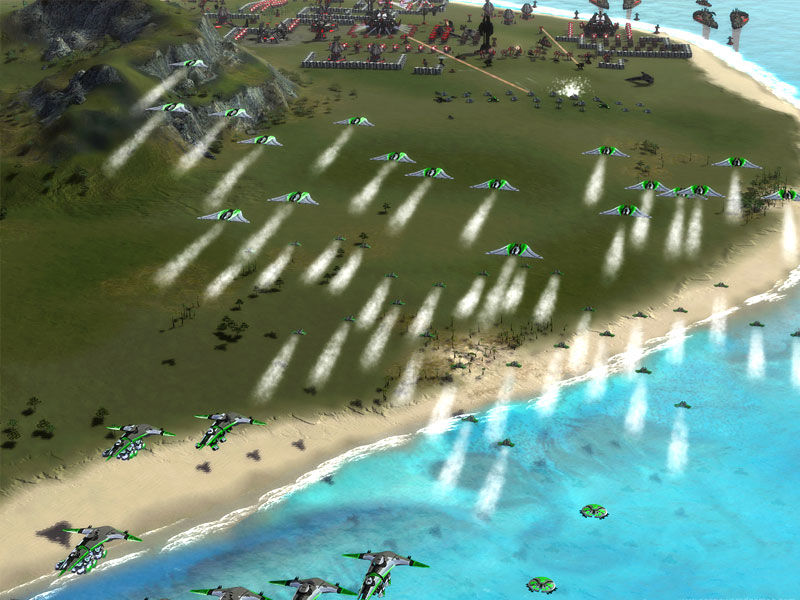
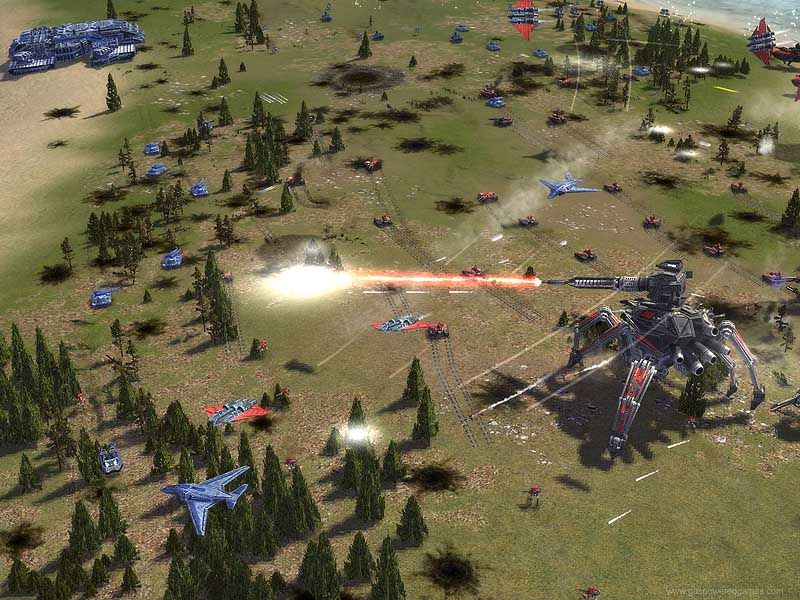
What makes it ache so deeply isn’t the size alone (though yes—huge scale, four playable factions, continents-spanning maps), nor the polish (“still looks great in 2026”). It’s the loneliness of command. You don’t rally troops with speeches—you calculate ballistic drift on a nuke launch, reroute power to a failing shield generator while three enemy Titans advance across tundra, watch your last experimental bomber vanish into a storm of flak—and feel, viscerally, the weight of survival as arithmetic. There’s no heroic music swelling at the climax. Just static, distant explosions, and the low hum of your quantum reactor holding on. It makes you think about entropy—not as theory, but as terrain. About how civilization doesn’t fall in one cataclysm, but in a thousand small failures of coordination, power, and time. It makes you feel small, yet responsible—not like a god, but like a last engineer in a dying observatory, calibrating instruments while the stars go dark.
That same emotional architecture pulses through Getter Robo: Armageddon, where survival isn’t about victory—it’s about crafting continuity from ruin. The mecha aren’t sleek tools; they’re jury-rigged, scarred, rebuilt from wreckage, echoing FA’s salvage-based economy and desperate base expansions across irradiated plains. Both treat space as hostile geometry—not backdrop, but pressure. And Gurren Lagann, for all its bombast, shares FA’s buried melancholy: beneath the spiraling energy and shouting lies the same truth—that humanity clings to meaning because extinction looms physically, not abstractly. When Kamina’s drill punches through the ceiling of the underground village, it’s not triumph—it’s relief, raw and trembling, mirroring the player’s gasp when their first quantum gate finally boots up mid-siege. Then there’s Knights of Sidonia, where every battle is fought in the shadow of irreversible loss—ships fracture, crews vanish silently, and tactics demand patience, precision, and crafting under duress. Its zero-G dogfights, governed by inertia and delayed response, feel kin to FA’s projectile physics: no instant hits, only consequence, calculation, and the sickening lurch when your prediction misses.
Who lives for this? Not the casual strategist who wants clean wins and tidy endings. It’s the person who replays the same skirmish map for six hours—not to win faster, but to understand the decay. The viewer who rewatches Gurren Lagann’s silent shot of Simon staring at the empty cockpit after the final battle, or who pauses The Ideon: Be Invoked not at the explosion, but at the quiet second before—when the bridge lights flicker, the comms cut, and everyone just stops talking. It’s the kind of person who finds beauty in a perfectly timed EMP burst that drops an entire enemy fleet mid-orbit, then sits in the silence afterward, listening to the hum of their own reactors, thinking: We’re still here. For now. They don’t crave spectacle—they crave substance. They want the weight of steel, the drag of light-speed lag, the exhaustion of rebuilding a sensor net from scrap while something ancient and certain moves toward them across the void. That’s the shared breath between Supreme Commander: Forged Alliance and these anime—not hope as promise, but as resistance, stubborn and precise, measured in milliseconds, megatons, and the quiet, unbroken hum of something still running.
→76 Anime That Match the Vibe

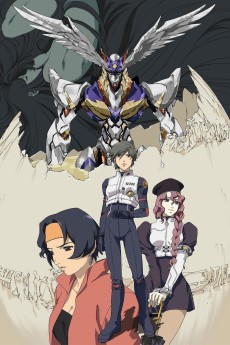
Ryoma Nagare’s grim return to the cockpit—haunted, imprisoned, then thrust into battle against resurrected horrors—mirrors the Forged Alliance’s desperate, late-war salvage operations where engineers jury-rig war machines from ruins. Unlike most mecha or RTS narratives, both commit fiercely to *Survival & Crafting*: every repaired Getter limb, every repurposed SCU chassis, feels like defiance carved from collapse. That shared grit—rooted in bodily trauma and industrial decay—makes their resonance startlingly intimate, not epic.

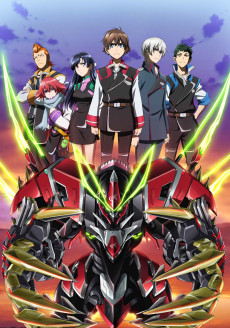
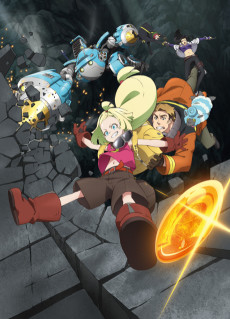
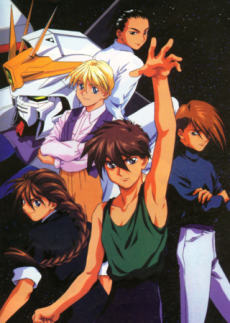
Simon’s trembling hand gripping the drill as he unearths Lagann mirrors the tense, resource-scarce opening of *Forged Alliance*, where engineers scavenge wrecked Titans amid radioactive ash—both root mecha power in desperate survival & crafting. Unlike most military sci-fi, neither glorifies war; Kamina’s “drill your way to the sky” ethos echoes the game’s defiant humanist resistance against overwhelming AI and entropy. This resonance in **Survival & Crafting** makes their shared hope feel earned, not escapist.
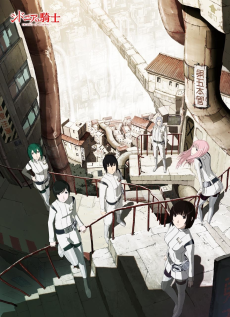
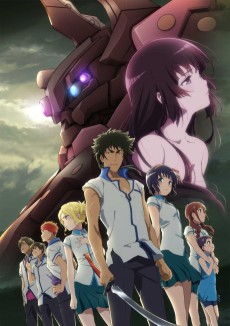
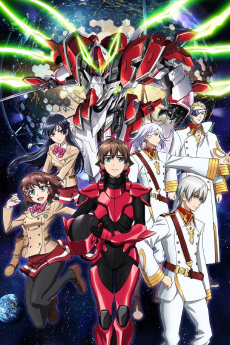
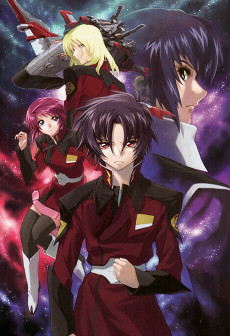
Desperation hums in the static of Forged Alliance’s crumbling command centers—where engineers jury-rig quantum reactors mid-battle—just as it pulses in Sidonia’s claustrophobic maintenance shafts, where Nagate repairs Gauna-scarred mecha with scavenged parts. Unlike most military sci-fi, both weaponize *Survival & Crafting*: every bolt tightened, every fleet formation adjusted, feels like staving off entropy itself. That shared tension—between human fragility and relentless, alien-scale threat—makes their resonance startlingly visceral, not just aesthetic.
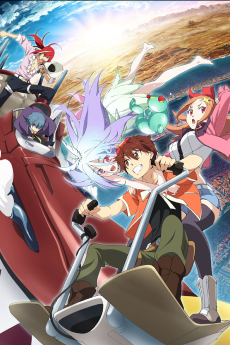
Connected through 3 aesthetic dimensions.
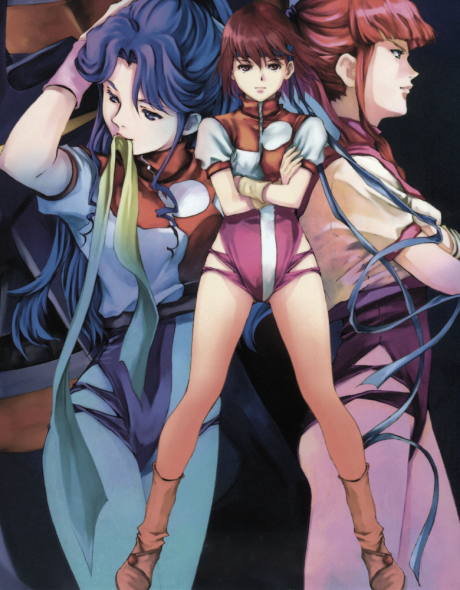
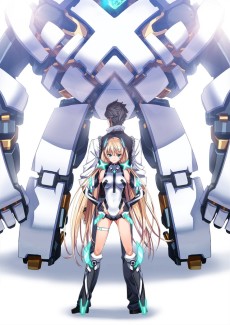
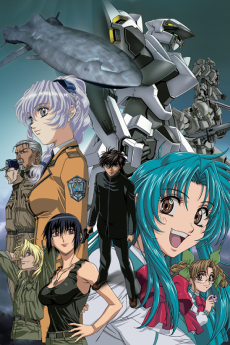
Gunbuster’s final sacrifice—Noriko launching herself into the black hole while screaming “I’m not a weapon!”—mirrors Forged Alliance’s desperate, last-stand tactical warfare across shattered star systems. Where Gunbuster frames mecha as extensions of human will and trauma, FA renders titanic experimental units like the Seraphim Titan as both salvation and burden in a dying galaxy. This resonance isn’t just aesthetic—it’s existential: both confront military sci-fi’s core paradox—that survival demands becoming what you fear most.

Connected through 2 aesthetic dimensions.
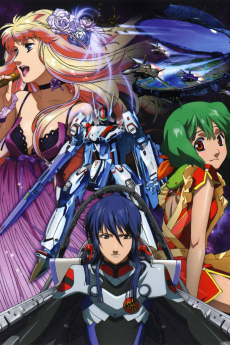
Amidst the shattered orbital habitats of Forged Alliance’s final campaign, humanity fights not for conquest—but survival against an existential void. Macross Frontier’s Vajra war mirrors this desperation: no grand ideology, just fragile colonies clinging to life while pilots like Alto sing amid collapsing fleets. Where tactical warfare demands cold calculus, both works fracture that precision with raw human vulnerability—music, romance, and mecha alike trembling on the edge of annihilation.
Connected through 3 aesthetic dimensions.
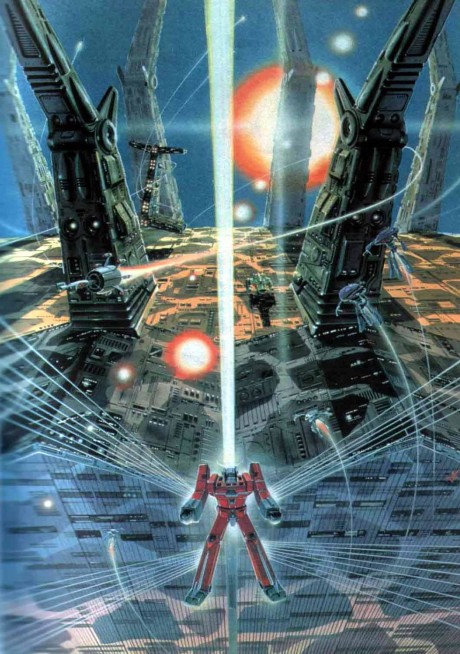
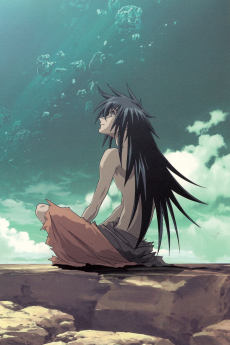
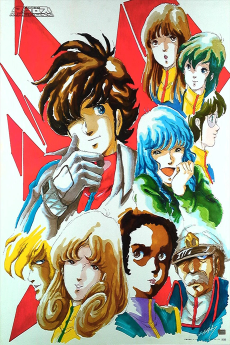
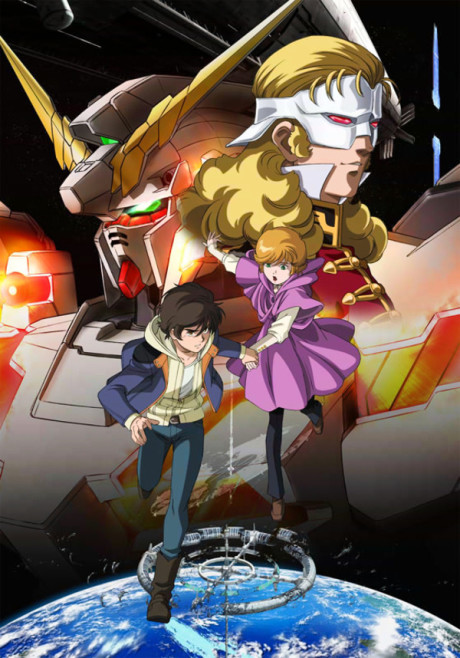
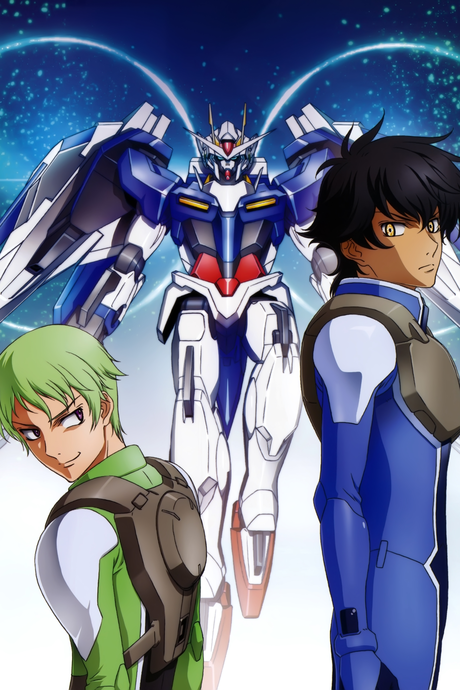
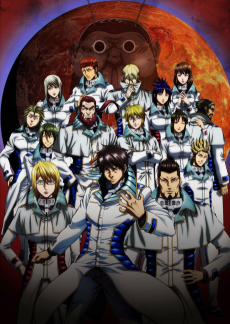
The Ideon’s final, apocalyptic invocation—where cosmic consciousness obliterates all matter—mirrors Supreme Commander’s “Black Sun” superweapon: both weaponize transcendence as annihilation. Where Forged Alliance frames tactical warfare 🎯 through fractured command networks and collapsing AI empires, *Be Invoked* renders mecha combat 🤖 as ritual sacrifice before an indifferent universe. That shared dread—not of defeat, but of meaning dissolving into scale—makes their resonance startlingly precise.
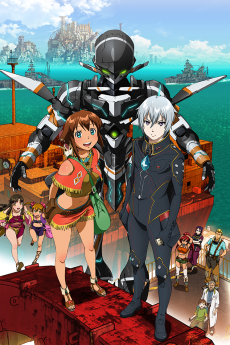
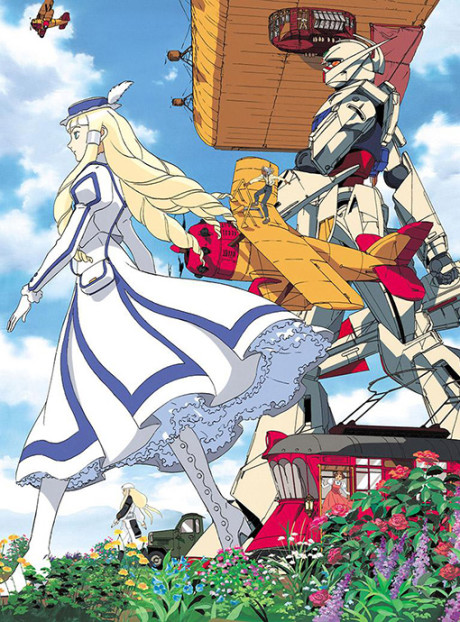
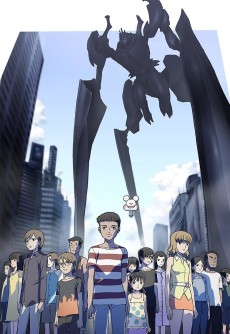
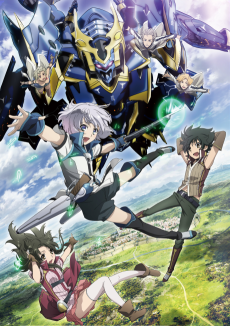
Lehm, the scarred AI core aboard Gargantia’s rusting fleet, hums with the same weary pragmatism as Supreme Commander’s experimental AIs—both forged in collapse, not conquest. Unlike most mecha narratives fixated on glory, their shared *Tactical Warfare* emerges from scarcity: salvaging wrecked titans in Verdurous’ ocean graveyards mirrors Forged Alliance’s desperate reclamation of fallen ACUs amid radioactive ruins. That quiet tension—between colossal machines and fragile human survival—is where their resonance lives, raw and unromantic.

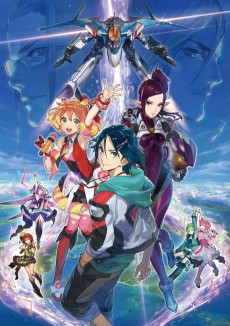
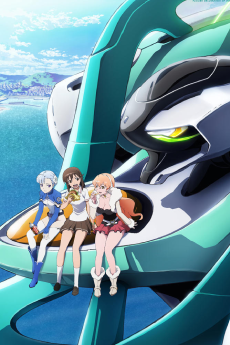
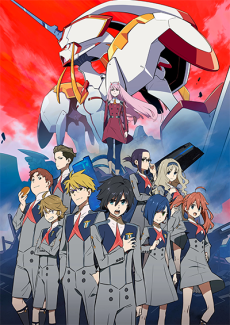

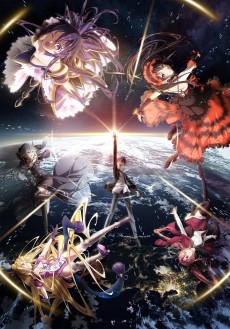



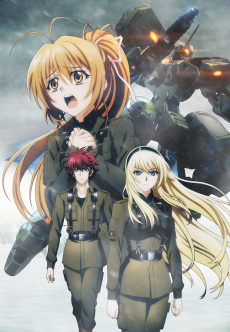

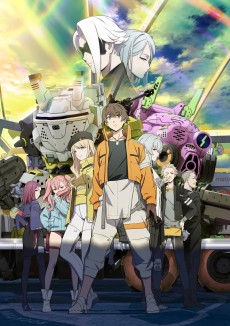

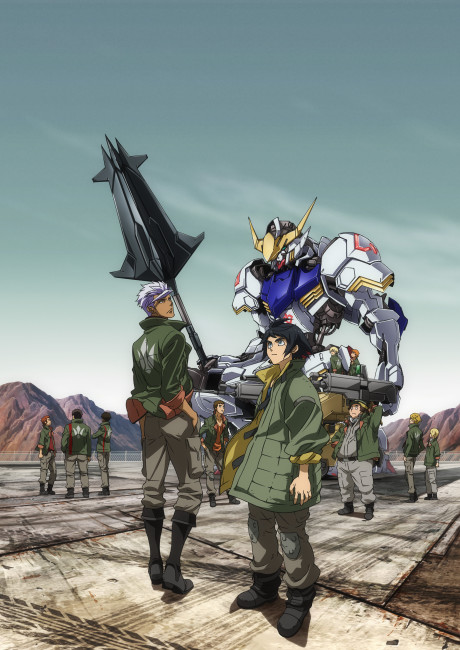

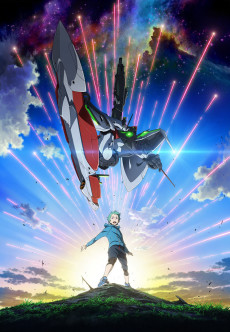









Match Dimensions Explained
❓Frequently Asked Questions
Why does Getter Robo: Armageddon match Supreme Commander: Forged Alliance so well?
Because both hinge on desperate, large-scale warfare against an overwhelming alien threat—Getter Robo’s Raimon Empire mirrors UE’s brutal, apocalyptic advance across ruined Earth, and the climactic battle where Ryoma pilots the Shin Getter against the Black Emperor’s fleet feels like a direct echo of Forged Alliance’s late-game superweapon duels. Plus, the game’s emphasis on physics-based projectile combat (like railgun barrages and gravity-driven mecha crashes) lines up perfectly with SC:FA’s realistic ballistic trajectories and terrain deformation.
Is there an anime adaptation of Supreme Commander: Forged Alliance?
No—there’s never been an official anime adaptation of SC:FA, but fans often say Knights of Sidonia *feels* like one: the Gauna invasion parallels UE’s sudden, existential assault, and Nagate’s arc—from isolated tech operator to fleet commander during the Battle of Sidonia—mirrors how SC:FA players evolve from managing a single ACU to coordinating dozens of experimental units across continents.
Gurren Lagann vs. The Ideon: Be Invoked—which is closer to Forged Alliance’s vibe?
The Ideon wins for tactical grit: while Gurren Lagann leans into over-the-top escalation and emotional catharsis, Ideon’s brutal attrition warfare—like the slow, costly siege of the Ideon’s shield systems under constant UE-style bombardment—matches SC:FA’s punishing resource management and unit loss consequences. And just like Forged Alliance’s ‘mass’ economy, Ideon’s power scaling is tied directly to energy draw from the planet itself—no free upgrades.
What’s the best anime like Supreme Commander: Forged Alliance if I want that ‘last stand on a broken world’ feeling?
Gargantia on the Verdurous Planet—it nails the post-civilization salvage aesthetic: Ledo piloting his Centimani in flooded ruins, jury-rigging weapons from ocean-floor wreckage, and slowly rebuilding infrastructure while facing off against the rogue AI ‘Fleet’ (a clear spiritual cousin to UE’s zealot-led machines). That sense of fragile hope amid total collapse? Exactly what SC:FA delivers when your last T3 engineer is repairing a damaged Quantum Gate under artillery fire.