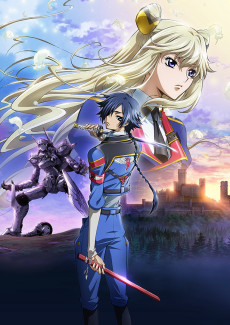
Code Geass: Akito the Exiled - The Wyvern Arrives
📺Anime Details
📝Editorial Analysis
The cold doesn’t just coat the ground in Code Geass: Akito the Exiled – The Wyvern Arrives—it seeps into the joints of the Lancelot Albion, freezes breath mid-exhale as Akito braces for impact, and hums through the cracked visor of a fallen soldier whose last transmission dissolves into static snow. That moment—when the Wyvern’s thrusters ignite not with triumph but exhaustion, when the camera lingers on frost forming on a bloodied helmet strap—is where the anime lives: not in victory, but in the weight of duty carried by bodies too young to bear it.
This isn’t war as spectacle. It’s war as resonance: the low-frequency vibration of armored footsteps echoing down a ruined cathedral corridor, the way royal insignia glint under artillery flares like broken promises, the quiet dread before a curse activates—not as power-up, but as violation. You don’t feel heroic here. You feel pressured, watched, measured—by command chains, by legacy, by the sheer physics of mecha that groan under their own tonnage. The politics aren’t debated in marble halls; they’re whispered in oxygen-starved cockpits, parsed through encrypted comms that cut out just as truth surfaces. There’s no clean line between pilot and weapon, between loyalty and coercion—only the cold, the static, and the silence after explosion.
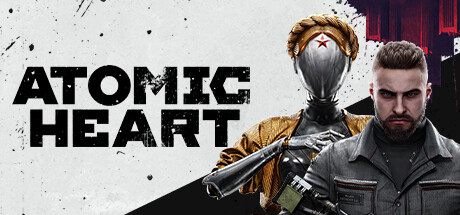
That same pressure-cooker atmosphere pulses through Atomic Heart, where mecha aren’t sleek tools but grotesque extensions of a collapsing ideology—twisted limbs fused with clockwork, soldiers reassembled from scrap and sinew. Its body horror & occult dimension mirrors Akito’s curse: not a gift, but a corruption that reshapes flesh and identity under institutional control. When the player stumbles past a hallway of smiling, severed mannequin heads in Atomic Heart, it echoes the anime’s visual grammar—order enforced through unnatural stillness, authority wearing a grin too wide, too fixed. And the score (78) isn’t just high—it’s earned in the shared dread of systems that demand obedience even as they unravel.
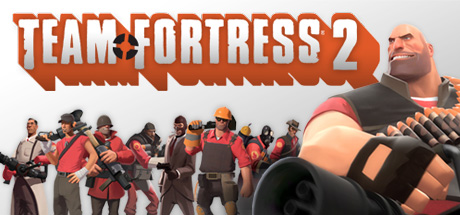
Then there’s Team Fortress 2, absurd on surface, razor-sharp underneath. Its tactical warfare unfolds through nine distinct classes—each a walking contradiction of role, personality, and vulnerability—just like Akito’s squad: disciplined yet fractured, loyal yet haunted, all operating under rigid doctrine that barely conceals desperation. The player review nails it: “The community is gay, racist, sexist, gay, artistic, gay, furries, and love men.” That chaotic, contradictory, fiercely alive energy? It’s the emotional inverse of Akito’s austerity—but the same pulse: people clinging to identity, humor, and connection inside machinery designed to erase them. The hats? Not frivolous—they’re armor of selfhood, tiny rebellions against uniformity, exactly like Leila’s scarf or Shin’s unspoken grief worn like a second uniform.
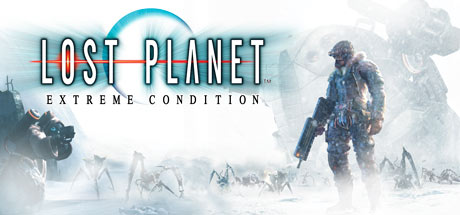
And Lost Planet™: Extreme Condition—another 76-score match—lands with the physicality Akito embodies: humans driven to the brink on ice-covered wastelands, fighting gargantuan Akrid while dodging Snow Pirates’ ambushes. That frozen hellscape isn’t backdrop—it’s antagonist, shaping every tactical choice, every exhausted reload, every time a pilot staggers up after a crash only to see the horizon tilt under blizzard winds. The player’s disappointment about Colonies Edition fixes? It mirrors the anime’s unresolved tension—the sense that systems are broken, not just flawed, and survival hinges on improvisation, not doctrine. Both ask: what does courage look like when your boots are frozen to the ground and your mecha’s hydraulics scream?
Who feels this? Not the casual viewer who wants clean arcs or easy wins. It’s the one who replays the scene where Akito’s hand trembles before he pulls the trigger—not from fear, but from recognition: he knows the cost, and pulls anyway. It’s the player who spends hours in Supreme Commander, watching continents burn across a minimap, feeling the scale of futility and resolve in equal measure—not because they love big battles, but because they recognize the gravity of choice when every unit represents a life already spent. They’re drawn to stories where mecha aren’t toys or trophies, but extensions of trauma, where military precision masks moral fracture, and where the most powerful thing isn’t a superpower—it’s the silence between orders, the breath before the curse takes hold, the weight of staying upright when the world insists you fall.
🎮5 Games That Match the Vibe
Match Dimensions Explained
❓Frequently Asked Questions
Why does Atomic Heart match Code Geass: Akito the Exiled so well despite no mecha piloting?
Because both lean hard into surreal, high-stakes military sci-fi with oppressive authoritarian regimes and body horror undertones—like Akito’s psychic trauma mirroring P-3’s grotesque biomechanical mutations. The eerie, stylized Soviet-futurist world of Atomic Heart (with its sentient robots and warped biology) echoes the same tonal dread as the Euro-British occupation in Akito, especially during scenes like the Wyvern’s first deployment amid snowbound ruins.
Is there a Code Geass: Akito the Exiled game adaptation?
No—there’s never been an official video game adaptation of *Akito the Exiled*. The closest matches are tactical or large-scale sci-fi war games that capture its vibe: *Supreme Commander* nails the geopolitical weight and mecha-heavy warfare of the Holy Britannian Empire’s campaigns, while *Lost Planet: Extreme Condition* mirrors Akito’s icy, desperate frontline combat against overwhelming alien (or imperial) forces—think the frozen battlefields of Kyoto and the Akrid’s hulking presence echoing the Wyvern’s terrifying scale.
How does Supreme Commander compare to Lost Planet: Extreme Condition for Code Geass fans?
If you love Akito’s grand strategy and ideological warfare—like Lelouch’s chess-like command from afar—*Supreme Commander* delivers with its massive RTS battles, faction-driven doctrine, and ‘Infinite War’ lore that feels ripped from Britannia’s century-long conquests. But if you’re hooked on Akito’s visceral, close-quarters survival—like his solo Wyvern sortie through blizzard-choked ruins—*Lost Planet* is the pick: grappling hooks, thermal-based resource management, and fighting colossal Akrid in frozen wastelands hit that same isolated, high-stakes desperation.
What’s the best game like Akito the Exiled for that cold, lonely, morally gray wartime vibe?
Go straight to *Lost Planet: Extreme Condition*—it’s got the desolate ice fields, the ragged human resistance scraping by against impossible odds, and that haunting quiet between explosions, just like Akito’s solo missions in occupied Kyoto. The way you scavenge thermal energy while dodging Snow Pirates or Akrid mimics Akito’s resource-scarce, emotionally raw struggle—no flashy heroics, just survival, loyalty, and consequence, all under a grey, snow-laden sky.