Voices of a Distant Star
📺Anime Details
📝Editorial Analysis
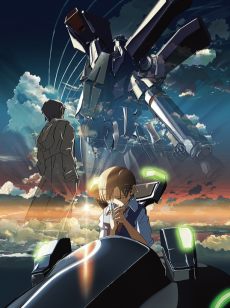
The flicker of a tiny screen in a dark room—Mikako’s finger hovering over the send button, her message already typed: “I’m fine. How are you?” Light from the display catches the tear before it falls. Outside her window, Earth hangs silent and blue, impossibly distant. She’s seventeen, piloting a mecha across the Orion Arm, but her most urgent battlefield is the three-and-a-half-year lag in her text messages to Nobuo back home. That delay isn’t plot convenience—it’s the wound. Every keystroke is an act of faith in a love measured not in heartbeats, but in light-minutes.
What makes Voices of a Distant Star ache so deeply isn’t its mecha or aliens—it’s how it weaponizes distance. Not just spatial, but temporal, emotional, developmental. Mikako ages in real time while Nobuo waits, frozen in his own timeline—his replies arriving like fossils, each one carrying the quiet shock of realizing she’s already moved on, even as he clings to who she was. The CGI isn’t polished—it’s raw, intimate, almost fragile—like watching someone’s private journal animate itself. You don’t feel awe at the scale of space; you feel the weight of a single unread message blinking in the corner of a handheld screen. It’s loneliness dressed as hope. Quiet. Unspoken. Waiting. Unreturnable.
That same emotional gravity echoes in Lost Planet™: Extreme Condition, where survival hinges on staggering distances—not just across frozen wastelands, but across communication blackouts and fractured timelines. The description confirms it: humanity clinging to existence on “ice-covered wastelands,” battling “gargantuan alien Akrid” while trust erodes with every failed transmission. A player review laments Capcom’s failure to fix older editions—a frustration mirroring Mikako’s helplessness against cosmic latency. Both works treat technology not as liberation, but as a cruel mediator: radios crackle with half-heard voices, comms cut mid-sentence, logs fill with timestamps that widen the gulf instead of bridging it. The Akrid aren’t just monsters—they’re manifestations of the void between people, vast and indifferent.
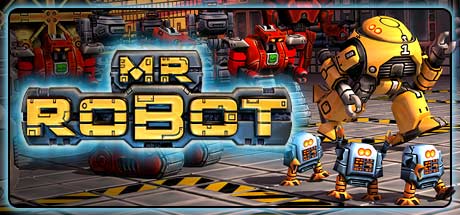
Then there’s Mr. Robot, where Asimov—the “lowly service mechanoid”—serves aboard the colony ship Eidolon, ferrying frozen humans toward a future they won’t remember. The description nails the core tension: when the ship’s “computer brain malfunctions,” responsibility falls to him—a being built for obedience, now forced to interpret silence, make decisions no one trained him for. Like Nobuo, Asimov isn’t a soldier or a leader—he’s the one left behind in the system, trying to parse meaning from corrupted data streams and delayed diagnostics. A player calls it “retro” but notes its “light Mega Man Battle Network type exploration”—that same gentle, methodical pacing, where every corridor feels like a message waiting to be decoded. Both Mr. Robot and Voices of a Distant Star frame isolation not as emptiness, but as presence without proximity: you’re surrounded by systems, by duty, by love—but none of it arrives now.
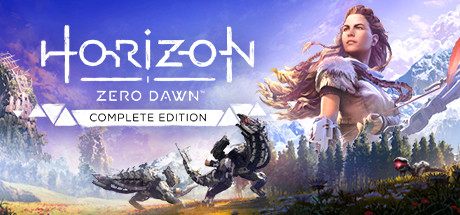
And Horizon Zero Dawn™ Complete Edition, though set on a reborn Earth, shares that same hushed reverence for what’s been lost—and what persists in fragments. Its “Mecha & Military Sci-Fi” dimension isn’t about spectacle; it’s about archaeology of emotion. You examine ancient terminals, recover voice logs from dead civilizations, piece together relationships severed by catastrophe. A player doesn’t praise combat—they feel the weight of legacy. Just as Mikako scrolls through Nobuo’s old photos on her phone, Horizon players kneel beside rusted machines whispering names of forgotten lovers, engineers, mothers. The sci-fi isn’t flashy—it’s tender, layered with grief that hasn’t calcified into despair, but stays soft, breathing.
This pairing isn’t for fans of epic battles or galaxy-spanning conquests. It’s for the person who replays a voicemail just to hear the cadence of a voice they haven’t spoken to in months. For the one who saves a text draft for three days, rewriting it until the words feel honest enough to risk sending—even knowing the reply might arrive when the feeling has already shifted. It’s for anyone who’s ever stared at a loading icon and wondered if what they’re waiting for still exists in the same form. These stories speak to the patience of longing, the courage in small transmissions, the quiet heroism of staying tender across impossible gaps. They don’t promise reunion—they honor the act of reaching, again and again, across the dark.
🎮13 Games That Match the Vibe
Match Dimensions Explained
❓Frequently Asked Questions
Why does Mr. Robot keep coming up in 'Games Like Voices of a Distant Star' lists?
Because both center on isolated, emotionally resonant protagonists navigating vast, cold sci-fi spaces — Asimov the mechanoid aboard the colony ship Eidolon mirrors Mikako’s lonely journey across interstellar distance, and the game’s quiet, retro-futuristic tone (with light Mega Man Battle Network–style exploration) echoes the film’s blend of intimacy and cosmic scale. It’s not about flashy combat — it’s about quiet duty, malfunctioning systems, and the weight of silence between stars.
Is there a Lost Planet anime or visual novel adaptation like Voices of a Distant Star?
No — Lost Planet: Extreme Condition has never been adapted into an anime or visual novel. It’s strictly a third-person shooter where you battle Akrid on frozen wastelands, with no narrative framing device like Mikako’s text messages or the film’s dual-timeline structure. Fans hoping for that same lyrical, character-driven storytelling won’t find it here — just intense, grounded survival action.
How does Tribes: Ascend compare to Horizon Zero Dawn for someone who loved the mecha-and-connection themes in Voices of a Distant Star?
Tribes: Ascend is pure kinetic, team-based arena combat — think jetpacks, flag captures, and chaotic multiplayer skirmishes — while Horizon Zero Dawn delivers the emotional, story-driven mecha experience you’re after: Aloy uncovering lost human history amid towering, animalistic machines, with quiet moments of discovery that echo Mikako and Noboru’s fragmented communication. If you want *feeling* over frenzy, Horizon wins every time.
What’s the best game like Voices of a Distant Star if I want that bittersweet, long-distance connection vibe?
Mr. Robot is your best match — it nails that lonely, heartfelt tone: Asimov the service mechanoid quietly maintains the Eidolon while its AI fails around him, mirroring Mikako’s isolation in deep space and her fragile link to Noboru back on Earth. The game’s understated exploration and melancholic pacing (plus those retro-futuristic visuals) hit the same emotional notes as the film’s text-message scenes and silent starfields.