
Guilty Crown
Shuu's entire world was shattered after a meteorite crashed into Japan, unleashing the lethal Apocalypse Virus. The chaos and anarchy born of the outbreak cost Shuu his family and reduced him to a timid, fearful shell of the boy he'd once been. His life took another unexpected turn after a chance encounter with the stunning pop star, Inori. This mysterious beauty introduced Shuu to the King's Right Hand: a genetic mutation that allows him to reach into hearts of mortals and turn them into weapons.
Shuu finds himself caught in the crossfire between those who desperately seek his newfound strength. On one side lurks a clandestine government agency, and on the other, Inori and the spirited band of rebels known as Funeral Parlor. The choice is Shuu's to make - and the world is his to change.
(Source: Funimation)
📺Anime Details
📝Editorial Analysis
The rain in Shinjuku doesn’t fall—it bleeds. Grey ash swirls with downpour as Shuu stumbles through rubble-strewn streets, his breath ragged, fingers trembling not from cold but from the memory of pulling a sword from someone’s chest—not his own, not by choice, but because the King’s Right Hand demanded it. That moment isn’t spectacle. It’s silence after the scream: the hollow click of a rifle bolt, the static hiss of a broken broadcast tower still looping Inori’s voice, the way her pop song echoes off collapsed overpasses like a ghost refusing to fade. This is Guilty Crown—not as plot, but as pressure: the suffocating weight of inherited power, of love weaponized, of a world where every heartbeat feels borrowed and every choice leaves a scar you can’t unsee.

What makes Guilty Crown ache so deeply isn’t its mecha or its pandemic backdrop—it’s how it treats agency like shattered glass. You watch Shuu gain power only to lose control of himself. The Apocalypse Virus isn’t just biological decay; it’s moral erosion made visible in coughed blood and flickering quarantine lights. The dystopia isn’t distant or abstract—it’s urban intimacy: cramped apartments wired with surveillance, school rooftops turned into sniper perches, love letters passed between barricades. It makes you feel claustrophobic hope—the kind that tightens your throat when Inori sings mid-battle, not because it’s pretty, but because beauty persists despite the rot, and that persistence hurts more than despair ever could.
That same emotional DNA hums in BioShock™, whose description calls it a “shooter unlike any you’ve ever played,” loaded with weapons and tactics “never seen”—but the player review cuts deeper: “one of the most revolutionary games ever! genuinely changed the gaming world…” That revolution wasn’t about guns or graphics. It was about choice without consent: plasmids that warp your body while whispering lies, Little Sisters you’re forced to harvest or save, a city built on utopian ideals that curdle into fascism. Like Shuu pulling powers from hearts he barely knows, Jack’s genetic upgrades are violations disguised as gifts. Both demand you ask—not what you’ll do, but who you become when survival demands you betray your own soul. The dread isn’t in the jump scares or virus outbreaks—it’s in realizing the monster isn’t outside the wall. It’s holding the knife. And it’s you.
Then there’s Supreme Commander, described as a war waged for “a thousand years” where “there can be no room for compromise: their way is the only way.” Its player review nails the resonance: “The scale of the battles…” Not “epic,” not “cool”—scale. Because Guilty Crown’s tragedy isn’t in grand explosions—it’s in how tiny, personal collapses accumulate into irreversible ruin. Shuu’s first use of the Right Hand isn’t against an army; it’s against a classmate who trusted him. Likewise, Supreme Commander doesn’t glorify war—it renders it geologic: continents shift under artillery fire, factories rise and burn in real time, and victory feels less like triumph and more like exhaustion carved into terrain. Both understand that dystopia isn’t born in a day. It’s assembled—brick by brick, decision by decision—until the map you’re fighting on no longer resembles the one you remember.
Even Team Fortress 2, with its chaotic nine-class mayhem and review calling it “fun and chaotic,” shares something quieter beneath the hats and slapstick: the weight of role. Each class is locked into identity—Heavy’s loyalty, Spy’s deception, Medic’s god complex—all performed relentlessly, even absurdly. Shuu isn’t just given the King’s Right Hand; he’s cast as king, then betrayed by the script. His romance with Inori isn’t tender—it’s scripted performance, a pop idol singing rebellion while her body is weaponized, her autonomy erased by the very movement she symbolizes. TF2’s satire of militarized identity mirrors Guilty Crown’s horror: what happens when your heart isn’t yours to give, but a resource to be deployed?
This pairing isn’t for fans of “cool powers” or “sad endings.” It’s for the ones who pause mid-episode when Shuu stares at his reflection in a cracked subway window—not because he looks broken, but because he recognizes the boy behind the glass and hates him. It’s for players who linger in Rapture’s flooded halls long after the objective is done, tracing graffiti on walls that read “Would you kindly?” It’s for people who don’t want catharsis—they want resonance: that shiver when fiction names the quiet terror of living inside systems too large to escape, yet too intimate to ignore. Who love stories where love and violence wear the same face, and the most devastating line isn’t shouted—it’s whispered, off-mic, as the screen fades to static.
🎮35 Games That Match the Vibe
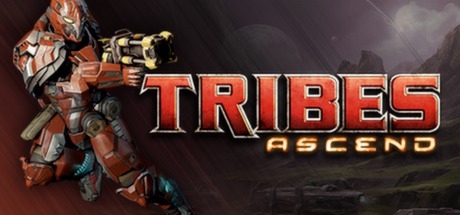
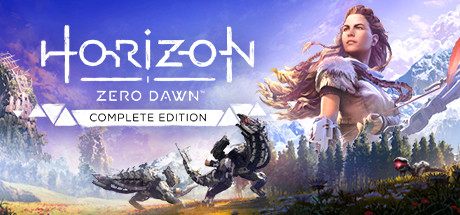
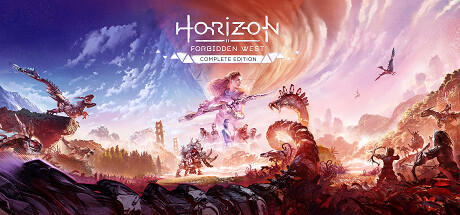
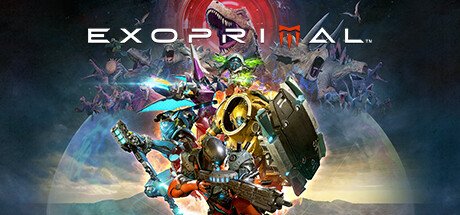





Match Dimensions Explained
❓Frequently Asked Questions
Why does BioShock keep coming up in 'games like Guilty Crown' lists?
Because both lean hard into dark, philosophical dystopias where ideology warps humanity—Guilty Crown’s GHQ occupation and BioShock’s Rapture echo each other in tone and moral decay. You’ll feel that same gut-punch when you first see Fontaine’s betrayal mirrored in Gai’s manipulation, and the Plasmid-infused chaos of BioShock’s combat (revolvers, tonics, environmental traps) matches Guilty Crown’s high-stakes, emotionally charged action sequences.
Is there a Guilty Crown anime game adaptation?
No official Guilty Crown game adaptation exists—but Space Quest™ Collection nails that off-kilter, self-aware sci-fi energy fans love, with its twisted humor and 'do anything, consequences be damned' freedom. It’s not canon, but if you’re craving that blend of absurdity, mecha-tinged dystopia, and narrative unpredictability, it scratches the same itch in a totally different way.
How does Supreme Commander compare to Tribes: Ascend for Guilty Crown fans?
Tribes: Ascend gives you that kinetic, high-speed military sci-fi rush—think Shu’s first airborne battle with the Void Genome—but Supreme Commander trades speed for scale and weight: imagine commanding entire mechanized legions across continents, like watching the U.S. Army’s assault on Tokyo unfold from orbit. Both hit Mecha & Military Sci-Fi hard, but Supreme Commander leans into strategic gravity while Tribes is pure adrenaline-fueled skirmish chaos.
What’s the best Guilty Crown-like game if I want that oppressive, politically tense cyberpunk vibe?
BioShock™ is your strongest match—it’s got the same suffocating atmosphere, morally bankrupt authority figures (like Andrew Ryan vs. GHQ), and a world where ideology bleeds into architecture and gameplay. The moment you step into Rapture’s decaying Art Deco halls, hearing distant Big Daddy groans and distorted radio broadcasts? That’s the exact emotional claustrophobia Guilty Crown builds around Tokyo’s quarantine zones.