
Love, Chunibyo & Other Delusions: Depth of Field - Ai to Nikushimi Gekijou
Specials bundled with all the BD/DVD volumes.
📺Anime Details
📝Editorial Analysis
The flicker of a classroom projector—dust motes swirling in the beam—as Rikka’s hand trembles mid-air, sketching not equations but sigils onto her notebook margin. Outside, the bell rings, ordinary and insistent. Inside, the air thickens: not with tension, but with weight—the quiet, breath-held gravity of a girl clinging to meaning she’s built herself, brick by delusional brick, while war machines loom just beyond the school gates. That moment isn’t fantasy escaping reality. It’s reality bending, softly, under the pressure of adolescent feeling so intense it demands its own cosmology.

What makes Love, Chunibyo & Other Delusions: Depth of Field - Ai to Nikushimi Gekijou vibrate at this particular frequency isn’t its mecha or its war—it’s how those elements are muffled. The robots aren’t sleek titan-slayers; they’re clunky, weathered, CGI-rendered hulks lumbering past cherry blossoms like tired teachers shuffling between classes. The battlefield isn’t distant—it bleeds into hallway chatter, into lunchbox conversations, into the way a boy hesitates before holding a girl’s hand, his pulse louder than any artillery report. It makes you feel tenderly disoriented: like your heart is outpacing your logic, like grief and infatuation wear the same uniform, like every small gesture carries consequence—not because the world is ending, but because you are, in real time, becoming someone new.
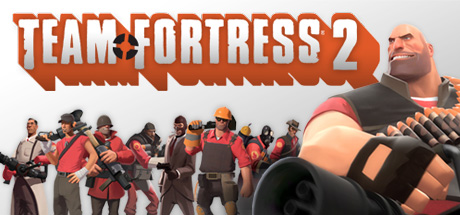
That emotional DNA pulses strongest in Team Fortress 2, where nine wildly distinct classes each wield tactical abilities and personalities—not as flavor, but as identity. Just like Rikka’s “Dark Flame” persona isn’t costume; it’s armor, language, lifeline. And the player review nails it: “The community is gay, racist, sexist, gay, artistic, gay, furries, and love men.” Chaotic? Yes. Contradictory? Absolutely. But alive—a messy, shouting, glitter-glued ecosystem where sincerity and absurdity coexist without apology. That’s the same air Depth of Field breathes: no irony shield, no winking fourth wall—just kids deploying delusion like doctrine, because feeling matters more than facts.
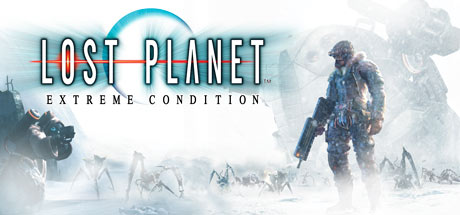
Then there’s Lost Planet™: Extreme Condition, where humanity fights extinction on ice-covered wastelands against gargantuan alien Akrid—and treacherous Snow Pirates. Not clean sci-fi spectacle, but survival grit: frozen breath, cracked visors, machinery groaning under strain. The player review laments unpatched flaws—“Capcom still hasn’t fixed Colonies Edition”—but that frustration mirrors the anime’s texture: things don’t work right. The mecha stutter. The war feels half-remembered, half-dreamed. There’s exhaustion beneath the bravado, a sense that everyone’s improvising, cold and scared, yet still showing up—to class, to battle, to love—because stopping would mean dissolving.
And Supreme Commander, where three forces wage “The Infinite War” for millennia, believing their way is the only way. Its scale is staggering—but what resonates isn’t the grand strategy, it’s the relentless conviction. Like Rikka insisting her curse is real, or Yuuta refusing to fully dismantle her myth, even as he holds her hand. The player review says it outright: “The scale of the battles…”—then trails off, awed. Because it’s not about victory. It’s about continuance. About choosing your side—not in ideology, but in emotional allegiance. In Depth of Field, love and hatred aren’t opposites—they’re both devotions, equally loud, equally irrational, equally necessary to survive the thaw.
This pairing sings loudest for the late-night rewatcher who keeps a notebook full of half-sketched sigils beside their laptop, for the player who queues into TF2 not for rank, but for the voice-chat chaos of strangers yelling nonsense in perfect sync, for the one who boots up Supreme Commander just to watch a single experimental tank trundle across a frozen map at 3 a.m., knowing no one else is watching—but feeling seen anyway. For people who know that the most devastating wars aren’t fought with lasers or tanks, but in the silent space between “I love you” and “I’m scared”—and who need stories, games, and moments that treat that space with sacred, ridiculous, aching seriousness.
🎮7 Games That Match the Vibe

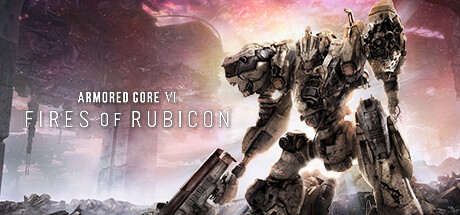
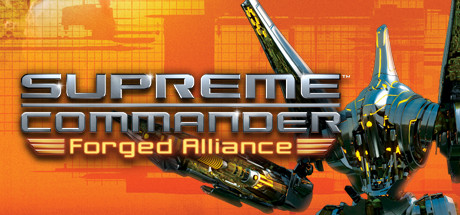
Match Dimensions Explained
❓Frequently Asked Questions
Why does Love, Chunibyo & Other Delusions: Depth of Field feel so different from Team Fortress 2 even though they’re matched?
Great question — it’s all about *tonal contrast within shared dimensions*. Both tap into 'Mecha & Military Sci-Fi' and 'Tactical Warfare', but TF2 leans hard into absurdist, class-based chaos (think Heavy’s minigun spam or Spy’s disguises) while Depth of Field uses those same frameworks for surreal, emotionally charged delusion-play — like Rikka’s 'Wicked Eye' visual effects layered over real-world Tokyo streets. The match isn’t about genre overlap; it’s about how both weaponize tactical framing to explore identity — one through satire, the other through teenage fantasy.
Is there a Love, Chunibyo & Other Delusions anime game adaptation for PC?
No official PC game adaptation exists — *Depth of Field* is the only canon video game release, and it’s Japan-exclusive (PS4/PS Vita only, no Steam or PC port). That said, fans often cite *Team Fortress 2* as a spiritual cousin because of its over-the-top character archetypes and self-aware absurdity — like how TF2’s Medic’s 'Ubercharge' echoes Rikka’s dramatic 'Dark Flame' declarations, both turning mundane moments into theatrical, high-stakes spectacle.
How does Lost Planet: Extreme Condition compare to Depth of Field in terms of emotional tone?
They’re polar opposites emotionally — *Lost Planet* is grim survivalism (think protagonist Wayne battling Akrid in blizzards, losing limbs, barely clinging to hope), while *Depth of Field* is tender, awkward adolescence wrapped in glittery delusion (like Yūta trying to ground Rikka’s 'Wicked Eye' fantasies with quiet, patient realism). Yet both use 'Mecha & Military Sci-Fi' scaffolding — Lost Planet’s powered armor vs. Depth of Field’s stylized 'battle aura' overlays — to externalize inner stakes: one fights extinction, the other fights growing up.
What’s the best game like Depth of Field if I want that bittersweet, quietly hopeful vibe?
Go straight to *Supreme Commander: Forged Alliance* — not for the mechs, but for its haunting, elegiac pacing and fragile hope amid ruin. Like when Yūta watches Rikka sleep after a meltdown, the game mirrors that stillness: massive RTS battles slow to deliberate, almost meditative scale, with factions rebuilding amid ash and snow. Player reviews even call it 'bitter memory' made playable — matching Depth of Field’s core mood: love persisting in the cracks of collapse.