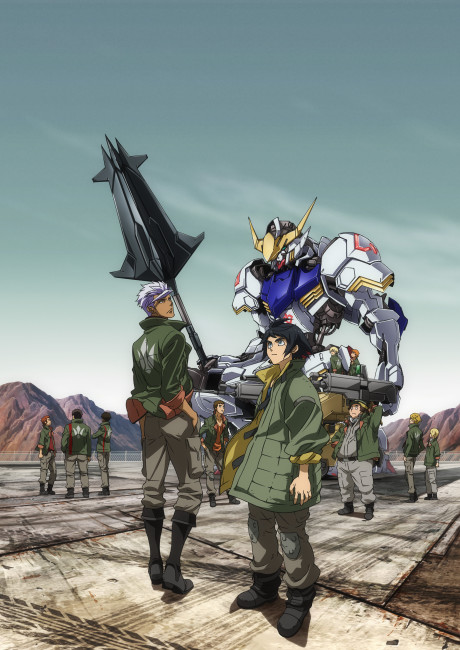
Mobile Suit GUNDAM Iron Blooded Orphans
300 years after a great conflict between Earth and Mars known as the "Calamity War," a woman named Kudelia sets out on a journey to Earth to speak for the independence of the Martian city of Chryse, which is under the control of the Earth government. Escorting her is the private security company CGS members Mikazuki Augus and Orga Itsuka. When a group named Gjallarhorn attacks CGS and Kudelia, Orga sees this as a chance to rebel against CGS and launch a coup. Mikazuki and Orga are thrust into a new conflict. To fend off Gjallarhorn, Mikazuki rides an old mobile suit from the Calamity War, powered by a nuclear reactor, the Gundam Barbatos.
(Source: Anime News Network)
📺Anime Details
📝Editorial Analysis
The smell of burnt hydraulic fluid and ozone hangs thick in the air as Mikazuki Augus staggers upright inside his battered Gjallarhorn-spec Graze, one arm already severed at the shoulder, blood dripping onto the cockpit’s cracked display—Kudelia’s voice crackling over comms, not pleading, but naming him: “Mikazuki. Not a weapon. Not a tool. A person.” That moment isn’t catharsis—it’s fracture. A single breath where the body remembers it’s flesh, not steel, and the war hasn’t ended—it’s just changed its grammar.

What makes Mobile Suit GUNDAM Iron Blooded Orphans ache so deeply isn’t its mecha scale or political scheming—it’s the weight of unchosen loyalty. This is a world where childhood was erased by the Calamity War, where “found family” isn’t warmth—it’s a covenant written in shared trauma and enforced by swordplay, not sentiment. You don’t feel hope here; you feel resistance to collapse. Every handshake is tactical. Every vow is provisional. Even the sunlight on Mars’ rust-colored plains feels thin, like it’s been rationed. It’s dystopia not as spectacle, but as texture: the grit under fingernails, the way Orga’s laugh cuts short when he sees a child wearing CGS insignia, the quiet horror of realizing your own body has been optimized for war before you knew what mercy looked like.
That emotional gravity finds echoes—not in games that look like IBO, but in those that replicate its moral exhaustion. Tribes: Ascend, for all its “mindless fun” reputation, mirrors IBO’s brutal physicality: movement isn’t graceful—it’s costly, momentum-based, punishing misjudgment with instant, disorienting death. Its “Action Spectacle” dimension isn’t about flash—it’s about the consequence of speed, just like Mikazuki’s hammer strikes: each swing risks destabilizing his own frame. The player review admits it “could have been expanded”—and that’s precisely IBO’s tragedy: characters straining against systems too vast to overhaul, running full-tilt toward futures they’re never quite allowed to reach.
Then there’s NieR:Automata™, where androids 2B, 9S, and A2 fight machines in a world already lost. Its “Mecha & Military Sci-Fi” and “Cyberpunk & Dystopia” dimensions sync with IBO’s core tension: bodies built for war, forced to ask what remains when the mission ends? The player review’s haunting line—“We’re trapped in a never-ending spiral of life and death”—is Orga’s final command, Mikazuki’s silent nod, Kudelia’s speech delivered not to ears, but to empty seats in a chamber built on exploitation. Both works treat identity as battlefield terrain: not who you are, but who you refuse to become mid-collapse.
And BioShock™, though set underwater instead of on Mars, shares IBO’s suffocating political architecture. Its “Political Thriller” and “Cyberpunk & Dystopia” dimensions aren’t backdrop—they’re architecture. Rapture’s decay mirrors Chryse’s brittle independence: both built on ideologies that curdle into control, both revealing freedom as a negotiation between oppressor and oppressed. The player review calls it “revolutionary”—not for its guns, but for making ideology visceral, just as IBO makes politics bodily: every bullet fired by CGS is funded by Earth’s bureaucracy; every rebel act is priced in orphaned lives.
This pairing isn’t for fans of clean victories or heroic arcs. It’s for the ones who replay the same trench sequence in Lost Planet™: Extreme Condition, not to win—but to feel the Akrid’s roar vibrate through the controller, to sit with the silence after the snow stops falling, to recognize that survival isn’t triumph—it’s the slow, stubborn refusal to let your name be erased from the roster. It’s for viewers who flinch when Mikazuki’s prosthetic hand whirs to life—not because it’s unnatural, but because it remembers the weight of a real one. For players who pause BioShock’s audio diaries not to gather lore, but to hear the tremor in a scientist’s voice as she justifies her own dehumanization. For anyone who’s ever held their breath, waiting—not for rescue, but for proof they’re still there, underneath the armor, the rank, the rust.
🎮75 Games That Match the Vibe


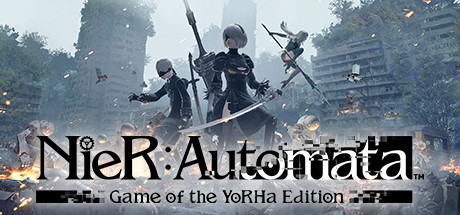















Match Dimensions Explained
❓Frequently Asked Questions
Why does Tribes: Ascend feel so similar to Iron Blooded Orphans' mobile suit battles?
Because both emphasize high-speed, momentum-based combat with jetpack-assisted movement and large-scale battlefield awareness — just like Mikazuki’s Gjallarhorn sliding across the desert or Atra’s agile skirmishes in the Argo. Tribes: Ascend nails that same kinetic rush with its ski-and-jet mechanics, team-based objective play, and visual spectacle (think orbital strikes and EMP bursts), all wrapped in that gritty military sci-fi + dystopian aesthetic reviewers praised for its 'mindless fun' intensity.
Is there a Gundam Iron Blooded Orphans game adaptation?
No — there’s never been an official IBO game adaptation, despite how perfectly it fits the mecha & military sci-fi niche. Fans often reach for NieR:Automata instead, since it shares IBO’s emotional weight and war-torn worldbuilding: 2B and 9S’ fractured loyalties echo Orga and Mikazuki’s bond, and the ruined cityscapes of YoRHa mirror Tekkadan’s struggle in the post-Advent era — all while delivering that same visceral, action-spectacle mecha combat.
NieR:Automata vs Lost Planet: Extreme Condition — which is closer to Iron Blooded Orphans’ tone?
NieR:Automata wins on tone: both dive deep into existential dread, found family, and morally gray warfare — like when 9S unravels truths about machine sentience, mirroring IBO’s gut-punch reveals about the Nobles’ lies and the true cost of Tekkadan’s rise. Lost Planet leans harder into survivalist sci-fi spectacle (fighting Akrid on frozen wastelands), but lacks IBO’s political intimacy and character-driven tragedy — though its tactical mech combat and desperate human-vs-alien stakes do recall early Mars colony skirmishes.
What’s the best game like Iron Blooded Orphans if I want that grim, grounded, politically tense vibe?
BioShock — seriously. It’s not mecha-heavy, but its underwater dystopia of Rapture mirrors IBO’s crumbling social order: Fontaine’s propaganda and the Little Sisters’ exploitation hit the same nerve as the Nobles’ exploitation of Martian laborers and the ‘human cattle’ rhetoric. The political thriller dimension — with betrayals, ideological collapse, and haunting audio logs — delivers that same suffocating, morally complex atmosphere fans love in episodes like the Teiwaz arc or McGillis’ downfall.